
Unlocking the Complexity of Multi-Fidelity Combat Simulations
Discover how modern combat simulations balance detailed entities with aggregate modeling and dual fidelity algorithms
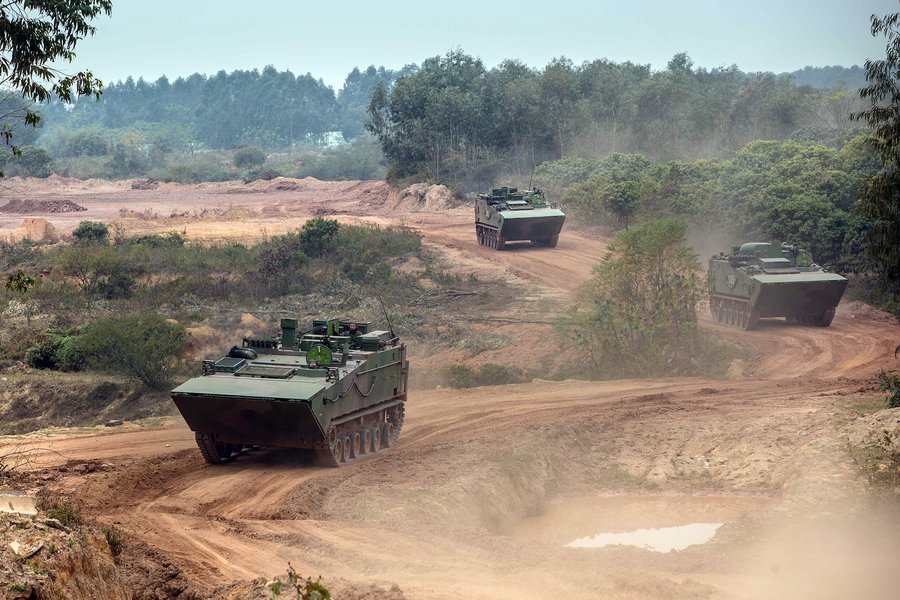
Key Takeaways
- Seamless Integration: Combining both entity and aggregate models improves simulation realism and efficiency.
- Balanced Fidelity: Dual use of high-fidelity and low-fidelity algorithms optimizes resource allocation in critical versus routine scenarios.
- Adaptive Modeling: Multi-resolution and hierarchical methods allow dynamic switching based on simulation needs.
Overview of Combat Simulation Modeling
Combat simulations have emerged as a pivotal tool in military training and strategic planning. Modern simulation systems must account for the individual behavior of soldiers, vehicles, or weapon systems (entities) while also managing large groups of these units (aggregates). Furthermore, to capture the dynamics of real-world operations, these simulations often incorporate both high-fidelity algorithms that offer detailed modeling and low-fidelity algorithms that streamline large-scale operations. This hybrid approach not only ensures operational realism but also optimizes computing resources.
Understanding Entities and Aggregates
Entity-Level Modeling
In the context of a combat simulation, individual entities represent the fundamental units of a simulation:
- Each unit (e.g., a soldier, vehicle, or aircraft) is modeled with comprehensive attributes like health, weapon status, position, and behavior.
- This enables detailed interactions and command decisions tailored to micro-level tactical scenarios.
- Entity-level modeling is computationally demanding, especially when simulating high numbers of units in real time.
Aggregate-Level Modeling
Aggregates group entities into cohesive units providing a macro-level overview of operations:
- Aggregates allow simulation frameworks to manage large formations like a platoon, battalion, or squadron.
- This level of abstraction simplifies calculations, reduces computational load, and enables large-scale strategic assessments.
- Access to individual entities in an aggregate is typically controlled through an aggregate root to maintain consistency.
The combination of these two approaches lets simulations switch seamlessly between micro and macro perspectives – using detailed, individually modeled units when precision is critical, and broader, aggregate representations when overall strategic movements are the focus.
High-Fidelity and Low-Fidelity Algorithm Integration
High-fidelity algorithms deliver intricate, realistic simulation details through advanced mathematical models and physics computations. Conversely, low-fidelity algorithms prioritize computational efficiency by simplifying the behavior and interactions within the simulation. The prudent integration of both approaches is essential.
High-Fidelity Simulation
Characteristics
- Utilizes complex physics and mathematical models to accurately simulate ballistic trajectories, detailed unit behavior, and environmental conditions.
- Ideal for high-stakes combat scenarios where precision is required.
- Essential for training scenarios where the minute details of a weapon system or unit response are under scrutiny.
Challenges
- High computational overhead can limit scalability across large simulated forces.
- Often requires powerful hardware or distributed computing infrastructures.
Low-Fidelity Simulation
Characteristics
- Employs simplified models that represent group behaviors and overall movement patterns.
- Allows simulation of large-scale engagements with reduced computational requirements.
- Ideal for strategic planning or background processes within a simulation scenario.
Benefits and Use Cases
- Improves overall simulation responsiveness, which is critical in real-time operations.
- Provides a cost-effective solution by economizing on detailed modeling where it is not required.
- Enables dynamic switching to high-fidelity when a particular encounter or event demands higher detail.
Integrating high and low fidelity within the same simulation framework involves:
- Employing multi-resolution modeling techniques to switch between detailed and abstract models.
- Using runtime delegation methods that adjust the fidelity of units dynamically based on simulation context, proximity, or strategic importance.
- Adopting hierarchical simulation structures where aggregates are managed at a low fidelity while key entities are simulated with high fidelity.
Multi-Resolution Modeling and Dynamic Algorithms
Multi-resolution modeling (MRM) is a crucial strategy that allows combat simulations to handle various levels of detail dynamically. MRM enables the system to adjust the resolution at which different simulation components are processed, ensuring that high-fidelity modeling is applied only when needed. For example:
- During large-scale troop movements, an aggregate-level simulation provides an efficient and overarching view of the battle, utilizing low-fidelity algorithms to manage overall dynamics.
- As combat engagements intensify, specific units or interactions can transition to high-fidelity algorithms, offering granular insights into tactical behavior, such as reactive maneuvers or advanced targeting systems.
Dynamic Aggregation and Disaggregation
Adaptive Entity Management
Combat simulations can dynamically aggregate units as needed, based on the tactical or strategic context. This process involves:
- Aggregation: Grouping individual entities into aggregates to simplify simulations during large-scale operations. For instance, multiple vehicles in an armored column can be represented as a single aggregate to maintain an overview of movement and engagement.
- Disaggregation: Breaking aggregates back into individual entities during detailed tactical analysis when specific interactions need in-depth examination.
The dynamic toggling between these states enhances both computational efficiency and simulation fidelity, ensuring that the system is both scalable and precise.
Hierarchical and Agent-Based Modeling
A hierarchical approach allows for strict control over which components of the simulation require high detail and which can maintain a simplified representation. Multi-layered simulation architectures often include:
- A top-level aggregate view that manages overall resource allocation and unit movements.
- Intermediate layers handling sub-unit dynamics and decision-making processes.
- Individual entity-level simulations that are deployed for critical tasks, high-intensity engagements, or when real-time precision is necessary.
Agent-based modeling (ABM) complements this hierarchy by treating each entity as an autonomous agent with its own behaviors and decision-making capabilities. ABM greatly enhances simulation fidelity in critical scenarios while retaining broader aggregate models for the overall simulation environment.
Visualizing Simulation Strategies with a Radar Chart
The radar chart below represents an opinionated analysis of how different aspects of combat simulation—Entity-Level Modeling, Aggregate-Level Modeling, High-Fidelity, Low-Fidelity, Multi-Resolution Modeling, and Agent-Based Modeling—compare in terms of their computational intensity, realism, scalability, and adaptability. The datasets on the chart illustrate subjective ratings based on operational needs and simulation priorities.
Entity vs. Aggregate Modeling Comparison Table
The following table provides a summary comparison between entity-level modeling and aggregate-level modeling within a combat simulation. This comparison encapsulates key characteristics beneficial for understanding dynamic simulation management.
| Characteristic | Entity-Level Modeling | Aggregate-Level Modeling |
|---|---|---|
| Level of Detail | High detail with individual attributes per unit | Simplified representation of multiple units |
| Computational Demand | High computational load especially in large counts | Lower computational load enabling broader strategic simulation |
| Usage Scenario | Critical engagements requiring granular simulation detail | Large-scale troop movement and strategic planning |
| Control Interface | Direct manipulation of individual entity attributes | Managed through aggregate roots to ensure consistency |
Integrated Video Insight
The embedded video below provides further insight into the principles of aggregates, entities, and high vs. low fidelity simulations, showcasing how modern development approaches integrate these concepts in practical scenarios:
Frequently Asked Questions
What is the main difference between entity-level and aggregate-level modeling?
Entity-level modeling focuses on detailed simulation of individual units with specific attributes, while aggregate-level modeling represents groups of units as larger, simplified entities to enhance scalability and reduction in computational load.
How does a combat simulation switch between high-fidelity and low-fidelity algorithms?
The simulation uses multi-resolution and dynamic delegation techniques to change between detailed (high-fidelity) and simplified (low-fidelity) algorithms. This allows it to focus computational resources on critical components while handling background processes in aggregate mode.
What are the benefits of using an aggregate approach in combat simulations?
Aggregates reduce computational complexity by grouping individual entities, which is crucial for large-scale simulations. This method allows simulations to maintain strategic oversight while reserving detailed, computationally expensive simulation for critical events.
References
- Aggregate Level Simulation Protocol - Wikipedia
- Aggregate Pattern in Domain-Driven Design - Deviq
- Modeling and Simulation of Warfare - Total Military Insight
- Domain-Driven Design Aggregates - Martin Fowler
- Alternative Aggregate Combat Modeling - ITSC
Recommended Related Queries
Last updated April 2, 2025