
Unraveling the Comma Conundrum: Does 'First' Need a Comma in Your Sentence?
A specific look at comma usage with sequential adverbs like 'first' in the context of progressive stages.
You've asked about the correct punctuation for the word "first" in your sentence: "This leads to dysfunction first at a cellular level, then at the tissue and organ levels, and finally throughout the body." Let's delve into the grammatical rules governing this specific situation.
Highlights: Key Takeaways on Comma Usage
- No Comma Needed After 'First': In your specific sentence structure, a comma is generally not required after the word "first".
- Reasoning: Sequential Adverb Function: "First" functions here as an adverb indicating the initial stage within a continuous sequence ("first... then... finally..."), modifying the phrase "at a cellular level". It's integrated into the flow of the sentence, not acting as a separate introductory element.
- Contrast with Introductory Use: This differs from cases where "First," starts a sentence or introduces an independent clause, which typically requires a comma (e.g., "First, the cells began to malfunction.").
Decoding the Sentence Structure
Understanding the Role of 'First'
Your sentence describes a clear progression or sequence of where dysfunction occurs. Let's break it down:
- Stage 1: dysfunction occurs first at a cellular level
- Stage 2: dysfunction occurs then at the tissue and organ levels
- Stage 3: dysfunction occurs finally throughout the body
In this structure, "first," "then," and "finally" are adverbs that signal the order of these stages. "First" directly connects to and modifies the prepositional phrase "at a cellular level," telling us *when* or *where* in the sequence this level is affected. It's not introducing the entire sentence or a distinct clause; rather, it's the first marker in a tightly linked series.
Why No Comma?
Grammar guidelines generally advise against placing a comma after adverbs like "first," "then," or "next" when they are used mid-sentence to link sequential phrases or ideas smoothly within the same clause, especially in structures like "first X, then Y, and finally Z." The commas already present before "then" and "finally" effectively separate the distinct stages of the progression, ensuring clarity. Adding another comma after "first" could interrupt the flow unnecessarily and is typically considered redundant in this context.
Therefore, the sentence is correctly punctuated as you wrote it:
"This leads to dysfunction first at a cellular level, then at the tissue and organ levels, and finally throughout the body."
Visualizing the Sentence Structure
A Mindmap Breakdown
This mindmap illustrates how "first" functions within the sentence structure, linking directly to the initial stage in the described sequence:
As the map shows, "first" is integrated into the description of Stage 1, directly modifying "at a cellular level," rather than standing apart as an introductory element for the entire sequence or clause.
Grammatical Context: Adverbs of Sequence
How 'First', 'Then', and 'Finally' Work
Words like "first," "second," "next," "then," and "finally" are often used as adverbs of sequence or time. Their punctuation depends heavily on their position and function in the sentence.
- Introductory Function: When these words introduce a sentence or an independent clause, they are usually followed by a comma.
- Example: First, analyze the data. Then, write the report.
- Integrated Function (Sequential): When these adverbs are embedded within a clause to link parallel phrases describing a sequence, commas after them are often omitted for better flow, especially if the phrases are relatively short and the structure is clear. This applies to your sentence.
- Example: The process involves first heating the mixture, then adding the catalyst, and finally cooling it down. (Similar structure to your sentence, commas after the adverbs are generally omitted).
- Adjective/Pronoun/Noun Function: "First" can also function as other parts of speech (e.g., "the first step," "I was first"), where commas are typically not relevant in this way.
Your sentence falls squarely into the second category – an integrated function linking sequential stages within a single main idea.
Factors Influencing Comma Usage After 'First'
A Comparative Analysis
This chart visualizes various factors influencing whether a comma is typically used after "first," comparing scenarios where a comma is often recommended versus scenarios (like yours) where it's often omitted. Higher scores indicate stronger influence favoring that comma usage pattern.
The chart highlights that while factors like introductory position strongly favor a comma, characteristics of your sentence – "first" being part of an integrated sequence and the desire for smooth sentence flow – lean heavily towards omitting the comma.
The Importance of Context: Cellular Dysfunction Progression
Understanding the Sentence Content
While your question is grammatical, the sentence itself describes a common pattern in biology and medicine: disease processes often begin with changes or dysfunction at the smallest level (cellular) and progressively affect larger structures (tissues, organs) and eventually the entire organism (systemic effects). This concept is fundamental to understanding the pathology of many conditions, from metabolic disorders like diabetes to neurodegenerative diseases and inflammatory conditions.
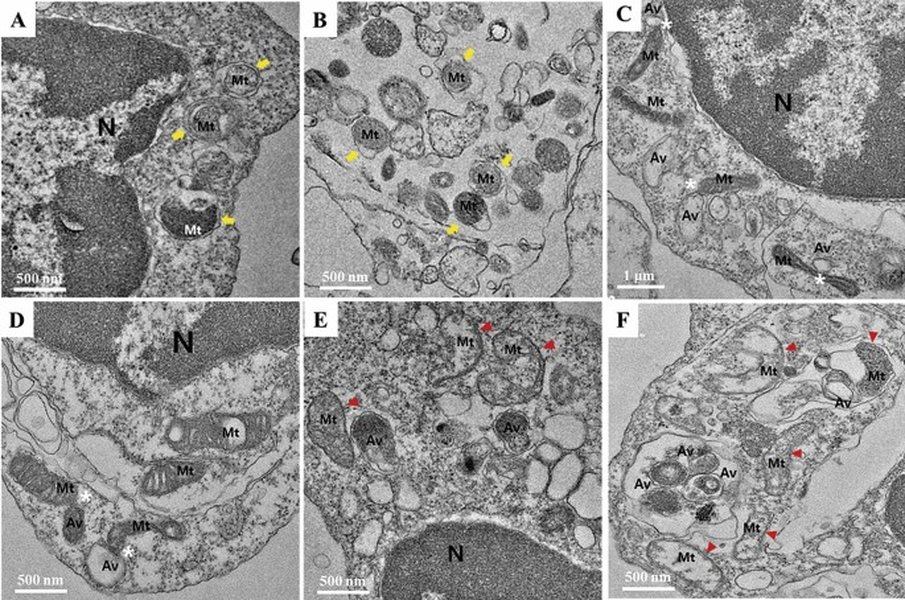 Diagram illustrating cellular processes, including mitochondrial function and dysfunction, key aspects of cellular health.
Understanding this progression helps researchers and clinicians identify diseases early and develop targeted therapies. The clarity afforded by correct punctuation is crucial when communicating such complex scientific concepts.
Mitochondria and Cellular Energy
Often referred to as the "powerhouses" of the cell, mitochondria play a critical role in generating the energy cells need to function. Dysfunction in mitochondria is implicated in a wide range of diseases and is a prime example of how problems at the cellular level can have far-reaching consequences. The video below provides an overview of mitochondrial diseases, illustrating the significance of cellular health.
Overview of Mitochondrial Diseases, highlighting the importance of cellular energy production.
Comma Usage with 'First': A Comparative Table
When to Use vs. Omit the Comma
This table summarizes different scenarios involving the word "first" and the typical comma usage:
| Scenario | Comma After 'First'? | Example Sentence | Rationale |
|---|---|---|---|
| Introductory Adverb (Sentence Start) | Yes | First, gather all the necessary materials. | "First" introduces the entire sentence/clause and indicates a sequence starting point. A comma signals this introductory role. |
| Introductory Adverb (Clause Start) | Yes | We completed the initial analysis, and first, we presented the key findings. | "First" introduces the second independent clause, functioning as an introductory element for that clause. |
| Integrated Sequential Adverb (like your sentence) | No (Generally) | The plan is to first review the proposal, then discuss the budget, and finally vote on the decision. | "First" is part of a smooth, parallel sequence within the clause. Commas before "then" and "finally" separate the stages; an additional comma after "first" is usually omitted for flow. |
| Part of an Introductory Phrase | Yes (after the phrase) | At first, the idea seemed unworkable. | The comma comes after the entire introductory phrase ("At first"), not just the word "first". |
| Adjective | No | This is the first time we've encountered this issue. | "First" acts as an adjective modifying "time." No comma is needed. |
| Noun/Pronoun | No | She achieved a first in her class. He arrived first. | "First" functions as a noun or pronoun substitute. No comma needed in this way. |
As the table shows, your sentence fits the "Integrated Sequential Adverb" pattern where omitting the comma after "first" is the standard convention for maintaining flow and clarity within the sequence.
Frequently Asked Questions (FAQ)
Clarifying Comma Usage with Sequential Words
▶ When is a comma definitely required after 'first'?
A comma is typically required after "first" when it acts as an introductory adverb at the beginning of a sentence or an independent clause. Example: "First, let's address the main points." Here, "First" sets the stage for the entire statement that follows.
▶ Does this rule apply to words like 'secondly', 'then', 'next', 'finally'?
Yes, the principle is generally the same. When these words function as introductory adverbs at the start of a sentence or clause, they usually take a comma (e.g., "Secondly, we need to consider..."). When they are integrated into a sequence within a clause, like in your example ("...first X, then Y, finally Z..."), commas after them are often omitted for smoother reading, while commas before them (or conjunctions like 'and') separate the distinct elements of the sequence.
▶ What if the phrase following 'first' in the sequence was very long or complex?
While the general rule is to omit the comma in integrated sequences, clarity is paramount. If the phrase following "first" (or "then," etc.) is very long or complex, potentially causing the reader to lose track of the sentence structure, a writer might choose to add a comma for clarity, even if it deviates slightly from the standard flow. However, in most cases, especially with parallel structures like yours ("first at X, then at Y, finally Z"), omitting the comma after the sequence adverb is preferred.
▶ Is there a difference between 'first' and 'firstly'?
Both "first" and "firstly" can function as introductory adverbs. Traditionally, "first" was preferred even in sequences (first, second, third), while "firstly" was sometimes seen as slightly more formal but potentially unnecessary. When used as introductory adverbs, both typically take a comma (e.g., "Firstly, we must..."). In the integrated sequence structure of your sentence, using "first" without a comma is standard. Using "firstly" in that same embedded position might feel slightly more awkward to some style guides.
Recommended
Explore Related Grammar Topics
- What are the rules for using commas in a series or list?
- When should I use a comma after an introductory adverb?
- How does punctuation support parallel structure in sentences?
- What are common comma errors to avoid in scientific writing?
References
Sources for Comma Rules
Last updated May 3, 2025