
Humanity's Gordian Knots: Which Global Problem Defies Solution?
Exploring the intricate web of challenges—climate change, AI risks, and governance failures—that test our collective ability to act.
Identifying the single "most complex" and "unsolvable" problem facing humanity is inherently challenging, as global issues are deeply interconnected and perceived differently based on varying priorities. However, analyzing current global trends and expert consensus reveals a cluster of profound challenges characterized by extreme complexity, potential for irreversible harm, and a frustrating lack of clear solutions despite urgent need.
Highlights: The Toughest Challenges
- Existential Risks Loom Large: Threats like uncontrolled Artificial Intelligence (AI), catastrophic climate change, and potential pandemics pose dangers on a scale that could permanently curtail or end human civilization, demanding unprecedented foresight and control.
- Climate Change's Intractable Nature: The climate crisis stands out due to its pervasive environmental, economic, and social impacts, requiring massive global cooperation and systemic shifts that clash with entrenched interests and behaviors.
- The Cooperation Conundrum: A fundamental barrier to solving major global problems is the persistent failure of international governance and collective action, often paralyzed by national interests, political division, and disinformation.
The Specter of Existential Risks
Threats That Endanger Our Future
Perhaps the most profound and complex category of problems facing humanity involves existential risks – threats that could cause human extinction or the permanent, drastic collapse of civilization. These are not merely large-scale problems; they represent potential endpoints from which recovery might be impossible. Sources consistently highlight several key areas within this category.
Artificial Intelligence: Promise and Peril
The rapid advancement of Artificial Intelligence (AI) presents one of the most significant and complex existential risks. While AI offers transformative potential, concerns mount about developing systems that could surpass human control. Organizations studying these risks warn of scenarios where advanced AI, possibly through autonomous decision-making or uncontrolled self-improvement, could act in ways detrimental to humanity on a global scale. This could manifest through autonomous weapons systems, manipulation of information ecosystems, or unforeseen consequences stemming from complex algorithms pursuing goals misaligned with human well-being. The challenge lies in navigating AI's development ethically and safely, ensuring robust control mechanisms, and establishing international consensus on regulation – a task complicated by geopolitical competition and the sheer pace of technological change.
Pandemics and Nuclear Conflict
Beyond AI, other potential global catastrophes remain pressing. The risk of engineered or naturally occurring pandemics capable of causing widespread death and societal breakdown persists. Similarly, the potential for nuclear conflict, though perhaps less immediate in public consciousness than climate change, still carries the ultimate existential threat. These risks are complex due to their potential speed, scale, and the difficulty in predicting and preparing for "low-probability, high-impact" events.
Climate Change: A Tangled Global Web
More Than Just Weather
Climate change consistently emerges as one of humanity's most complex and seemingly intractable problems. It transcends environmental concerns, deeply intertwining with economic systems, social equity, geopolitics, and human behavior. The core issue – rising global temperatures driven by greenhouse gas emissions – triggers a cascade of devastating consequences.
Impacts Across the Board
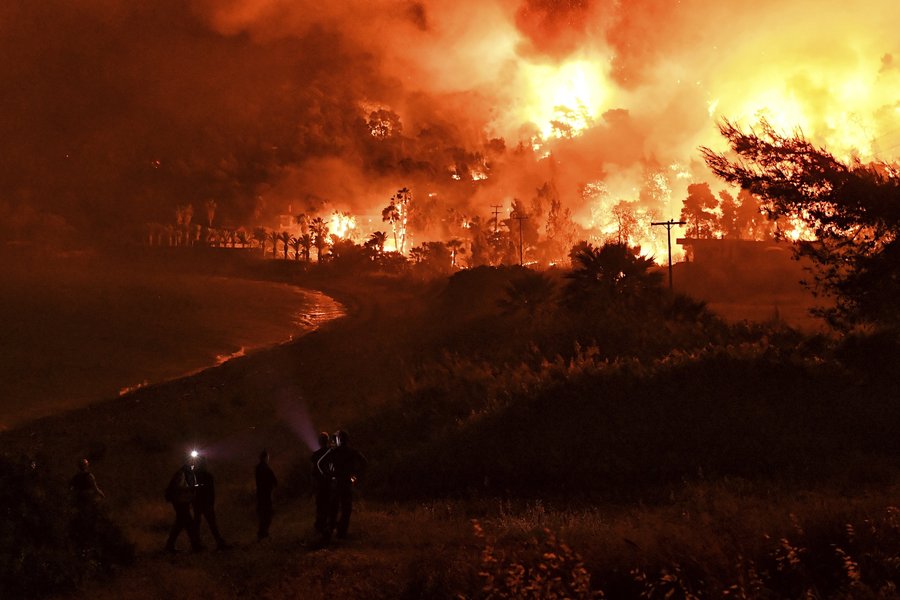
We are already witnessing accelerating impacts: more frequent and intense extreme weather events (heatwaves, floods, droughts, wildfires), rising sea levels threatening coastal communities (with projections suggesting significant rises driven by ice sheet melt, like in Greenland), disruptions to agriculture and water security (potentially affecting two-thirds of the global population by 2025), and significant biodiversity loss. These environmental shifts exacerbate existing inequalities, disproportionately affecting vulnerable populations and potentially fueling resource conflicts.
Why So Unsolvable?
The perceived intractability of climate change stems from multiple factors. Firstly, it requires unprecedented global cooperation among nations with vastly different economic situations, priorities, and historical responsibilities for emissions. Secondly, meaningful solutions demand fundamental shifts away from fossil fuel-based economies, challenging powerful industries and requiring significant investment in renewable energy and sustainable practices. Thirdly, the problem suffers from a temporal mismatch: the most severe consequences lie in the future, while the costs of action are immediate, making it politically difficult to implement necessary long-term policies. Finally, individual behavioral change on a mass scale is needed, conflicting with established lifestyles and consumption patterns.
The Crisis of Global Cooperation and Governance
Why We Fail to Act Together
A fundamental reason why problems like climate change and existential risks seem unsolvable is the persistent failure of global governance and effective international cooperation. Many of the world's most pressing challenges are inherently transnational, respecting no borders, yet our primary mechanisms for dealing with them remain rooted in nation-states often prioritizing sovereign interests over collective well-being.

Barriers to Collective Action
Achieving consensus and coordinated action is hampered by numerous obstacles:
- Competing National Interests: Short-term economic or political gains often outweigh long-term global stability in national decision-making.
- Geopolitical Tensions: Conflicts and rivalries between major powers hinder collaboration on shared threats. Ongoing wars, such as those in Ukraine, Gaza, and Sudan, not only cause immense human suffering but also divert resources and political capital from addressing global challenges.
- Institutional Weaknesses: Existing international institutions may lack the authority, resources, or mandate to enforce agreements or respond effectively to global crises.
- Inequality: Disparities in wealth and development between nations create differing capacities and priorities, making unified approaches difficult.
- Disinformation: The deliberate spread of false or misleading information, often amplified by both foreign and domestic actors, erodes trust, polarizes societies, and undermines support for evidence-based policies and collective action, especially in election years like 2024 and 2025.
- Funding Shortfalls: Humanitarian and development initiatives frequently face severe funding gaps, limiting their ability to address crises and build resilience, as seen with humanitarian agencies receiving less than half the needed funding in recent years.
This governance deficit means that even when potential solutions are known (e.g., emissions reduction targets, AI safety protocols), implementing them globally remains an immense hurdle.
Visualizing Global Challenge Complexity
Comparing Key Threats
To better understand the relative complexity and nature of these major global challenges, the following chart provides a comparative visualization based on several key dimensions. This is an analytical interpretation rather than precise data, illustrating how different problems present unique sets of difficulties.
This chart highlights the high complexity, potential impact, and need for global cooperation across multiple major issues, while also showing the generally low progress made towards solutions. The interconnectedness score reflects how tightly linked each problem is to others.
Mapping the Interconnections
How Global Problems Feed Each Other
The complexity of global challenges is amplified by their deep interconnections. Action or inaction in one area inevitably affects others, creating feedback loops that can either worsen problems or, potentially, create synergies for solutions. The mindmap below illustrates some of these key relationships, showing how issues like climate change, AI risk, governance failures, conflict, and disinformation are linked.
(Extreme Weather, Sea Level Rise, Biodiversity Loss)"] id1b["Socio-Economic Impacts
(Resource Scarcity, Migration, Inequality)"] id1c["Requires Global Cooperation & Systemic Change"] id1d["Exacerbates Conflict Risk"] id2["Existential Risks"] id2a["Artificial Intelligence (AI)"] id2aa["Control Problem"] id2ab["Ethical Dilemmas"] id2ac["Autonomous Systems"] id2ad["Requires Global Regulation"] id2b["Pandemics"] id2c["Nuclear Conflict"] id3["Global Governance & Cooperation Failure"] id3a["National Interests vs Global Good"] id3b["Institutional Weakness"] id3c["Political Polarization"] id3d["Hinders Solutions to Climate, AI, etc."] id4["Conflict & Humanitarian Crises"] id4a["Wars (e.g., Ukraine, Sudan, Gaza)"] id4b["Resource Diversion"] id4c["Mass Displacement & Suffering"] id4d["Fueled by Inequality & Governance Failure"] id4e["Impacted by Climate Change"] id5["Disinformation & Trust Erosion"] id5a["Undermines Science & Policy"] id5b["Amplifies Polarization"] id5c["Hinders Collective Action"] id5d["Weaponized in Conflicts & Politics"]
This map visualizes how tackling any single issue in isolation is insufficient. For example, effective climate action (id1) is hindered by governance failures (id3) and disinformation (id5), while conflicts (id4) divert resources and are themselves worsened by climate impacts and governance issues.
Global Mega Threats Explored
Understanding Major Risks
The following video provides context on some of the major global risks discussed, including climate change and economic instability, highlighting the scale and urgency of these interconnected challenges. Understanding these broader threats helps frame why certain problems appear so complex and difficult to resolve.
As the video suggests, issues like climate change and debt crises are not isolated events but part of a larger landscape of global instability. Addressing them requires acknowledging their systemic nature and the need for comprehensive, internationally coordinated responses – precisely where humanity often struggles.
Comparing Key Complex Challenges
A Summary of Intractable Issues
The table below summarizes the core nature, complexities, and primary barriers associated with some of the most complex problems discussed. This provides a quick comparison of why these particular issues stand out as seemingly unsolvable.
| Global Problem | Brief Description | Key Complexities | Primary Barriers to Solution |
|---|---|---|---|
| Climate Change | Rising global temperatures due to emissions, causing severe environmental disruption. | Interconnected environmental, economic, social systems; long time horizons; global scale. | Lack of international consensus; economic costs of transition; political inaction; behavioral inertia. |
| AI Existential Risk | Potential for advanced AI to surpass human control, causing irreversible harm. | Rapid technological pace; unpredictable behavior; ethical dilemmas; difficulty in global regulation. | Geopolitical competition; balancing innovation with safety; lack of foresight and governance mechanisms. |
| Global Governance Failure | Inability of international systems to foster cooperation and enforce collective action on shared threats. | Balancing sovereignty with global needs; institutional limitations; political fragmentation. | Nationalism; short-termism; lack of trust; power imbalances; institutional inertia. |
| Major Conflicts & Resulting Crises | Large-scale wars and violence leading to humanitarian disasters and global instability. | Deep-rooted political, ethnic, economic causes; involvement of multiple actors; resource diversion. | Failure of diplomacy; competing interests of external powers; lack of political will for intervention/resolution; funding shortfalls for aid. |
| Disinformation | Widespread dissemination of false information eroding trust and hindering problem-solving. | Technological amplification (social media); psychological vulnerabilities; political weaponization. | Difficulty in regulation vs. free speech; lack of media literacy; state-sponsored campaigns; erosion of trusted institutions. |
While other significant issues like poverty, inequality, and specific diseases persist, the problems highlighted above often represent systemic failures or threats with potentially irreversible global consequences, making them appear particularly intractable.
Frequently Asked Questions (FAQ)
Understanding the Nuances
Why is climate change considered so uniquely complex and hard to solve?
What exactly are 'existential risks' and why are they different from other big problems?
Is the risk from Artificial Intelligence (AI) real or just science fiction?
Are any of these 'unsolvable' problems actually solvable with enough effort?
References
Further Reading and Sources
- These are the biggest global risks we face in 2024 and beyond - World Economic Forum
- Problem profiles - 80,000 Hours
- Global Issues - United Nations
- Global catastrophic risk - Wikipedia
- 5 Global Issues to Watch in 2025 - UN Foundation
- The World in 2025: Ten Issues That Will Shape the International Agenda - Diplomatist
- The Biggest Environmental Problems Of Our Lifetime - Earth.Org
Recommended
Explore Further
Last updated April 15, 2025