
Understanding the Expression (1/0)-1 in Complex Analysis
Exploring why (1/0)-1 results in 1/complex infinity instead of 0
Key Takeaways
- Extended Complex Plane: The Riemann sphere extends the complex plane by adding a single point at infinity, facilitating operations like division by zero.
- Complex Infinity Defined: Unlike real infinity, complex infinity encapsulates all directions in the complex plane, making it a unique entity.
- Symbolic Representation: Expressions involving complex infinity maintain their symbolic form to preserve the nature of operations performed.
Introduction to Complex Infinity
In the realm of complex analysis, operations such as division by zero are approached with concepts that extend beyond the conventional real number system. The expression (1/0)-1 is a prime example of how complex analysis handles scenarios that are undefined or indeterminate in the real numbers. To comprehend why this expression yields 1/complex infinity instead of a straightforward 0, it's essential to delve into the foundational structures that underpin complex numbers, particularly the Riemann sphere and the notion of complex infinity.
The Extended Complex Plane and the Riemann Sphere
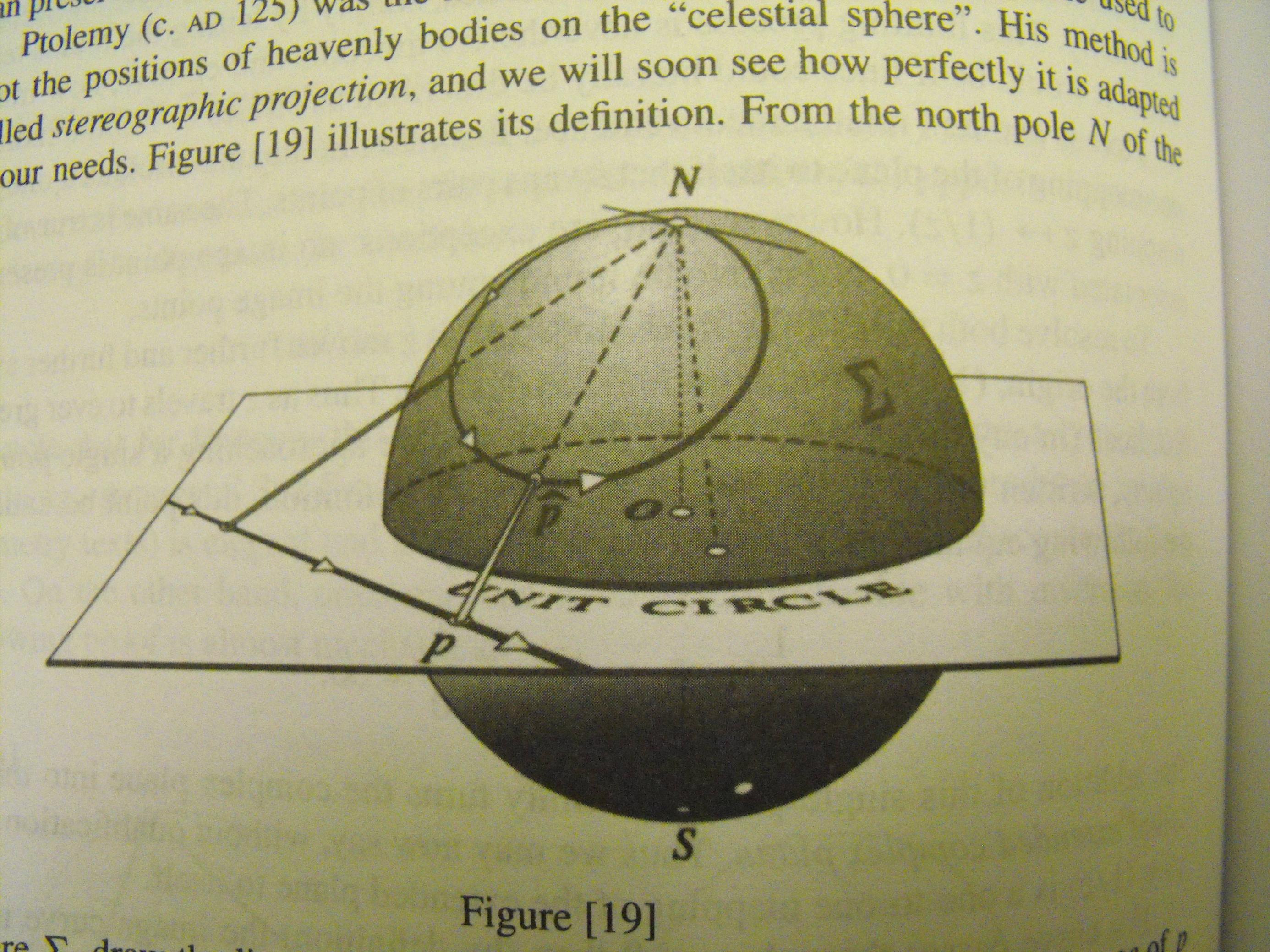
The extended complex plane is an essential construction in complex analysis that allows mathematicians to navigate and manipulate points at infinity seamlessly. This extension is visually and conceptually represented by the Riemann sphere, where the entire complex plane is projected onto a sphere by stereographic projection.
Understanding the Riemann Sphere
The Riemann sphere maps every complex number to a unique point on the sphere, with the north pole representing infinity. This single point at infinity simplifies many complex operations by providing a definitive location for infinite values, eliminating the ambiguities present in the real number system where +∞ and -∞ are distinct.
Division by Zero in the Extended Complex Plane
In the real number system, division by zero is undefined due to the conflicting limits approached from positive and negative directions. However, in the extended complex plane, division by zero is defined in terms of complex infinity. Specifically, for any non-zero complex number z, the expression 1/z approaches infinity as z approaches zero. On the Riemann sphere, this division results in the north pole, representing complex infinity.
Defining Complex Infinity
Complex infinity is not merely an unbounded value but a singular entity that encapsulates all possible directions in the complex plane. This contrasts with the real number system, where infinity can be approached from the positive or negative direction, leading to two distinct infinities.
Properties of Complex Infinity
- Uniqueness: There is only one point at infinity in the complex plane, regardless of the direction from which it is approached.
- Symmetry: Complex infinity treats all directions equally, maintaining the inherent rotational symmetry of the complex plane.
- Reciprocal Relationship: The reciprocal of complex infinity is defined as zero, maintaining consistency in arithmetic operations.
Mathematical Representation
In mathematical terms, complex infinity can be represented using the extended complex plane notation:
$$ \mathbb{C} \cup \{\infty\} $$
Here, $\mathbb{C}$ denotes the set of all complex numbers, and $\infty$ represents complex infinity.
Analyzing the Expression (1/0)-1
The expression (1/0)-1 involves two primary operations: division by zero and taking the reciprocal of the result. To unpack why this leads to 1/complex infinity instead of directly to 0, we must examine each step within the framework of the extended complex plane.
Step 1: Evaluating 1/0
As previously discussed, in the extended complex plane, 1/0 is defined as complex infinity. This assignment is critical for preserving the continuity and algebraic structure of the complex plane, especially when dealing with limits and function behavior at infinity.
Mathematically:
$$ \frac{1}{0} = \infty $$
Step 2: Taking the Reciprocal of Complex Infinity
The next operation is taking the reciprocal of the previously obtained complex infinity:
$$ \left(\frac{1}{0}\right)^{-1} = \frac{1}{\infty} $$
In many mathematical contexts, 1/∞ is understood to be 0. However, within the extended complex plane, it's important to retain the symbolic representation to maintain the integrity of the operations performed, especially when dealing with indeterminate forms.
Symbolic vs. Numerical Interpretation
While 1/∞ simplifies to 0 in many real-number based computations, in the context of complex analysis and the Riemann sphere, it retains its symbolic form as 1/infty. This symbolic representation is crucial for several reasons:
-
Preservation of Mathematical Structure: Keeping the expression symbolic ensures that the unique properties of complex infinity are respected and that further operations can be performed without losing context.
-
Handling Indeterminate Forms: In complex analysis, certain expressions may lead to indeterminate forms where simplistic numerical substitutions could lead to loss of information or incorrect conclusions.
-
Consistency in Function Behavior: The behavior of functions near infinity can require the retention of symbolic representations to accurately describe limits and asymptotic behavior.
Implications in Complex Analysis
The decision to represent (1/0)-1 as 1/complex infinity rather than simplifying directly to 0 has significant implications in the field of complex analysis. It affects how mathematicians and scientists interpret and manipulate expressions involving infinity, ensuring precision and consistency across various applications.
Function Limits and Asymptotic Behavior
In evaluating limits of complex functions, understanding how expressions involving infinity behave is crucial. By maintaining the symbolic form, mathematicians can more accurately describe the asymptotic behavior of functions as they approach infinity in the complex plane.
Operational Consistency
Maintaining symbolic representations ensures that operations remain consistent across different mathematical contexts. For instance, while 1/\infty simplifies to 0 in certain cases, retaining the form 1/infty allows for more versatile and accurate manipulations in advanced mathematical frameworks.
Avoiding Ambiguities
Symbolic representations help avoid ambiguities that can arise from oversimplification. By explicitly stating the relationship between different expressions involving infinity, the mathematical narrative remains clear and unambiguous.
Practical Examples and Applications
Understanding the interpretation of expressions like (1/0)-1 as 1/complex infinity is not merely an academic exercise. It has practical applications in various fields such as engineering, physics, and computer science, where complex numbers play a pivotal role.
Electrical Engineering and Signal Processing
In electrical engineering, particularly in signal processing, complex numbers are used to represent and manipulate signals. Understanding how operations involving infinity are handled ensures that systems can be designed to manage edge cases and prevent undefined behaviors.
Quantum Physics
Quantum mechanics extensively utilizes complex numbers to describe the state of systems. Precise handling of mathematical expressions involving infinity helps in formulating accurate models and predictions.
Computer Algebra Systems
In computer algebra systems like Wolfram Mathematica, maintaining symbolic representations allows for more robust and flexible mathematical computations. Users can manipulate expressions involving infinity without prematurely simplifying, preserving the integrity of complex calculations.
Conclusion
The expression (1/0)-1 serves as a fascinating example of how complex analysis extends beyond the limitations of the real number system. By defining division by zero as complex infinity on the Riemann sphere, mathematicians can perform operations that would otherwise be undefined or ambiguous. The subsequent reciprocal operation maintains its symbolic form as 1/complex infinity to preserve mathematical consistency, handle indeterminate forms, and ensure the robust application of complex analysis across various scientific disciplines.
This nuanced approach underscores the importance of symbolic representations in advanced mathematics, enabling precise and meaningful manipulations of expressions that transcend traditional numerical interpretations.
References
Last updated January 22, 2025