
Complexity of Manual Rice Weevil Removal Process
An in-depth exploration of challenges and methods in eliminating rice weevils without chemicals
Highlights
- Labor and Time Intensity: The process is highly labor-intensive, requiring detailed inspection and manual sorting for effective removal.
- Detection and Identification Challenges: Identifying the different life stages of weevils and hidden infestations demands careful observation and expertise.
- Prevention and Post-Cleaning Efforts: Long-term prevention measures and post-removal cleaning are essential to avoid re-infestations.
Introduction
The manual removal of rice weevils from rice involves a multifaceted process that integrates careful inspection, physical sorting, cleaning, and post-removal preventive measures. Despite its straightforward premise of physically removing pests without chemical intervention, the process is complex due to the size, behavior, and reproductive habits of rice weevils. This article examines the multiple layers of complexity in this process, discussing both the technical challenges and the practical considerations that contribute to the overall difficulty of complete weevil eradication from stored rice.
Understanding the Pest: Rice Weevils
Biology and Life Cycle
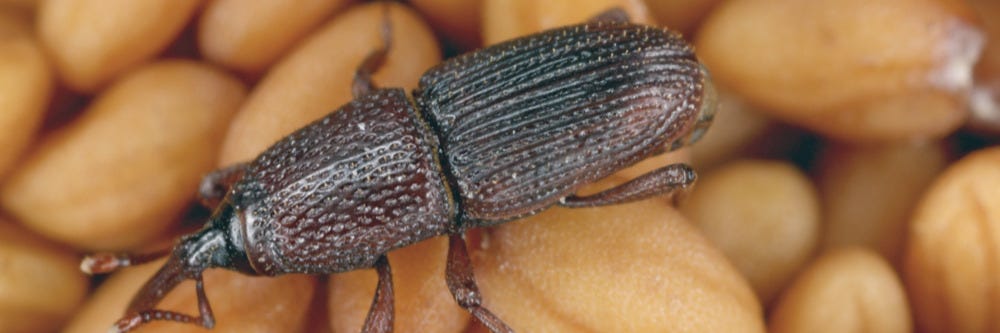
Rice weevils are tiny beetles typically measuring 2-3 mm in length, with a dark brown to black coloration and sometimes featuring subtle yellowish markings on their backs. One of the primary challenges in their manual removal is due to their small size and ability to blend in with the rice grains. Female weevils are prolific egg layers, depositing eggs directly into the grain kernels. This unique reproductive strategy means that many of the pest’s life stages, including larvae and pupae, occur inside the grain itself, making their detection extremely challenging.
Reproductive Attributes
With females laying roughly 3-4 eggs per day and potentially producing hundreds of eggs over their lifespan, even a minor infestation can quickly escalate into a severe problem. The life cycle of the rice weevil can complete in about 28 days, further complicating the timing and effectiveness of removal interventions.
Detailed Process of Manual Removal
Inspection and Initial Sorting
The first step in the manual process revolves around the systematic inspection and sorting of rice. This phase is crucial because it establishes the baseline extent of the infestation and helps identify visibly infested grains. Manual inspection is inherently time-consuming and requires workers to sift through each grain carefully. Methods often include spreading the rice on brightly lit surfaces to enhance visibility; the increased light contrast helps identify tiny weevils and any damage to grains.
Methods of Inspection
Inspectors rely on visual cues such as the presence of small dark dots or holes in the grains, which could indicate an infestation. Additionally, manual picking is employed where infested kernels and visible insects (including larval forms on the grain surface) are removed by hand. However, the reliance on manual visual detection means that even experienced workers might miss eggs or larvae hidden within the interior of the grain.
Cleaning and Separation Techniques
Once a preliminary sorting is completed, the next step involves cleaning the rice from residual weevils and debris. The rice is transferred into a large container, where tools like fine-mesh strainers or cheesecloth are used to separate the grains from potential contaminants. This method helps to filter out detached insects, dust, and other foreign particles.
Soaking and Rinsing Process
In some practices, rice is soaked in water with periodic changes to facilitate the detachment of any remaining weevils, larvae, or eggs from the kernel surfaces. After a period of soaking – typically around an hour with regular water changes – the rice is thoroughly rinsed to eliminate any dislodged pests. Although effective in some cases, this method introduces the additional challenge of ensuring complete drying post-rinsing. Inadequate drying can lead to mold growth, adding another layer of complexity to the process.
Drying and Storage
Drying the rice is crucial after any washing steps to prevent moisture-related issues such as mold or further pest attractants. The grains can be spread thinly in an environment with ample airflow, or even placed in low-temperature ovens. This step is critically important since residual moisture can not only encourage re-infestation but may also damage the rice quality.
Prevention Through Proper Storage
Preventing re-infestation is as important as the removal procedure itself. Cleaned and dried rice should be stored in airtight containers. Additional methods such as including natural deterrents like bay leaves or silica gel packs are recommended to discourage future pest intrusion. The integrity of storage containers must be maintained since rice weevils can bore through substandard plastic or cardboard, making quality control in storage another complicated aspect.
Challenges and Complications in Manual Removal
Labor and Time Constraints
Manual removal of rice weevils is highly labor-intensive and time-consuming. Even if the process is effective on a small scale, labor requirements increase exponentially with the quantity of rice in storage. Sorting through even a moderate quantity of rice demands continuous attention and sustained effort. In larger storage facilities, the physical challenges and time constraints mean that the process can become impractical, particularly if the infestation is widespread.
Scale and Economic Considerations
Operating on a larger scale introduces further challenges including the economic viability of the process when balanced against potential losses. The cumulative labor costs, additional cleaning materials, and time investments can make manual methods less attractive compared to chemical treatments or automated pest control systems in commercial settings.
Detection Challenges and Hidden Infestations
A major complexity in manual rice weevil removal lies in the ability to accurately identify all life stages of the pest. Rice weevils embed their larvae within the grain, making a simple surface-level inspection inadequate. Even after manual sorting, eggs and larvae concealed inside the grain may continue the infestation cycle. The difficulty in completely eradicating these hidden stages contributes significantly to the overall complexity of the process.
Accuracy and Consistency in Efforts
Due to the necessity of identifying very small pests and their early stages, human error is a notable risk. Inconsistent manual techniques or oversight during the sorting phase can result in partial removal, leaving behind a few vectors that can re-establish the infestation. Such challenges demand skilled personnel and continuous quality control measures, adding layers to the operational complexity.
Environmental and Operational Factors
Several environmental factors complicate the manual removal process. Temperature and humidity play critical roles in the behavior of rice weevils. In conditions of high humidity and temperature, weevils tend to be more active, making it more difficult to capture them during manual inspection. Furthermore, the physical nature of rice—specifically its grain size and density—can hinder the efficiency of manual removal tools and techniques.
External Factors Influencing the Process
The environment of the storage facility itself also has significant implications for removal efforts. Storage areas with uneven surfaces or inaccessible nooks can harbor weevils, necessitating more comprehensive cleaning strategies such as vacuuming and the use of detergents. The constant need for deep cleaning and frequent inspections underscores the continuous nature of pest management in grain storage.
Comprehensive Overview of Manual Techniques
Manual Weevil Removal Techniques
Several manual methods are employed to tackle rice weevil infestations, each with its unique procedures and challenges. Techniques range from simple hand-picking to more controlled methods like heat or cold treatments. While hand-picking might be feasible for small quantities, it often proves insufficient when addressing the internal larval stages.
Heat Treatment
One of the widely recognized methods to deal with weevils is heat treatment. Exposure to temperatures around 60°C (140°F) for a designated period (about 15 minutes) can kill all developmental stages of the weevil. However, applying heat uniformly without damaging the quality of the rice poses significant challenges. The rice must be heated evenly to ensure that all weevils, including hidden larvae, are eradicated without cooking the grain.
Cold Treatment
Alternatively, cold treatment can be used by freezing the rice at temperatures around 0°F (-18°C) for approximately three days. Note that while freezing is an effective method to kill insects and larvae, it also requires careful post-freezing drying and handling to maintain the grain's texture and quality.
Manual Sorting and Additional Measures
For those who prefer a purely mechanical approach, manual sorting remains a default choice. This approach involves extensive hand-picking of infested grains coupled with secondary cleaning measures such as soaking, rinsing, and employing fine mesh strainers to capture stray insects. While effective for a limited quantity, manual sorting becomes increasingly onerous with scale.
Structured Comparison of Manual Methods
The effectiveness and feasibility of manual weevil removal methods depend on both the scale of operation and the specific infestation scenarios. Below is a table summarizing the key methods, their specific applications, and inherent challenges:
| Method | Application | Challenges |
|---|---|---|
| Visual Inspection & Manual Sorting | Small to moderate quantities; direct removal of visible insects | Labor-intensive, can miss eggs and hidden larvae |
| Soaking & Rinsing | Helps detach insects from grains | Requires effective drying post-rinse; risk of mold if incomplete |
| Heat Treatment | Kills weevils and larvae uniformly | Risk of damaging rice quality; uniform heat distribution is critical |
| Cold Treatment | Effective for preserving rice texture while eliminating pests | Time-consuming; requires careful post-treatment handling |
| Thorough Storage Cleaning | Prevents re-infestation by eliminating habitat | Requires persistence; involves cleaning inaccessible areas |
Post-Removal Prevention and Quality Control
Ensuring Long-Term Storage Success
Post-removal, the process does not simply end with the elimination of the current infestation. In order to ensure long-term storage success, ongoing prevention measures and periodic quality checks are imperative. Even after an intensive cleaning routine, residual eggs or larvae hidden within the grain can restart an infestation cycle if not properly addressed.
Preventive Storage Measures
After ensuring that the rice is completely pest-free and thoroughly dried, implementing preventive measures is critical. Rice should be stored in airtight containers and kept in cool, dry conditions. Some households and facilities utilize natural insect repellents such as bay leaves, neem leaves, or silica gel packs inserted into the containers to deter future weevil activity. Moreover, regular inspections and maintaining clean storage environments help to catch small infestations before they become problematic.
Quality Control and Monitoring
Quality control in this context goes beyond verifying the removal of pests. Post-treatment monitoring includes periodic sampling of stored rice, thorough cleaning of storage shelves, and environmental control measures to maintain low humidity and stable temperatures. Regular monitoring is essential because rice weevils can quickly re-establish if even a few eggs are missed.
Integrated Pest Management Strategies
Given the difficulties and labor demands of complete manual removal, many facilities incorporate integrated pest management (IPM) strategies. These combine manual removal with other non-chemical approaches such as environmental controls, physical barriers, and, in some cases, selective chemical interventions where permitted. By blending multiple control measures, IPM aims to provide a balanced method that minimizes labor intensity while maximizing the effectiveness of weevil control.
Comparative Analysis of Manual vs. Alternative Methods
Economic and Practical Considerations
While manual removal avoids the use of chemicals and their associated risks, it does present significant economic and practical challenges. The manpower requirements, skilled labor needs, and time delays associated with manual methods can often make them less desirable compared to automated or chemical-based alternatives in some contexts.
Resource Allocation and Costs
In small-scale or home settings, manually removing rice weevils may be an acceptable method since the quantities involved are manageable. However, for larger quantities typically handled by commercial operations, the labor cost and time delay can offset the benefits of a chemical-free method. Economic evaluations often show that while the upfront cost for manual removal might be lower, the long-term cost related to persistent labor and possible re-infestations can be significant.
Health and Safety Considerations
An additional aspect of manual weevil removal is the potential health risk to workers. Handling infested grain and cleaning storage areas that might harbor not only pests but also bacteria and mold demands strict adherence to health and safety protocols. Protective equipment and regular training can help mitigate these risks, but they represent another layer of complexity and cost in the process.
Therefore, while manual removal can be a preferred method in contexts where pesticide usage is a concern, the trade-offs in terms of labor, time, and ongoing monitoring need to be carefully balanced, particularly in large-scale operations.
Advanced Strategies in Manual Removal
Innovations and Best Practices
Even within the manual removal framework, innovative practices have emerged to enhance the efficiency and reliability of the process. For instance, some modern approaches advocate for a two-step inspection process—first using broad sorting methods to identify possible infested areas, followed by a more intensive, targeted inspection using magnification tools. This combined strategy helps improve detection rates and reduces the likelihood of missing hidden infestations.
Technological Aids to Manual Sorting
Although the process remains largely manual, there has been an adoption of low-tech devices such as magnifying glasses and specialized sorting trays designed to enhance visual contrast between infested and non-infested grains. Additionally, laboratory-grade sieves and fine mesh strainers have been developed to handle the cleaning process more efficiently. Innovations like these represent incremental improvements that help reduce the burden of manual labor without transitioning to full automation.
Environmental Impact and Sustainability
Choosing manual removal over chemical treatments aligns with sustainable practices by minimizing environmental contamination and potential health risks associated with chemical residues. The commitment to a non-chemical approach, while significantly more demanding, is often driven by concerns about ecological impacts, consumer preferences for organic products, or regulatory limitations on pesticide use. Thus, understanding the complexity of manual rice weevil removal aids stakeholders in weighing the sustainability benefits against the operational challenges.
Summary and Final Thoughts
Balancing Complexity with Efficacy
In conclusion, the manual removal of rice weevils is a highly complex procedure that integrates multiple steps, from detailed visual inspections and manual sorting to advanced cleaning techniques and comprehensive preventive measures. The process is inherently labor- and time-intensive, with effectiveness hinging on meticulous attention to even the smallest details, including the detection of hidden larvae and eggs. Environmental considerations, economic factors, and safety protocols further add layers to this complexity, making the method practical primarily for small-scale operations or in contexts where chemical interventions are not desirable.
Organizations and individuals opting for manual removal must be prepared to invest in systematic inspection routines, effective cleaning techniques, and rigorous post-removal storage protocols. While integrated pest management strategies that combine manual and complementary measures may offer a more balanced solution, the core challenges remain: the tiny size and pervasive presence of rice weevils require continuous vigilance and frequent monitoring. Ultimately, success in managing rice weevil infestations manually relies on a deep understanding of the pest’s biology, innovative adaptations in manual methods, and robust preventive practices that together ensure long-term storage quality.
Conclusion
The manual removal process for rice weevils is a multi-layered, intricate endeavor that demands significant effort, precision, and constant vigilance. Workers must navigate challenges from hidden infestations involving eggs and larvae to the physical constraints of manual sorting and cleaning. While several methods — from soaking and rinsing to heat and cold treatments — offer partial solutions, the overarching message is that effective pest management requires a holistic, integrated approach. Rigorous pre-inspection, effective removal, supportive post-cleaning, and long-term preventive measures form the backbone of a successful strategy against rice weevils.
References
- How to remove weevils from rice? - ShiftyChevre
- How to get rid of Rice Weevils : r/Cooking - Reddit
- Rice Weevil Information - Bug Out Service
- How to Get Rid of Rice Weevils - Bugs Guide
- Rice Weevils - Pestie
Recommended
Last updated February 20, 2025