
Comprehensive Guide to Cognitive Biases, Heuristics, Fallacies, and Distortions
Unveiling the Hidden Influences on Our Thinking and Decision-Making
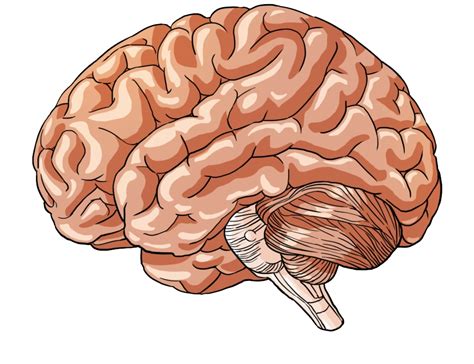
Key Takeaways
- Human cognition is influenced by numerous biases and heuristics that can skew judgment and decision-making.
- Awareness and understanding of these cognitive distortions can lead to improved critical thinking and more rational choices.
- Logical fallacies often undermine arguments, emphasizing the importance of sound reasoning in discourse.
Comprehensive List and Granular Categorization
1. Decision-Making and Judgment Biases
These biases influence how individuals make decisions and evaluate information, often leading to suboptimal outcomes.
- Confirmation Bias: The tendency to search for, interpret, and remember information that confirms one's preexisting beliefs, while giving disproportionately less consideration to alternative possibilities.
- Anchoring Bias: Relying too heavily on the first piece of information encountered (the "anchor") when making decisions, leading to insufficient adjustments from that starting point.
- Availability Heuristic: Overestimating the importance or likelihood of information that is readily available in memory, often because it is recent or emotionally charged.
- Overconfidence Bias: Having excessive confidence in one's own answers to questions, judgments, or decisions, leading to taking greater risks than justified.
- Hindsight Bias: The inclination to see events as having been predictable after they have already occurred, often leading to oversimplified causal narratives.
- Sunk Cost Fallacy: Continuing an endeavor due to previously invested resources (time, money, effort), rather than cutting losses based on current circumstances.
- Status Quo Bias: Preferring things to remain the same by resisting change, even when change might lead to better outcomes.
- Endowment Effect: Valuing an owned object higher than its market value solely because one owns it.
- Loss Aversion: The tendency to prefer avoiding losses over acquiring equivalent gains, making losses more impactful than gains.
- Framing Effect: Drawing different conclusions based on how information is presented, such as in terms of gains or losses.
2. Social and Group Biases
Social biases emerge in contexts involving interactions and group dynamics, affecting perceptions and behaviors towards others.
- In-Group Bias: Favoring members of one's own group over those in out-groups, leading to partiality and discrimination.
- Out-Group Homogeneity Bias: Perceiving members of out-groups as more similar to each other than they actually are, overlooking individual differences.
- Stereotyping: Assigning generalized characteristics to individuals based on their membership in a particular group, often leading to inaccurate assumptions.
- Fundamental Attribution Error: Overemphasizing personal characteristics and underestimating situational factors when explaining others' behaviors.
- Halo Effect: Allowing one positive trait (e.g., attractiveness) to influence the overall perception of a person, often overlooking other attributes.
- Horn Effect: Allowing one negative trait to disproportionately influence the overall perception of a person.
- False Consensus Effect: Overestimating the extent to which others share one's beliefs, opinions, and behaviors.
- Bandwagon Effect: Adopting beliefs or behaviors because many others are doing so, often without critical evaluation.
- Authority Bias: Valuing the opinions and decisions of authority figures more highly, sometimes disregarding contrary evidence.
3. Memory and Recall Biases
These biases affect how information is remembered and recalled, often distorting past events and experiences.
- Selective Memory: Remembering only certain aspects of an event, often those that are more emotionally charged or significant.
- Rosy Retrospection: Recalling past events as more positive than they actually were, often idealizing former experiences.
- Negativity Bias: Giving more weight to negative experiences or information than positive ones, influencing overall perception.
- Misinformation Effect: Incorporating misleading information into one's memory of an event, altering the original memory.
- Source Amnesia: Forgetting the origin of a memory while retaining the content, leading to potential misattribution.
- Recency Bias: Giving more importance to recent events over earlier ones, affecting memory recall and judgments.
- Primacy Effect: Remembering the first items in a series more effectively than those in the middle or end.
4. Attention and Perception Biases
These biases influence what individuals notice and how they interpret information, often leading to distorted perceptions of reality.
- Selective Attention: Focusing on specific stimuli while ignoring others, leading to a biased perception of the environment.
- Change Blindness: Failing to notice significant changes in the environment when they occur gradually or amidst visual clutter.
- Inattentional Blindness: Not noticing unexpected objects or events in plain sight due to lack of attention.
- Observer-Expectancy Effect: Seeing what one expects to see, often influenced by preconceived notions or experiences.
- Pareidolia: Perceiving meaningful patterns, such as faces, in random or ambiguous stimuli.
- Illusory Correlation: Believing there is a relationship between two variables when no such relationship exists.
5. Probability and Risk Biases
These biases affect how individuals assess probabilities and risks, often leading to misjudgments in uncertain situations.
- Gambler’s Fallacy: Believing that past random events influence future probabilities, such as thinking a coin is "due" to land on heads after several tails.
- Base Rate Neglect: Ignoring statistical information (base rates) in favor of specific or anecdotal information when making judgments.
- Hot-Hand Fallacy: Believing that a person who has experienced success in a random event has a higher chance of further success.
- Zero-Risk Bias: Preferring to eliminate small risks completely rather than reducing larger risks by a greater amount.
- Optimism Bias: Underestimating the likelihood of negative outcomes and overestimating the likelihood of positive ones.
- Pessimism Bias: Overestimating the likelihood of negative outcomes, often leading to a more negative outlook.
6. Logical Fallacies
Logical fallacies are errors in reasoning that weaken arguments, often making them seem more persuasive than they actually are.
A. Formal Fallacies
- Straw Man Fallacy: Misrepresenting someone's argument to make it easier to attack or refute.
- False Dilemma: Presenting only two options when more exist, forcing a choice between them.
- Equivocation: Using ambiguous language to mislead or confuse, often by shifting the meaning of a key term.
- Circular Reasoning: Supporting a proposition by repeating it in different words, with no additional evidence.
B. Informal Fallacies
- Ad Hominem Fallacy: Attacking the person making an argument rather than the argument itself.
- Appeal to Emotion: Using emotional responses instead of valid arguments to persuade.
- Slippery Slope: Arguing that a minor action will inevitably lead to significant and often negative consequences without evidence.
- Appeal to Authority: Using the opinion of an authority figure as the sole basis for an argument, disregarding other evidence.
7. Emotional and Motivational Biases
These biases are driven by emotions and personal motivations, influencing how individuals perceive and react to information.
- Wishful Thinking: Believing something is true because it is desirable, rather than based on evidence.
- Self-Serving Bias: Attributing successes to oneself while blaming failures on external factors.
- Dunning-Kruger Effect: Overestimating one's own abilities due to a lack of self-awareness or knowledge.
- Impostor Syndrome: Feeling undeserving of one's achievements, often leading to chronic self-doubt despite evidence of competence.
- Reactance: Doing the opposite of what is requested or demanded, often due to a perceived threat to one's freedom.
- Just-World Hypothesis: Believing that the world is inherently fair, leading to the assumption that people get what they deserve.
8. Language and Communication Biases
These biases affect how language is used and interpreted, often leading to misunderstandings or manipulation.
- Ambiguity Effect: Avoiding options with ambiguous or unclear outcomes, even if they might be equally or more beneficial.
- Semantic Satiation: The phenomenon where repetition causes a word or phrase to lose meaning temporarily.
- Euphemism Treadmill: Using softer language to describe negative concepts, which may eventually become dulled or carry no significant meaning.
- Weasel Words: Using vague or ambiguous language to mislead or obscure the truth.
9. Miscellaneous Biases
Other notable biases that do not fit neatly into the above categories but still significantly impact cognition and behavior.
-
Functional Fixedness: Being unable to see alternative uses for an object beyond its intended purpose.
-
Moral Credential Effect: Feeling licensed to act immorally after performing a moral action, balancing one's self-image.
-
Bias Blind Spot: Failing to recognize one's own biases while easily identifying them in others.
-
Curse of Knowledge: Assuming that others have the same level of understanding as oneself, leading to poor communication.
Detailed Explanations and Examples
Decision-Making and Judgment Biases
Confirmation Bias
Individuals tend to seek out information that confirms their existing beliefs and disregard evidence that contradicts them. For example, a person who believes in a particular political ideology may only follow news outlets that align with their views, thereby reinforcing their beliefs while ignoring opposing perspectives.
Anchoring Bias
When making decisions, people often rely too heavily on the first piece of information they receive. For instance, if a car dealer first offers a high price, subsequent negotiations are likely to revolve around that initial anchor, potentially leading to higher final prices than if the initial anchor was lower.
Availability Heuristic
This bias involves estimating the likelihood of events based on their availability in memory. After seeing news reports about airplane accidents, a person might overestimate the danger of flying, even though statistically, it remains one of the safest modes of transportation.
Social and Group Biases
In-Group Bias
Individuals favor members of their own group over those in out-groups. For example, a manager may give more opportunities to employees who share their alma mater, inadvertently overlooking equally qualified candidates from other institutions.
Halo Effect
The halo effect occurs when the perception of one positive trait influences the perception of other traits. For instance, a physically attractive person might also be perceived as more intelligent or trustworthy, regardless of actual abilities.
Memory and Recall Biases
Hindsight Bias
After an event has occurred, individuals often believe they predicted or expected the outcome, even if there was no basis for such predictions. For example, after a sports team wins, fans might claim they knew the team would win all along, disregarding prior uncertainties.
Misinformation Effect
This occurs when exposure to misleading information alters one's memory of an event. For example, if a witness to a crime is later exposed to incorrect details, their recollection of the event may incorporate these inaccuracies.
Attention and Perception Biases
Selective Attention
Selective attention involves focusing on specific aspects of the environment while ignoring others. For instance, during a conversation at a noisy party, a person might only focus on the voice of the person they are speaking to, disregarding background noise.
Pareidolia
Pareidolia is the tendency to perceive meaningful patterns, such as faces, in random or ambiguous stimuli. A common example is seeing shapes of animals in cloud formations.
Probability and Risk Biases
Gambler’s Fallacy
Individuals believe that past random events affect future probabilities. For example, after flipping a coin and getting heads five times in a row, a person might believe that tails is now "due," despite each flip being independent.
Loss Aversion
Loss aversion refers to the tendency to prefer avoiding losses over acquiring equivalent gains. This can lead to risk-averse behavior, such as holding onto losing investments longer than is rational in hopes of a turnaround.
Logical Fallacies
Ad Hominem Fallacy
This fallacy occurs when someone attacks the person's character or traits instead of engaging with their argument. For example, dismissing a colleague's idea by calling them incompetent, rather than addressing the merits of the idea itself.
Straw Man Fallacy
The straw man fallacy involves misrepresenting someone else's argument to make it easier to attack. For instance, if someone argues for environmental regulations, responding by saying they want to shut down all businesses, thereby distorting their actual position.
Emotional and Motivational Biases
Self-Serving Bias
Individuals attribute their successes to internal factors while blaming failures on external factors. For example, a student might credit a good grade to their intelligence but blame a poor grade on an unfair test.
Dunning-Kruger Effect
This effect describes how individuals with low ability in a domain overestimate their competence, while highly skilled individuals may underestimate their ability. For example, a novice chess player might believe they can easily compete with experts.
Language and Communication Biases
Ambiguity Effect
The ambiguity effect is the tendency to avoid options with uncertain outcomes, favoring those with known probabilities. For example, choosing a guaranteed small reward over a larger but uncertain one.
Weasel Words
Weasel words are vague or ambiguous terms used to mislead or obscure the truth. An example is advertising a product as "helps improve" without specifying the extent or nature of the improvement.
Miscellaneous Biases
Functional Fixedness
Functional fixedness limits creativity by preventing individuals from seeing alternative uses for an object. For instance, only using a paperweight as a weight and not considering it for other purposes like a tool for pressing flowers.
Curse of Knowledge
This bias occurs when someone who knows a lot about a topic struggles to imagine what it's like not to know it, leading to ineffective communication. A teacher might explain a concept in overly complex terms, assuming all students have the same level of understanding.
Conclusion
Understanding the myriad of cognitive biases, heuristics, fallacies, and distortions is crucial for enhancing critical thinking and making more informed decisions. By recognizing these mental shortcuts and errors, individuals can strive to mitigate their influence, leading to more rational and balanced judgments in both personal and professional contexts.
References
Last updated January 18, 2025