
Unlocking Nature's Building Blocks: The Revolutionary World of Biopolymers
Explore how these sustainable materials are transforming industries and paving the way for a greener future.
Key Insights into Biopolymers
- Sustainable Alternatives: Biopolymers are naturally occurring macromolecules derived from renewable biological sources, offering an eco-friendly substitute for traditional petroleum-based plastics.
- Diverse Applications: From advanced medical implants and targeted drug delivery systems to biodegradable packaging and sustainable textiles, biopolymers are revolutionizing numerous industries.
- Unique Structural Precision: Unlike many synthetic polymers, biopolymers exhibit a well-defined and often complex structural organization, crucial for their highly specific biological functions and advanced applications.
Biopolymers are large molecules produced by living organisms or synthesized from biological materials. Composed of repeating monomer units, they are fundamental to life processes and offer a sustainable alternative to conventional synthetic polymers. Their significance has grown exponentially due to escalating global concerns about fossil fuel depletion and environmental pollution. As of today, June 6, 2025, biopolymers are at the forefront of innovation, driving advancements across diverse sectors from healthcare to consumer goods.
Decoding the Essence of Biopolymers
At their core, biopolymers are natural macromolecules built from smaller, repeating units called monomers, which are covalently bonded together to form long chains. This structure is analogous to synthetic polymers, but biopolymers distinguish themselves by their biological origin. They are found in all living organisms, including plants, animals, and microorganisms, performing vital biological functions. Their production from renewable resources, coupled with their inherent biodegradability and biocompatibility, makes them a crucial component in the pursuit of environmental sustainability and a circular economy.
Unlike the often irregular structures of synthetic polymers, biopolymers frequently possess a precise and uniform molecular architecture. This characteristic, known as monodispersity, results from template-directed synthesis within living systems, ensuring that biopolymers of a specific type have consistent sequences, monomer counts, and molecular masses. This structural integrity is critical for their specific functions in biological systems and enhances their applicability in advanced technological fields.
A Spectrum of Types: Classifying Biopolymers
Biopolymers can be broadly categorized based on their monomeric units and structural properties. The three principal classes are polynucleotides, polypeptides, and polysaccharides, each playing distinct roles in nature and offering unique properties for industrial applications.
Polynucleotides: The Genetic Blueprints
These biopolymers are long chains of nucleotide monomers. The most well-known examples are Deoxyribonucleic Acid (DNA) and Ribonucleic Acid (RNA). DNA is the fundamental carrier of genetic information in nearly all living organisms, forming the basis of inherited traits and cellular structures. RNA plays crucial roles in gene expression, protein synthesis, and regulation. Their precise, sequence-defined structures are vital for information storage and transfer processes.
Polypeptides: The Workhorses of Life
Also known as proteins, polypeptides are polymers of amino acids linked together by peptide bonds. They are incredibly diverse in function, ranging from structural support to enzymatic catalysis. Examples include:
- Collagen: The most abundant protein in mammals, providing structural integrity to connective tissues like bones, tendons, and cartilage. Its strength and flexibility make it valuable in medical implants and wound healing.
- Silk Fibroin: Derived from silkworms, known for its exceptional strength and biocompatibility, used in textiles and biomedical applications like sutures.
- Actin and Fibrin: Proteins involved in muscle contraction and blood clotting, respectively.
- Keratin: Found in hair, nails, and skin, providing protective properties.
Polysaccharides: Nature's Structural and Energy Reservoirs
These are linear or branched chains composed of sugar carbohydrates (monosaccharides) linked by glycosidic bonds. They serve as energy storage compounds or structural components in living organisms. Key examples include:
- Cellulose: The most abundant natural biopolymer, forming the primary component of plant cell walls. It is widely used in paper, textiles, and as a precursor for biodegradable plastics.
- Starch: A primary energy storage polysaccharide in plants (e.g., corn, potatoes), utilized in the food industry and for producing bioplastics in packaging and disposable items.
- Alginate: Derived from brown algae, known for its gelling properties, used in food, pharmaceuticals, and biomedical applications.
- Chitin: Found in the exoskeletons of crustaceans and insects, and in fungal cell walls, explored for its potential in water treatment and drug delivery.
- β-glucan: A polysaccharide found in oats, barley, and fungi, offering beneficial health properties and potential in food and cosmetic applications.
Beyond these main categories, other notable biopolymers include natural rubbers (polymers of isoprene), polyhydroxyalkanoates (PHAs) produced by microorganisms, lignin (a complex polymer in plant cell walls), suberin, and cutin.
The Structural Elegance of Biopolymers
The precise structural organization of biopolymers sets them apart from many synthetic counterparts. While synthetic polymers often exhibit polydispersity (a range of molecular weights and sequences), biopolymers, through template-directed biosynthesis in living systems, demonstrate monodispersity, meaning all molecules of a specific biopolymer have nearly identical sequences, monomer counts, and molecular masses. This uniformity is paramount to their biological functions and enables their specific interactions with other biomolecules.
Many biopolymers, particularly proteins, spontaneously fold into intricate three-dimensional structures, including secondary (e.g., alpha-helices, beta-sheets), tertiary, and sometimes quaternary structures. These higher-order structures dictate their biological activity and specific functions. For instance, the specific folding of an enzyme is crucial for its catalytic activity, while the coiled-coil structure of collagen imparts its tensile strength. This inherent structural complexity and self-assembly capability contribute to their unique properties and expanded utility in advanced materials science.
Transformative Applications Across Industries
The unique properties of biopolymers—including their biodegradability, biocompatibility, and renewability—have spurred their widespread adoption across various industries, offering innovative and sustainable solutions.
Innovations in Food and Packaging
Biopolymers are increasingly vital in the food industry, especially for sustainable packaging and food preservation. They are used to create:
- Edible Films and Coatings: Starch, alginate, and protein-based films can encapsulate flavors and nutrients, extend shelf life, and provide a barrier against moisture and oxygen, reducing food waste.
- Biodegradable Packaging: Materials like Polylactic Acid (PLA) and Polyhydroxyalkanoates (PHAs) are transforming food trays, disposable cutlery, transparent cups, and thin films, offering compostable alternatives to conventional plastics. Blown starch pellets, for example, are used for encapsulating fragile goods during shipping.
- Emulsifiers: Utilized to create stable emulsions in various food products.
An example of a biopolymer film offering a sustainable alternative for food packaging.
Advancements in Medical and Pharmaceutical Fields
Their biocompatibility and low toxicity make biopolymers ideal for a wide range of medical and pharmaceutical applications:
- Drug Delivery Systems: Natural biopolymers like alginate, chitosan, and collagen are used as non-toxic, biodegradable carriers for targeted drug delivery, enhancing drug absorption and efficacy.
- Medical Implants and Devices: They are employed in implantable devices, tissue scaffolds, wound healing materials, and biodegradable sutures (e.g., PLA, polyglycolic acid - PGA, silk fibroin). Collagen sponges, for instance, are widely used for burn wound dressings.
- Tissue Engineering and Regenerative Medicine: Biopolymer scaffolds provide a favorable environment for cell proliferation and tissue repair, crucial for regenerating damaged tissues and organs.
- Nanomedicine: Used in the formulation of nanoparticles for diagnostics and therapeutics.
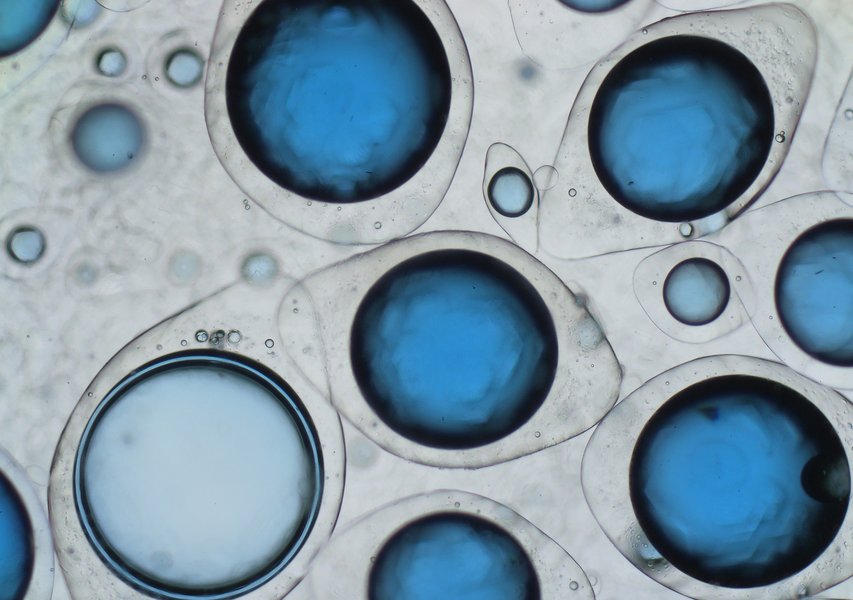
Environmentally friendly microcapsules, showcasing a cutting-edge application of biopolymers.
Sustainable Agriculture and Other Industrial Uses
Biopolymers contribute significantly to sustainable practices in agriculture and various other industrial sectors:
- Agriculture: Used in biopolymer-based hydrogels for water retention, improving soil conditioning, and as biodegradable mulch films.
- Textiles: Proteins like silk and wool, and cellulose, are utilized to produce biodegradable fibers for clothing and other textile applications.
- Oil and Gas Industry: Employed as effective scale inhibitors to maintain oilfield equipment and manage viscosity.
- Water Treatment: Chitin and chitosan derivatives are used in water purification processes.
- Cosmetics and Paints: Biopolymers offer sustainable alternatives to petroleum-based components in these industries.
- 3D Printing: PLA is a widely used bioplastic filament for 3D printing.
- Electronics: Research is exploring biopolymers for components in portable electronic devices and power sources.
Comparative Advantages of Biopolymers
Biopolymers offer compelling advantages over traditional synthetic polymers, which are primarily derived from non-renewable fossil fuels. These benefits are driving their increasing adoption and research investment.
The radar chart above illustrates a comparative analysis of key attributes between biopolymers and synthetic polymers. Biopolymers (represented in blue) score higher on aspects like biodegradability, renewability, and biocompatibility, reflecting their inherent eco-friendly and health-compatible nature. Synthetic polymers (represented in green), while strong in mechanical strength and cost-effectiveness (historically), often lag in environmental sustainability and biodegradability. This visual comparison highlights why biopolymers are becoming the material of choice for a wide array of applications focused on sustainability and health.
Renewability and Sustainability
Biopolymers are derived from abundant, renewable biological sources such as plants, animals, microorganisms, and agricultural waste. Unlike synthetic polymers, which rely on finite fossil fuels, biopolymers can be grown continuously and contribute to carbon sequestration by absorbing CO2 from the atmosphere during their growth. This makes their production inherently more sustainable and eco-friendly, significantly reducing the carbon footprint associated with material production.
Biodegradability and Compostability
A hallmark advantage of biopolymers is their capacity to break down naturally in the environment through microbial action, often into non-toxic byproducts like water, carbon dioxide, and biomass. This biodegradability dramatically reduces persistent plastic waste, microplastic pollution, and landfill burden, offering a solution to the global plastic crisis. Many biopolymers are also compostable, further facilitating their decomposition in industrial composting facilities.
Biocompatibility and Low Toxicity
Many biopolymers are inherently biocompatible, meaning they are well-tolerated by living tissues and do not elicit adverse immune responses or toxic reactions. This makes them exceptionally suitable for medical and pharmaceutical applications, where direct contact with the human body is involved. Their low toxicity also extends to environmental safety, ensuring that their degradation products are harmless.
Environmental Impact and Circular Economy
The production of biopolymers generally has a lower environmental impact, often associated with reduced greenhouse gas emissions compared to petroleum-based plastics. Their ability to be derived from biomass and subsequently degrade naturally supports the principles of a circular economy, where resources are kept in use for as long as possible, extracting the maximum value from them whilst in use, then recovering and regenerating products and materials at the end of each service life.
This video provides a concise guide to eco-friendly biopolymers, highlighting their benefits and applications. It emphasizes their role in promoting environmental sustainability by offering biodegradable alternatives to conventional plastics, thus aligning with the broader goal of reducing ecological footprints.
Understanding Biopolymer Characteristics: A Comprehensive Table
To further elucidate the distinct properties and applications of key biopolymer types, the following table summarizes their primary characteristics, common sources, and typical uses. This overview helps in understanding their versatility and significance in addressing various industrial and environmental challenges.
| Biopolymer Type | Primary Monomer Unit | Common Sources | Key Characteristics | Primary Applications |
|---|---|---|---|---|
| Polynucleotides (DNA, RNA) | Nucleotides | All living organisms | Genetic information storage & transfer, template-directed synthesis, highly ordered structure | Biotechnology, genetic engineering, diagnostic tools |
| Polypeptides (Proteins) | Amino Acids | Animals (Collagen, Silk), Plants, Microorganisms | Diverse functions (structural, enzymatic, transport), complex 3D folding, biocompatible | Drug delivery, tissue engineering, wound healing, medical implants, textiles (silk, wool) |
| Polysaccharides (Cellulose, Starch, Alginate, Chitin) | Sugars (Monosaccharides) | Plants (Cellulose, Starch), Algae (Alginate), Crustaceans/Insects (Chitin) | Energy storage, structural support, gelling properties, film-forming, biodegradable | Food packaging, edible films, textiles, paper, bioplastics, drug delivery, water treatment |
| Polyhydroxyalkanoates (PHAs) | Hydroxyalkanoates | Bacteria, Microorganisms | Biodegradable, thermoplastic, good barrier properties | Biodegradable packaging, medical devices, agricultural films |
| Polylactic Acid (PLA) | Lactic Acid | Corn starch, Sugarcane | Biodegradable, rigid, transparent, thermoplastic | Disposable cutlery, 3D printing, packaging films, medical sutures |
The Interconnected World of Biopolymers: A Mind Map
This mind map visually represents the core concepts and interrelationships within the realm of biopolymers, from their fundamental definition to their wide-ranging applications and inherent advantages. It illustrates how various aspects such as types, structures, and benefits converge to define the significance of these natural materials in modern science and industry.
Frequently Asked Questions About Biopolymers
What is the primary difference between biopolymers and synthetic polymers?
Are all biopolymers biodegradable?
What are the main types of biopolymers?
Why are biopolymers considered sustainable?
What are some common applications of biopolymers?
Conclusion
Biopolymers represent a critical frontier in sustainable materials science, offering a powerful blend of natural origin, advanced functionality, and environmental responsibility. From their intricate molecular structures that dictate precise biological roles to their versatile applications spanning medicine, food, and environmental protection, biopolymers are fundamentally reshaping how we approach material design and consumption. As research continues to overcome challenges such as production costs and mechanical properties, the role of biopolymers in fostering a greener, more sustainable future will only expand, positioning them as indispensable components in the global effort to mitigate pollution and conserve resources.
Recommended Further Exploration
- How do bioplastics compare to traditional plastics in terms of environmental impact?
- What are the latest advancements in biopolymer applications for regenerative medicine and drug delivery?
- What are the primary challenges in the large-scale manufacturing and commercialization of biopolymers?
- What emerging trends are shaping the future of sustainable materials beyond biopolymers?