
The Powerful World of Transformers: Connecting Voltage, Entertainment, and Technology
Discover the fascinating realm of transformers - from electrical devices that power our world to popular entertainment franchises and cutting-edge AI models
Essential Insights About Transformers
- Electrical Powerhouses: Transformers efficiently transfer electricity between circuits through electromagnetic induction, adjusting voltage levels without changing frequency
- Multiple Applications: From power transmission grids to household electronics, transformers enable safe and efficient electrical distribution worldwide
- Beyond Electricity: "Transformers" also refers to both a popular entertainment franchise featuring shape-shifting robots and a revolutionary machine learning library powering modern AI systems
Electrical Transformers: The Backbone of Power Systems
Electrical transformers are essential devices that transfer electrical energy between circuits through electromagnetic induction. Their primary function is to change voltage levels while maintaining the same frequency, making them crucial for power transmission, distribution, and the operation of various electrical devices.
Based on Faraday's law of electromagnetic induction, transformers operate without moving parts, making them reliable and efficient. When alternating current flows through the primary winding, it creates a varying magnetic field that induces voltage in the secondary winding. The ratio of the windings determines whether the transformer increases voltage (step-up) or decreases it (step-down).
Basic Construction of an Electrical Transformer
A typical transformer consists of:
- Primary winding (input coil) that receives the input voltage
- Secondary winding (output coil) that delivers the output voltage
- Core made of magnetic material (typically laminated silicon steel) that enhances the magnetic coupling between the coils
- Insulating materials that prevent electrical contact between components
- Cooling systems in larger transformers (oil, air, or other methods)
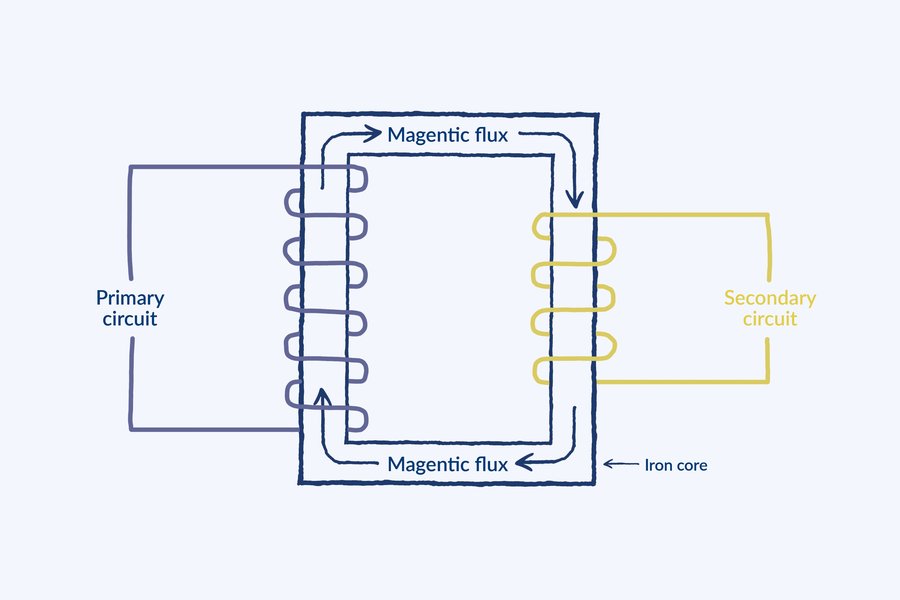
Working Principle of Transformers
The voltage transformation in a transformer follows a simple relationship:
\[ \frac{V_s}{V_p} = \frac{N_s}{N_p} \]
Where:
- Vs = Secondary voltage
- Vp = Primary voltage
- Ns = Number of turns in the secondary winding
- Np = Number of turns in the primary winding
Real-World Efficiency Considerations
While transformers are highly efficient (often 95-99% for large power transformers), they do experience some energy losses:
- Core losses: Hysteresis and eddy current losses in the transformer core
- Copper losses: Resistance in the windings causing heat
- Flux leakage: Not all magnetic flux links both primary and secondary windings
- Magnetostriction: Mechanical vibration in the core causing noise
Types of Electrical Transformers
Transformers come in various types, each designed for specific applications based on different classification criteria:
| Classification Basis | Types | Key Characteristics | Common Applications |
|---|---|---|---|
| Voltage Level | Step-Up Transformers | Increase voltage from primary to secondary winding | Power generation, transmission systems |
| Step-Down Transformers | Decrease voltage from primary to secondary winding | Distribution networks, household appliances | |
| Isolation Transformers | Maintain same voltage level while providing electrical isolation | Medical equipment, sensitive electronics | |
| Phase | Single-Phase Transformers | Designed for single-phase AC power | Residential applications, small electronics |
| Three-Phase Transformers | Three sets of primary and secondary windings | Industrial power systems, large motors | |
| Core Material | Iron Core Transformers | Metal sheets for cores to minimize eddy currents | Power applications, high electromagnetic flux |
| Air Core Transformers | Uses air as core material | High-frequency applications, radio equipment | |
| Construction | Dry-Type Transformers | Uses air as coolant, non-flammable | Indoor applications, commercial buildings |
| Oil-Immersed Transformers | Core and windings immersed in insulating oil | Outdoor substations, high-voltage applications |
Specialty Transformers
Autotransformers
These transformers employ a single continuous winding with taps at various points to achieve different voltage levels. They're more efficient and cost-effective than traditional transformers where electrical isolation is not required, making them suitable for interconnecting power systems with multiple voltage levels.
Instrument Transformers
This category includes current transformers (CT) and voltage transformers (VT), which safely isolate measuring instruments from high voltage or high current circuits. They're crucial for metering and protective relay applications in electrical systems.
Industrial Control Transformers
Designed to handle the momentary current inrush when electromagnetic devices (like contactors, solenoids, and relays) are energized, these transformers ensure stable voltage despite temporary loading conditions.
The radar chart above compares different transformer types across key performance metrics. Oil-immersed transformers excel in efficiency and cooling but have higher maintenance requirements, while dry-type transformers offer better safety profiles and lower maintenance needs at slightly reduced efficiency levels.
Applications of Transformers in the Modern World
Power Generation and Transmission
In power plants, generators typically produce electricity at 11kV to 25kV. Step-up transformers increase this voltage to 220kV, 400kV, or even 765kV for long-distance transmission, minimizing power loss. Substations then use step-down transformers to reduce voltage to distribution levels.
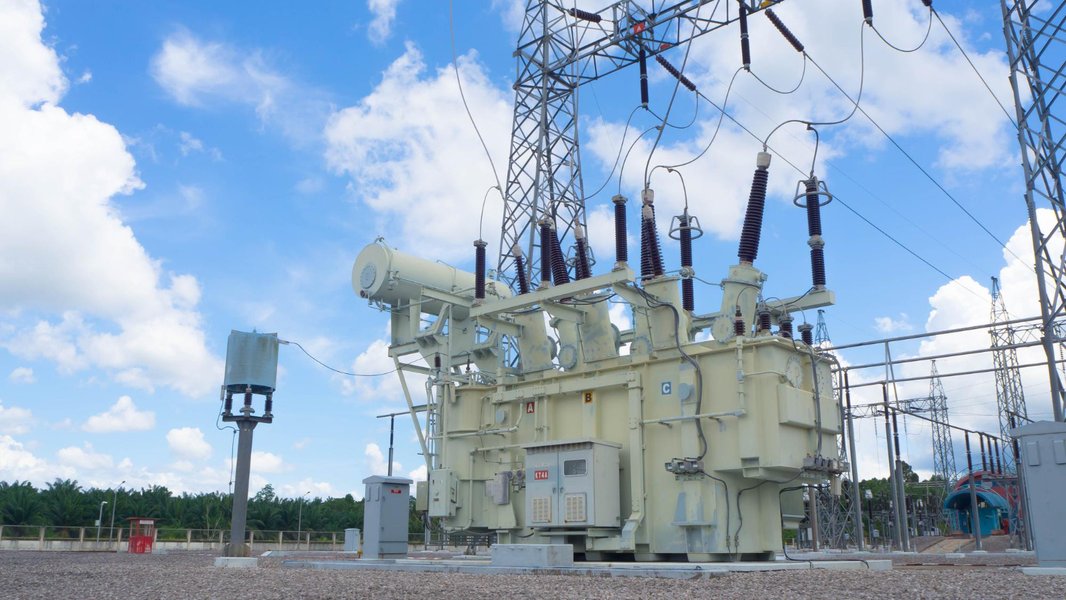
Distribution Networks
Distribution transformers reduce voltage from transmission levels (typically 33kV or 11kV) to utilization levels (400V three-phase or 230V single-phase) for residential, commercial, and small industrial consumers. These transformers are designed for high efficiency even at low loads.
Industrial Applications
Industries use various transformers for specific purposes:
- Arc furnace transformers for steel manufacturing
- Rectifier transformers for electrochemical processes
- Variable voltage transformers (autotransformers) for motor speed control
- Isolation transformers for sensitive equipment protection
Electronic Devices
Smaller transformers are integral to many electronic devices:
- Inverters and UPS systems
- Battery chargers and adapters
- Audio equipment (input/output transformers)
- Medical devices (isolation transformers)
Conceptual Overview of Transformer Types and Applications
The following mindmap illustrates the various types of transformers and their relationships with applications and characteristics:
Beyond Electrical: Other Meanings of "Transformers"
Transformers Media Franchise
The Transformers media franchise, created by Hasbro and Takara Tomy, centers around alien robots that can transform into vehicles, animals, and other objects. Beginning in 1984 with toy lines and an animated series, it has expanded to include:
- Multiple animated TV series (Generation 1, Beast Wars, Animated, Prime, etc.)
- Comic book series published by Marvel, Dreamwave, and IDW
- A live-action film series directed primarily by Michael Bay
- Video games, merchandise, and theme park attractions
Transformers in Machine Learning
In the context of artificial intelligence, "Transformers" refers to a library of pretrained machine learning models developed by Hugging Face. These models employ the transformer architecture, which revolutionized natural language processing through its attention mechanism. The library includes:
- State-of-the-art language models for text generation, summarization, and translation
- Computer vision models for image classification and object detection
- Audio processing models for speech recognition and audio classification
- Multimodal models that can process combinations of text, images, and audio
Transformer Technology: Educational Resources
This comprehensive tutorial video explores the internal components of transformers, detailing their construction and working principles. The video provides excellent visualizations of how electromagnetic induction creates voltage transformation between coils, offering a deeper understanding of transformer technology through practical demonstrations.
Transformer Images: From Distribution to Power Substations
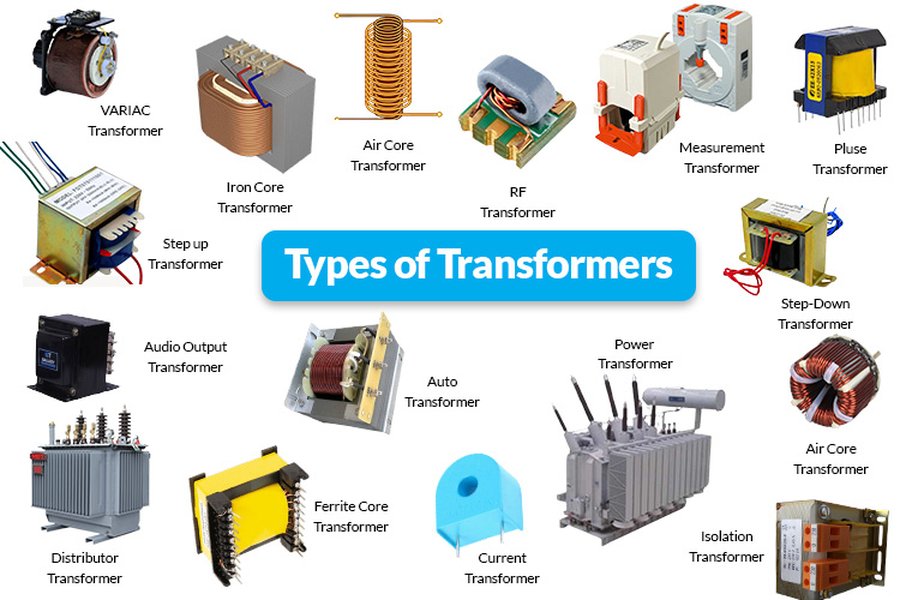
Various transformer types showing different construction methods

Large power transformer for substation applications

Typical pole-mounted distribution transformer
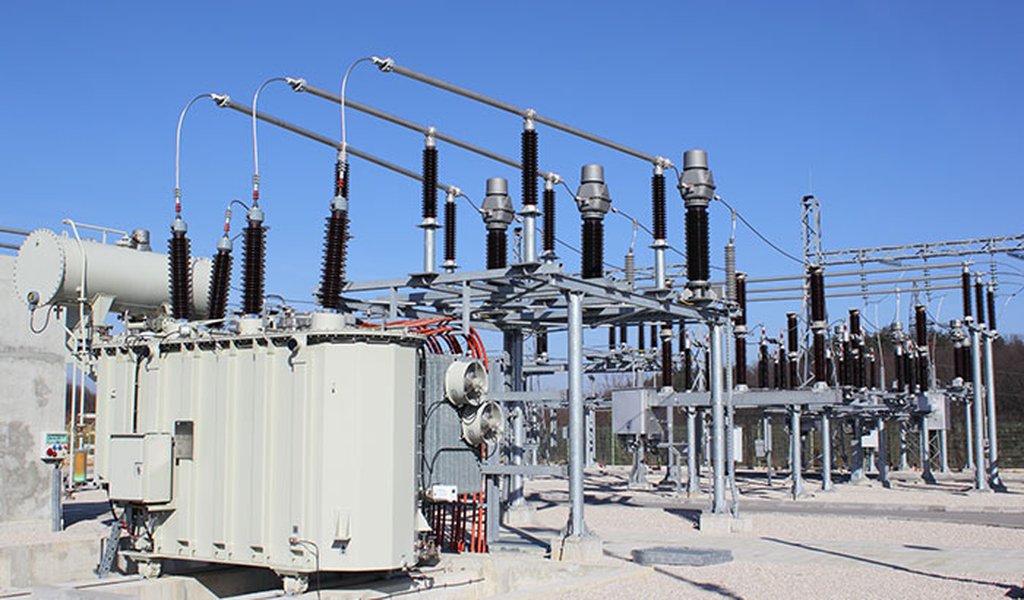
Substation transformer with cooling apparatus
Frequently Asked Questions
References
- Different Types of Transformers and Their Applications - Circuit Digest
- Types of Transformers - MetaPower Solutions
- Different Types of Transformers - Peerless Electronics
- Transformer Types and Configurations - Monolithic Power Systems
- Types of Electric Transformers - IQS Directory
- What Are the Different Types of Transformers? - SNC Manufacturing
- How do electricity transformers work? - Explain that Stuff
- Transformer types - Wikipedia
Recommended Searches
Last updated April 8, 2025