
Navigating Your Healthcare Journey: Understanding Your Fundamental Patient Rights
Empowering you with knowledge about the essential guarantees designed to protect your dignity, autonomy, and access to quality medical care.
The Patient's Bill of Rights is a cornerstone of modern healthcare, establishing a set of fundamental entitlements and protections for individuals interacting with the healthcare system. While specific iterations may vary slightly across different jurisdictions, healthcare institutions, and guiding organizations, a core set of principles remains consistent. These rights are designed to ensure you are treated with respect, are fully informed about your medical care, can actively participate in decisions, and have your privacy safeguarded.
Essential Insights: Your Key Healthcare Entitlements
- Informed Decision-Making: You have the fundamental right to receive comprehensive information about your diagnosis, treatment options (including risks and benefits), and prognosis, enabling you to make informed choices about your care, including the right to refuse treatment.
- Privacy and Confidentiality: Your personal medical information is protected. You have the right to confidential communication with your healthcare providers and control over who can access your health records, largely governed by laws like HIPAA.
- Respectful and Non-Discriminatory Care: You are entitled to receive considerate, respectful care without discrimination based on race, religion, gender, sexual orientation, disability, age, national origin, or source of payment.
A Comprehensive Look at Your Patient Rights
The Patient's Bill of Rights is not a single, universally codified document but rather a collection of rights derived from various legal statutes (like the Affordable Care Act), regulations (such as 42 CFR § 482.13), ethical principles espoused by organizations like the American Medical Association (AMA) and the American Hospital Association (AHA), and institutional policies. These rights empower you to be an active partner in your healthcare journey.
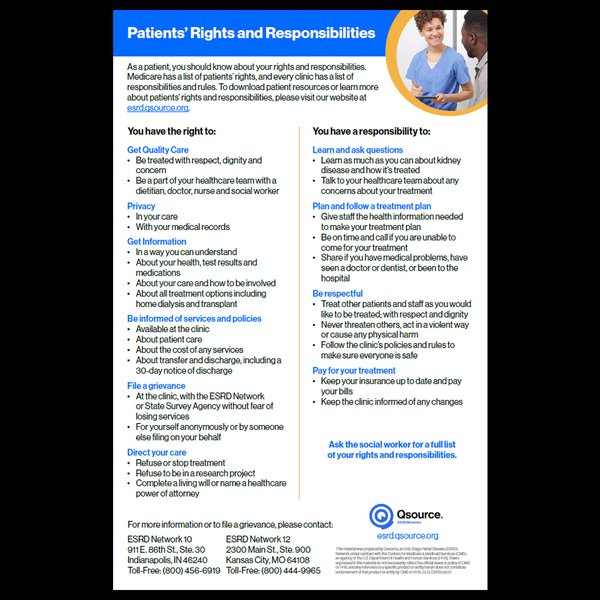
An example poster outlining common patient rights and responsibilities in a healthcare setting.
1. The Right to Information and Informed Consent
Understanding Your Health and Treatment
This is one of the most crucial rights. You are entitled to receive clear, accurate, and easily understandable information regarding:
- Your diagnosis and current medical condition.
- The proposed course of treatment, including its purpose and potential benefits.
- The potential risks, side effects, and complications associated with the proposed treatment.
- Alternative treatments or procedures available, along with their respective risks and benefits.
- The likely prognosis if the proposed treatment is undertaken, or if no treatment is pursued.
- Information about the names, professional status, and experience of the healthcare providers involved in your care.
- Details regarding any proposed clinical trials or research studies you might be asked to participate in.
Giving Your Permission: Informed Consent
Based on the information provided, you have the right to give informed consent before any non-emergency medical procedure or treatment begins. This means you voluntarily agree to the treatment after understanding all relevant aspects. You also have the right to refuse or withdraw consent at any time, even if it goes against medical advice or could lead to adverse health outcomes. If a patient lacks the capacity to make decisions, a designated surrogate or legal guardian may exercise these rights.
2. The Right to Privacy and Confidentiality
Protecting Your Personal Health Information
Your medical information is private. Healthcare providers are obligated to protect the confidentiality of your personal and medical details. This right is strongly supported by federal laws such as the Health Insurance Portability and Accountability Act (HIPAA) in the United States. This includes:
- The right to private conversations with your healthcare providers.
- The assurance that your medical records are kept secure and are not disclosed without your authorization, except as permitted or required by law.
- The right to be informed about how your health information may be used and shared.

Visual summary of patient rights under HIPAA, emphasizing privacy and access to information.
3. The Right to Access Medical Records
Reviewing and Obtaining Your Health Information
You generally have the right to inspect and obtain a copy of your medical records, including billing records, usually within a reasonable timeframe and potentially for a reasonable fee to cover copying costs. You also have the right to request amendments or corrections to your medical records if you believe they contain inaccurate or incomplete information.
4. The Right to Respectful and Non-Discriminatory Care
Dignity and Equality in Healthcare
Every patient has the right to be treated with courtesy, respect, dignity, and consideration for their personal values, beliefs, and cultural background. Care must be provided without discrimination based on:
- Race or ethnicity
- Color
- Religion or creed
- Sex or gender identity
- Sexual orientation
- National origin or ancestry
- Disability (physical or mental)
- Age
- Source of payment or financial status
This includes the right to humane care and protection from abuse, neglect, or exploitation.
5. The Right to Access Emergency Services and Choice of Providers/Plans
Timely Care and Provider Selection
You have the right to access emergency medical services when and where the need arises, without unnecessary delay or regard for your ability to pay. Hospitals with emergency departments are generally obligated to provide a medical screening examination and stabilizing treatment for emergency medical conditions. Furthermore, patients often have the right to choose their healthcare providers and health insurance plans from available options, and to seek a second opinion if they desire.
6. The Right to Participate in Treatment Decisions and Refuse Treatment
Your Voice in Your Healthcare Plan
You are entitled to participate actively in the development and implementation of your treatment plan. This includes discussions about your care, making choices that align with your preferences, and being involved in decisions about end-of-life care. As mentioned under informed consent, this right also encompasses the crucial ability to refuse any recommended treatment, test, or procedure, even if it is life-sustaining, as supported by principles like the Patient Self-Determination Act (PSDA) of 1990.
7. The Right to a Safe and Considerate Environment
Safety and Comfort During Care
Healthcare facilities must provide a safe environment for patients, free from hazards, abuse, or neglect. This includes appropriate safety measures, clean facilities, and care delivered in a manner that is considerate of your personal needs and preferences.
8. The Right to Complain, Appeal, and Seek Advocacy
Voicing Concerns and Getting Support
If you have concerns or are dissatisfied with your care, you have the right to voice grievances or complaints without fear of retribution or compromised access to care. Healthcare facilities should have a clear process for addressing patient complaints fairly and promptly. You also have the right to appeal decisions regarding your care or coverage. Furthermore, you can access patient advocacy services or an ombudsman, particularly in settings like hospitals or mental health facilities, to help navigate the system and ensure your rights are upheld.
Visualizing Patient Rights: Focus Areas
The following chart offers a conceptual representation of the typical emphasis placed on different categories of patient rights by various entities within the healthcare ecosystem. It's important to note this is an illustrative overview rather than a precise data-driven comparison, as the actual focus can vary.
This chart highlights how different frameworks might emphasize various aspects of patient rights, all contributing to a comprehensive safety net for patients. For instance, federal laws like HIPAA place a strong emphasis on privacy, while ethical guidelines from the AMA may particularly stress informed consent and patient autonomy.
Exploring the Landscape of Patient Rights: A Mindmap
This mindmap provides a visual overview of the interconnected categories that form the Patient's Bill of Rights, branching from the central concept to key areas and specific entitlements. It helps illustrate how these rights work together to ensure comprehensive patient protection and empowerment.
This mindmap illustrates the breadth of protections afforded to patients, emphasizing that these rights are not isolated tenets but part of a holistic approach to patient-centered care. Each branch represents a fundamental area where patients are empowered and protected throughout their healthcare experience.
9. The Right to Financial Transparency
Understanding Healthcare Costs
Patients have the right to receive information about the costs associated with their medical care before treatment, where possible. This includes the right to an itemized bill explaining all charges. Transparency in billing and costs helps patients make informed financial decisions related to their healthcare.
10. The Right to Continuity of Care
Coordinated and Uninterrupted Treatment
You have the right to expect coordinated care and appropriate discharge planning. This means that when you are moving between healthcare settings or providers, or when you are discharged from a hospital, there should be a plan in place to ensure your care continues smoothly and without interruption.
11. The Right to Advance Directives
Planning for Future Healthcare Decisions
You have the right to create advance directives, such as a living will or a durable power of attorney for healthcare. These legal documents allow you to state your preferences for medical treatment in the event you become unable to make decisions for yourself. Healthcare providers are generally required to honor these directives.
12. The Right to Visitors and Communication
Staying Connected
Subject to reasonable clinical restrictions (e.g., for safety or therapeutic reasons), patients generally have the right to receive visitors whom they designate, including a spouse, domestic partner (including a same-sex domestic partner), other family members, or friends. They also have the right to communicate with people outside the healthcare facility.
13. The Right to Freedom from Unnecessary Restraints or Seclusion
Ensuring Safety with Least Restrictive Means
Patients have the right to be free from physical or chemical restraints or seclusion that are not medically necessary or are used as a means of coercion, discipline, convenience, or retaliation by staff. Restraints should only be used as a last resort to ensure the immediate physical safety of the patient, staff, or others, and must be discontinued at the earliest possible time.
Key Patient Rights: A Summary Table
This table summarizes some of the most critical patient rights and their significance in ensuring patient-centered care. Understanding these rights empowers you to advocate for yourself and your loved ones within the healthcare system.
| Right | Description | Importance |
|---|---|---|
| Information Disclosure | Receive complete, understandable information about diagnosis, treatment, prognosis, risks, and benefits. | Enables informed decision-making and active participation in care. |
| Informed Consent | Give voluntary agreement to procedures/treatments after being fully informed; right to refuse. | Upholds patient autonomy and self-determination. |
| Privacy & Confidentiality (HIPAA) | Medical information kept private and secure; control over disclosure. | Protects sensitive personal data and builds trust. |
| Access to Medical Records | Review and obtain copies of medical records; request amendments. | Promotes transparency and allows patients to be informed partners. |
| Respect & Non-Discrimination | Treated with dignity, respect, free from discrimination. | Ensures equitable and humane care for all individuals. |
| Access to Emergency Services | Timely access to emergency care regardless of ability to pay. | Guarantees critical care in urgent situations. |
| Participation in Treatment Decisions | Be involved in care planning and decision-making. | Fosters collaboration and care aligned with patient preferences. |
| Complain & Appeal | Voice complaints about care and appeal decisions without fear of reprisal. | Provides a mechanism for redress and quality improvement. |
| Safe Environment | Receive care in a setting free from abuse, neglect, or hazards. | Ensures patient safety and well-being during treatment. |
| Financial Transparency | Informed about treatment costs and billing; receive itemized bills. | Allows for informed financial planning related to healthcare. |
Understanding Patient Rights in Practice
The video below provides a simple explanation of what the Patient's Bill of Rights entails, focusing on key aspects that are crucial for every patient to understand. It emphasizes the practical application of these rights in everyday healthcare encounters, helping to demystify the protections available to you.
This video explains that the Patient's Bill of Rights is often used for accreditation purposes by organizations like The Joint Commission and is mandated by entities such as the Centers for Medicare & Medicaid Services (CMS). It underscores the importance of these rights in ensuring standardized, quality care across healthcare facilities. Understanding these rights helps patients navigate the healthcare system more confidently and ensures they receive the care they are entitled to.
Frequently Asked Questions (FAQ)
What is the main purpose of a Patient's Bill of Rights?
The main purpose is to protect patients by ensuring they receive respectful, ethical, and high-quality healthcare. It empowers patients by informing them of their entitlements, such as the right to informed consent, privacy, access to their medical records, and freedom from discrimination, fostering a more collaborative patient-provider relationship.
Is the Patient's Bill of Rights a single law?
No, it's not a single, universally codified law. Instead, it's a compilation of rights derived from various sources, including federal laws (like HIPAA and the Affordable Care Act), state laws, healthcare facility policies, and ethical guidelines from professional organizations (like the AMA and AHA). Different states and institutions may have their own specific versions.
What does "informed consent" truly mean?
Informed consent means that a healthcare provider must give you all the necessary information about a proposed medical treatment, procedure, or test—including its benefits, risks, alternatives, and potential outcomes—in a way you can understand. You must then voluntarily agree to it before it is performed. You also have the right to refuse or withdraw consent at any time.
How are my medical records kept private?
Your medical records are protected primarily by the Health Insurance Portability and Accountability Act (HIPAA) in the U.S. This law sets national standards for the protection of individually identifiable health information. Healthcare providers and health plans must implement safeguards to protect your information and can only disclose it for treatment, payment, healthcare operations, or with your explicit authorization, with some exceptions for public health and law enforcement purposes.
What can I do if I believe my patient rights have been violated?
If you believe your rights have been violated, you can first try to resolve the issue with your healthcare provider or the facility's patient advocate or ombudsman. You can also file a formal complaint with the healthcare facility. For HIPAA violations, you can file a complaint with the U.S. Department of Health and Human Services Office for Civil Rights (OCR). Depending on the nature of the violation and your state's laws, you may also contact your state's Department of Health, medical licensing board, or seek legal counsel.
Recommended Next Steps
To deepen your understanding of patient rights and related healthcare topics, consider exploring these queries:
- How does HIPAA protect my medical information specifically?
- What are patient responsibilities in conjunction with their rights?
- How do I create an advance healthcare directive?
- What is the role of a patient advocate in a hospital setting?
References
This information was synthesized from various authoritative sources on patient rights. For further reading, please consult the following:
Last updated May 15, 2025