
Comprehensive Guide to Python Programming
Unlocking the Power and Versatility of Python in Modern Development
Key Takeaways
- Versatile Programming Language: Python supports multiple paradigms, making it suitable for various applications from web development to machine learning.
- Extensive Libraries and Frameworks: The rich ecosystem of libraries like NumPy, Pandas, Django, and TensorFlow enhances Python's functionality and ease of use.
- Strong Community and Continuous Development: Python benefits from a large, active community and regular updates, ensuring its relevance and advancement in the tech industry.
Introduction to Python
Python is a high-level, general-purpose programming language renowned for its simplicity, readability, and versatility. Created by Guido van Rossum and first released in 1991, Python has evolved into one of the most popular programming languages in the world. Its design philosophy emphasizes code readability and ease of use, making it an excellent choice for both beginners and experienced developers.
History and Evolution
Python was conceived as a successor to the ABC programming language, with the goal of addressing some of its limitations while retaining its strengths. Over the years, Python has undergone significant enhancements, leading to the current stable release of Python 3.13.2 as of February 2025. The language continues to evolve, with the upcoming Python 3.14.0 alpha 4 introducing experimental features like a just-in-time compiler, further boosting its performance and capabilities.
Key Features of Python
Multi-Paradigm Support
Python supports various programming paradigms, including structured, object-oriented, and functional programming. This flexibility allows developers to choose the most suitable approach for their projects, enhancing productivity and code maintainability.
Dynamic Typing and Interpreted Nature
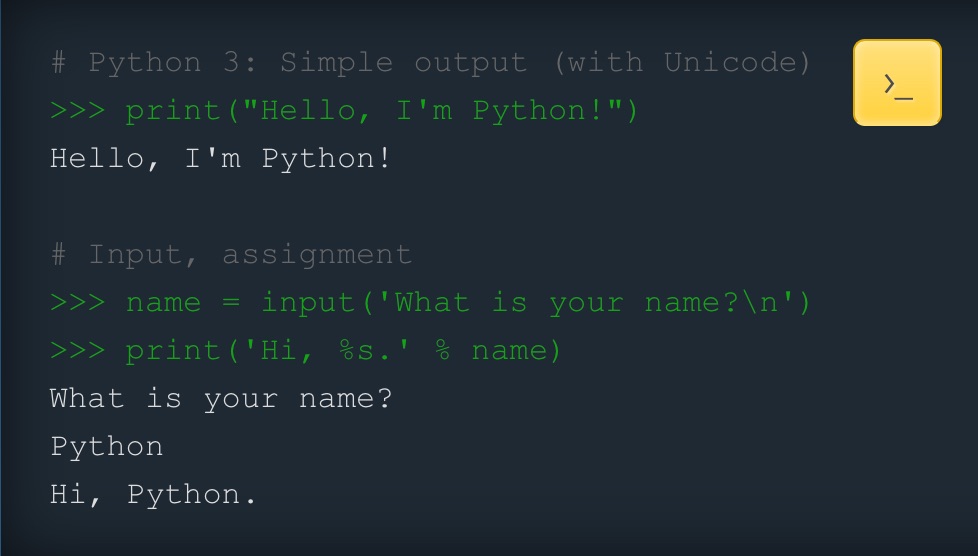
As a dynamically typed language, Python does not require explicit type declarations for variables. This feature, combined with its interpreted nature—where code is executed line by line at runtime—facilitates rapid development and debugging. Developers can prototype and iterate quickly without the overhead of compiling code.
Readable and Clean Syntax
One of Python's standout features is its emphasis on readability. The language uses whitespace indentation to define code blocks, which enforces a clean and consistent coding style. This design choice not only makes the codebase easier to read and maintain but also reduces the likelihood of syntax-related errors.
Extensive Standard Library
Python boasts a comprehensive standard library that offers modules and functions for a wide range of tasks, from file I/O and system calls to internet protocols and data serialization. This "batteries included" philosophy enables developers to perform complex operations without relying heavily on external libraries.
Applications of Python
Web Development
Python is a formidable tool in web development, powering both the server-side of web applications and backend systems. Frameworks like Django and Flask provide robust structures for building scalable and maintainable web applications. Django, known for its "batteries included" approach, offers built-in features like authentication, ORM, and admin interfaces, while Flask provides a lightweight alternative for more flexible development.
Data Science and Machine Learning
Python has become the language of choice for data scientists and machine learning practitioners. Libraries such as NumPy and Pandas facilitate data manipulation and analysis, while TensorFlow and PyTorch empower the development of complex machine learning models. Python's ability to handle large datasets and perform intricate computations efficiently makes it indispensable in the realm of data science.
Automation and Scripting
The simplicity and readability of Python make it ideal for automating repetitive tasks and system administration. Scripts written in Python can automate file management, data processing, and software testing, enhancing productivity and reducing the potential for human error.
Scientific Computing
In scientific research and engineering, Python serves as a powerful tool for numerical computations and simulations. Libraries like SciPy provide modules for optimization, integration, and differential equations, facilitating complex scientific calculations and experiments.
Software Development
Python is also utilized in developing desktop applications, games, and mobile applications. Its versatility allows developers to create a wide range of software solutions, from simple utilities to complex, feature-rich applications.
Popular Python Libraries and Frameworks
| Library/Framework | Purpose | Key Features |
|---|---|---|
| NumPy | Numerical Computing | Efficient array operations, mathematical functions, linear algebra |
| Pandas | Data Manipulation and Analysis | Data structures like DataFrames, data cleaning, manipulation |
| Django | Web Development | ORM, authentication, admin interface, scalability |
| Flask | Web Development | Lightweight, flexible, easy to integrate extensions |
| TensorFlow | Machine Learning | Deep learning models, neural networks, scalable computation |
| PyTorch | Machine Learning | Dynamic computation graph, deep learning models, research-friendly |
| Matplotlib | Data Visualization | Plotting graphs, customizable visualizations, integration with Pandas |
| OpenCV-Python | Image Processing | Computer vision tasks, image manipulation, real-time processing |
| Keras | Deep Learning | High-level neural networks API, user-friendly, compatible with TensorFlow |
Advantages of Using Python
Ease of Learning and Use
Python's straightforward syntax and readability make it an ideal language for beginners. The simplicity of writing and understanding Python code allows new programmers to grasp fundamental programming concepts quickly, while experienced developers appreciate the language's efficiency in expressing complex ideas succinctly.
Extensive Standard Library and Third-Party Packages
The extensive standard library provides modules for various tasks out of the box, reducing the need for external dependencies. Additionally, the Python Package Index (PyPI) hosts thousands of third-party packages, enabling developers to extend Python's functionality and integrate it with other technologies seamlessly.
Cross-Platform Compatibility
Python is a cross-platform language, meaning that Python programs can run on various operating systems, including Windows, macOS, and Linux, without requiring significant modifications. This compatibility enhances the portability of Python applications across different environments.
Large and Active Community
Python boasts a vast and active community of developers and contributors. This community support translates into comprehensive documentation, numerous tutorials, and a wealth of resources for troubleshooting and learning. The collaborative nature of the community fosters continuous improvement and innovation within the Python ecosystem.
Rapid Development and Prototyping
The combination of Python's simplicity, dynamic typing, and interpreted nature allows for rapid development and prototyping. Developers can iterate quickly, testing and refining their code without the delays associated with compiled languages, thereby accelerating the development lifecycle.
Recent Developments and Future Outlook
Python 3.13.2 and Beyond
As of February 2025, Python 3.13.2 is the latest stable release, introducing several performance improvements and new features that enhance the language's capabilities. The ongoing development community is actively working on Python 3.14.0 alpha 4, which includes experimental features such as a just-in-time compiler (JIT) aimed at further boosting execution speed and efficiency.
Emerging Trends
Python continues to adapt to the evolving technological landscape. Emerging trends include the integration of Python with emerging fields like quantum computing, enhanced support for asynchronous programming, and the development of more sophisticated machine learning frameworks. These advancements ensure that Python remains at the forefront of programming languages suited for a wide array of applications.
Community and Ecosystem Growth
The Python community remains a driving force behind the language's growth and sustainability. Initiatives focused on improving accessibility, diversity, and education within the community contribute to its robust ecosystem. The continuous influx of new libraries and tools, along with comprehensive support for existing frameworks, solidifies Python's position as a staple in the programming world.
Conclusion
Python's enduring popularity is a testament to its versatility, ease of use, and the strength of its community. Whether you're delving into web development, data science, machine learning, or automation, Python offers the tools and frameworks necessary to bring your projects to life efficiently and effectively. Its clear syntax and expansive ecosystem make Python not just a programming language, but a powerful ally in the ever-evolving landscape of technology.
References
 aws.amazon.com
Last updated February 16, 2025