
Exploring Novel Computational Methods in Psychiatric Data Analysis
Delving into interdisciplinary computational approaches for psychiatry
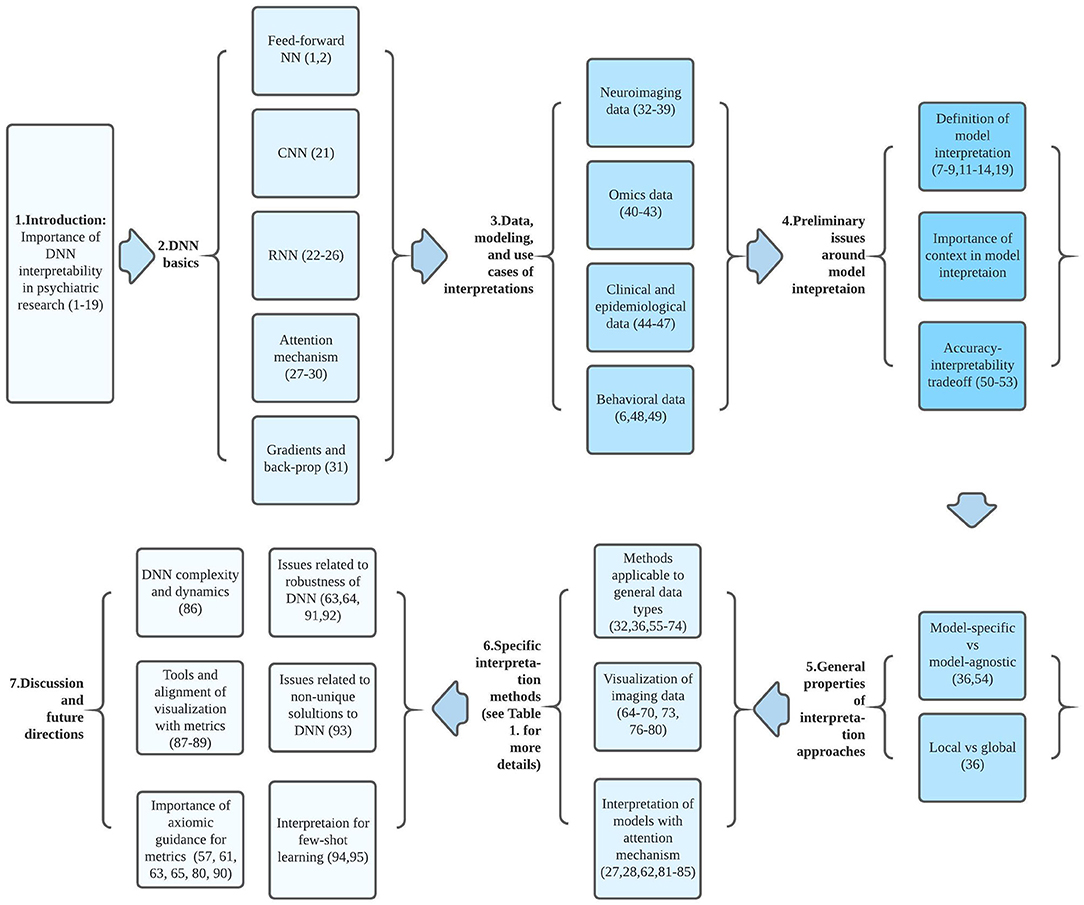
Key Highlights
- Advanced Machine Learning & AI: Employing algorithms from neural networks to reinforcement learning for data-driven psychiatric insights.
- Network Science & Computational Modeling: Integrating neuroimaging with network theory and dynamic models to understand complex brain dynamics.
- Bayesian & Dynamical Methods: Utilizing probabilistic and time-series models to handle uncertainty and model the interactions underpinning psychiatric conditions.
Introduction to Computational Psychiatry
Computational psychiatry is an emerging interdisciplinary field that leverages advanced computational methods to analyze psychiatric data. These methods unify concepts from machine learning, network science, Bayesian inference, reinforcement learning, and dynamical systems to gain a deeper understanding of psychiatric disorders. By integrating large-scale data analysis with theoretical models, researchers can unravel the complexities of mental disorders, improve diagnostic accuracy, and design tailored therapeutic interventions.
Interdisciplinary Foundations
This field synthesizes theories and techniques from psychology, neuroscience, computer science, and mathematics. By adopting these integrated approaches, computational psychiatry offers a framework for understanding brain function, cognitive processes, and behavioral outcomes in psychiatric patients. These computational models not only analyze static data but also capture progressively complex patterns in longitudinal data, offering insights into the dynamics of mental health conditions.
Core Computational Methods
Data-Driven and Machine Learning Approaches
Algorithmic Classification
Machine learning algorithms have become essential tools in analyzing psychiatric data. These methods include support vector machines, decision trees, neural networks, and deep learning architectures. They are utilized to classify patient data by identifying subtle patterns and correlations that traditional methods might miss. In a clinical setting, these techniques facilitate earlier diagnoses and personalized treatment plans.
Latent Class Analysis and Clustering
Data-driven clustering techniques, such as latent class analysis, are applied to identify subgroups within heterogeneous clinical populations. By stratifying patients based on symptom patterns and biomarker profiles, these methods help generate homogeneous subgroups. This stratification is crucial for precision psychiatry, as it allows for the development of targeted intervention strategies tailored to specific subtypes of psychiatric disorders.
Network Science and Neuroimaging Integration
Graph Theoretical Approaches
Network science methodologies apply graph theory to model the interconnections among various brain regions. Advanced neuroimaging techniques, such as functional MRI, are used to map these connections, providing valuable insights into the structural and functional aspects of neural circuits. This approach helps in identifying circuit dysfunctions associated with psychiatric disorders by revealing abnormal connectivity patterns.
Biophysically Realistic Neural Network Models
These models simulate brain functions to understand cognitive patterns underlying psychiatric conditions. By constructing neural network models that mimic the biophysical properties of the brain, researchers can explore how neural circuit disruptions manifest as specific psychopathologies. This method is instrumental in advancing our understanding of mood disorders, schizophrenia, and other mental illnesses.
Probabilistic and Dynamical Modeling
Bayesian Inference
Bayesian methods offer a powerful framework for integrating prior knowledge with observed data to make probabilistic inferences about psychiatric phenomena. Bayesian inference is particularly useful in modeling decision-making processes and cognitive biases seen in various mental disorders. For instance, it has been used to study the "Jumping-to-Conclusions" bias in schizophrenia, where individuals make hasty decisions based on insufficient data. This probabilistic approach helps to quantify uncertainty and refine diagnostic processes.
Dynamical Systems and Time-Series Analysis
Dynamical systems methodologies focus on analyzing how various psychiatric variables evolve over time. By modeling time-series data, researchers can gain insights into the interaction between multiple physiological and psychological parameters. Such approaches are essential in understanding the temporal dynamics of neural interactions, offering both qualitative and quantitative perspectives on mental health fluctuations. These models can also assist in identifying potential critical transitions leading to pathological states.
Reinforcement Learning and Decision-Making Models
Algorithmic Reinforcement Learning
Reinforcement learning techniques are applied to model how individuals learn from and adapt to their environment through feedback mechanisms. This method is valuable for understanding disorders related to impaired reward processing, such as depression and addictive behaviors. By simulating how patients evaluate rewards and punishments, these models provide insights into aberrant decision-making processes. Algorithmic reinforcement learning models help in designing adaptive treatment strategies that evolve with patient responses.
Dimensionality Reduction Techniques
Multidimensional Scaling
Dealing with high-dimensional psychiatric data is a significant challenge. Techniques such as dimensionality reduction and multidimensional scaling help in distilling complex datasets into more tractable forms. By reducing the number of variables while preserving the underlying structure, these methods enable researchers to identify latent factors that contribute to mental disorders. This process not only simplifies data interpretation but also facilitates the discovery of novel predictive markers.
Summary of Methods and Their Applications
The diverse computational methods applied in psychiatric data analysis are transforming how mental health disorders are understood and treated. From machine learning algorithms that facilitate precision diagnostics to network science approaches that reveal intricate connectivity patterns, each method offers distinct advantages in capturing the multifaceted nature of psychiatric conditions. Moreover, probabilistic models such as Bayesian inference provide a robust framework for managing uncertainty, while reinforcement learning models offer insights into behavioral adaptations. Together, these methods pave the way for more accurate, personalized, and effective strategies in the management of mental health disorders.
| Method | Applications | Key Advantages |
|---|---|---|
| Machine Learning Algorithms | Classification, diagnostic predictions, treatment personalization | Handles complex, high-dimensional data; uncovers hidden patterns |
| Latent Class Analysis & Clustering | Patient stratification, subgroup identification | Creates homogeneous subgroups for targeted therapies |
| Graph Theoretical Network Science | Mapping structural and functional brain connectivity | Reveals circuit dysfunctions and connectivity anomalies |
| Biophysically Realistic Neural Models | Simulating neural dynamics in mental disorders | Models cognitive patterns and brain functionality accurately |
| Bayesian Inference | Decision-making analysis, probabilistic modeling of symptoms | Quantifies uncertainty, integrates prior knowledge with new data |
| Dynamical Systems | Time-series analysis of neural and behavioral dynamics | Captures temporal evolution and interactions among variables |
| Reinforcement Learning | Modeling learning processes, reward-based behavioral analysis | Simulates adaptive learning mechanisms for personalized interventions |
| Dimensionality Reduction | Simplifying high-dimensional datasets | Facilitates identification of latent factors and predictive markers |
Future Perspectives and Clinical Applications
Precision Psychiatry
One of the most promising frontiers in computational psychiatry is precision psychiatry. This approach uses patient-specific data to tailor diagnostic and therapeutic strategies. By integrating multiple data sources — such as neuroimaging, genetic profiles, behavioral assessments, and sensor data — computational models can deliver predictions with meaningful clinical implications. Such precision approaches not only increase the likelihood of treatment success but also reduce the trial-and-error process often associated with psychiatric care.
Emerging Data Sources
Recent advancements have led to the incorporation of unconventional data types, such as eye-tracking metrics, passive sensor outputs, and digital phenotyping. These novel data sources are integrated with traditional clinical data through sophisticated algorithms. The result is a more comprehensive picture of an individual's mental health, facilitating early detection and intervention. As these techniques evolve, the potential to predict symptom onset or relapse increases, thereby improving preventive strategies in mental health care.
Bridging Basic Research and Clinical Practice
The synthesis of computational methods and clinical data is a critical step toward translating research findings into practice. By harnessing the capabilities of advanced analytical techniques, researchers can develop formal clinical models that are adaptable to individual variability. This has important implications for monitoring treatment effects, optimizing drug dosages, and even designing biofeedback systems that adjust in real time based on patient responses. The interdisciplinary collaboration between computational scientists, clinicians, and neuroscientists ensures that findings in the lab are rapidly and effectively translated to real-world settings.
References
-
PMC Article on Computational Psychiatry - NIH
- NIMH Computational Psychiatry Program - NIMH
-
PMC Article on Data-Driven Approaches - PMC
- Oxford Academic Psychiatry Supplement - OUP
- ClinicalKey Journal Article - Elsevier
Recommended Further Exploration

Last updated March 6, 2025