
Computational Thinking in the Philippines
Exploring innovative educational approaches and success stories
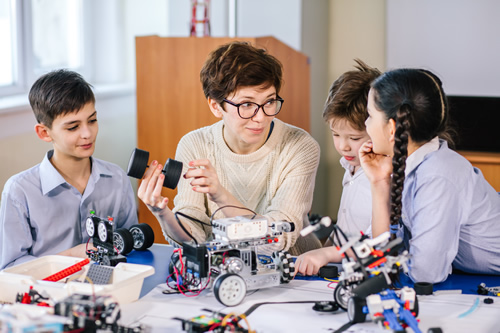
Key Highlights
- Innovative Curriculum Integration: Computational thinking is increasingly embedded in the K-12 curriculum, enhancing problem-solving and logical reasoning skills.
- Student Success Stories: Filipino students have achieved international recognition in competitions involving robotics and computational design challenges.
- Interdisciplinary Applications: The development of computational thinking supports a broad range of disciplines, including mathematics, science, and technology education.
Understanding Computational Thinking
Computational thinking is a problem-solving methodology that involves breaking down complex problems into manageable parts, identifying recurring patterns, and developing algorithmic solutions. This approach is not limited to computer science alone; it is a valuable skill that complements various academic disciplines, including mathematics and the sciences. In the context of the Philippines, computational thinking is increasingly recognized as a vital skill for the digital age.
Core Elements of Computational Thinking
The core components of computational thinking include:
- Decomposition: Breaking down larger problems into smaller, manageable segments.
- Pattern Recognition: Identifying similarities, trends, or repeated elements that can streamline problem-solving.
- Abstraction: Focusing on the relevant information only, separating the essential from the non-essential details.
- Algorithm Design: Creating clear, step-by-step solutions to problems that can often be automated or implemented through programming.
Integration of Computational Thinking in the Philippines
In recent years, there has been a concerted effort to infuse computational thinking into the educational fabric of the Philippines. Several initiatives, programs, and competitions have emerged to elevate its status as a core competency. Notably, various educational institutions and organizations are steadily integrating computational thinking into their curricula, offering opportunities for students to engage with technology in innovative ways.
Educational Initiatives and Curriculum Development
Computational thinking has been integrated at multiple levels of education in the Philippines. Programs developed by organizations like the Asian MathSci League, Inc. (AMSLI) provide competitive platforms that foster algorithmic and critical thinking skills among students. These platforms are particularly effective in nurturing creative approaches to problem-solving.
Furthermore, initiatives such as the Computational Thinking Curriculum Development event organized by CSTA Philippines are instrumental in helping educators design K-12 curricula that seamlessly incorporate computational thinking components. This multidimensional approach not only enriches traditional subjects like mathematics and science but also bolsters students’ abilities to engage with the modern technological landscape.
Robotics and Design Thinking Competitions
One of the most visible manifestations of computational thinking in the Philippines is its application in robotics and design competitions. Filipino students have consistently performed well on international stages, where competitions such as the Design Thinking with Robotics and Computational Thinking (DrCT) International Competition showcase the aptitude and creativity developed through rigorous computational training.
For instance, students like Nathan Batnag have achieved international acclaim by winning medals in these competitions. These achievements highlight how computational thinking not only fosters individual student growth but also elevates national pride in the country’s educational standards.
Computational Thinking Across Diverse Disciplines
Beyond its role in computer science or robotics, computational thinking has been recognized for its interdisciplinary benefits. In the Philippines, this approach has been applied in academic research, particularly in fields such as physics, where the systematic breakdown of problems aids in modeling complex systems. Additionally, computational thinking supports mathematical problem-solving by offering strategies that include pattern recognition and stepwise analysis, thereby enhancing students’ capacity to tackle challenging mathematical problems.
Case Study: Robotics Competitions and Computational Thinking Success
Robotics competitions serve as a microcosm of the broader advantages of computational thinking in educational settings. Filipino students participating in these competitions engage in activities that require both creative design and rigorous algorithmic processes. The success stories from these international events underscore the efficacy of combining theoretical knowledge with practical application.
An illustrative case involves participants from Ateneo de Manila Senior High School, where students’ blend of robotics programming and computational thinking resulted in winning awards such as the bronze medal in global competitions. This case exemplifies how competitive platforms can drive interest and excellence in computational thinking and foster a culture of innovation among young learners.
Table: Key Aspects of Computational Thinking Initiatives
| Aspect | Description | Example/Initiative |
|---|---|---|
| Curriculum Integration | Incorporating computational thinking in K-12 subjects to enhance problem-solving skills. | CSTA Philippines Computational Thinking Curriculum Development |
| Competitive Platforms | International competitions that test students’ algorithmic and design capabilities. | Design Thinking with Robotics and Computational Thinking International Competition |
| Interdisciplinary Applications | Developing problem-solving skills that span mathematics, physics, and other disciplines. | Research on synergistic learning in a physics-computational thinking environment |
| Student Success | Achievements in robotics and computational thinking competitions as indicators of educational excellence. | Ateneo de Manila Success Stories (Nathan Batnag, etc.) |
Notable Articles and Research
Several notable articles and research papers offer a detailed look into the evolution and application of computational thinking in the Philippines. These sources provide insights into curriculum development, interdisciplinary applications, and real-world examples of student success.
Google for Education
An article by Google for Education elaborates on how computational thinking supports a broader spectrum of academic disciplines. The piece emphasizes its role in developing computer applications while also assisting in solving complex challenges in fields like mathematics and the humanities.
Philippine EJournals
Philippine EJournals has published research discussing the importance of computational thinking in enhancing problem-solving skills, particularly in mathematical contexts. This research highlights the significance of pattern recognition and algorithmic thinking in academic problem solving.
Local Success in Global Competitions
Local news articles chronicling student achievements in international competitions, like those from Ateneo de Manila, provide concrete examples of how computational thinking has been successfully implemented through technology and robotics. These case studies not only reflect individual successes but also help set benchmarks for academic excellence in the country.
Integrated Curriculum Approaches
Articles discussing initiatives such as the Computational Thinking Curriculum Development by CSTA Philippines outline specific strategies and methodologies that educators can adopt. These publications stress the need for systematic curriculum development that supports both theoretical understanding and practical applications.
References
- Bebras AMSLI - AMSLI Philippines
- Batnag wins bronze for PH - Ateneo de Manila
- Ballatan wins gold for PH - Ateneo de Manila
- Computational Thinking Curriculum - CSTA Philippines
- Computational Thinking in Mathematics - Philippine EJournals
- Exploring Computational Thinking - Google for Education
Recommended Related Queries
 amsliphil.blogspot.com
Last updated March 14, 2025