
Understanding Conception, Prevention, and Safer Sexual Practices
A Comprehensive Guide to Reproductive Health and Responsible Choices
Understanding the intricacies of human reproduction and the various methods available for preventing pregnancy and sexually transmitted infections (STIs) is crucial for making informed decisions about sexual health. This guide provides a detailed overview of contraception, safe sex practices, and related considerations to help individuals navigate their reproductive lives responsibly.
Key Insights into Contraception and Safer Sex
- Highly Effective Contraceptive Methods: Long-acting reversible contraceptives (LARCs) like IUDs and implants are among the most effective methods, offering over 99% efficacy in preventing pregnancy and requiring infrequent replacement.
- Dual Protection: While many contraceptive methods effectively prevent pregnancy, only barrier methods, particularly condoms, offer protection against both pregnancy and sexually transmitted infections (STIs).
- Holistic Approach to Safe Sex: "Safe sex" extends beyond just using contraception; it encompasses clear communication, consent, and taking steps to prevent the transmission of STIs, ensuring both physical and psychological well-being.
The Science of Conception: How Pregnancy Occurs
Conception, or the beginning of pregnancy, occurs when a sperm fertilizes an egg. This process typically happens within the female reproductive system after sexual intercourse where ejaculation occurs inside the vagina. Here's a breakdown of the key elements:
Ovulation: The Release of an Egg
For pregnancy to occur, a woman must ovulate. Ovulation is the process where an ovary releases a mature egg. This usually happens once during each menstrual cycle. The egg travels down the fallopian tube, where it remains viable for fertilization for about 12 to 24 hours.
Sperm and Fertilization: The Journey to the Egg
During ejaculation, millions of sperm are released into the vagina. These sperm then embark on a journey through the cervix, into the uterus, and finally into the fallopian tubes. If an egg is present in the fallopian tube, a single sperm can penetrate and fertilize it. While sperm can survive in the female reproductive tract for up to five days, fertilization must occur shortly after the egg is released.
Implantation: The Start of Pregnancy
Once fertilized, the egg (now called a zygote) continues its journey to the uterus, dividing and developing into a blastocyst. Upon reaching the uterus, the blastocyst embeds itself into the uterine lining, a process called implantation. Successful implantation marks the official beginning of pregnancy.
Comprehensive Contraceptive Methods: Preventing Pregnancy
There are numerous birth control methods available, each with varying levels of effectiveness, mechanisms of action, and considerations for use. Choosing the right method involves understanding individual health, lifestyle, and future family planning goals. It's crucial to make choices through voluntary, informed consent. Here's a detailed look at various categories:
Long-Acting Reversible Contraceptives (LARCs)
LARCs are highly effective and convenient methods that can prevent pregnancy for several years. They are considered some of the most reliable forms of birth control.
Intrauterine Devices (IUDs)
IUDs are small, T-shaped devices inserted into the uterus by a healthcare provider. They are over 99% effective in preventing pregnancy and can last for several years (3 to 10 years, depending on the type). There are two main types:
- Hormonal IUDs (e.g., Mirena, Skyla): These release progestogen, which thickens cervical mucus, thins the uterine lining, and can prevent ovulation.
- Copper IUDs (e.g., ParaGard): These do not contain hormones but release copper ions, which create an inflammatory reaction in the uterus that is toxic to sperm and eggs, preventing fertilization and implantation. Copper IUDs can also be used as emergency contraception if inserted within five days of unprotected sex.
Contraceptive Implant (Nexplanon)
A matchstick-sized rod inserted under the skin of the upper arm, the implant releases progestin to prevent ovulation and thicken cervical mucus. It is over 99% effective and can last for up to three years.
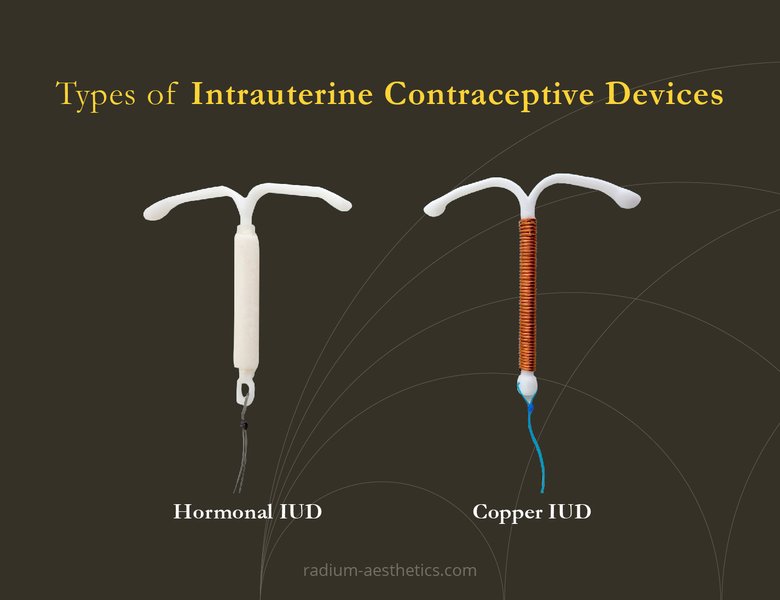
An illustration depicting various types of Intrauterine Devices (IUDs).
Hormonal Methods
These methods use hormones (estrogen and progestin, or progestin-only) to prevent ovulation, thicken cervical mucus, and thin the uterine lining.
Combined Hormonal Contraceptives
- Birth Control Pills (Combined Oral Contraceptives): Taken daily, these pills contain both estrogen and progestin. They are 91-99% effective with perfect use but less effective with typical use due to missed doses.
- Contraceptive Patch: A sticky patch worn on the skin (usually for three weeks, with one patch-free week) that releases hormones. It is about 91% effective with typical use.
- Vaginal Ring (NuvaRing): A soft, flexible ring inserted into the vagina, releasing hormones for three weeks, followed by a ring-free week. It is also around 91% effective with typical use.
Progestogen-Only Methods
- Progestogen-Only Pill (Mini-Pill): Taken daily, these pills contain only progestin. They are often suitable for individuals who cannot use estrogen. Effectiveness is similar to combined pills.
- Contraceptive Injection (Depo-Provera): An injection given every 12 weeks (3 months) containing progestogen. It is highly effective (over 99% with perfect use) as it prevents ovulation and thickens cervical mucus.
Barrier Methods
Barrier methods physically block sperm from reaching the egg. They are unique in offering protection against both pregnancy and most STIs.
Condoms (Male and Female)
- Male Condoms: Worn on the erect penis, these are thin sheaths typically made of latex or polyurethane. When used correctly and consistently, male condoms are 82-98% effective in preventing pregnancy and significantly reduce the risk of STI transmission.
- Female Condoms: Inserted into the vagina, these create a barrier that prevents sperm from entering the uterus. They offer similar protection against pregnancy and STIs as male condoms.
Diaphragm and Cervical Cap
These are dome-shaped (diaphragm) or thimble-shaped (cervical cap) devices inserted into the vagina before sex to cover the cervix. They are used with spermicide and are about 88% and 77-83% effective, respectively, with typical use.
Contraceptive Sponge
A soft, disposable sponge containing spermicide, inserted into the vagina before sex. It is less effective than other barrier methods, with effectiveness ranging from 76-88% depending on prior pregnancies.
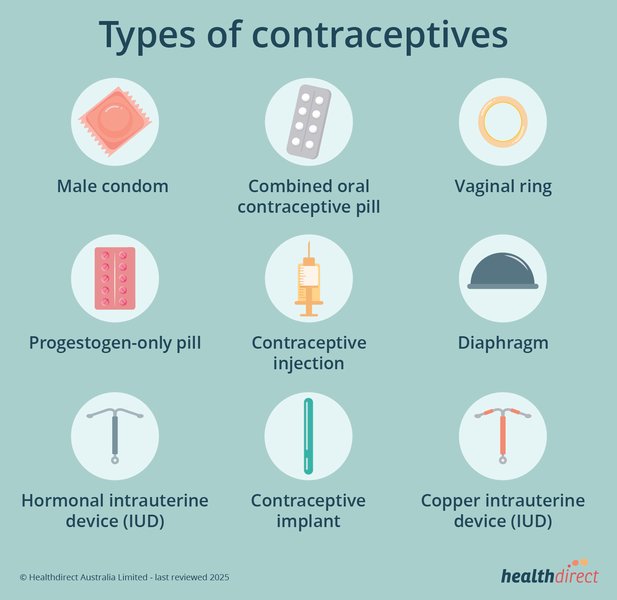
An illustrative chart detailing different contraceptive methods and their mechanisms.
Natural Family Planning (Fertility Awareness Methods - FAMs)
FAMs involve tracking the menstrual cycle and fertility signs (like basal body temperature and cervical mucus) to identify fertile days and avoid unprotected sex during those times. While they are hormone-free, their effectiveness can vary significantly (91-99% with perfect use, but much lower with typical use) due to the precision required.
Withdrawal Method (Coitus Interruptus)
This involves withdrawing the penis from the vagina before ejaculation. It is not recommended as a primary birth control method due to its low effectiveness (about 78% with typical use) and significant risk of pregnancy from pre-ejaculate or mistiming.
Emergency Contraception (EC)
Emergency contraception can be used after unprotected sex or if a regular birth control method fails (e.g., a broken condom). It is not meant for regular use.
- Emergency Contraceptive Pills (ECPs): Often called the "morning-after pill," these hormonal pills can be taken up to five days after unprotected sex, but are most effective the sooner they are taken.
- Copper IUD for EC: A copper IUD can be inserted by a healthcare provider up to five days after unprotected sex to prevent pregnancy, making it the most effective form of emergency contraception.
Permanent Methods
These are surgical procedures that provide permanent contraception.
- Vasectomy (Male Sterilization): A minor surgical procedure that blocks the tubes that carry sperm from the testicles.
- Tubal Ligation (Female Sterilization): A surgical procedure that blocks or ties the fallopian tubes, preventing eggs from reaching the uterus and sperm from reaching the egg.
Navigating Safer Sex Practices
The term "safe sex" or "safer sex" refers to sexual activities that minimize the risk of transmitting sexually transmitted infections (STIs) and preventing unintended pregnancies. It's a holistic concept that extends beyond just contraception.
Reducing STI Risk
While contraception prevents pregnancy, not all methods protect against STIs. Condoms are the only widely available method that offers dual protection. Other strategies for STI prevention include:
- Limiting Sexual Partners: Having fewer sexual partners reduces the potential exposure to STIs.
- Open Communication: Discussing sexual health history and STI status with partners is vital.
- Regular Testing: Getting tested for STIs regularly, especially when engaging in new sexual relationships or with multiple partners.
- Vaccinations: Vaccinations, such as the HPV vaccine, can protect against certain STIs.
- PrEP (Pre-Exposure Prophylaxis): A daily medication for individuals at high risk of HIV to prevent infection.
Beyond Physical Barriers: Consent and Communication
Safe sex also encompasses ensuring clear, enthusiastic consent before and during sexual activity, and fostering an environment free from pressure, fear, or violence. This aspect of safe sex promotes psychological well-being and mutual respect.
This video from Dr. Jordan B. Peterson discusses important principles for practicing safe sex and maintaining overall sexual health.
Effectiveness and Considerations
The effectiveness of birth control methods is often categorized by "perfect use" (consistent and correct use every time) versus "typical use" (how people actually use them, accounting for human error). Choosing a method requires considering:
- Effectiveness: How well it prevents pregnancy.
- STI Protection: Whether it also protects against STIs.
- Ease of Use: How simple it is to use consistently.
- Side Effects: Potential hormonal or physical side effects.
- Cost and Accessibility: The financial and logistical aspects of obtaining and using the method.
- Reversibility: Whether the method is temporary or permanent.
Comparing Contraceptive Effectiveness and Features
This table summarizes key characteristics of various contraceptive methods to aid in comparison and decision-making.
| Method Type | Examples | Typical Effectiveness (Pregnancy Prevention) | STI Protection | Hormone-Free | Duration/Frequency |
|---|---|---|---|---|---|
| Long-Acting Reversible Contraceptives (LARCs) | IUD (Hormonal/Copper), Implant | >99% | No (except condoms when used in conjunction) | Copper IUD only | Years (3-10) |
| Hormonal Methods (Short-Acting) | Pill, Patch, Ring, Injection | 91-99% (Pill), ~91% (Patch/Ring), >99% (Injection) | No | No | Daily, Weekly, Monthly, Quarterly |
| Barrier Methods | Male Condom, Female Condom, Diaphragm, Cervical Cap, Sponge | 82-98% (Condoms), ~88% (Diaphragm), ~77-88% (Cap/Sponge) | Yes (Condoms) | Yes | Per act of sex |
| Fertility Awareness Methods (FAMs) | Calendar, Temperature, Mucus methods | 76-99% (highly variable) | No | Yes | Daily tracking |
| Emergency Contraception | EC Pills, Copper IUD | 75-99% (EC Pills), >99% (Copper IUD as EC) | No | Copper IUD only | Single use after unprotected sex |
| Permanent Methods | Vasectomy, Tubal Ligation | >99% | No | Yes | Permanent |
| Abstinence | Avoiding all sexual contact | 100% | Yes | Yes | Continuous |
Effectiveness Spectrum of Contraceptive Methods
When considering contraception, it's helpful to visualize the typical effectiveness of different methods. The radar chart below illustrates how various birth control options stack up in terms of pregnancy prevention, STI protection, ease of use, and reversibility. This data is based on aggregated insights into typical use and general characteristics, providing a comparative overview.
This chart highlights the trade-offs between different contraceptive methods. For instance, while LARCs offer superior pregnancy prevention and ease of use, they do not protect against STIs. Conversely, condoms excel in STI protection and are hormone-free and reversible, but their pregnancy prevention effectiveness is lower due to user error. Fertility awareness methods and the withdrawal method, while hormone-free and reversible, have significantly lower typical effectiveness in preventing pregnancy and offer no STI protection. This visualization underscores the importance of considering multiple factors when choosing a contraceptive method, often advocating for dual protection strategies (e.g., combining a hormonal method for pregnancy prevention with condoms for STI protection).
Frequently Asked Questions About Contraception and Safe Sex
What is the most effective way to prevent pregnancy?
Do all birth control methods protect against STIs?
What is "safe sex" and how does it differ from just using contraception?
Can emergency contraception be used as a regular birth control method?
Conclusion
Navigating sexual health involves understanding the nuances of conception, the diverse landscape of contraceptive options, and the principles of safer sexual practices. From highly effective long-acting reversible contraceptives to barrier methods that offer crucial STI protection, a wide array of choices exists to meet individual needs and preferences. Empowering oneself with knowledge about these methods, coupled with open communication and responsible sexual behavior, is paramount for preventing unintended pregnancies and safeguarding against sexually transmitted infections. Consulting with healthcare providers is essential for personalized advice and to ensure the most appropriate and effective choices are made for one's reproductive health journey.
Recommended Further Exploration
- How do hormonal birth control methods work in detail?
- What are the latest advancements in contraception technology?
- Understanding the psychological and social aspects of safe sex practices
- Comprehensive guide to STI prevention and testing