
Conceptual Framework Development
A Comprehensive Guide to Structuring Your Research Ideas
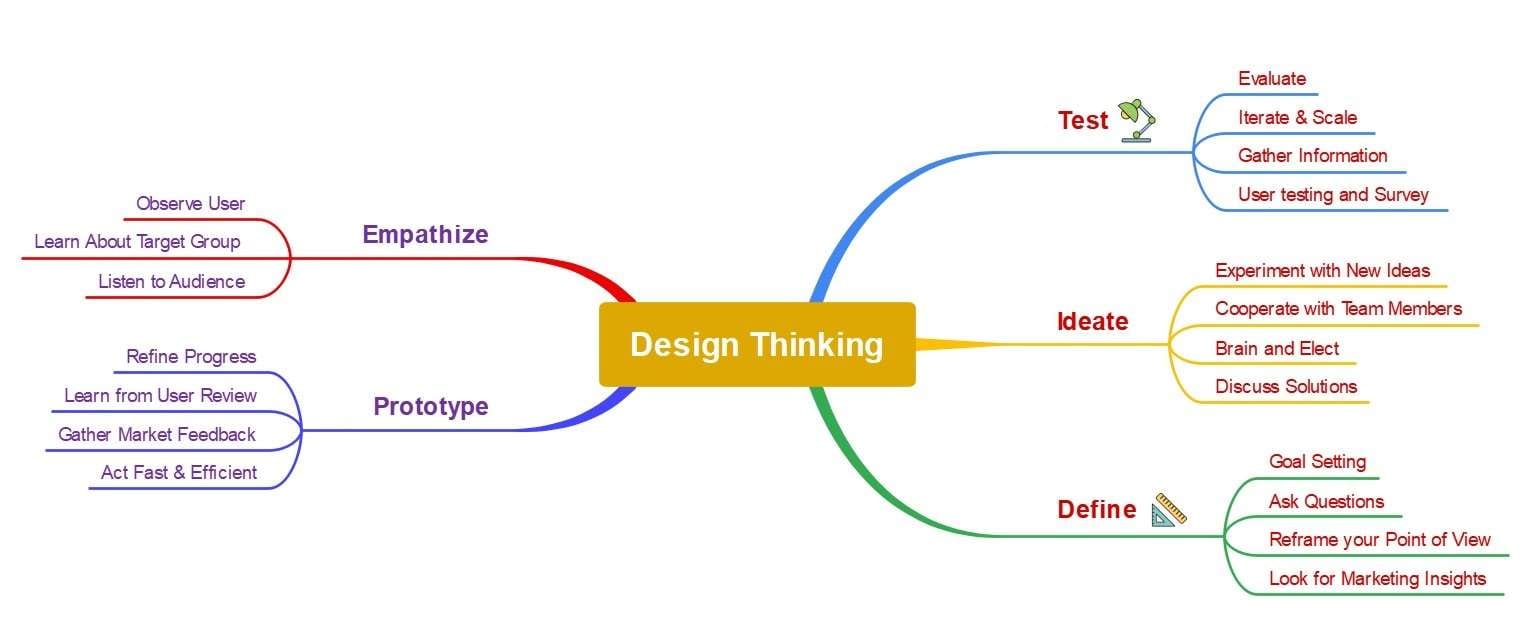
Highlights
- Systematic Design: Follow clear steps from topic selection to visual representation.
- Key Components: Identify variables, articulate relationships, and develop narratives.
- Iterative Process: Continuously review, refine, and ensure alignment with literature.
Introduction to Conceptual Frameworks
A conceptual framework is a fundamental tool for academic and applied research, providing an organized method to structure your inquiry and ideas. It represents the relationships among various concepts, variables, and theories, thereby serving as a roadmap for your research. Whether you are investigating the impact of social media on academic performance or exploring a complex theoretical model, a well-constructed conceptual framework clarifies your research objectives, guides the methodology, and solidifies the interpretative lens through which you view your results.
Components of a Conceptual Framework
A successful conceptual framework encompasses several core components. Each element contributes to developing an integrated and coherent picture of your research study:
Research Topic and Question
The starting point is to identify and clearly articulate your research topic and question. The research topic forms the broader subject area you wish to explore, while the research question zeroes in on a specific query that your study intends to address. Establishing a clear research question is paramount because it defines the boundaries for investigation.
Literature Review
Conducting a thorough literature review is essential to ground your framework in existing theories and empirical findings. This process involves:
- Gathering comprehensive data and information from scholarly articles, books, and credible online sources.
- Identifying and summarizing existing frameworks that have relevance to your study.
- Noting down gaps or areas where further research could offer novel insights.
The literature review not only supports the rationale behind your chosen approach but also provides the theoretical underpinning for the concepts and parameters within your framework.
Key Concepts and Variables
Identifying the key concepts that form the backbone of your research is crucial. In this context, variables may fall under several categories:
Independent and Dependent Variables
The independent variable represents the cause or factor being manipulated, while the dependent variable is the effect or outcome which you measure. These variables are central to your investigation and define the main relationship that your study will analyze.
Moderating and Mediating Variables
Moderating variables influence the strength or direction of the relationship between the independent and dependent variables. On the other hand, mediating variables explain the mechanism through which the independent variable affects the dependent variable. Both types bring depth and nuance to the conceptual framework and help elucidate complex interrelations.
Control and Confounding Variables
It is also important to identify control variables which are maintained constant to ensure unbiased results. Confounding variables are those that might distort the perception of the relationship between the independent and dependent variables. Recognizing these helps in designing a robust framework.
Steps in Creating a Conceptual Framework
Constructing a conceptual framework is an iterative process that requires a systematic approach. Below are detailed steps guiding you through the process:
1. Selecting the Research Topic
Start by choosing a research topic that not only interests you but also presents ample scope for exploration. Consider the feasibility concerning available resources and the time required. Ensure that your topic is sufficiently narrow to allow deep investigation yet broad enough to yield comprehensive insights.
2. Defining the Research Question
Formulate an explicit research question based on your chosen topic. This question should be specific, focused, and capable of guiding your entire research process. It acts as the cornerstone of your study, prompting you to connect ideas and determine what variables require inclusion.
3. Conducting a Detailed Literature Review
A meticulous review of existing literature is vital to understand the current state of knowledge. This step involves:
- Extracting key theories and models that relate to your topic.
- Identifying established concepts to build upon or challenge.
- Documenting gaps in the literature for further inquiry.
This step ensures that your conceptual framework is not developed in isolation but is grounded in scholarly work and real-world observations.
4. Identifying and Defining Variables
With research questions and literature findings in place, clearly identify the variables relevant to your study. This involves:
- Listing all key concepts and determining their roles (e.g., independent, dependent, moderating, mediating).
- Defining each variable in the context of your research.
- Understanding both direct and indirect relationships among the variables.
5. Establishing Relationships
Draw connections between variables by specifying how the various elements interact. This can be done through:
- Using directional arrows and lines in a diagram to denote causality or influence.
- Articulating the hypothesized relationships in written form.
- Explaining whether the relationships are linear, cyclical, or complex.
For example, in a study assessing social media's impact on academic performance, you might hypothesize that increased social media usage leads to higher stress levels, which in turn affect performance. Here, stress functions as a mediating variable.
6. Creating Visual and Narrative Representations
The conceptual framework should be represented both visually and narratively:
Visual Diagram
A visual representation, such as a flowchart or mind map, is a great way to summarize and communicate the relationship among variables. Consider the following table that outlines a sample framework for a study on the impact of social media:
| Element | Description |
|---|---|
| Research Topic | The impact of social media usage on academic performance among university students. |
| Research Question | How does social media usage affect academic performance, and what role do stress and time management play? |
| Independent Variable | Social media usage |
| Dependent Variable | Academic performance |
| Mediating Variable | Stress Levels |
| Moderating Variable | Time Management Skills |
| Control Variables | Study hours, background, socioeconomic status |
This table illustrates how each component is linked to the study’s overall intent and how variables interact with one another in a structured manner.
Narrative Description
Alongside the diagram, provide a detailed narrative describing:
- The rationale for selecting each variable.
- Explanations of how the variables are operationalized.
- The theoretical basis for the interconnections among variables.
- A discussion of any assumptions made in forming these relationships.
This descriptive text should seamlessly integrate with your visual diagram, offering readers both clarity and context.
7. Reviewing and Refining the Framework
The process of creating a conceptual framework is iterative. After developing the initial draft:
- Solicit feedback from peers, advisors, or subject matter experts to ensure accuracy and comprehensiveness.
- Revisit the literature and update relationships or variable definitions as new insights emerge.
- Ensure that the framework remains consistent with both the research question and the study objectives.
A refined and well-articulated framework ultimately serves to ensure that your research is both methodologically sound and conceptually robust.
Practical Applications and Examples
Conceptual frameworks are not limited to academic research; they have practical applications across various fields. In business studies, for instance, a conceptual framework might express the relationship between market trends and consumer behavior. In the social sciences, frameworks can illustrate the influence of socio-economic factors on health outcomes.
Consider a conceptual framework for environmental research. In this context, you could have:
- Topic: The impact of urbanization on air quality.
- Research Question: How does urban growth affect air pollution levels, and what mitigating factors can be identified?
- Independent Variable: Urbanization indicators such as population density and industrial activities.
- Dependent Variable: Air quality measurements.
- Mediating and Moderating Variables: Local policies, green infrastructure, and technological interventions.
Connecting these variables visually and narratively would help frame policy discussions, direct future studies, and guide empirical investigations.
Theoretical Underpinnings and Assumptions
Incorporating robust theoretical underpinnings is indispensable for a successful conceptual framework. By aligning your framework with established theories, you ensure that your research is both credible and well-grounded. Consider these aspects:
Theory Integration
Integrate theories that relate to the phenomenon under study. For instance, if your research examines social media’s effects, draw from communication theories, behavioral psychology, and media studies. Incorporating multiple theoretical perspectives can provide a richer context for understanding complex relationships.
Assumptions and Limitations
Every conceptual framework carries inherent assumptions. Clearly state these assumptions:
- Assumptions regarding the nature of the variables and their interactions (e.g., linearity, causality, or bidirectional influences).
- Limitations derived from the scope of the literature review or available empirical data.
- The potential for unforeseen factors that may alter the hypothesized relationships.
By transparently presenting your assumptions, you lay the groundwork for more refined analyses and facilitate discussions on possible improvements in future research.
Documentation and Presentation
After developing the framework, it is essential to document and present your work in a clear, logical format. This involves:
Visual Aids
Leverage diagramming and graphic representation tools to create a clean and accessible visual summary of your framework. Tools such as flowcharts, graphs, or conceptual maps can effectively communicate complex relationships with clarity.
Written Documentation
Accompany your visuals with written explanations that detail the logic behind each identified relationship and variable. This combination ensures that your conceptual framework is thoroughly understood by fellow researchers and stakeholders.
Iterative Improvement and Feedback
Conceptual frameworks rarely remain static. An integral part of the research process is to continually assess and refine the framework:
- Review it periodically as your study progresses.
- Incorporate feedback from academic supervisors, peers, and subject matter experts.
- Adapt it in response to emerging literature, new data, or theoretical developments.
This dynamic process not only improves the quality of your research project but also ensures your methodology remains responsive to new insights.
Implementing the Conceptual Framework
Once you have established a robust conceptual framework, its implementation in your research design becomes straightforward. The framework should:
- Guide the Collection of Data: Inform your methodological choices such as surveys, experiments, or observational studies.
- Shape the Analysis: Provide a structure for analyzing the interplay between independent, dependent, and other variables.
- Support Interpretation: Offer a theoretical lens through which findings can be interpreted and contextualized.
Using the framework as a continuous reference throughout your research will help maintain focus and ensure consistency from methodology to data analysis.
Final Thoughts on Conceptual Frameworks
Developing a conceptual framework is an invaluable step in research and strategic planning. It fosters clarity, direction, and coherence in the entire study process. By methodically defining research questions, reviewing relevant literature, identifying key variables, and mapping out the relationships between them, you can create a solid foundation for your investigation. This framework not only serves as a guide for collecting and analyzing data but also enables you to communicate your research design effectively to peers and advisors.
Whether your focus is academic or practical, investing the time to develop a detailed and iterative conceptual framework can significantly enhance the quality and impact of your work. As you advance through your research journey, remember that the framework is not fixed; it evolves with new insights, emerging data, and continued scholarly dialogue.
References
- Conceptual Framework - Scribbr
- How to Make a Conceptual Framework - TOPNOTCHER PH
- Conceptual Framework: Types, Methodology and Examples - Research Method
- Conceptual Framework Examples - Filipiknow
- What is a Conceptual Framework? - AJE
Recommended Further Queries
Last updated March 9, 2025