
Mastering Conflict Management: Strategies for Productive Outcomes
Transforming Disagreements into Opportunities for Growth and Stronger Relationships
Key Insights into Effective Conflict Management
- Conflict is Inevitable and Often Beneficial: Rather than viewing conflict as inherently negative, recognize it as a normal part of human interaction and an opportunity for growth, innovation, and stronger relationships when managed constructively.
- Understanding Conflict Styles is Crucial: The Thomas-Kilmann Conflict Model identifies five key strategies: Avoiding, Competing, Accommodating, Compromising, and Collaborating. Knowing these styles, and when to apply them, is fundamental to effective resolution.
- Communication and Empathy are at the Core: Active listening, clear and respectful communication, and the ability to understand another's perspective are essential skills that underpin successful conflict resolution, fostering trust and mutual understanding.
Conflict is an inherent part of human interaction, whether in personal relationships, within teams, or across organizations. While often perceived negatively, conflict, when managed effectively, can be a powerful catalyst for positive change, deeper understanding, and enhanced collaboration. It provides an opportunity to address underlying issues, stimulate creativity, and strengthen bonds by fostering open communication and mutual respect. Conversely, mishandled conflict can lead to strained relationships, reduced productivity, and a toxic environment.
The ability to navigate disagreements constructively is not merely a desirable trait; it's an imperative skill in today's complex world. This comprehensive guide will explore the multifaceted nature of conflict management, delving into various strategies, essential skills, and practical approaches to transform disputes into productive outcomes.
Understanding the Nature of Conflict
Why Conflict Arises and Its Potential Impact
Conflict arises from diverse perspectives, differing personalities, competition for resources, miscommunication, and discrepancies in goals or values. In a workplace setting, for example, varying backgrounds, opinions, and daily lives of employees inevitably lead to discord. Recognising the root causes is the first step toward effective resolution.
While conflict can trigger strong emotions, hurt feelings, and discomfort, leading to rifts and resentment if mismanaged, it also offers significant benefits. When handled respectfully, conflict can:
- Increase understanding between individuals.
- Build trust and strengthen relationships.
- Stimulate new ideas and encourage innovative solutions.
- Drive improvement and enhance team dynamics.
The key lies not in avoiding conflict, but in developing the capabilities to manage it constructively.
The Five Core Conflict Resolution Strategies (Thomas-Kilmann Model)
Navigating Assertiveness and Cooperativeness
The Thomas-Kilmann Conflict Mode Instrument (TKI) identifies five primary strategies for conflict resolution, based on two dimensions: assertiveness (the extent to which an individual attempts to satisfy their own concerns) and cooperativeness (the extent to which an individual attempts to satisfy the other person's concerns).
Understanding the five main conflict resolution strategies is crucial for effective management.
1. Avoiding (Low Assertiveness, Low Cooperativeness)
This strategy involves sidestepping or ignoring the conflict altogether. Individuals may avoid expressing their concerns or addressing the concerns of the other party. While it offers a short-term resolution in situations fueled by intense anger or when the issue is trivial, avoiding conflict often causes it to worsen over time and reappear at inopportune moments. Nothing is resolved, and stress levels can increase.
2. Competing (High Assertiveness, Low Cooperativeness)
Competing is an uncooperative, assertive approach where one party insists on winning the dispute at all costs. It's a "win-lose" strategy, where one opinion is accepted and the other is disregarded. This approach can be effective in emergencies or when decisive action is needed, but it often fosters resentment and can harm relationships in the long run.
3. Accommodating (Low Assertiveness, High Cooperativeness)
In this strategy, one party acquiesces to the other's needs, prioritizing the relationship over their own goals. Accommodating can be useful when the issue is more important to the other person, when building goodwill is crucial, or when you realize you are wrong. However, consistently accommodating can lead to one's own needs being neglected and can foster an imbalance in the relationship.
4. Compromising (Medium Assertiveness, Medium Cooperativeness)
Compromising involves both parties giving up something to reach a mutually acceptable solution. Neither party is fully satisfied, as each sacrifices a portion of their ideal outcome. This strategy offers a temporary solution and can be effective when time is limited, or when both parties have equally important goals. However, it may not lead to the most optimal or creative solutions as significant parts of the resolution can be left out.
5. Collaborating (High Assertiveness, High Cooperativeness)
Collaborating is a "win-win" approach where all parties work together to find a solution that fully satisfies everyone's concerns. It promotes creative problem-solving, fosters mutual respect, and strengthens relationships. This strategy is ideal for complex issues where innovative solutions are needed and where maintaining strong relationships is paramount. It requires significant time and effort but typically yields the most beneficial and sustainable outcomes.
Choosing the right strategy depends on the specific situation, the importance of the issue, and the value placed on the relationship. A flexible approach, rather than defaulting to a comfortable style, is crucial for effective conflict management.
Essential Skills for Conflict Resolution
Building Bridges Through Communication and Empathy
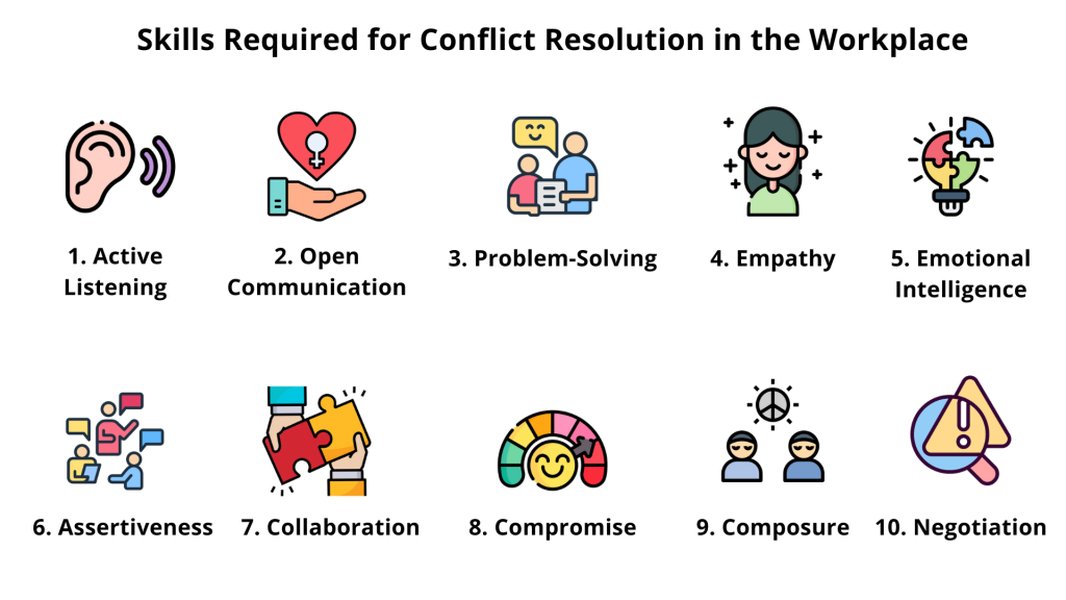
Regardless of the strategy chosen, certain core skills are indispensable for successful conflict resolution:
- Emotional Intelligence: The ability to manage your own stress and emotions while remaining calm and alert, and to understand and empathize with the emotions of others, is foundational. Don't speak in anger or get drawn into negative emotional energy.
- Active Listening: Truly hearing what the other person is saying—not just waiting for your turn to speak—demonstrates respect and a willingness to understand their viewpoint. Ask clarifying questions and focus on their perception of the problem.
- Clear and Respectful Communication: Directly express your thoughts and feelings without blaming or name-calling. Focus on the issue, not the person. Instead of "You are blocking my driveway on purpose to make me mad!", try "When your car blocks my driveway, I get angry because I can't get to work on time."
- Empathy and Perspective-Taking: Try to see the situation from the other person's point of view. Understanding their motivations and background can help bridge differences.
- Problem-Solving and Negotiation: Once the conflict is understood, brainstorm possible resolutions collaboratively. The goal is not to decide who is right or wrong, but to reach a solution everyone can live with. Negotiation is the most basic means of settling differences, involving back-and-forth communication to find a solution.
A Structured Approach to Resolving Conflict
From Identification to Sustained Agreement
A systematic process can significantly improve the chances of successful conflict resolution. Here’s a general framework:
Step 1: Identify and Understand the Conflict
The first crucial step is to pinpoint the source of the conflict. This involves identifying the specific issues, behaviors, or misunderstandings causing the tension. Gather as much information as possible, moving the discussion away from personal attacks and toward the actual problem. This might involve understanding underlying needs rather than just stated positions.
Step 2: Create a Safe and Open Communication Environment
Choose a neutral, safe space for discussion, away from distractions. Encourage open and honest communication, ensuring all parties feel heard and respected. Establish ground rules, such as not interrupting and focusing on the problem, not personal character. Normalize conflict as an opportunity for growth.
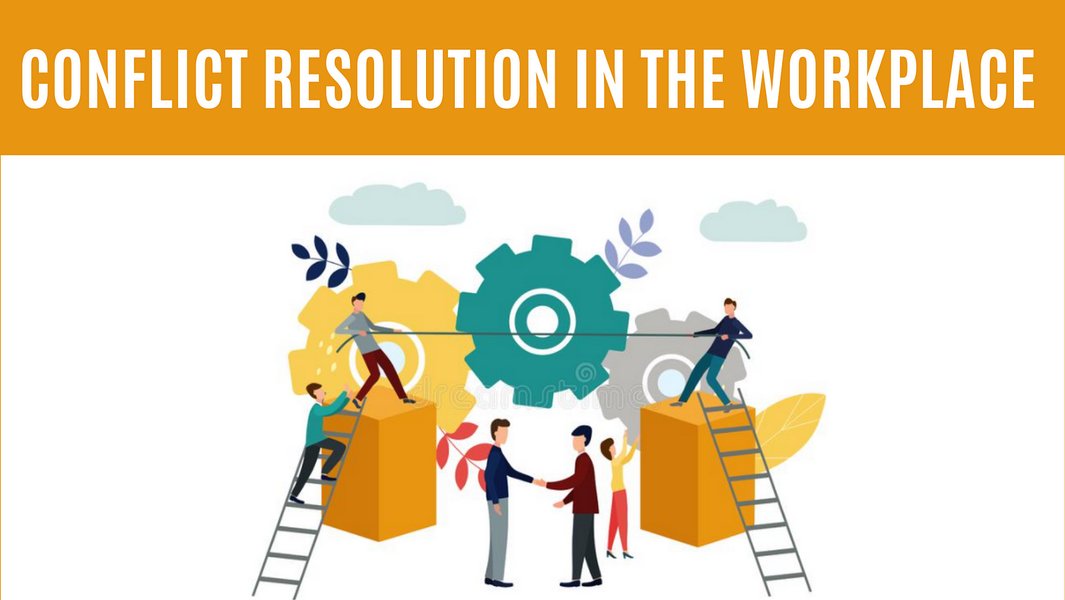
Creating a safe and open communication environment is fundamental to resolving conflicts.
Step 3: Explore Possible Resolutions and Brainstorm Solutions
Once the conflict is clearly understood by all parties, brainstorm a range of possible solutions. Encourage creative thinking and focus on shared goals. Consider alternative dispute resolution (ADR) methods like mediation, where a neutral third party helps facilitate communication and exploration of solutions.
This video provides an excellent overview of practical conflict resolution techniques:
This video explains tried-and-true methods for resolving conflicts, highlighting their benefits and various applications.
Step 4: Choose the Best Solution and Develop a Plan
Evaluate the brainstormed options based on feasibility, fairness, and the extent to which they address the underlying needs of all parties. Choose the solution that benefits all involved and develop a clear action plan. This plan should establish guidelines, prioritize actions, and set specific goals.
Step 5: Implement and Follow Up
Act decisively to implement the agreed-upon solution. Crucially, schedule follow-up meetings to check on the progress and ensure the agreement is still working. If the conflict re-emerges or remains unresolved, be prepared to explore other avenues, such as involving an outside facilitator or escalating it to a performance issue if necessary.
The Role of Mediation and Negotiation
Alternative Dispute Resolution (ADR) Approaches
When direct negotiation fails, or when parties find it difficult to communicate constructively, alternative dispute resolution (ADR) methods like mediation and arbitration become invaluable. These methods are often preferred over litigation due to their cost-effectiveness and ability to preserve relationships.
Negotiation: This is the most basic means of settling differences, involving direct communication between parties to find a solution. It's a daily occurrence in various settings, from personal interactions to professional dealings.
Mediation: If direct negotiation is unsuccessful, a neutral third-party mediator can assist. The mediator doesn't make decisions but facilitates communication, helping parties explore options and reach a mutually acceptable agreement. Mediation is versatile and applicable to a wide range of conflicts, including family disputes, workplace disagreements, and business conflicts.
Arbitration: In arbitration, a neutral third party (the arbitrator) hears both sides of the dispute and makes a binding decision. It's a more formal process than mediation, but less formal than court proceedings.
Assessing Conflict Resolution Approaches: A Radar Chart Analysis
Visualizing the Strengths of Different Strategies
To better understand the nuances of each conflict resolution strategy, consider the following radar chart. This chart visually represents how each of the five Thomas-Kilmann conflict styles performs across several key dimensions critical for effective resolution. These dimensions include their effectiveness in preserving relationships, achieving long-term solutions, fostering innovation, efficiency, and overall satisfaction for all parties.
The radar chart provides a snapshot of the strengths and weaknesses of each approach, helping individuals and teams make informed decisions about which strategy to deploy based on the specific context and desired outcomes. For instance, while 'Collaborating' generally excels in long-term solutions and relationship preservation, 'Avoiding' might be efficient for trivial issues, and 'Competing' can be quick in crises.
Practical Applications and Scenarios
Applying Conflict Management in Diverse Settings
Conflict management principles are universally applicable, from personal relationships to complex organizational dynamics. Here's how these strategies and skills can be applied:
Workplace Conflict
In the workplace, conflicts can stem from differing management styles, resource allocation, ethical dilemmas, or communication breakdowns. Effective conflict management is a business imperative, not just an HR responsibility. It minimizes disruption, improves communication, and maintains a healthy team environment. Leaders are encouraged to normalize conflict, establish ground rules, model healthy conflict resolution, and celebrate positive outcomes. Addressing issues early, managing emotions, showing empathy, and practicing active listening are critical skills for managers.
For example, if two team members disagree on the best approach for a project, a collaborative strategy might involve a meeting where both articulate their perspectives, brainstorm solutions, and jointly decide on a path forward that integrates the best elements of both ideas.
Interpersonal Relationships
In personal relationships, conflict is a normal part of healthy interaction. Mismanaged conflict can lead to irreparable rifts, but when handled respectfully, it strengthens bonds. Key tips include directly expressing thoughts and feelings without blaming, sticking to one argument at a time, and actively listening. Seeking a neutral third party, like a counselor, can also provide new perspectives and facilitate resolution.

Mediation with a neutral third party can be a valuable tool for resolving family conflicts.
Key Elements of Successful Conflict Resolution
A Comprehensive Overview
The following table summarizes essential components and their benefits in achieving effective conflict resolution:
| Element | Description | Benefit in Conflict Resolution |
|---|---|---|
| Open Communication | Encouraging direct, honest, and respectful dialogue between all parties. | Prevents misunderstandings, fosters transparency, and builds trust. |
| Active Listening | Giving full attention to understand the other person's perspective, without interruption or judgment. | Validates feelings, demonstrates empathy, and helps identify underlying issues. |
| Emotional Regulation | Managing one's own feelings (anger, frustration) and avoiding reactive responses. | Maintains a calm and productive environment, preventing escalation. |
| Focus on Issues, Not Personalities | Addressing the specific problem or behavior rather than blaming individuals. | Depersonalizes the conflict, making it easier to find solutions. |
| Mutual Respect | Acknowledging the inherent dignity and worth of each individual involved. | Creates a foundation for constructive dialogue and collaborative problem-solving. |
| Seeking Win-Win Solutions | Aiming for outcomes where all parties feel their core needs are addressed. | Leads to sustainable agreements, strengthens relationships, and fosters future cooperation. |
| Follow-Up and Evaluation | Periodically checking in to ensure the resolution is effective and holding parties accountable. | Ensures the agreement remains viable and addresses any new issues that arise. |
| Third-Party Facilitation (Mediation) | Involving a neutral outsider to guide the discussion and help parties find common ground. | Provides impartiality, new perspectives, and can break stalemates when direct communication fails. |
Conclusion
Embracing Conflict for Positive Growth
Conflict is an unavoidable aspect of life and interaction. However, it is not something to be feared or avoided. By understanding the different conflict resolution strategies—avoiding, competing, accommodating, compromising, and collaborating—and by honing essential skills such as active listening, emotional intelligence, and empathetic communication, individuals and organizations can transform conflict from a disruptive force into a powerful engine for growth, innovation, and stronger relationships. Effective conflict management is an ongoing process that requires flexibility, commitment, and a willingness to engage constructively, ultimately leading to more harmonious and productive environments.
Frequently Asked Questions (FAQ)
What is conflict management?
Why is conflict resolution important?
What are the five main conflict resolution strategies?
What skills are essential for resolving conflict?
When should mediation be used?
Recommended Further Reading
- Understanding the Thomas-Kilmann Conflict Mode Instrument
- How to improve active listening skills for conflict resolution
- Techniques for fostering open communication in teams
- The role of emotional intelligence in workplace conflict
