
Understanding the Mechanisms of Consciousness
Exploring the Brain, Theories, and Subjective Experiences That Define Our Inner World
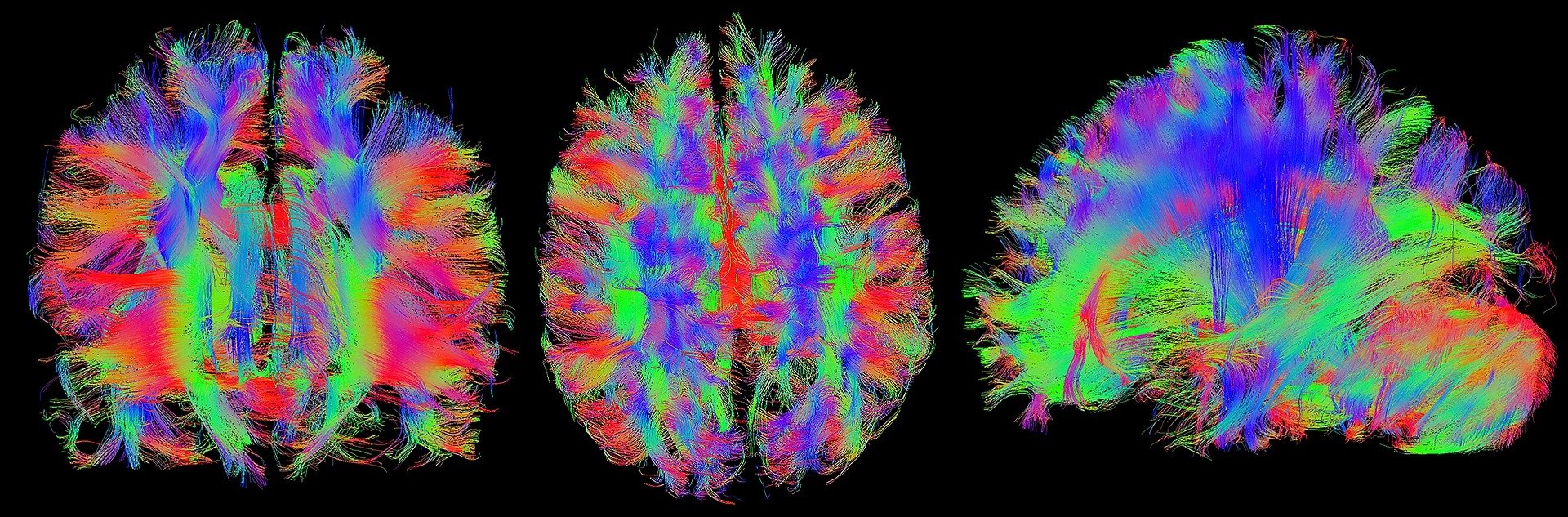
Key Insights
- Neural Integration: Consciousness emerges from highly complex neural activity and intricate brain networks.
- Theoretical Frameworks: Several major theories, including global workspace theory and integrated information theory, explain different aspects of conscious experience.
- Subjectivity and Complexity: The subjective nature of consciousness, often referred to as qualia, makes its study uniquely challenging and multifaceted.
Introduction
Consciousness is one of the most complex and debated subjects across the fields of neuroscience, psychology, and philosophy. It refers to the state of awareness that encompasses thoughts, feelings, perceptions, and self-awareness. Modern research into consciousness seeks to uncover how brain processes translate into subjective experiences—the so-called "hard problem" of consciousness—which asks why and how neural processes yield the rich, qualitative experiences we know as consciousness.
Neural Underpinnings of Consciousness
The biological basis of consciousness is fundamentally linked to the activity of neurons within the brain. Advances in neuroimaging and electrophysiological techniques such as fMRI, EEG, and PET scans have allowed researchers to identify brain regions and networks responsible for different elements of conscious thought. Specifically, the dynamic interplay between various brain regions, especially the neocortex, thalamus, and prefrontal cortex, supports the emergence of conscious experience.
Neural Correlates of Consciousness
A major focus in neuroscience is identifying the neural correlates of consciousness (NCC). These are specific brain processes and networks whose activity patterns correlate with conscious perception. Research has indicated that when individuals are aware of a stimulus, distinct patterns of neuronal activation occur, indicating that certain brain areas are directly involved in producing conscious experience.
Role of Brain Regions
The prefrontal cortex, in conjunction with the parietal cortex, is known to play a central role in the integrative processing of sensory information, working memory, and attentional control. The thalamus acts as a relay station, integrating sensory inputs and channeling information to various cortical areas. This coordination among different brain regions is crucial for generating a coherent and unified conscious experience.
Global Workspace Theory
One of the most influential models in understanding consciousness is the Global Workspace Theory (GWT). This framework suggests that the brain operates like a theater, where only the information that enters the global workspace is broadcasted to various cognitive systems. In this "global" broadcasting system, attentional mechanisms filter and integrate sensory and internal data, rendering it available for further processes like reasoning, decision making, and memory consolidation.
How Information is Broadcast
According to this theory, once sensory information is processed through preliminary stages, it enters a global workspace characterized by long-range neuronal connections, particularly in the prefrontal and parietal cortices. This convergence enables multiple brain regions to access and process the same data simultaneously, leading to a unified conscious experience. Thought processes, decisions, and even reflections on one’s own perceptions are facilitated by this extensive network.
Integrated Information Theory
Integrated Information Theory (IIT) provides another compelling theoretical framework. It posits that consciousness corresponds to the amount of integrated information within a system. In this view, the qualitative aspect of experience, known as qualia, emerges from the complex interconnectivity and causal interactions among neural elements. A system that exhibits high degrees of integration will have a rich and multidimensional experience, whereas less integrated systems (e.g., certain artificial systems or isolated neuronal groups) may exhibit rudimentary or no conscious experience.
Quantifying Consciousness
IIT attempts to quantify consciousness by measuring the degree of integration among different neural components. Mathematical formulations proposed within IIT, often represented in equations using MathJax, help illustrate how small changes in connectivity might drastically alter the integrated information, thereby influencing conscious experience. Although these equations are complex, they offer a promising way to understand why some systems are conscious while others are not.
Higher-Order Theories
Beyond models that rely solely on network integration, higher-order theories suggest that consciousness involves additional layers of meta-representation. This implies that for a mental state to be considered conscious, there must be a higher-order representation of that very state. Essentially, it is not enough to process information; one must also be aware that the information is being processed, which adds another layer of sophistication to our understanding of consciousness.
Dimensions of Consciousness
Consciousness is not a monolithic phenomenon; rather, it is composed of multiple dimensions that vary in their presentation and complexity:
Wakefulness and Awareness
At the most basic level, consciousness involves wakefulness—the state of being alert and responsive to your environment. However, mere wakefulness does not fully encapsulate consciousness. Awareness, which includes the perception of one's internal states (such as thoughts and emotions) and external stimuli, is essential. The variability of these states can be observed in different conditions, from complete wakefulness to deep sleep, and from states induced by anesthesia to those altered by psychoactive substances.
Sensory Organization and Integration
Conscious experience is marked by the brain's ability to integrate sensory information across different modalities. The seamless integration of vision, hearing, touch, taste, and smell is crucial for forming a complete, unified perception of the environment. By synchronizing sensory inputs, the brain creates coherent experiences that allow us to interact with the world effectively.
Subjectivity and Qualia
Perhaps the most enigmatic aspect of consciousness is its subjectivity, often referred to as “qualia.” Qualia represent the personal, ineffable qualities of experiences: the redness of a rose, the bitterness of coffee, or the soothing sound of rain. These first-person experiences pose significant challenges for scientists because they are intrinsically private and cannot be directly observed or measured using conventional tools.
Exploring Conscious Experience Through Research
Numerous research methodologies have evolved to understand consciousness more deeply. Notably, breakthroughs in brain imaging have allowed researchers to visualize and quantify the neural activity that accompanies conscious states. Experimental paradigms often compare conscious and unconscious states—using conditions ranging from sleep to anesthesia—to identify the minimal neural signatures that support awareness.
Neuroimaging and Electrophysiology
Modern neuroimaging techniques, such as functional magnetic resonance imaging (fMRI) and electroencephalography (EEG), provide snapshots of brain activity as individuals process information. These tools have been instrumental in identifying the networks that repeatedly become active during conscious thought processes. For instance, researchers have observed that neural oscillations—rhythmic activities in the brain—tend to synchronize across disparate regions during states of high awareness.
Computational Models of Consciousness
Complementing the empirical findings are computational models that simulate brain networks to investigate how consciousness might arise from complex interactions. These models help scientists explore how varying degrees of connectivity and synchronization among neurons might lead to emergent properties such as self-awareness and introspection. Although still nascent, computational approaches are paving the way for a more rigorous understanding of the fundamental processes underlying conscious experience.
Comparative Analysis Table
| Aspect | Description | Key Brain Regions / Mechanisms |
|---|---|---|
| Neural Correlates | Specific brain activities linked to conscious processes | Prefrontal Cortex, Thalamus, Parietal Cortex |
| Global Workspace | Integration and global broadcasting of information across networks | Long-range neural connections, Prefrontal and Parietal cortices |
| Information Integration | Emergence of qualia based on interconnected neural activity | Integrated networks throughout the brain |
| Higher-Order Processes | Self-reflection and meta-representation of mental states | Advanced cognitive areas and feedback loops |
Philosophical and Conceptual Perspectives
While scientific advances have significantly contributed to our understanding of consciousness, philosophical inquiries remain equally important. The distinct nature of subjective experience, often referred to as the "hard problem," challenges the idea that consciousness can be fully explained by neural mechanisms alone.
The Hard Problem of Consciousness
The term "hard problem" was coined to describe the difficulty in explaining why and how subjective experiences arise from physical processes. Even with detailed mappings of brain activity, the question of how electrical and chemical interactions translate into an internal, qualitative experience remains largely unresolved. This philosophical conundrum continues to fuel debates and drive interdisciplinary research.
Dualism vs. Physicalism
Philosophical discussions often contrast dualistic viewpoints—which propose that consciousness may have both physical and non-physical components—with physicalist or materialist perspectives, which maintain that consciousness is entirely a product of brain activity. While the majority of contemporary research supports physicalism, the challenge of explaining subjective experiences ensures that these debates remain vibrant.
Emerging Models and Future Directions
Researchers are increasingly exploring integrative approaches that combine empirical observations with computational and theoretical models. With advances in technology and data analysis, future studies are likely to further elucidate the degrees of complexity within neural networks that give rise to consciousness. The pursuit of such knowledge not only broadens our understanding of the human mind but also has significant implications for artificial intelligence and the development of conscious machines.
Interdisciplinary Challenges in Consciousness Research
The multifaceted nature of consciousness makes it an inherently interdisciplinary subject. Bridging the gap between neurobiology, cognitive science, and philosophy, scientists are tasked with reconciling the objective measurements of brain activity with the fundamentally subjective aspects of experience.
Measurement and Quantification
One of the primary challenges in consciousness research is the measurement of subjective experiences. Despite detailed neural imaging, quantifying the personal and qualitative aspects of consciousness remains elusive. Researchers have developed various indices and theoretical metrics to quantify information integration, yet the inherent subjectivity of qualia makes direct measurement much more difficult.
Bridging Empirical and Theoretical Approaches
The synthesis of empirical data with theoretical models is critical. Current efforts involve integrating findings from cognitive neuroscience with computational frameworks to understand how local interactions among neurons can produce global, unified conscious states. Innovations in data science and machine learning are further helping to analyze complex neural networks, providing richer insights into the mysterious nature of conscious awareness.
Practical and Ethical Considerations
As advancements in neuroscience raise the possibility of influencing or even replicating consciousness in artificial systems, ethical considerations become paramount. Understanding the neural basis of consciousness could pave the way for revolutionary technologies in medicine and artificial intelligence, yet it also prompts significant ethical questions regarding the manipulation of conscious states and the potential rights of AI systems.
Conclusion and Final Thoughts
The study of consciousness remains one of the most profound endeavors in modern science. At its core, consciousness is the emergent property of complex neural interactions and dynamic, integrated information processing that gives rise to our subjective inner world. From the foundational neural correlates to advanced theories such as the global workspace and integrated information theories, current research illustrates that consciousness is not localized in one brain area but is the product of widespread, interconnected brain networks.
While considerable progress has been made, the debate over how subjective experiences—qualia—arise from physical brain processes continues to inspire both scientific inquiry and philosophical debate. The interdisciplinary nature of consciousness research ensures that future discoveries will likely come from joint efforts among neuroscientists, cognitive psychologists, physicists, and philosophers. These collaborative endeavors promise a more unified theory of consciousness that encompasses the neural, cognitive, and experiential dimensions of this captivating phenomenon.
In summary, understanding consciousness involves a deep dive into the interplay between neural activity, information processing, and reflective awareness. Even though a definitive answer remains elusive, the current landscape of research provides valuable insights and compelling frameworks that help us piece together the puzzle of conscious experience.
References
- Mysteries of Human Consciousness and Anesthesia - TED Ideas
- How Does the Human Brain Create Consciousness and Why - Medical News Today
- What is Consciousness? - MIT McGovern Institute
- Unlocking the Mind: The Neuroscience Behind Our Conscious Reality - Neuroscience News
- Where Does Consciousness Come From? - Caltech Science Exchange
Recommended Related Queries
Last updated February 20, 2025