
Comprehensive Guide to Constructing a Financial Model
A step-by-step approach to building accurate and insightful financial models
Key Takeaways
- Define Clear Objectives: Understanding the purpose and scope of your financial model ensures it meets your specific needs.
- Integrate Comprehensive Data: Gathering accurate historical data and making informed assumptions are critical for reliable projections.
- Ensure Model Integrity: Building interconnected financial statements and performing thorough validations enhance the model's robustness.
1. Define the Objective and Scope
Establishing the Foundation for Your Financial Model
The first step in constructing a financial model is to clearly define its purpose and scope. This foundational step ensures that the model aligns with your specific goals, whether it's valuing a company, analyzing a project, budgeting, or supporting strategic decisions. Understanding the target audience—be it investors, management, or stakeholders—and identifying the key decisions the model will influence are crucial. Additionally, determining the level of detail required, such as opting for a three-statement model, Discounted Cash Flow (DCF) analysis, or Leveraged Buyout (LBO) model, helps in structuring the model appropriately.
2. Gather and Organize Data
Collecting Historical and Relevant Financial Information
A robust financial model is built on accurate and comprehensive data. Begin by collecting at least three years of historical financial statements, including the income statement, balance sheet, and cash flow statement. This historical data provides a baseline for understanding past performance and identifying trends. Additionally, gather relevant business performance data, market and industry-specific information, and ensure the accuracy and reliability of all data sources. Organizing this data systematically, often in separate worksheets or tabs for assumptions, historical data, projections, and summary outputs, facilitates ease of use and reduces the risk of errors.
Essential Data Components
- Historical Income Statements
- Balance Sheets
- Cash Flow Statements
- Market and Industry Data
- Operational Metrics
3. Develop Key Assumptions
Formulating Realistic Projections Based on Data Insights
Assumptions are the backbone of any financial model, dictating future projections and outcomes. Based on historical performance and market trends, establish realistic assumptions regarding revenue growth rates, cost structures, capital expenditures, working capital needs, and other key financial drivers. Incorporate sensitivity analysis to assess how variations in these assumptions impact the model's outputs. Documenting these assumptions transparently enhances the model's credibility and allows for easier adjustments as new data becomes available or conditions change.
Common Assumptions in Financial Modeling
- Revenue Growth Rates
- Operating Margins
- Capital Expenditure Plans
- Depreciation and Amortization Schedules
- Tax Rates
4. Set Up the Model Structure
Organizing Your Spreadsheet for Clarity and Efficiency
Choosing the right software, typically Microsoft Excel or specialized financial modeling tools, is essential for building your model. Structure your spreadsheet by creating separate worksheets or tabs for different components such as assumptions, historical data, projections, supporting schedules, and summary outputs. Maintaining consistent formatting, clear labeling, and color coding—for example, using blue for inputs and black for formulas—helps in reducing errors and improving readability. A well-organized structure not only makes the model easier to navigate but also facilitates collaboration and updates.
Best Practices for Spreadsheet Design
- Consistent Formatting
- Clear Labeling and Headings
- Color Coding for Inputs and Outputs
- Avoiding "Hard-Coded" Numbers
- Logical Organization of Data
5. Build the Three-Statement Model
Integrating Income, Balance Sheet, and Cash Flow Statements
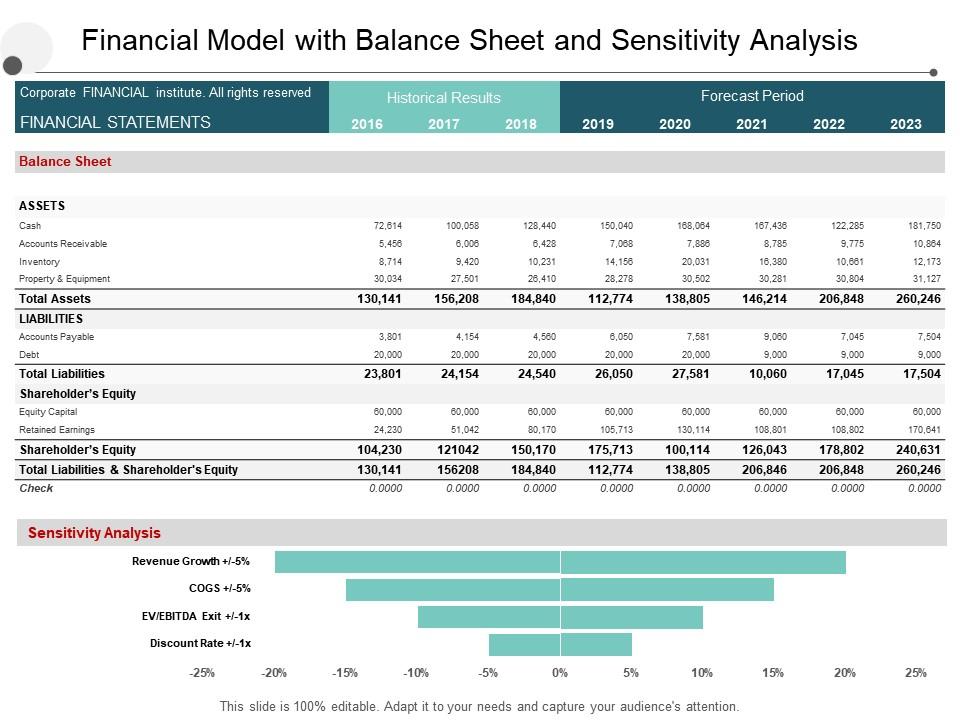
The core of any financial model is the integrated three-statement model, encompassing the income statement, balance sheet, and cash flow statement. Begin by constructing the income statement, projecting revenues, cost of goods sold (COGS), operating expenses, and net income based on your assumptions. Move on to the balance sheet, forecasting assets, liabilities, and equity, ensuring that it remains balanced (Assets = Liabilities + Equity). Finally, develop the cash flow statement, categorizing cash flows into operating, investing, and financing activities. Linking these statements ensures that changes in one statement automatically update the others, maintaining consistency and accuracy across the model.
Linking the Financial Statements
- Income Statement to Cash Flow: Net Income flows into the Cash Flow Statement.
- Cash Flow to Balance Sheet: Cash balances are updated based on cash flow activities.
- Balance Sheet to Income Statement: Depreciation from the Cash Flow Statement affects the Balance Sheet.
- Reconciliation: Ensure that the Balance Sheet balances after incorporating cash flows and other adjustments.
6. Create Supporting Schedules
Detailing Specific Financial Components
Supporting schedules provide the detailed calculations that underpin the main financial statements. Key supporting schedules include:
Key Supporting Schedules
| Schedule | Description |
|---|---|
| Debt Schedule | Details current debt, new borrowings, repayments, and interest calculations. |
| Depreciation & Amortization | Calculates depreciation expenses and updates net Property, Plant, and Equipment (PP&E). |
| Working Capital | Forecasts components like accounts receivable, inventories, and accounts payable based on turnover ratios. |
| Capital Expenditures | Projects future investments in capital assets based on historical trends and expansion plans. |
| Revenue Projections | Breaks down revenue by segments or products, using historical growth rates or market research. |
7. Perform Sensitivity and Scenario Analysis
Assessing the Impact of Variable Assumptions
Sensitivity analysis involves changing key assumptions to see how variations affect the model's outcomes. This process helps in identifying which variables have the most significant impact on the financial projections and in assessing the risks associated with different scenarios. Scenario analysis extends this by evaluating multiple scenarios—such as best-case, worst-case, and base-case—to understand a range of possible outcomes. Incorporating these analyses into your financial model enhances its robustness and provides valuable insights for decision-making.
Common Scenarios to Analyze
- Revenue Growth Rate Fluctuations
- Changes in Operating Margins
- Variations in Capital Expenditures
- Interest Rate Changes
- Market Demand Shifts
8. Incorporate Valuation Techniques
Estimating the Value of the Business or Project
Depending on the purpose of your financial model, incorporating valuation techniques may be necessary. The most common methods include Discounted Cash Flow (DCF) analysis, which involves projecting free cash flows and discounting them to present value using an appropriate discount rate. Comparative company analysis, which benchmarks against similar companies, and precedent transactions analysis, which looks at similar past transactions, are also widely used. These valuation techniques provide a means to estimate the intrinsic value of the company or project, aiding in investment decisions, mergers and acquisitions, or strategic planning.
Popular Valuation Methods
- Discounted Cash Flow (DCF) Analysis
- Comparable Company Analysis
- Precedent Transactions Analysis
- Leveraged Buyout (LBO) Analysis
- Sum of the Parts (SOTP) Valuation
9. Review and Validate the Model
Ensuring Accuracy and Reliability
After constructing the financial model, it is imperative to review and validate its accuracy. This involves checking all formulas for errors, ensuring that the financial statements are correctly linked, and verifying that the Balance Sheet balances. Comparing the model's outputs against actual historical results or other reliable models can help identify discrepancies. Additionally, adhering to best practices in financial modeling—such as maintaining clear documentation, using consistent formulas, and avoiding overly complex structures—enhances the model's reliability and ease of use.
Validation Techniques
- Cross-Verification with Historical Data
- Double-Checking Formulas and Links
- Peer Reviews and Audits
- Stress Testing Under Extreme Scenarios
- Ensuring Logical Flow Between Statements
10. Iterate and Refine the Model
Enhancing the Model with Ongoing Insights
Financial modeling is an iterative process that requires continuous refinement. As new data becomes available or as business conditions evolve, updating the model ensures that it remains relevant and accurate. Refinement may involve adjusting assumptions, incorporating new revenue streams, or adapting to changes in the competitive landscape. Additionally, soliciting feedback from stakeholders and incorporating their insights can further enhance the model's effectiveness and applicability.
Areas for Ongoing Improvement
-
Updating Assumptions with Latest Data
-
Incorporating Feedback from Users
-
Enhancing Visual Representations and Dashboards
-
Expanding the Model to Include Additional Scenarios
-
Optimizing Spreadsheet Performance for Large Data Sets
Conclusion
Constructing a financial model is a meticulous process that demands a clear understanding of its purpose, thorough data collection, and careful structuring of financial statements. By defining clear objectives, gathering comprehensive data, developing informed assumptions, and ensuring the integrity of the model through validation and refinement, you can create a robust financial tool that supports strategic decision-making and financial planning. Incorporating sensitivity and scenario analyses, along with appropriate valuation techniques, further enhances the model's utility, providing valuable insights into potential risks and opportunities. Adhering to best practices in spreadsheet design and documentation ensures that your financial model remains accurate, reliable, and user-friendly, serving as a critical asset in navigating complex financial landscapes.
References
Last updated February 14, 2025