
Exploring the Possibility of Continuous Characteristic Fields in Commutative Rings
Analyzing the feasibility of smooth transformations between commutative rings through topological interpretations.
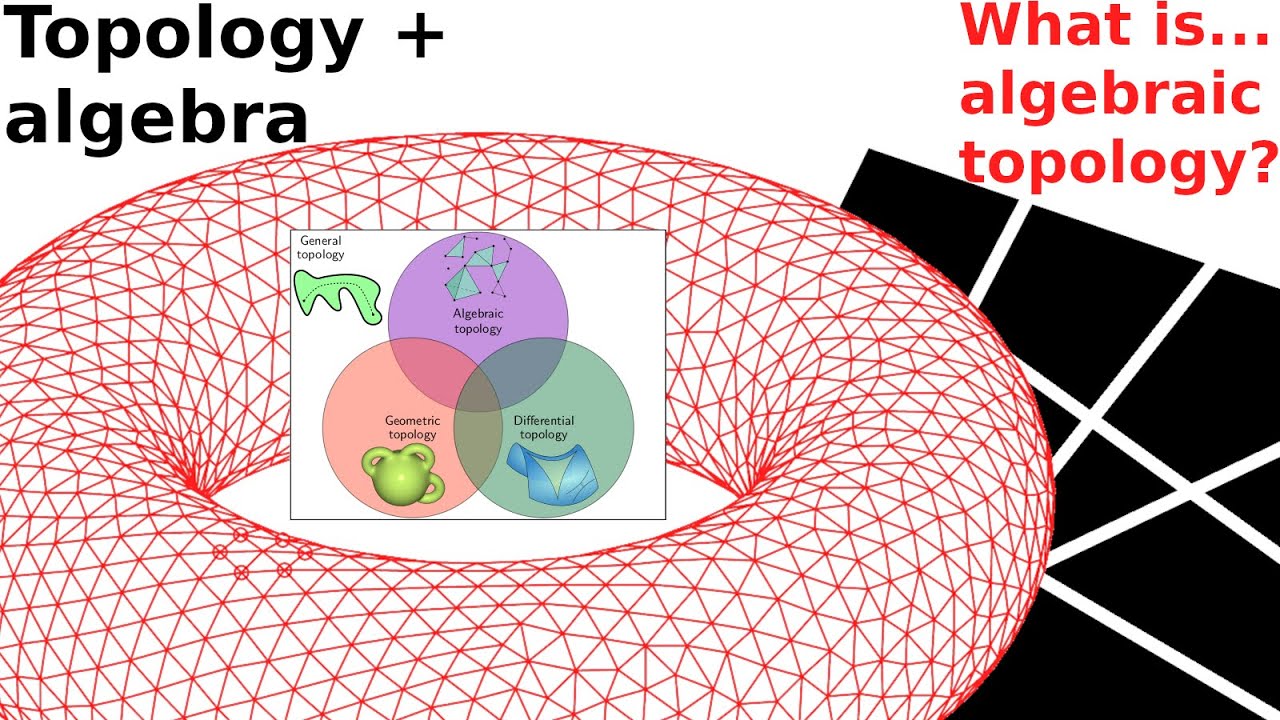
Key Takeaways
- Characteristics are inherently discrete properties, making continuous transitions between different characteristics fundamentally incompatible with classical algebraic structures.
- Topological interpretations of field characteristics, such as associating them with geometric objects like lines or spheres, are creative but lack formal mathematical frameworks.
- Emerging mathematical theories offer potential pathways for integrating algebraic and topological concepts, but a continuous definition of characteristic fields remains speculative.
Introduction
The concept of defining characteristic fields continuously to enable smooth transformations between commutative rings presents an intriguing fusion of algebra and topology. This idea seeks to transcend the traditional discrete nature of algebraic characteristics by associating them with geometric or topological structures, such as lines, points, and spheres. However, this proposition encounters significant challenges rooted in the foundational principles of classical algebra.
Understanding Field Characteristics
1. The Discrete Nature of Characteristics
The characteristic of a field or commutative ring is a fundamental algebraic invariant defined as the smallest positive integer n such that n·1 = 0 within the ring. If no such integer exists, the characteristic is zero. For instance:
- Fields like ℚ, ℝ, and ℂ possess characteristic zero.
- Finite fields 𝔽ₚ, where p is prime, have characteristic p.
This discrete classification implies that characteristics are distinct and cannot be smoothly transitioned between within classical algebraic frameworks.
2. Limitations in Smooth Transformations
In classical algebra, transforming a commutative ring of one characteristic into another of a different characteristic is inherently obstructed by their discrete properties. The arithmetic operations within these rings behave fundamentally differently based on their characteristics, preventing any notion of a "continuous" deformation or interpolation between them.
For example, attempting to transition from a ring with characteristic zero to one with characteristic p disrupts the underlying algebraic structure, as the defining relations for addition and multiplication change discontinuously.
3. Topological and Geometric Associations
The proposal to associate field characteristics with geometric entities—such as lines, points, and spheres—introduces a novel perspective but lacks formal mathematical backing. While creative, these associations do not align with established algebraic or topological frameworks:
- Characteristic zero, representing a line on a flat plane, does not correspond to any algebraic property beyond its definition.
- Characteristic one, often considered hypothetical in algebra, poses challenges as traditional ring structures do not support such a characteristic without collapsing to triviality.
- Characteristic two, analogous to the great circle of a sphere, remains a symbolic representation without direct algebraic significance.
Exploring Algebraic and Topological Integration
1. Algebraic Constraints
The rigidity of algebraic structures regarding characteristics imposes significant constraints on any attempt to introduce continuity. Since characteristics are tied to the fundamental operations within rings, altering them continuously would require redefining these operations, leading to inconsistencies within the algebraic system.
2. Topological Theories and Potential Pathways
While traditional algebra does not accommodate continuous characteristics, certain advanced mathematical theories hint at possible integrations:
- Topos Theory: Explores connections between algebraic and topological structures but does not inherently support continuous characteristics.
- Homotopy Theory: Deals with spaces and their continuous deformations, offering conceptual tools that might inspire alternative frameworks.
- Algebraic Geometry: Investigates solutions to algebraic equations using geometric methods, though it maintains the discrete nature of characteristics.
These theories provide rich interactions between algebra and topology but stop short of facilitating smooth transitions between different characteristics.
3. Speculative Frameworks
To envision a continuous definition of characteristic fields, one might consider speculative frameworks that extend beyond classical algebra:
- Deformation Theory: Investigates how mathematical structures can be 'deformed' into one another, potentially offering insights into characteristic transitions.
- Non-Standard Analysis: Introduces hyperreal numbers, which might provide alternative perspectives on algebraic continuity.
- Quantum Algebraic Geometry: Merges quantum theory with algebraic geometry, potentially opening avenues for novel interpretations of characteristics.
However, these areas remain largely exploratory and have not yet provided concrete methods for achieving continuous characteristics in commutative rings.
Challenges with Winding Numbers
The concept of winding numbers pertains to algebraic topology and describes how many times a curve winds around a point or another curve. Associating winding numbers with the characteristics of fields introduces additional layers of complexity:
- Topological Obstructions: Winding numbers are inherently topological invariants that do not have a direct correspondence with algebraic properties like characteristic.
- Incompatibility with Algebraic Structure: Classical algebraic operations do not account for topological features such as winding numbers, making seamless integration challenging.
- Discrete vs. Continuous: While winding numbers are discrete, characteristics are also discrete but originate from different mathematical domains, hindering straightforward correlations.
These factors collectively underscore the difficulties in transforming solids with different winding numbers within the classical algebraic framework concerning characteristics.
Potential Mathematical Innovations
1. Bridging Algebra and Topology
Future mathematical innovations might explore deeper integrations between algebraic and topological concepts. Possible directions include:
-
Developing new algebraic structures that inherently incorporate topological invariants.
-
Modifying existing theories to allow for graded or parametrized characteristics.
-
Utilizing categorical approaches to create more flexible mappings between algebraic and topological entities.
2. Continuous Algebraic Structures
Introducing continuous parameters into algebraic structures might pave the way for generalized characteristics. This could involve:
- Defining rings or fields with characteristics that vary smoothly with respect to a parameter.
- Exploring algebras over topological spaces where characteristics are local properties.
- Investigating sheaf-theoretic approaches to associate algebraic structures with continuous data.
3. Quantum and Non-Commutative Geometries
Emerging fields like quantum algebraic geometry and non-commutative geometry offer unconventional perspectives that might inspire methods for defining continuous characteristics. These areas challenge traditional boundaries and could potentially accommodate the fusion of algebraic and topological properties.
Conclusion
The endeavor to establish a continuous definition of characteristic fields, enabling smooth transformations between commutative rings, represents a bold and innovative proposition. Despite the creativity of associating field characteristics with geometric and topological constructs, classical algebraic frameworks fundamentally resist such continuous transitions due to the discrete nature of characteristics. While advanced mathematical theories offer tantalizing pathways for potential integration, the realization of continuous characteristics remains speculative and unsupported by existing formalizations. Future mathematical research may uncover novel structures or theories that bridge these gaps, but as of now, the discrete nature of characteristics stands as a significant barrier to the envisioned continuous transformation.
References
- Characterization of Fields in Commutative Rings
- Algebraic Characterization of Rings of Continuous R((t))-Valued...
- Ring (Mathematics) - Wikipedia
- Commutative Rings and Fields - Millersville University of Pennsylvania
- Commutative Ring - Medium
- Rings - UTSA Math Research Wiki
- Characteristic (Algebra) - Wikipedia
- Commutative Rings and Fields - Millersville University
Last updated January 22, 2025