
Exploring the Most Exciting and Innovative Use Cases in Technology Today
A deep dive into groundbreaking applications across various fields.
Key Highlights of Innovative Use Cases
- Artificial Intelligence (AI) is revolutionizing numerous sectors, from healthcare diagnostics and personalized medicine to financial fraud detection and automated customer service. Its ability to analyze vast datasets and identify patterns is driving significant advancements.
- Innovative solutions in healthcare, such as telemedicine and AI-powered diagnostics, are making care more accessible and efficient, addressing real-world problems and improving patient outcomes globally.
- The convergence of technologies like 5G, IoT, and AI is enabling a new era of connectivity and automation, leading to smart cities, autonomous systems, and enhanced efficiency across industries.
The Transformative Power of AI Use Cases
Artificial Intelligence continues to be at the forefront of technological innovation, offering a wide array of use cases that are reshaping industries and daily life. From sophisticated algorithms powering autonomous vehicles to AI agents assisting in complex decision-making, the applications are vast and impactful.
AI in Healthcare: Revolutionizing Diagnosis and Treatment
One of the most compelling areas where AI is making a significant difference is in healthcare. AI is being used to improve diagnostics, often identifying patterns in medical images or patient data that might be missed by human eyes. Personalized medicine is another area benefiting greatly from AI, with algorithms analyzing genetic information and patient history to suggest optimal treatment plans. AI-powered systems can even assist healthcare providers in recommending the most effective prescriptions, minimizing errors and improving patient safety.
Furthermore, AI is accelerating drug discovery by analyzing vast biological datasets to identify potential drug candidates and predict their efficacy. Telemedicine is also being enhanced by AI, allowing for remote patient monitoring and virtual consultations with greater accuracy and efficiency.
AI in Finance: Enhancing Security and Efficiency
In the financial sector, AI plays a crucial role in fraud detection by analyzing transaction patterns in real-time to identify suspicious activities. Algorithmic trading, powered by AI, allows for high-speed trading decisions based on market analysis. Credit scoring and risk assessment are also being improved with AI, providing more accurate evaluations of financial risk.
AI-driven apps like Mint help users manage their finances, offering personalized budgeting advice and spending tracking. The application of AI also brings transparency to sales processes, enhancing lead generation, customer engagement, and overall sales strategies.
Agentic AI: Enabling More Autonomous Systems
Agentic AI, which refers to AI systems capable of independent action and decision-making to achieve specific goals, is gaining momentum. Use cases for agentic AI are diverse and include personalized healthcare, smart assistants, and optimizing e-commerce experiences by helping retailers manage customer orders more efficiently.
Agentic AI can also streamline hiring processes and improve candidate experiences in Human Resources by automating tasks and providing intelligent insights.
Generative AI: Creativity and Automation
Generative AI, known for its ability to create new content such as text, images, and code, is opening up exciting possibilities. Beyond generating creative content like poems or images from text prompts, generative AI is being used in business for content generation, market demand forecasting to optimize supply chains, and even assisting in legal research and document analysis.
Tools powered by generative AI are becoming more accessible, with platforms from companies like OpenAI, NVIDIA, and Google offering capabilities for businesses to integrate into their operations.
Innovative Solutions Addressing Real-World Problems
Beyond the broad categories of AI, numerous innovative solutions are emerging to tackle specific real-world challenges across various sectors. These solutions often leverage technology in unique ways to create impactful change.
Healthcare Technology Innovations
Healthcare technology continues to innovate to provide more accessible and effective care. Innovations such as telemedicine, wearable health trackers, and AI-powered diagnostic tools are creating more efficient systems and improving patient outcomes. These technologies are crucial in reaching underserved populations and providing timely medical attention.
Sustainable Technology and Environmental Solutions
Innovative solutions are also focused on addressing environmental concerns. Examples include energy-producing roads, solar panels designed to prevent water evaporation, and technologies that convert waste into valuable resources. These advancements are vital for creating a more sustainable future.
Improving Infrastructure and Daily Life
Technology is also being applied to improve infrastructure and daily life. Innovations like plastic blocks for construction, shoe navigation systems for the visually impaired, and edible utensils demonstrate creative approaches to common problems. These solutions highlight how technology can be used to enhance convenience and accessibility.
The Role of Emerging Technologies in Future Use Cases
Several emerging technologies are poised to enable even more innovative use cases in the coming years. Their development and integration will likely lead to entirely new applications and transform existing ones.
Quantum Computing
Quantum computing, with its immense processing power, has the potential to solve complex problems that are currently intractable for even the most powerful supercomputers. This could lead to breakthroughs in drug discovery, materials science, and optimization problems across various industries.
Augmented and Virtual Reality (AR/VR)
AR/VR technologies are moving beyond gaming and entertainment into practical applications. In healthcare, AR can assist in surgery, while VR is being used for medical training and therapy. In education, AR/VR can create immersive learning experiences. These technologies are set to change how we interact with digital information and the physical world.
5G and Beyond (6G) Connectivity
Advanced connectivity like 5G and the upcoming 6G is crucial for enabling many future use cases, particularly those involving the Internet of Things (IoT) and autonomous systems. Faster speeds and lower latency will support more responsive and data-intensive applications, from smart cities to remote-controlled robotics.
Defining and Understanding Use Cases
To fully appreciate the coolest use cases, it's helpful to understand what a use case is in a technical context.
A use case describes the different ways a user or external entity interacts with a system or application. It outlines a sequence of actions and events that result in a specific outcome. Use cases are valuable in the planning and development stages of projects, helping to define requirements, scope, and potential interactions.
Components of a Use Case
While the format can vary, a typical use case description includes:
-
Actor: The user or external system interacting with the system.
-
Goal: The objective the actor wants to achieve.
-
Preconditions: Conditions that must be met before the use case can begin.
-
Flow of Events: A step-by-step description of the interaction between the actor and the system. This includes the main success scenario and alternative flows or exceptions.
-
Postconditions: The state of the system after the use case is successfully completed.
Selected Examples of Innovative Use Cases Across Industries
The following table provides a glimpse into some of the innovative use cases being implemented across various industries, highlighting their practical applications and impact.
| Industry | Innovative Use Case Example | Description |
|---|---|---|
| Healthcare | AI-Powered Diagnostics | Utilizing AI to analyze medical images (e.g., X-rays, MRIs) for early and more accurate disease detection. |
| Finance | AI for Fraud Detection | Implementing AI algorithms to monitor transactions and identify fraudulent activities in real-time. |
| Retail | Optimized E-commerce Experience | Using AI agents to personalize shopping experiences, manage inventory, and streamline order processing. |
| Transportation | Autonomous Vehicles | Developing self-driving cars and trucks that use AI and sensors to navigate and make driving decisions. |
| Agriculture | Precision Farming | Employing IoT sensors and AI to monitor crop health, soil conditions, and optimize resource allocation for better yields. |
| Education | Personalized Learning Platforms | Utilizing AI to adapt educational content and pace to individual student needs and learning styles. |
| Manufacturing | Predictive Maintenance | Using sensors and AI to monitor equipment performance and predict potential failures before they occur, minimizing downtime. |
Visualizing Innovation: A Relevant Example
Innovation often manifests in tangible ways, and examining specific projects can provide valuable insight into real-world applications of technology. The following image represents an example of innovation in a practical setting, showcasing how technology can be applied to solve problems.
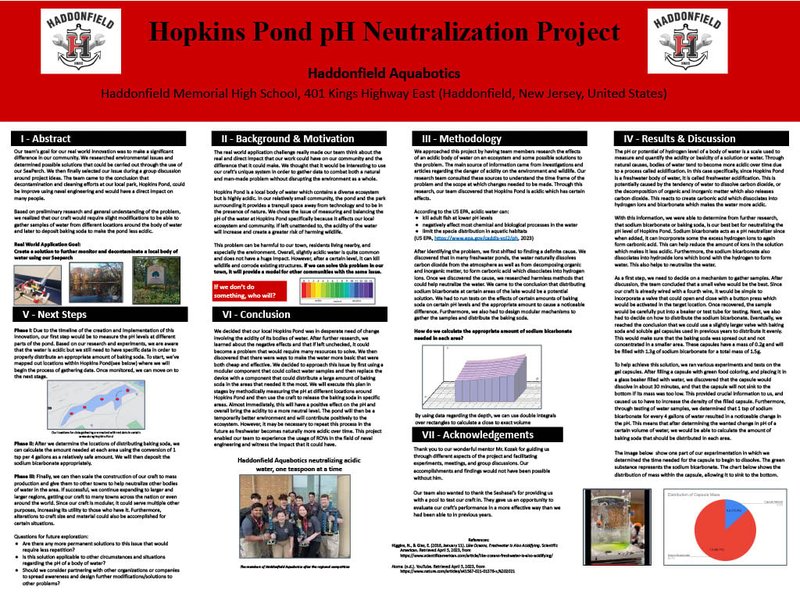
Students collaborating on a robotics project, demonstrating real-world application of technology and problem-solving.
This image depicts students engaged in a robotics project, likely as part of a program focused on "Real-World Innovation." Such initiatives are crucial in demonstrating how scientific and technological principles can be applied to address practical challenges. Robotics, for instance, has numerous use cases ranging from industrial automation and exploration to medical assistance and education. Projects like this foster problem-solving skills and encourage the development of innovative solutions from a young age.
Frequently Asked Questions About Innovative Use Cases
What makes a use case "cool"?
A "cool" use case is typically one that demonstrates a novel application of technology to solve a significant problem, create new possibilities, or significantly improve existing processes in an exciting or impactful way. It often involves pushing the boundaries of what was previously possible.
How do innovative use cases emerge?
Innovative use cases often emerge from identifying unmet needs or inefficiencies and then exploring how emerging or existing technologies can be applied to address them. This can happen through research and development, interdisciplinary collaboration, or simply creative problem-solving.
Are innovative use cases always related to advanced technology like AI?
While many of the most talked-about innovative use cases involve advanced technologies like AI, innovation can also come from applying simpler technologies in new and creative ways, or from developing non-technological solutions to problems.
What are the potential challenges in implementing innovative use cases?
Challenges can include technical hurdles, cost of implementation, regulatory issues, ethical considerations (especially with technologies like AI), user adoption, and the need for skilled personnel to develop and maintain the solutions.
How can businesses identify potential innovative use cases?
Businesses can identify potential innovative use cases by analyzing their current processes for inefficiencies, gathering feedback from customers and employees about pain points, monitoring technological advancements, and exploring how other industries are leveraging technology.
References
Last updated May 4, 2025