
Unveiling the Coolest Features in Modern Programming
Exploring Innovative Capabilities and Their Impact
The landscape of programming is constantly evolving, driven by innovative features that enhance efficiency, creativity, and the overall development experience. These features can range from powerful language constructs to sophisticated tools and methodologies. Identifying the "coolest" features often involves looking at those that significantly simplify complex tasks, enable new paradigms, or push the boundaries of what's possible in software development.
Highlights of Innovative Programming Features
- Advanced Type Systems: Providing stronger guarantees about program correctness and reducing runtime errors.
- Concurrency and Parallelism Tools: Simplifying the development of applications that can effectively utilize multi-core processors and distributed systems.
- Integrated Development Environments (IDEs) with AI Assistance: Offering intelligent code completion, error detection, and even code generation to accelerate development.
Top 10 Coolest Features in Programming
Based on current trends and their impact on the development process, here are ten features that stand out for their innovation and utility:
1. Advanced Pattern Matching
Pattern matching allows developers to concisely and expressively destructure data structures and execute code based on the shape of the data. This feature, often found in functional programming languages, significantly improves code readability and maintainability when dealing with complex data.
2. Built-in Concurrency and Parallelism Constructs
Managing concurrent and parallel operations can be challenging. Programming languages with built-in support for concurrency, such as goroutines in Go or async/await in C# and Python, make it easier to write efficient and responsive applications that leverage the full power of modern hardware.
Here's an example of how Go simplifies concurrency with goroutines:
package main

import (
	"fmt"
	"time"
)

func greet(name string) {
	time.Sleep(time.Second)
	fmt.Println("Hello,", name)
}

func main() {
	go greet("Alice")
	go greet("Bob")

	// Allow time for goroutines to complete
	time.Sleep(2 * time.Second)
}
3. Powerful Type Inference
Type inference allows the compiler to automatically deduce the data types of variables and expressions, reducing the need for explicit type annotations. This makes code more concise while still maintaining type safety, as seen in languages like Kotlin and Swift.
4. Metaprogramming Capabilities (Macros)
Metaprogramming allows programs to treat other programs as their data. Macros, a form of metaprogramming, enable developers to write code that writes code, facilitating tasks like code generation, domain-specific language implementation, and compile-time optimizations. Languages like Rust and Lisp are known for their powerful macro systems.
5. Live Coding Environments
Live coding, often used in creative coding and performance art, allows developers to modify code and see the results instantly without recompilation or restarting the application. This interactive approach fosters experimentation and rapid iteration.
Creative coding examples, including live coding, showcase the artistic possibilities of programming.

An illustration of coding in a dynamic environment.
6. Integrated Package Management
A robust package manager simplifies the process of including, updating, and managing external libraries and dependencies. Features like dependency resolution and version control are essential for building large and complex applications. Examples include pip for Python, npm for Node.js, and Cargo for Rust.
7. Automatic Memory Management (Garbage Collection)
Automatic memory management relieves developers from the burden of manual memory allocation and deallocation, reducing the risk of memory leaks and other memory-related bugs. Languages like Java, C#, and Python utilize garbage collection.
8. First-Class Functions and Closures
Treating functions as first-class citizens means they can be assigned to variables, passed as arguments, and returned from other functions. Closures, which allow functions to retain access to variables from their surrounding scope, are a powerful feature for creating flexible and modular code. These are key features in languages like JavaScript, Python, and Swift.
9. Domain-Specific Language (DSL) Creation Capabilities
Some programming languages provide features that make it easier to create domain-specific languages tailored to particular problem domains. This can lead to more expressive and readable code within that domain. Examples include Ruby's flexibility for building DSLs.
10. Robust Error Handling Mechanisms
Effective error handling is crucial for building reliable software. Features like exceptions, result types (e.g., Result in Rust, Optional in Java), and dedicated error handling syntax help developers gracefully manage and respond to errors.
Implementing Features in a "Cool" Programming Language
The "coolest" programming language is subjective and often depends on the specific use case and developer preferences. However, languages that incorporate a combination of innovative features that enhance productivity, safety, and expressiveness are often considered "cool." Rust, for example, is often lauded for its focus on memory safety without a garbage collector, achieved through its ownership system and borrow checker.
Let's consider how some of the coolest features could be implemented or are present in a modern language like Rust:
Pattern Matching in Rust
Rust has powerful pattern matching capabilities using the match keyword, which is similar to a switch statement but much more versatile. It can match on various data types, including enums, structs, and tuples.
enum Status {
    Value(i32),
    Error(String),
}

fn process_status(s: Status) {
    match s {
        Status::Value(v) => println!("Success with value: {}", v),
        Status::Error(e) => println!("Error: {}", e),
    }
}

fn main() {
    process_status(Status::Value(42));
    process_status(Status::Error("Something went wrong".to_string()));
}
Concurrency in Rust
Rust provides fearless concurrency through its ownership system and the Send and Sync traits, which help prevent data races at compile time. It offers various tools for concurrent programming, including threads and message passing.
use std::thread;
use std::time::Duration;

fn main() {
    let handle = thread::spawn(|| {
        for i in 1..10 {
            println!("hi number {} from the spawned thread!", i);
            thread::sleep(Duration::from_millis(1));
        }
    });

    for i in 1..5 {
        println!("hi number {} from the main thread!", i);
        thread::sleep(Duration::from_millis(1));
    }

    handle.join().unwrap();
}
Error Handling with Result and Option in Rust
Rust uses the Result<T, E> and Option<T> enums for explicit and robust error handling, encouraging developers to handle potential failures rather than relying on exceptions.
fn divide(numerator: f64, denominator: f64) -> Result<f64, String> {
    if denominator == 0.0 {
        Err("Cannot divide by zero".to_string())
    } else {
        Ok(numerator / denominator)
    }
}

fn main() {
    match divide(10.0, 2.0) {
        Ok(result) => println!("Result: {}", result),
        Err(e) => println!("Error: {}", e),
    }

    match divide(10.0, 0.0) {
        Ok(result) => println!("Result: {}", result),
        Err(e) => println!("Error: {}", e),
    }
}
These examples demonstrate how modern languages like Rust incorporate powerful features to enable safer, more efficient, and expressive programming.
Key Innovations in Programming and Software
Innovation in programming extends beyond language features to encompass tools, methodologies, and applications. Some significant innovations include:
| Innovation | Description | Impact |
|---|---|---|
| Internet and World Wide Web | A global network facilitating communication and information sharing. | Revolutionized access to information and commerce. |
| Personal Computers/Laptops | Democratized computing power, making it accessible to individuals. | Transformed work, education, and personal life. |
| Mobile Phones | Enabled ubiquitous communication and access to services. | Reshaped social interaction and business. |
| Provided a fast and efficient means of electronic communication. | Fundamental tool for personal and professional communication. | |
| Object-Oriented Programming (OOP) | A programming paradigm based on the concept of "objects". | Improved code organization, reusability, and maintainability. |
| Integrated Development Environments (IDEs) | Software applications that provide comprehensive facilities to computer programmers for software development. | Increased developer productivity and streamlined workflows. |
| Cloud Computing | Delivery of computing services—including servers, storage, databases, networking, software, analytics, and intelligence—over the Internet. | Enabled scalable and on-demand access to computing resources. |
| APIs (Application Programming Interfaces) | Sets of definitions and protocols for building and integrating application software. | Facilitated interoperability between different software systems. |
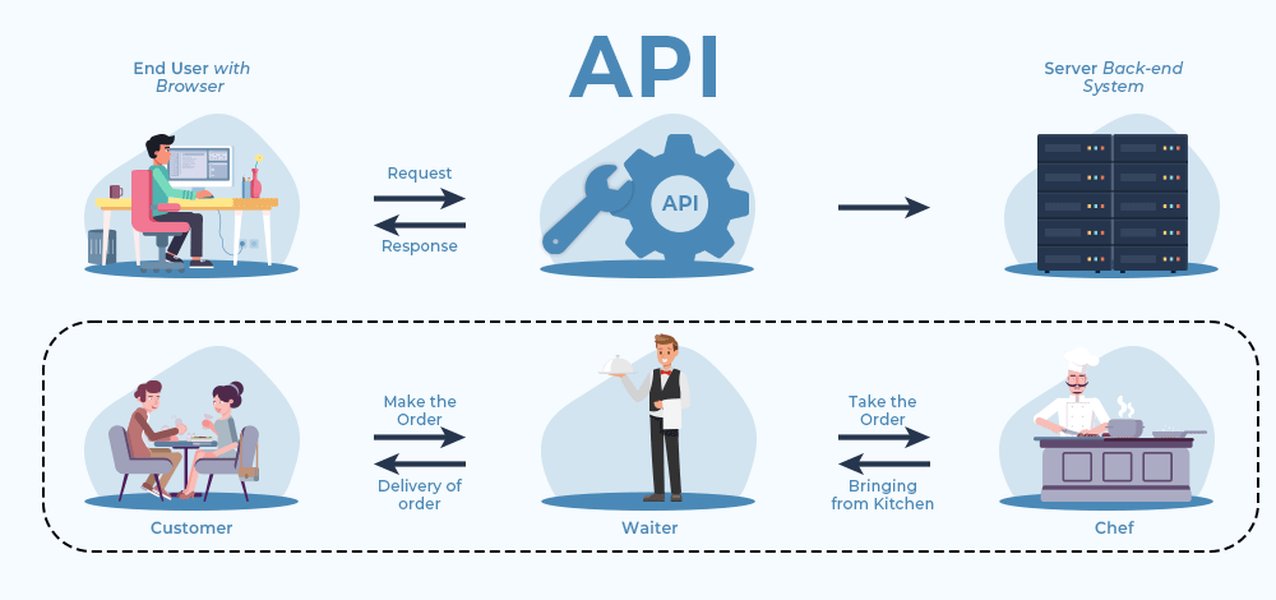
Understanding the role of APIs in modern software interaction.
The Future of Programming Features
The future of programming languages and tools is likely to see further integration of artificial intelligence, advancements in handling concurrency for emerging architectures like quantum computing, and continued focus on security and developer ergonomics. Features that enhance collaboration, simplify complex deployments, and provide better insights into program behavior will also be crucial.
AI in programming tools is expected to significantly ease the development process by assisting with tasks such as code generation, debugging, and optimization.
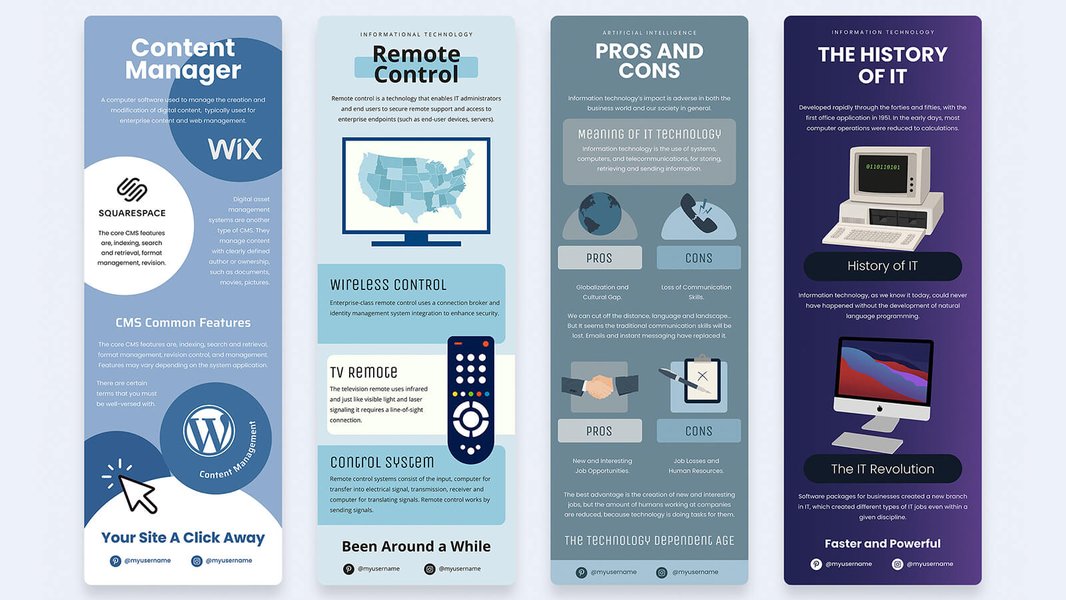
Visualizing the impact of AI on technology and programming.
FAQ
What makes a programming feature "cool"?
A programming feature is often considered "cool" if it significantly simplifies a complex task, enables a new and powerful way of solving problems, improves code safety or performance, or enhances the developer experience in a notable way. It often involves a degree of elegance or ingenuity in its design.
Are the "coolest" features always the most widely used?
Not necessarily. While some widely used features like automatic memory management are definitely cool due to the complexity they abstract away, some innovative features might be more niche or specific to certain programming paradigms or languages before gaining broader adoption.
How do new programming features emerge?
New features can emerge from research in computer science, the needs of specific industries or problem domains, advancements in hardware, or the evolution of programming paradigms. Community contributions and open-source development also play a significant role in the development and adoption of new features.
Which programming language is considered the "coolest"?
There is no single "coolest" programming language. The perception of a language's "coolness" is subjective and depends on factors like its features, community, ease of use for a specific task, and how it aligns with a developer's philosophy. Languages like Rust, Python, JavaScript, and Kotlin are often cited for their modern features and developer-friendly aspects.
Recommended Further Exploration
- What are the latest trends shaping programming languages?
- How is artificial intelligence impacting software development practices?
- Explore the innovative features found in functional programming languages.
- What does the future hold for concurrency models in programming?
References
Last updated May 18, 2025