
Unlocking the Secrets of Coordination Compounds: A Comprehensive Guide
Delve into the fascinating world of metal-ligand interactions, structure, bonding, and applications.

- 1.Key Insights into Coordination Compounds
- 2.The Essence of Coordination Compounds: Defining Principles
- 3.Structural Diversity and Geometry of Complexes
- 4.Nomenclature: Naming the Complex World
- 5.Bonding Theories: Explaining Metal-Ligand Interactions
- 6.The Spectrum of Applications: Where Coordination Compounds Shine
- 7.Alfred Werner's Enduring Legacy
- 8.A Mindmap of Coordination Compound Concepts
- 9.A Glimpse into Isomerism through Video
- 10.Summary of Key Concepts
- 11.Frequently Asked Questions (FAQ)
- 12.Conclusion
- 13.Recommended Further Exploration
- 14.Referenced Search Results
Key Insights into Coordination Compounds
- Fundamental Definition: Coordination compounds are formed by a central metal atom or ion bonded to surrounding molecules or ions, known as ligands, through coordinate covalent bonds.
- Structural Diversity: These compounds exhibit a rich variety of structures and geometries, including tetrahedral, square planar, and octahedral, determined by the coordination number and ligand arrangement.
- Broad Applications: Coordination compounds play crucial roles in diverse fields such as catalysis, medicine, and material science, owing to their unique chemical and physical properties.
Coordination compounds represent a pivotal area within chemistry, characterized by the intricate interactions between a central metal atom or ion and surrounding molecules or ions, termed ligands. These interactions, facilitated by coordinate covalent bonds where ligands donate electron pairs to the metal, underpin the unique properties and widespread applications of these complexes.
The Essence of Coordination Compounds: Defining Principles
At the heart of coordination chemistry lies the concept of a central metal atom or ion, which acts as a Lewis acid by accepting electron pairs. Surrounding this central metal are ligands, which function as Lewis bases, donating electron pairs to form coordinate covalent bonds. The number of ligands directly attached to the metal center is known as the coordination number, a critical factor influencing the compound's geometry and overall structure.
Key Components and Their Roles
Understanding coordination compounds requires familiarity with their fundamental components:
- Central Metal Atom/Ion: Typically a transition metal, it serves as the core of the complex, often possessing vacant d-orbitals to accommodate electron pairs from ligands.
- Ligands: These are molecules or ions that bond to the central metal. They can be neutral (e.g., NH₃, H₂O) or charged (e.g., Cl⁻, CN⁻) and vary in their denticity (number of donor atoms).
- Coordinate Covalent Bonds: Also known as dative bonds, these are formed when a ligand donates both electrons to the central metal.
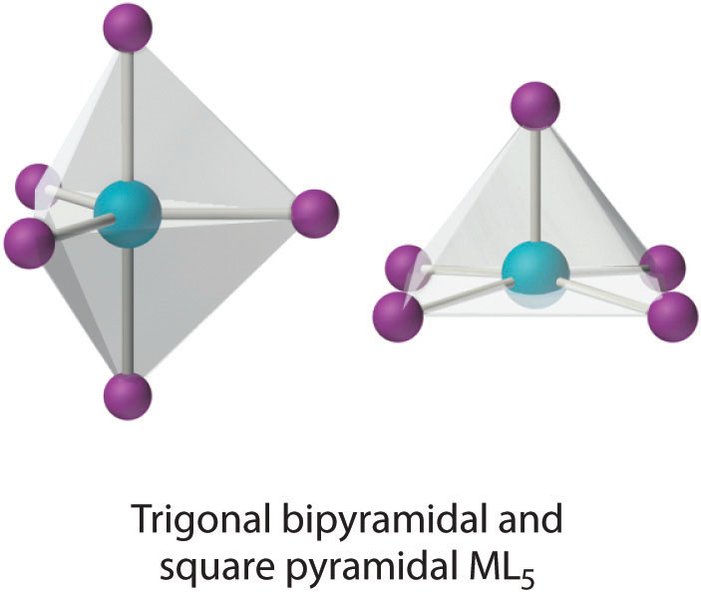
- Coordination Number: This specifies the total number of ligand donor atoms directly bonded to the central metal ion. Common coordination numbers include 4 and 6, but others exist.
- Coordination Sphere: This encompasses the central metal ion and its directly attached ligands, enclosed in square brackets in chemical formulas.

An illustration highlighting the concept of coordination number.
Structural Diversity and Geometry of Complexes
The arrangement of ligands around the central metal atom dictates the geometry of the coordination compound. The coordination number plays a pivotal role in determining these shapes. For instance, a coordination number of 4 can lead to either tetrahedral or square planar geometries, while a coordination number of 6 almost universally results in an octahedral arrangement.
Common Geometries
- Tetrahedral: Often seen with a coordination number of 4, where the ligands are positioned at the vertices of a tetrahedron around the central metal.
- Square Planar: Also with a coordination number of 4, but with ligands arranged in a plane around the central metal, typically observed in d⁸ transition metal complexes (e.g., complexes of Ni(II), Pd(II), Pt(II)).
- Octahedral: The most common geometry for a coordination number of 6, where ligands occupy the vertices of an octahedron. This arrangement allows for various types of isomerism.
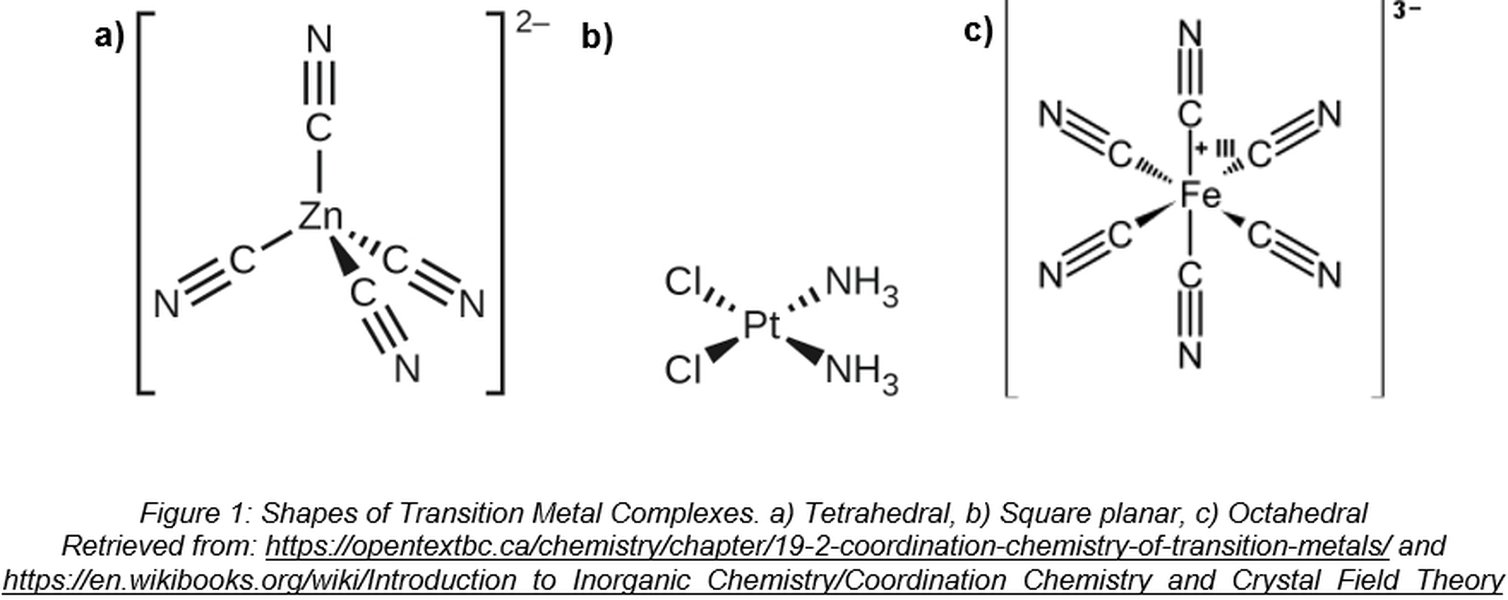
Depiction of various stereochemical arrangements in transition metal complexes.
Understanding Isomerism: Same Formula, Different Structures
Isomerism is a critical concept in coordination chemistry, where compounds share the same chemical formula but differ in the arrangement of their atoms or ligands. This phenomenon significantly influences their chemical and physical properties.
Types of Isomerism
- Structural Isomerism:
- Linkage Isomerism: Occurs when a ligand can bind to the metal through different donor atoms (e.g., NO₂⁻ can bind via N or O).
- Coordination Isomerism: Found in complexes where both the cation and anion are complex ions, and the ligands are swapped between them.
- Ionization Isomerism: Different ions are inside or outside the coordination sphere.
- Solvate (or Hydrate) Isomerism: Water molecules are exchanged between the coordination sphere and the lattice.
- Stereoisomerism:
- Geometric (cis-trans) Isomerism: Arises from different spatial arrangements of ligands around the central metal, especially in square planar and octahedral complexes.
- Optical Isomerism: Occurs when isomers are non-superimposable mirror images of each other (enantiomers), leading to chirality.
Nomenclature: Naming the Complex World
The International Union of Pure and Applied Chemistry (IUPAC) provides a systematic set of rules for naming coordination compounds to ensure clarity and avoid ambiguity. These rules dictate how ligands, the central metal, and its oxidation state are designated.
An example of a coordination compound illustrating its components.
Key Nomenclature Rules
- Ligand Naming: Anionic ligands end in "-o" (e.g., chloro, cyano), while neutral ligands retain their common names (e.g., ammine for NH₃, aqua for H₂O), with a few exceptions.
- Prefixes for Ligand Count: Greek prefixes (di-, tri-, tetra-, etc.) are used to indicate the number of identical simple ligands. For complex ligands, "bis-", "tris-", "tetrakis-" are used.
- Order of Ligands: Ligands are listed alphabetically before the metal name.
- Central Metal Naming: The name of the metal follows the ligands. If the complex is an anion, the metal name ends in "-ate" (e.g., ferrate, cuprate).
- Oxidation State: The oxidation state of the central metal is indicated by a Roman numeral in parentheses after its name.
Bonding Theories: Explaining Metal-Ligand Interactions
To understand the properties of coordination compounds, various theories have been developed to explain the nature of metal-ligand bonding. These theories help predict magnetic properties, color, and stability.
Valence Bond Theory (VBT)
VBT describes the bonding in terms of overlap between filled ligand orbitals and vacant metal orbitals, forming coordinate covalent bonds. It explains the hybridization of metal orbitals and predicts the geometry of the complex. However, it doesn't fully account for color or magnetic properties.
Crystal Field Theory (CFT)
CFT focuses on the electrostatic interactions between the central metal ion and the ligands. It describes how the electric field created by the ligands causes the splitting of the metal's d-orbitals into different energy levels. This splitting (crystal field splitting) is responsible for the characteristic colors and magnetic properties of many coordination compounds. Ligands are classified as strong-field or weak-field based on their ability to cause large or small splitting, respectively.
Ligand Field Theory (LFT)
LFT is a more advanced approach that combines aspects of CFT and molecular orbital theory, providing a more comprehensive description of bonding in coordination compounds. It accounts for both electrostatic and covalent interactions, offering a more accurate explanation of spectral and magnetic properties.
The Spectrum of Applications: Where Coordination Compounds Shine
The unique properties of coordination compounds, including their varied geometries, electronic structures, and reactivity, make them indispensable in numerous scientific and industrial applications.
The radar chart above illustrates the perceived significance and research interest of coordination compounds across various application domains. Catalysis and analytical chemistry show high significance, while medicine and material science are areas of intense research interest.
Catalysis
Many coordination compounds act as powerful catalysts in various industrial processes, including polymerization, hydrogenation, and oxidation reactions. Their ability to facilitate reactions efficiently and selectively makes them crucial in synthesizing pharmaceuticals, polymers, and fine chemicals.
Medicine
In medicine, coordination compounds are employed as diagnostic agents, therapeutic drugs, and imaging agents. For instance, cisplatin and its derivatives are well-known platinum-based anticancer drugs, while gadolinium complexes are widely used in Magnetic Resonance Imaging (MRI).
Material Science
Coordination compounds contribute to the development of novel materials with specific optical, electronic, and magnetic properties. Examples include metal-organic frameworks (MOFs) for gas storage and separation, and luminescent complexes for display technologies.
Analytical Chemistry
Their ability to form colored complexes with specific metal ions makes coordination compounds invaluable in analytical chemistry for qualitative and quantitative analysis, such as spectrophotometry and complexometric titrations.
Alfred Werner's Enduring Legacy
Any discussion of coordination compounds would be incomplete without acknowledging the groundbreaking work of Alfred Werner. His coordination theory, proposed in 1893, revolutionized the understanding of these complexes. Werner introduced the concepts of primary and secondary valences, which correspond to the oxidation state and coordination number of the central metal, respectively. His theory provided a framework for understanding the structure and isomerism of coordination compounds, for which he was awarded the Nobel Prize in Chemistry in 1913.
Werner's Coordination Theory
- Primary Valence: Corresponds to the oxidation state of the central metal ion and is satisfied by negatively charged ions.
- Secondary Valence: Corresponds to the coordination number and is satisfied by ligands, leading to a fixed geometry.
This bar chart compares the relative explanatory power of different bonding theories in coordination chemistry. Ligand Field Theory, being the most comprehensive, offers the highest explanatory power.
A Mindmap of Coordination Compound Concepts
To consolidate the various aspects of coordination compounds, here's a mindmap illustrating the interconnectedness of key concepts.
This mindmap provides a visual overview of the key concepts associated with coordination compounds, highlighting their interrelations from definition to applications.
A Glimpse into Isomerism through Video
Isomerism is a fundamental concept in coordination chemistry, demonstrating how compounds with the same chemical formula can exhibit vastly different properties due to variations in their atomic arrangements. The following video offers a visual explanation of optical isomerism, a specific type of stereoisomerism prevalent in coordination complexes.
The video above delves into the specifics of optical isomerism in coordination compounds. Optical isomers, or enantiomers, are non-superimposable mirror images of each other, a property that often leads to different biological activities, making it highly relevant in medicinal chemistry and drug design. Understanding how these complex structures can have subtle yet profound differences is key to mastering coordination chemistry.
Summary of Key Concepts
The study of coordination compounds is a cornerstone of inorganic chemistry, bridging theoretical understanding with practical applications. From Werner's pioneering work to modern ligand field theory, the principles governing these complexes have evolved, allowing for precise control over their synthesis and properties.
| Concept | Description | Significance |
|---|---|---|
| Definition | Central metal ion bonded to ligands via coordinate covalent bonds. | Forms the basis of all coordination chemistry. |
| Ligands | Molecules/ions donating electron pairs to the metal. | Determine coordination number, geometry, and electronic properties. |
| Coordination Number | Number of donor atoms directly bonded to the central metal. | Dictates the geometric shape of the complex. |
| Isomerism | Same formula, different arrangement of atoms/ligands. | Influences physical (e.g., color) and chemical (e.g., reactivity) properties. |
| Nomenclature | Systematic IUPAC rules for naming complexes. | Ensures clear and unambiguous communication in chemistry. |
| Bonding Theories | VBT, CFT, LFT explaining metal-ligand interactions. | Predicts electronic structure, color, and magnetic properties. |
| Applications | Catalysis, medicine, material science, analytical chemistry. | Highlights the practical importance and versatility of coordination compounds. |
This table provides a concise summary of the core concepts discussed in coordination chemistry, emphasizing their descriptions and overall significance.
Frequently Asked Questions (FAQ)
What is the primary difference between a coordination compound and a simple salt?
Why are transition metals commonly found in coordination compounds?
How does Crystal Field Theory explain the color of coordination compounds?
What are some real-world examples of coordination compounds in everyday life?
Can all ligands form chelate rings?
Conclusion
Coordination compounds stand as a testament to the intricate and diverse nature of chemical bonding. Their fundamental definitions, varied structural geometries, systematic nomenclature, and profound bonding theories collectively contribute to their wide-ranging applications in modern science and technology. From life-sustaining biological processes to cutting-edge industrial catalysts and medical diagnostics, these fascinating complexes continue to be an active and vital area of chemical research and innovation. The insights gleaned from their study pave the way for developing new materials and solutions to global challenges.
Recommended Further Exploration
- Advanced coordination chemistry bonding theories
- Applications of coordination compounds in drug discovery
- Metal organic frameworks MOFs synthesis and properties
- Spectroscopic techniques for coordination compounds