
Copper Aluminum Catalyst
A Comprehensive Overview of Structure, Applications, and Performance
Highlights
- Versatile Applications: Utilized in hydrogen production, oxidation reactions, methanol synthesis, and environmental remediation.
- Structural and Thermal Stability: The aluminium component enhances the thermal resistance and longevity of the catalyst.
- Green Chemistry Alignment: Supports solvent-free processes and improved efficiency in imine synthesis and organic transformations.
Introduction
Copper aluminum catalysts, also referred to as copper-alumina catalysts or Cu-Al catalysts, are an important class of catalytic materials in both academic research and industrial applications. These catalysts integrate copper, known for its high catalytic activity, with aluminum, which provides structural stability and resistance to sintering. By combining these materials, copper aluminum catalysts exhibit enhanced performance in a variety of chemical reactions while offering a balance of activity, selectivity, and durability.
Composition and Structure
The basic composition of a copper aluminum catalyst typically includes copper oxide (CuO) and aluminum oxide (Al2O3). The copper oxide acts as the active catalytic site in most reactions, while the aluminum oxide not only serves as a supporting matrix but also contributes to the overall thermal stability and surface area of the catalyst. In addition to its binary composition, copper-aluminum catalysts often incorporate additional components such as zinc oxide (ZnO) to further enhance performance in specific catalytic processes, for instance, in methanol synthesis.
Preparation Methods
Various synthesis methods are employed to prepare copper aluminum catalysts. Techniques such as sol-gel processing, modified inverse micelle methods, and activated carbon templating are used to achieve a mesoporous structure with high surface area and well-dispersed active sites. An optimal ratio of copper to aluminum is critical; researchers often fine-tune synthesis conditions to maximize both activity and selectivity for targeted reactions.
Catalytic Applications
Copper aluminum catalysts boast a wide array of applications across different industries. Their adaptability makes them valuable in processes that require high catalytic activity and selectivity. Below are several key reactions and applications:
Hydrogen Production and Water-Gas Shift Reaction
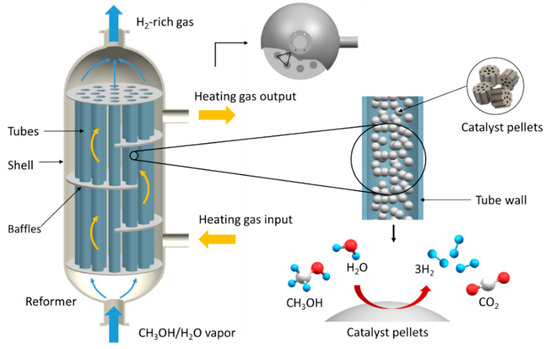
One of the most notable applications of copper aluminum catalysts is in hydrogen production, especially via the water-gas shift reaction. The water-gas shift reaction converts carbon monoxide (CO) and water (H2O) into hydrogen (H2) and carbon dioxide (CO2) using:
\( \text{\(CO\) + H}_2\text{O} \rightarrow \text{\(CO_2\) + H}_2 \)
In this process, copper oxide is instrumental in facilitating the reaction, while the aluminum oxide component helps to maintain the catalyst’s stability at high temperatures. This reaction is particularly valuable in the context of fuel cells and energy production.
Methanol Synthesis
Copper aluminum catalysts also play a significant role in methanol synthesis. When combined with zinc oxide, the catalyst can effectively convert synthesis gas (a mixture of CO, CO2, and H2) into methanol:
\( \text{\(CO\) + 2H}_2 \rightarrow \text{\(CH_3OH\)} \)
The benefits of this catalyst system include improved conversion rates and selectivity while operating under relatively mild reaction conditions. The presence of aluminum contributes to the thermal robustness required for these reactions.
Selective Oxidations and Organic Transformations
Another important application of copper aluminum catalysts is in selective oxidation reactions. These reactions are critical in both academic research and industrial synthesis of organic compounds. They are utilized in the hydrogenation, dehydrogenation, and oxidation of substrates such as alkenes, alkynes, and aromatics.
Furthermore, copper-aluminum mixed oxides exhibit promising results in the synthesis of imines—a key class of nitrogen-containing compounds—via the oxidative coupling of alcohols and amines. These processes are designed to occur under solvent-free conditions, thus adhering to green chemistry principles. Enhanced efficiency and reduced production of byproducts make these catalysts highly desirable for sustainable industrial processes.
Environmental Applications
In addition to synthesis and transformation reactions, copper aluminum catalysts are effective in environmental applications. For example:
- NOx Reduction: These catalysts have proven effective in reducing nitrogen oxides (NOx) by converting them into less harmful compounds, which is crucial in addressing air pollution.
- Gas Purification: A catalyst formulation comprising copper oxide, aluminum oxide, and zinc oxide can be utilized as an oxygen scavenger in gas streams, thereby aiding in the removal of impurities.
Advantages and Limitations
The integration of copper and aluminum in a catalyst introduces a number of benefits as well as some challenges:
Advantages
- High Catalytic Activity: The presence of copper contributes to robust catalytic performance in various chemical reactions.
- Thermal Stability: The incorporation of aluminum oxide stabilizes the catalyst structure, particularly under high-temperature conditions, thus prolonging its useful life.
- Cost-Effectiveness: Compared to many precious metal catalysts, copper aluminum systems offer a more economical solution for large-scale industrial applications.
- Green Chemistry Benefits: Their ability to efficiently catalyze reactions under solvent-free and mild conditions renders them suitable for sustainable chemical processes.
Limitations
- Deactivation Risks: Over time, the catalyst may become deactivated due to phenomena such as thermal sintering, oxidation state changes, or poisoning by impurities like sulfur compounds.
- Selectivity Challenges: In some reactions, achieving high selectivity may require additional promoters or fine-tuning of reaction conditions to minimize unwanted byproducts.
- Stability over Extended Use: Even though aluminum improves thermal stability, prolonged exposure to harsh reaction conditions may necessitate catalyst regeneration or replacement.
Performance Enhancements and Research Trends
Ongoing research into copper aluminum catalysts aims to address some of their limitations while leveraging their inherent advantages. Several studies have focused on:
Optimization of the Copper-to-Aluminum Ratio
Fine-tuning the proportion of copper to aluminum is essential for optimizing both the activity and the selectivity of these catalysts. Adjustments in synthesis methodology can lead to a better dispersion of copper particles and a more robust catalyst structure.
Incorporation of Additional Promoters
Researchers have successfully enhanced the performance of copper aluminum catalysts by introducing promoters such as potassium or lanthanide oxides. These additives help stabilize the active sites, reduce deactivation, and further fine-tune the catalyst’s performance in target reactions.
Adherence to Green Chemistry
There is a growing trend toward designing catalysts that align with the principles of green chemistry. Copper aluminum catalysts have been at the forefront of studies aiming to achieve solvent-free reactions, use ambient air as an oxidant, and reduce energy inputs. This sustainability focus not only lowers the environmental footprint but also enhances process efficiency.
Comparative Performance Data
To offer an insightful comparison of various catalyst systems and their performance metrics, consider the table below that summarizes key parameters for copper aluminum catalysts in several relevant applications:
| Parameter | Description | Application |
|---|---|---|
| Active Component | Copper oxide providing catalytic activity | Hydrogenation, oxidation, methanol synthesis |
| Supporting Material | Aluminum oxide ensuring stability and high surface area | All industrial catalytic processes |
| Thermal Stability | Enhanced by the use of alumina | High temperature reactions (e.g., water-gas shift) |
| Green Chemistry | Capability to run under solvent-free and ambient conditions | Selective organic transformations and imine synthesis |
| Economic Viability | Utilizes less expensive metals with high performance | Large-scale industrial applications |
Real-World Industrial and Research Implications
The versatility of copper aluminum catalysts has led to their utilization in various sectors including energy, pharmaceuticals, and environmental engineering. In the chemical industry, these catalysts are optimized for the production of hydrogen, which is a critical energy carrier, and for efficiently converting synthesis gas to methanol—a process that holds significant promise for reducing dependency on fossil fuels.
In academic research, copper-aluminum systems are frequently studied to further understand the intricacies of catalytic surface dynamics, the impact of promoter materials, and the methods to mitigate catalyst deactivation. Several scholarly articles and patents underline the potential advancements in these catalysts, emphasizing not only improved performance metrics but also the economic benefits associated with their use.
Given their high selectivity and adaptability in various reaction environments, the continuous improvement of copper aluminum catalysts is vital for pushing the boundaries of chemical manufacturing. Research often focuses on developing new synthesis routes that yield catalysts with more finely-tuned particle sizes, enhanced resistance to deactivation, and novel reaction pathways that minimize side products.
Key Considerations for Future Studies
As research into copper aluminum catalysts progresses, it is essential to consider several key areas:
Catalyst Longevity and Regeneration
Deactivation mechanisms such as sintering or poisoning require innovative regeneration techniques. Future studies could focus on in-situ regeneration processes that maintain catalyst activity over prolonged operational periods.
Tailored Nanostructuring
Nanostructured catalyst designs can provide improved dispersion of copper particles and maximize the effective surface area. This approach not only increases catalytic efficiency but also minimizes deactivation risks.
Green Synthesis Pathways
Developing synthetic routes that reduce environmental impact while enhancing catalytic properties is an ongoing challenge. The integration of green chemistry methodologies can lead to processes that are both sustainable and economically competitive.
References
-
Advances in Copper-Based Catalysts – ScienceDirect
-
Copper Aluminum Mixed Oxide Catalyst – ScienceDirect
-
Copper Aluminum Bulk Catalysts from MOF Precursors – ScienceDirect
- Copper Aluminum Zinc Oxide – American Elements
-
Copper Catalysts Overview – ScienceDirect Topics
Recommended Related Queries
Last updated March 21, 2025