
Unlock Lasting Change: The Hidden Pillars of Habit Commitment
Discover the psychological and practical elements that turn fleeting intentions into lifelong habits.
Turning a desired behavior into an automatic habit requires more than just willpower; it demands commitment. But what exactly constitutes commitment in the context of habit formation? It's a blend of psychological anchors, practical strategies, and reinforcing mechanisms that keep you on track long after initial motivation fades. Understanding these core components is crucial for building habits that truly stick.
Essential Insights: Key Takeaways
- Purpose Fuels Persistence: A clear intention linked to personal values and identity provides the foundational 'why' that sustains effort through challenges.
- Structure Supports Action: Leveraging the Habit Loop (Cue-Routine-Reward) alongside accountability systems and support networks creates a framework for consistent behavior.
- Commitment is Dynamic: It involves not just starting but also maintaining habits through conscious effort, emotional engagement, and strategies like commitment devices.
The Psychological Foundation: Anchoring Your Commitment
Lasting habits are built on a solid psychological base. This involves understanding your motivations, connecting the habit to your sense of self, and cultivating the right mindset.
Intention and Purpose: Your 'Why'
Defining Your Motivation
Commitment begins with a clear intention. Why do you want to build this specific habit? Is it to improve your health, enhance productivity, or align with a core value? Defining this purpose provides direction and resilience. Unlike fleeting motivation, a strong intention acts as an internal compass, guiding your actions consistently, especially when faced with obstacles or competing desires. It transforms a vague wish into a specific goal.
Connecting to Values and Identity
Habits are significantly more likely to endure when they align with your personal values and desired identity. Concepts from Acceptance and Commitment Therapy (ACT) highlight the importance of moving in valued directions through committed action. Ask yourself: "What kind of person do I want to be?" and "How does this habit help me become that person?". Framing the habit as part of your identity (e.g., "I am a person who prioritizes health" vs. "I am trying to exercise") fosters a deeper, intrinsic motivation. This emotional and identity-based connection forms the affective component of commitment – the genuine desire to engage in the behavior because it resonates with who you are or aspire to be.
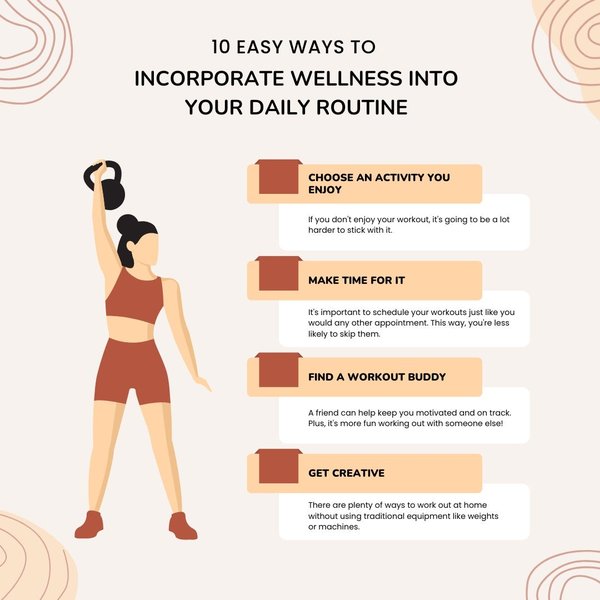
Integrating wellness habits requires conscious commitment aligned with personal values.
Visualization and Positive Framing
Mental rehearsal plays a significant role. Regularly visualizing yourself successfully performing the habit and experiencing its benefits can strengthen your mental commitment. Associating the habit with positive emotions and anticipating the satisfaction of completion helps anchor the behavior in your mind, making you more resilient when motivation naturally wanes. Positive affirmations can further reinforce this commitment by countering self-doubt.
The Mechanics of Habit Formation: Building the Behavior
Understanding how habits are neurologically and behaviorally formed is key to designing effective commitment strategies.
Decoding the Habit Loop
Popularized by Charles Duhigg and further refined by James Clear, the Habit Loop provides a fundamental model for understanding how automatic behaviors are formed and sustained. Commitment involves consciously engaging with and optimizing each part of this loop:
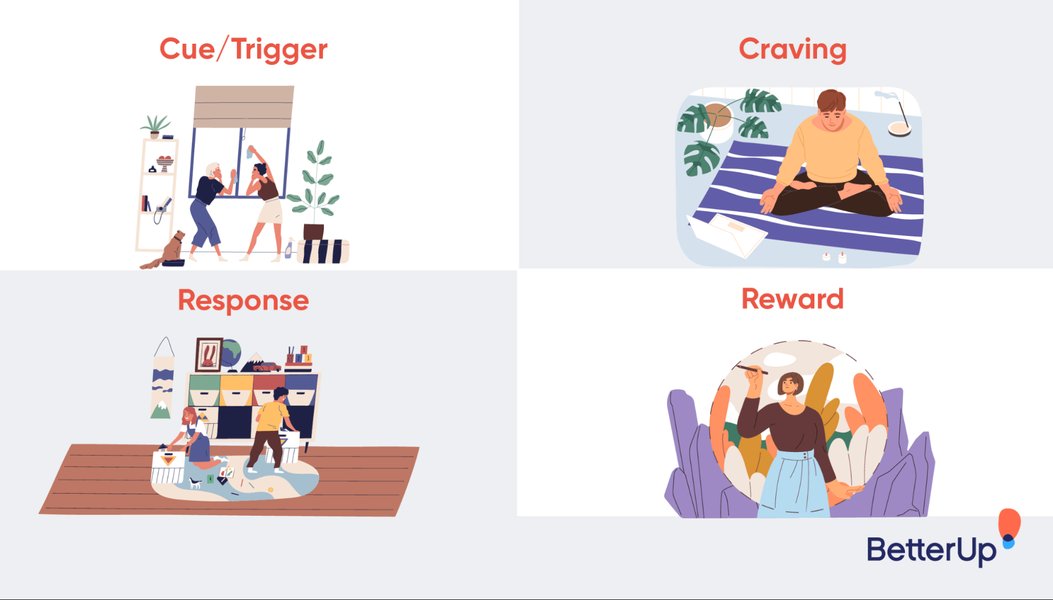
The Habit Loop: Cue, Craving, Response, Reward.
- Cue (Trigger/Reminder): This is the signal that initiates the behavior. It could be a specific time, location, preceding action, emotional state, or person. Commitment involves identifying reliable cues or intentionally designing them (e.g., setting out workout clothes the night before) to trigger the desired routine consistently.
- Routine (Behavior/Response): This is the actual habit you perform. Commitment requires making the routine as easy and frictionless as possible, especially initially. Consistency in performing the routine reinforces the neural pathways associated with the habit.
- Reward: This is the positive reinforcement that concludes the loop and tells your brain the behavior is worth remembering and repeating. Rewards solidify the habit by creating a craving for the outcome. They can be intrinsic (e.g., feeling energized after a workout) or extrinsic (e.g., enjoying a healthy smoothie). Commitment involves ensuring the reward is immediate and satisfying enough to reinforce the loop effectively. Neuroscientifically, this often involves the release of dopamine, strengthening the connection between the cue and the routine.
The Power of Consistency and Sustained Effort
Habits aren't formed overnight. Commitment fundamentally involves consistency and a willingness to exert sustained effort over time. This means showing up even when you don't feel like it, practicing self-discipline, and persevering through inevitable lapses. Each repetition strengthens the habit. Recognizing that progress isn't always linear and requires ongoing practice is crucial for long-term success.
Starting Small and Reducing Friction
An essential part of committing to a new habit is making it manageable. Trying to do too much too soon often leads to burnout and abandonment. Commitment is easier to maintain when the initial steps are small and achievable (e.g., meditating for 2 minutes instead of 30). Reducing friction – making the desired behavior the path of least resistance – is also key. This might involve preparing in advance, optimizing your environment, or simplifying the task itself.
Strengthening Your Resolve: Reinforcement Strategies
Beyond understanding the psychology and mechanics, specific strategies can actively bolster your commitment and increase your chances of success.
Accountability Systems: Staying on Track
Accountability significantly strengthens commitment by adding a layer of responsibility.
- Internal Accountability: This involves self-monitoring, such as using habit trackers, journals, or apps. Tracking progress provides visual feedback, reinforces success, and highlights areas needing adjustment. It makes your commitment tangible and measurable.
- External Accountability: Sharing your goals with others (friends, family, a coach, or a support group) creates social incentives to follow through. Knowing someone else is aware of your commitment can provide motivation and make you less likely to skip the habit.
Leveraging Support Networks
Building habits can be challenging, and having a support system is invaluable. Friends, family, or communities focused on similar goals can offer encouragement, share experiences, provide practical advice, and help you navigate setbacks. This social support reduces feelings of isolation and reinforces your commitment during difficult times.
Commitment Devices: Locking in Future Behavior
Commitment devices are strategies where you make a choice in the present that restricts your options or makes it harder/costlier to abandon your goal in the future. Examples include:
- Financial Stakes: Using apps like Beeminder or StickK where you pledge money that you lose if you don't stick to your habit.
- Social Contracts: Making a formal agreement with someone (a "referee") who monitors your progress and enforces pre-agreed consequences (stakes) if you fail.
- Public Declarations: Announcing your intention publicly (e.g., on social media) can create social pressure to follow through (a form of normative commitment).
These devices structure your commitment, making the cost of breaking it more salient and immediate.
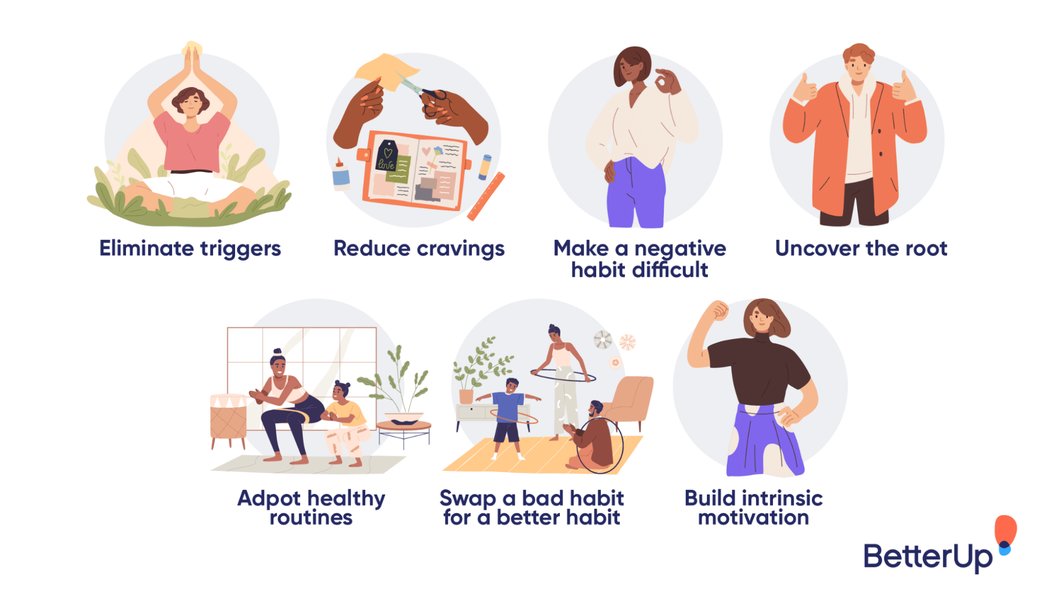
Structured approaches often incorporate various commitment components.
Visualizing Commitment Components: Importance Across Phases
The relative importance of different commitment components can shift as a habit moves from the initial formation phase to long-term maintenance. This radar chart illustrates a conceptual view of how the emphasis might change. Factors like 'Intention Clarity' and 'Reward Effectiveness' might be crucial early on, while 'Identity Alignment' and 'Consistency Effort' become paramount for making the habit endure.
This chart suggests that while getting started relies heavily on clear goals and immediate rewards, long-term adherence depends more on consistent effort, strong accountability, and integrating the habit into one's core identity.
Mapping the Interconnectedness of Habit Commitment
The various components of commitment don't exist in isolation; they work together to create a robust system for habit formation and maintenance. This mindmap illustrates the relationships between the foundational psychological elements, the behavioral mechanics, and the strategies used to reinforce commitment.
This map shows how a strong 'why' (Psychological Foundation) fuels the consistent action needed for the 'how' (Behavioral Mechanics), while specific strategies (Reinforcement) help maintain momentum and overcome obstacles.
Exploring Acceptance and Commitment Therapy (ACT) in Habit Change
Acceptance and Commitment Therapy (ACT) offers valuable insights relevant to habit formation, particularly concerning the components of values and committed action. ACT emphasizes psychological flexibility – the ability to contact the present moment more fully and change or persist in behavior when doing so serves valued ends. This aligns closely with the principles of building meaningful, value-driven habits.
This video explains the core processes of ACT, including clarifying values and taking committed action towards them, even in the presence of difficult thoughts or feelings. Understanding these concepts can provide a powerful framework for building habits that are deeply resonant and sustainable, moving beyond simple behavior modification towards living a life aligned with what truly matters to you. It helps solidify the 'why' behind your commitment.
Summary Table: Core Components of Habit Commitment
This table synthesizes the key components discussed, providing a quick reference for understanding the multifaceted nature of commitment in habit formation.
| Component | Description | Role in Habit Formation |
|---|---|---|
| Intention & Purpose | Clear understanding of 'why' the habit is desired; linked to goals and values. | Provides initial direction, motivation, and resilience against challenges. |
| Affective Commitment & Identity | Emotional connection to the habit; alignment with one's self-concept or desired identity. | Fosters intrinsic motivation, making the habit feel personally meaningful and desirable. |
| Habit Loop (Cue, Routine, Reward) | The neurological process underlying automatic behaviors: Trigger, Action, Reinforcement. | Provides the mechanical framework; optimizing the loop makes the habit easier to initiate and sustain. |
| Sustained Effort & Consistency | Ongoing practice, self-discipline, and persistence, even when motivation is low. | Builds and strengthens the neural pathways for the habit; turns intention into automaticity. |
| Accountability | Mechanisms (internal tracking or external social pressure) that encourage follow-through. | Increases the perceived cost of skipping the habit; reinforces commitment through monitoring and responsibility. |
| Support Systems | Encouragement and practical help from friends, family, or communities. | Provides motivation, helps navigate setbacks, and reduces feelings of isolation. |
| Commitment Devices | Voluntary constraints (e.g., contracts, stakes) that make abandoning the habit more difficult or costly. | Creates tangible structures that enforce commitment and reduce the likelihood of lapses. |
| Starting Small & Reducing Friction | Making the habit easy to initiate and perform, especially in the beginning. | Lowers the activation energy required, making consistent action more likely and sustainable. |
Frequently Asked Questions (FAQ)
What's the difference between motivation and commitment in habits?
Motivation is often the initial spark or desire that gets you started on a habit. It can be emotional and fluctuate depending on mood, energy levels, or external circumstances. Commitment, however, is the decision and dedication to continue the habit even when motivation wanes. It's about sticking to your intention and plan regardless of how you feel in the moment. While motivation helps initiate action, commitment ensures persistence and turns the action into a lasting habit.
How important is the 'reward' component of the habit loop?
The reward is critically important, especially in the early stages of habit formation. It closes the habit loop and signals to your brain that the preceding actions (cue and routine) are worth remembering and repeating. The reward creates a craving that drives future behavior. Effective rewards are usually immediate and satisfying. They don't have to be large; even a feeling of accomplishment or a moment of relaxation can serve as a powerful reward. Over time, the behavior itself might become intrinsically rewarding.
What should I do if I miss a day or break my commitment streak?
Missing a day is normal and doesn't mean failure. The key is not to let one missed day turn into two, or spiral into abandoning the habit altogether. Acknowledge the slip-up without excessive self-criticism. Remind yourself of your original intention and commitment. Focus on getting back on track with the very next opportunity. Consistency is more important than perfection. Use it as a learning opportunity: why did you miss the day? Can you adjust your cue, routine, or environment to prevent it next time?
Can commitment devices or accountability partners feel restrictive?
Yes, sometimes they can. It's important to choose commitment strategies that align with your personality and the specific habit. Commitment devices are, by definition, voluntary constraints you place on yourself. If they feel overly punitive or stressful, they might become counterproductive. Similarly, choose accountability partners who are supportive rather than judgmental. The goal is to create helpful structures, not prisons. Regularly review if your chosen methods are serving you well and adjust as needed. The most effective commitment comes from within (intrinsic motivation, identity alignment), with external structures serving as support rather than the primary driver.
Recommended Reading
- How can you maintain habits effectively even when your initial motivation disappears?
- What are some practical examples of commitment devices that successfully help people change their habits?
- How does aligning habits with your personal identity contribute to long-term behavior change?
- What strategies can help overcome the most common obstacles encountered when trying to form new habits?
References
Last updated May 4, 2025