
Unlock Savings: The Smartest Ways to Move Few Items Across States
Don't overpay for small moves! Discover cost-effective strategies tailored for relocating just a desk, couch, and TV interstate.
Moving across state lines can seem daunting and expensive, especially when you only have a few key pieces of furniture like a desk, couch, and television. Full-service movers often charge rates designed for entire households, making them uneconomical for small loads. Fortunately, several cost-effective alternatives cater specifically to these "small moves." This guide explores the best strategies to relocate your items affordably and efficiently, drawing on insights from various moving experts.
Key Highlights for Your Small Interstate Move
- Specialized Small Move Services: Companies exist that focus specifically on moving small loads (often under 2,000 lbs), providing a balance of professional help and affordability.
- Portable Containers & Freight: Options like U-Pack or freight shipping allow you to pay only for the space you use, combining DIY packing with professional transportation.
- Strategic DIY Approaches: Renting a small truck or trailer offers maximum control and potential savings, especially when combined with smart planning and potentially hiring hourly labor just for heavy lifting.
What Qualifies as a "Small Move"?
Understanding the Scope Before Choosing a Method
In the moving industry, a "small move" typically refers to shipments weighing less than 2,000 pounds. Your load—a desk, couch, and TV—comfortably falls into this category. Traditional moving companies often have minimum weight requirements (sometimes 2,000-3,000 lbs or more) that make them unsuitable or overly expensive for such moves. Recognizing that your needs fit the "small move" definition allows you to target services specifically designed for cost-efficiency at this scale.
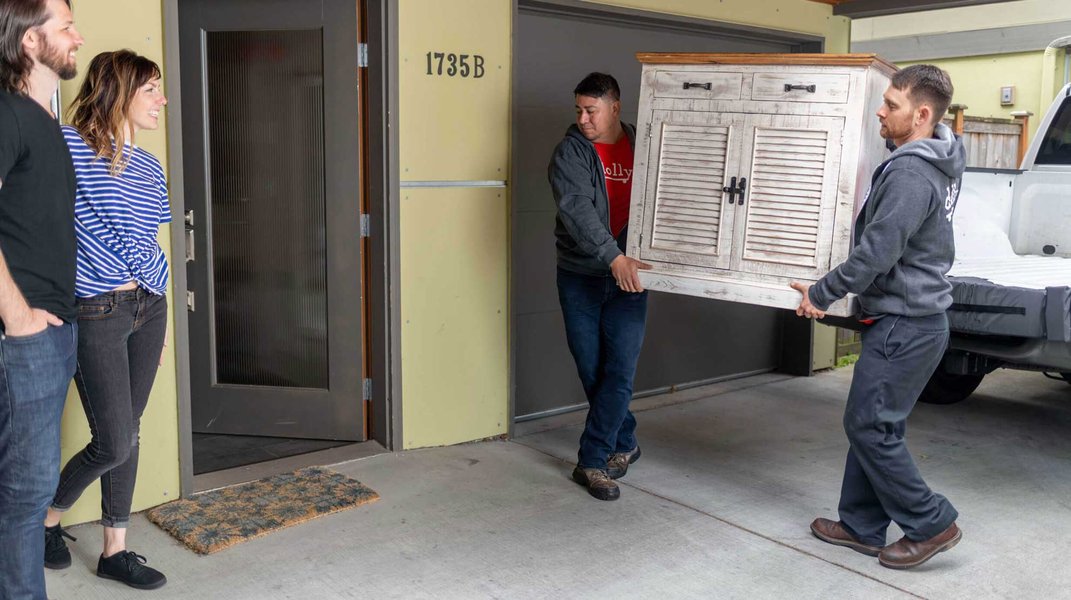
Services specializing in small moves cater to loads like yours.
Top Cost-Effective Strategies for Moving Few Items Interstate
When moving just a few large items across states, the goal is to avoid paying for unused truck space or excessive labor. Here are the most recommended budget-friendly approaches:
1. Specialized Small Move Companies
Professional Help Tailored to Your Needs
Several companies specialize in handling small-volume moves, offering a more economical alternative to large van lines. These services are designed for moving anything from a single piece of furniture to the contents of a small apartment.
- Examples: MiniMoves, Ship Smart, TWO MEN AND A TRUCK® (small move services), small move programs potentially offered by larger carriers like United Van Lines or Mayflower.
- How it Works: They often consolidate shipments from multiple customers going in the same direction or use smaller vehicles. You typically get professional handling, loading, and unloading without paying full-service prices. Some offer specific delivery windows (e.g., 2-14 days) and short-term storage.
- Pros: Professional handling reduces damage risk, more convenient than pure DIY, often includes basic insurance, priced for smaller loads.
- Cons: May have less flexible scheduling than DIY, transit times can sometimes be longer due to consolidation.
2. Portable Moving Containers
Pay for Space, Pack Yourself
Portable containers offer a popular hybrid approach. A company delivers a container (various sizes available) to your home; you load your desk, couch, and TV yourself (or hire hourly help); the company then transports the container to your new address, where you unload it.
- Examples: U-Pack (ReloCubes or trailers where you pay by linear foot), PODS, 1-800-PACK-RAT.
- How it Works: You rent the container size you need (a small one should suffice for your items). You control the packing and loading timeline. Transportation is handled professionally.
- Pros: Cost-effective (pay only for space used), flexible packing schedule, avoids driving a large truck yourself, storage options often available.
- Cons: Requires you to do the physical loading/unloading (unless you hire separate labor), delivery/pickup schedules need coordination, potential space constraints in urban areas.

Careful packing and handling are essential, whether DIY or using specialized services.
3. DIY Rental Truck or Trailer
Maximum Control, Minimum Cost
For the lowest potential cost, especially over shorter interstate distances, renting a small moving truck (like a 10-foot U-Haul) or a cargo van/trailer and driving it yourself is a viable option. This gives you complete control over the timing and handling.
- Examples: U-Haul, Budget Truck Rental, Penske.
- How it Works: You rent the vehicle, load your items, drive to your destination, and unload.
- Pros: Often the cheapest upfront option, full control over schedule and packing, suitable for just a few items.
- Cons: Requires you to do all the driving (potentially long distances), loading, and unloading. Fuel costs, mileage limits, and insurance for the rental add to the total expense. Can be physically demanding.
4. Freight Shipping (LTL - Less Than Truckload)
Leveraging Commercial Shipping Networks
You can ship your items as freight. This often involves palletizing or crating your items (especially the desk and TV) and having a freight company transport them. This works well if your items can be securely packed to withstand commercial shipping.
- Examples: U-Pack (freight option), FedEx Freight, UPS Freight, or other LTL carriers.
- How it Works: Your items share space on a commercial freight truck with other shipments. Pricing is typically based on weight, dimensions (dimensional weight), and freight class.
- Pros: Can be very cost-effective for dense or well-packaged items, utilizes established shipping routes.
- Cons: Requires robust packing/crating, items may be transferred multiple times increasing damage risk, delivery times can be longer and less precise, may require pickup/delivery at freight terminals unless curbside service is paid for.
5. Hybrid Approach: Rental Truck + Hired Labor
Targeted Help Where You Need It
Combine the cost savings of a DIY rental truck with the convenience of professional muscle. You rent and drive the truck yourself but hire moving laborers (e.g., via platforms like HireAHelper or local movers offering labor-only services) for a few hours at origin and/or destination solely to load and unload the heavy items like the couch and desk.
- How it Works: Book labor for specific tasks (loading/unloading). Coordinate their timing with your truck rental.
- Pros: Saves money compared to full-service movers, avoids heavy lifting yourself, maintains control over transport.
- Cons: Requires coordination between rental and labor, still involves driving the truck yourself, adds labor cost to the rental expense.
Visualizing Your Options: A Comparison
Comparing Methods Across Key Factors
Choosing the best method depends on your priorities. Are you optimizing purely for cost, or is convenience also a major factor? This chart compares the common small move strategies based on typical performance across several criteria. Note that these are generalizations, and specific company offerings may vary.
Interpretation: Lower scores for 'Cost-Effectiveness' and 'Effort Required' are better. Higher scores for 'Convenience', 'Speed', and 'Item Safety Assurance' are better. DIY options generally offer the lowest cost but require the most effort. Specialized services provide more balance.
Strategic Planning for Maximum Savings
Regardless of the method you choose, incorporating these tips can significantly lower the cost of your small interstate move:
Timing is Key
Moving companies and rental services often charge more during peak season (summer months, weekends, end of the month). If possible, schedule your move during the off-season (fall, winter, early spring) or mid-week/mid-month for potential discounts of 10-20%.
Book in Advance
Booking your container, truck rental, or small move service at least 4-8 weeks ahead (some sources suggest 60 days) can often secure better rates and ensure availability, especially during busier periods.
Declutter Ruthlessly
Moving fewer items directly translates to lower costs. Before packing, assess if you truly need the desk, couch, and TV at your new location. Could you sell them locally and buy replacements upon arrival? This might be cheaper than moving them, especially if they are old or inexpensive.
Pack Smart
If you're doing any packing yourself (containers, DIY truck), source free boxes from local stores or online marketplaces. Pack efficiently to maximize space. Disassemble furniture like the desk if possible. Use blankets and padding you already own before buying expensive packing materials.
Get Multiple Quotes
Always obtain quotes from at least three different providers for your chosen method (e.g., three container companies or three small move specialists). Compare not just the price but also what services are included (insurance, delivery window, etc.).
Understand Insurance Options
Interstate movers are required to offer basic liability coverage (Released Value Protection, typically $0.60 per pound per item), but this offers minimal protection for valuable items like a TV. Consider purchasing Full Value Protection or separate moving insurance, balancing the cost against the value of your items and risk tolerance.
Verify Mover Credentials
If using any service involving professional movers (even small move specialists or hired labor), ensure they are properly licensed and insured. For interstate moves, companies should have a U.S. Department of Transportation (USDOT) number, verifiable on the Federal Motor Carrier Safety Administration (FMCSA) website.
Budgeting Extras
Factor in potential additional costs like fuel for rental trucks, tolls, packing supplies, potential storage fees, and optional tipping for movers if service is good (suggested rates vary, e.g., $4-8 per person per hour or a percentage of the bill, but it's discretionary).
Comparing Estimated Costs
A Snapshot of Potential Expenses
Costs can vary significantly based on distance, specific provider, time of year, and included services. However, the provided answers suggest the following approximate ranges for moving a few items interstate. These are broad estimates; getting personalized quotes is essential.
| Moving Method | Estimated Cost Range (Interstate) | Key Considerations |
|---|---|---|
| Specialized Small Move Services (e.g., MiniMoves) | $500 - $1,500+ | Balances cost and professional handling; price depends heavily on distance and service level. |
| Portable Moving Containers (e.g., U-Pack, PODS) | $500 - $1,500+ (for small container/space) | Based on container size/space used and distance; requires DIY loading/unloading. |
| DIY Rental Truck (Small) | $1,000 - $3,000+ | Includes truck rental, fuel, mileage, insurance, tolls; requires driving and all labor. |
| Freight Shipping (LTL) | $500 - $1,500+ | Highly dependent on weight, dimensions, freight class, and packing quality; may involve terminal drop-off/pickup. |
| Hybrid (Rental Truck + Hourly Labor) | $1,200 - $3,500+ | Rental costs plus labor fees (typically $50-$100+/hour per mover for a few hours). |
| Full-Service Movers (Minimums Apply) | $2,500 - $5,000+ (often exceeds this due to minimums) | Generally not cost-effective for only a few items due to weight/volume minimum charges. |
Note: These ranges are indicative and synthesize estimates from the provided sources. Actual costs require specific quotes.
Mapping Your Moving Strategy
Visualizing the Decision Process
Choosing the right approach involves weighing several factors. This mindmap outlines the key considerations and pathways for planning your cost-effective small interstate move.
(Desk, Couch, TV)"] id1["Assess Needs"] id1a["Item Assessment"] id1a1["Value vs. Move Cost"] id1a2["Fragility (TV)"] id1a3["Disassembly Possible? (Desk)"] id1b["Distance & Route"] id1c["Budget Constraints"] id1d["Timeline Flexibility"] id1e["Physical Ability (DIY Labor)"] id2["Explore Options"] id2a["Specialized Small Movers"] id2a1["Pros: Pro handling, Less effort"] id2a2["Cons: Cost > DIY, Less flexible schedule"] id2b["Portable Containers"] id2b1["Pros: Cost-effective space, Flexible packing"] id2b2["Cons: DIY loading/unloading, Coordination"] id2c["DIY Rental Truck/Trailer"] id2c1["Pros: Lowest potential cost, Full control"] id2c2["Cons: Driving effort, Fuel/Extra costs, Physical labor"] id2d["Freight Shipping (LTL)"] id2d1["Pros: Potentially cheap for dense items"] id2d2["Cons: Robust packing needed, Longer transit"] id2e["Hybrid: Truck + Labor"] id2e1["Pros: Reduces physical strain of DIY"] id2e2["Cons: Adds labor cost, Still requires driving"] id3["Cost Saving Tactics"] id3a["Declutter/Sell Items"] id3b["Move Off-Peak"] id3c["Book Early"] id3d["Get Multiple Quotes"] id3e["DIY Packing (Free Materials)"] id3f["Compare Insurance"] id4["Final Steps"] id4a["Select Best Option"] id4b["Book Service/Rental"] id4c["Arrange Labor (if needed)"] id4d["Pack Items Securely"] id4e["Confirm Logistics"] id4f["Execute Move"] id4g["Unpack & Settle"]
This visual guide helps break down the decision-making process, leading you from assessing your specific situation to implementing the chosen moving strategy while incorporating cost-saving measures.
Helpful Moving Insights
Understanding Costs and Avoiding Pitfalls
Moving across the country, even with few items, involves navigating costs and potential issues. This video offers valuable tips on budgeting for an interstate move and recognizing practices that could lead to unexpected expenses, helping you make informed decisions.
Watching this can provide context on typical moving industry practices, how costs are calculated (weight, distance, extra services), and red flags to watch out for when getting quotes, ensuring your cost-effective plan stays on track.
Frequently Asked Questions (FAQ)
What's the absolute cheapest way if I can do all the work?
Renting the smallest possible moving truck or cargo van and driving it yourself is typically the cheapest option in terms of direct service cost. You handle all packing, loading, driving, unloading, and fuel expenses. However, factor in the cost of fuel, potential tolls, insurance for the rental, and your time and physical effort.
Are portable containers or small move specialists better?
It depends on your priorities. Portable containers (like U-Pack) are often slightly cheaper but require you to load/unload. Small move specialists (like MiniMoves) cost a bit more but include professional labor for handling your items, reducing your effort and potential damage risk. Get quotes for both to compare for your specific route and needs.
How should I pack fragile items like a TV for these methods?
For a TV, it's best to use the original box and packing materials if you still have them. If not, purchase a specialized TV moving box with foam padding. Wrap the screen carefully. Ensure it's secured upright in the truck or container and cushioned so it cannot shift or fall during transit. This is crucial for DIY, container, and freight methods.
Are there hidden costs I should watch out for?
Yes. With rental trucks, watch for mileage fees, fuel costs, tolls, and insurance add-ons. With containers, check for delivery fees, weight limits, and storage costs if you need extra time. With freight, dimensional weight charges, residential delivery fees, or liftgate service fees can apply. Always read the quote and contract carefully and ask about potential surcharges.
Recommended Further Exploration
- How do U-Pack and PODS compare specifically for moving just a few furniture items across states?
- What is the safest way to prepare a couch and flat-screen TV for LTL freight shipping?
- What are the typical hourly rates for hiring professional movers just for loading and unloading a rental truck?
- Can you explain the difference between Released Value Protection and Full Value Protection for interstate moves?
References
Last updated May 4, 2025