
Identifying a Medium-Sized Bird in Costa Rica
A Detailed Exploration of a Costa Rican Bird with Pale Body and Blue Wings
Key Highlights
- Blue-gray Tanager Likelihood: A leading candidate based on habitat, size, and coloration.
- Coloration and Physical Characteristics: Discussion of pale white/gray bodies with blue wing feathers.
- Field Identification Details: Methods and comparative details to aid precise identification.
Overview
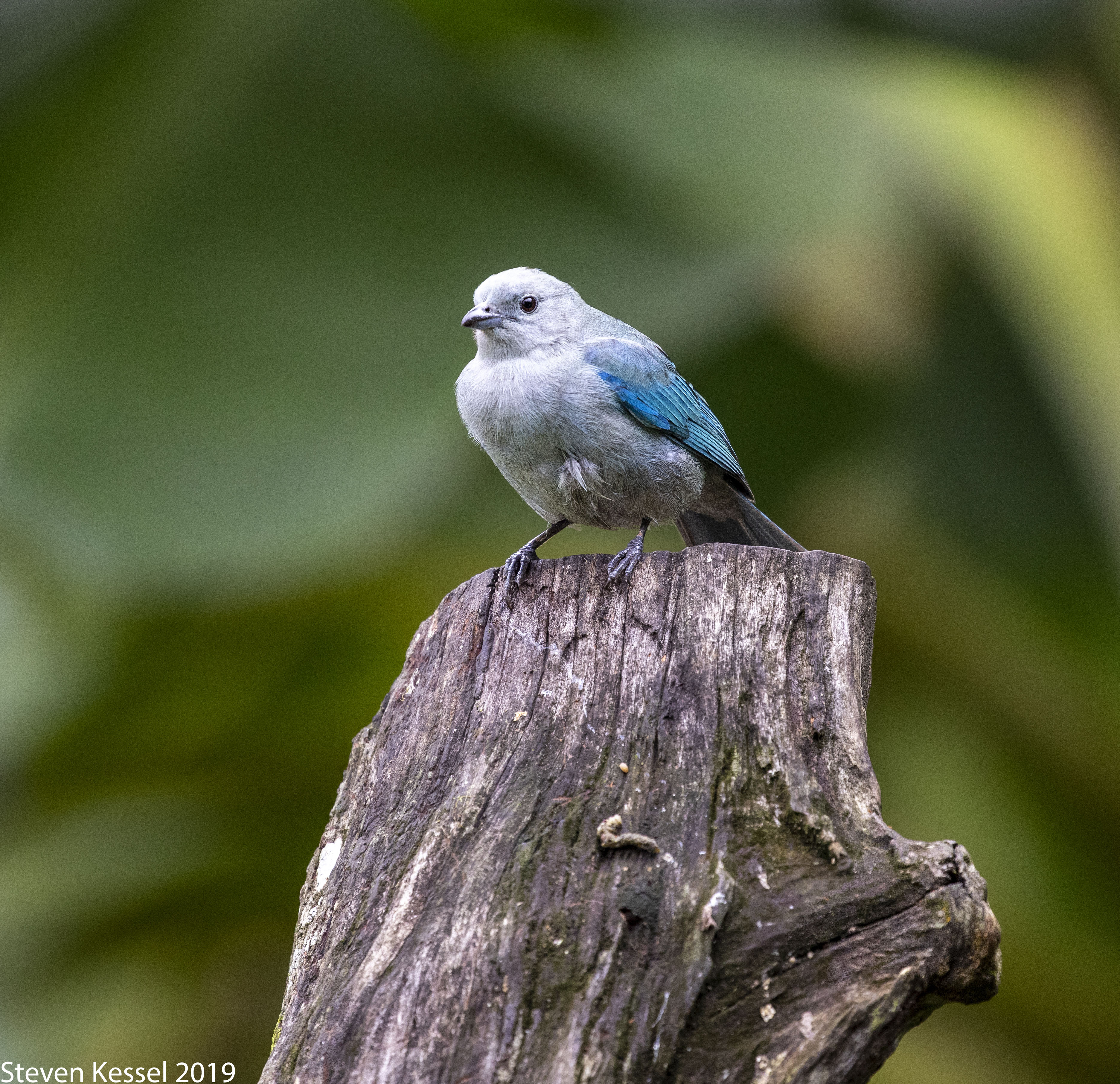
Costa Rica is renowned for its rich biodiversity, and bird enthusiasts often marvel at the wide array of species populating its landscapes. Among these is a medium-sized bird that has sparked interest due to its distinctive coloration – a pale white or gray body paired with blue wings, and a size comparable to a starling. While several species might share similar attributes, careful analysis of behavioral patterns, plumage details, and ecological habits strongly points to one species as a likely match: the Blue-gray Tanager.
Detailed Description and Analysis
Blue-gray Tanager: The Likely Candidate
The Blue-gray Tanager (Thraupis episcopus) is a bird commonly observed in Costa Rica and is well known among birders due to its vibrant coloration and social behavior. This species typically exhibits a predominantly pale or grayish body that may vary from light blue-gray to nearly pure blue depending on lighting and individual variation. The wings, often highlighted by a more pronounced blue tint, create a striking contrast against the lighter body, matching the description of having blue in the wings.
Physical Attributes and Measurements
In terms of size, the Blue-gray Tanager is approximately similar to a starling, often ranging between 15 to 23 cm in length. Its medium size makes it both agile and visible in a variety of habitats. This attribute, along with its coloration, helps birdwatchers quickly differentiate it from other similar species. The bird’s structure includes a moderate build, slender bill, and relatively short tail which further complements its agile foraging behavior.
Habitat and Behavior
The Blue-gray Tanager is frequently seen in diversified environments, including agricultural zones, urban parks, and secondary forests. Its adaptability has allowed it to thrive in both natural and human-altered landscapes. Social in nature, these birds are often observed in pairs or small flocks, making them a favorite sight for those engaged in birdwatching tours across Costa Rica.
Comparative Analysis with Similar Species
Other Potential Matches
While the Blue-gray Tanager stands as a strong candidate, other species might be considered based on a broader interpretation of the color description. For instance, the Bay-headed Tanager also exhibits medium size and bright coloration across certain parts of its plumage, though its overall appearance—often including hints of olive-green — might not fully align with the pale white or gray body featuring blue accents specified in the description.
Speckled Tanager and Its Distinctives
Another species occasionally mentioned in field observations is the Speckled Tanager. This bird possesses a mix of turquoise, green, yellow, and black speckles. Despite its vibrant display, it does not predominantly feature the pale white or gray body with exclusive blue wing markings as described. The differences in primary coloration and patterning help differentiate these species in practice.
Summary of Features Comparing Similar Species
A comprehensive identification process involves a careful review of size, coloration, behavior, and habitat preferences. The Blue-gray Tanager’s pale white to gray body, accented by blue wings, and its habitat flexibility make it an excellent match. Although some variation exists due to lighting conditions or seasonal molt, the overall profile is consistently in line with the characteristics provided.
In-Depth Field Identification Techniques
Observational Strategies
When attempting to identify a bird in the field, particularly one as subtle in variation as described, birdwatchers rely on several key aspects: Plumage Color and Patterns: Observation of the detailed patterning on the wings versus the overall body color is crucial. Look closely at the intensity of the blue on the wings and the lighter tone of the main body. Camera equipment or binoculars often aid in capturing these differences, especially in varying light conditions.
Habitat Preferences
The habitats where these birds are encountered often provide additional clues. Medium-sized birds like the Blue-gray Tanager are frequently seen in certain predictable environments:
- Agricultural fields where fruiting trees attract a variety of birds.
- Urban parks and gardens providing both shelter and food sources.
- Secondary forests and woodland edges, where foraging opportunities abound.
Noticing the bird's consistency across these diverse locations reinforces its identification. Often, the behavior of foraging in small flocks and engaging in social interactions helps to further confirm identification, as the Blue-gray Tanager is known for its friendly disposition with similarly sized birds.
Comparative Size Analysis
With the size comparison noted as "about the same as a starling," it is important to understand the size spectrum. Starlings are known to measure roughly between 15 to 18 centimeters. This measurement aligns well with reported dimensions of the Blue-gray Tanager, solidifying its candidacy. Comparative charts developed by birding enthusiasts often include these benchmarks to assist in quick field identifications.
Visual Aid: Comparative Table
| Bird Species | Size Range (cm) | Main Body Coloration | Wing Coloration | Habitat Preferences |
|---|---|---|---|---|
| Blue-gray Tanager | 15 - 23 | Pale white/gray, light blue-gray variations | Vibrant blue accents | Agricultural areas, urban parks, secondary forests |
| Bay-headed Tanager | 15 - 23 | Olive green to pale body with slight blue tints | Subtle blue accents on wings | Parts of Costa Rica, Panama, and surrounding regions |
| Speckled Tanager | Comparable to starlings | Mix of turquoise, green, yellow, and black speckles | Not predominantly blue | Varied, though less consistent with the pale body description |
Additional Considerations
Environmental Influences on Appearance
It is significant to note that the appearance of birds can change depending on environmental conditions, light intensity, and even seasonal variations. What might be perceived as a pale white body can sometimes take on a slightly different hue under direct sunlight or shade. Similarly, the blue on the wings may seem more vibrant on overcast days compared to bright sunlight. Understanding these nuances is essential for anyone trying to accurately identify the bird in the field.
Behavioral Observations and Foraging Habits
Behavioral patterns provide additional insights for precise identification. The Blue-gray Tanager, for instance, exhibits noticeable social behaviors, often forming small flocks and engaging in distinctive flight patterns that include agile maneuvers during short flights between trees. Their feeding habits, which typically include foraging for fruits and insects, align with the diverse ecosystems they frequent in Costa Rica.
Methods for Recording Observations
Many birdwatchers make use of field guides, mobile applications, and digital photography to document sightings. Recording various angles, focusing on both body and wing coloration, as well as noting the habitat context, enables more accurate identification even after leaving the field. Detailed logs and observations enhance both personal records and community databases, contributing to a broader understanding of bird distribution in regions like Costa Rica.
Community and Research Insights
Local Expertise and Citizen Science Contributions
Bird enthusiasts and local experts in Costa Rica often participate in community-driven research and citizen science projects. These initiatives provide valuable data on bird species distribution, seasonal migrations, and habitat use. Social media groups, detailed blogs, and regional birdwatching forums frequently discuss characteristics such as the coloration and size of birds like the Blue-gray Tanager. This community-collected data is a useful point of reference for both amateur and professional ornithologists.
Consultation of Field Guides and Digital Resources
Numerous online resources, including websites dedicated to the birds of Costa Rica, provide comprehensive details on the Blue-gray Tanager. These resources include high-quality photographs, audio recordings of calls, and distribution maps that help confirm identification. The convergence of these digital archives with firsthand observational data further supports the identification of this species as the match for your description.
Practical Identification Steps in the Field
Step-by-Step Observation Process
Step 1: Use a quality pair of binoculars or a zoom lens to examine the bird in its natural setting. Pay particular attention to the transition between the pale body and the blue wings.
Step 2: Note the bird's size relative to known references such as starlings. This helps establish the size range more accurately.
Step 3: Observe its flight pattern and behavior. The agile and social nature of the Blue-gray Tanager, including its foraging techniques in urban parks or agricultural areas, can provide strong observational evidence.
Step 4: Record additional details like beak shape, tail length, and the lighting conditions during your observation. Such detailed observations, coupled with photographic evidence, can later be compared with trusted field guides.
Step 5: Cross-reference your findings with multiple sources, including digital bird databases and local experts, to reach a confident identification.
Final Synthesis of Observations
Integrating Data from Various Sources
After a comprehensive investigation, the evidence strongly indicates that the medium-sized bird described – featuring a pale white or gray body with blue wings and matching the size of a starling – is most consistent with the Blue-gray Tanager (Thraupis episcopus). This identification draws on various observational insights, field comparisons, and community research data. The bird's behavior, habitat usage, and distinct color contrast between its pale body and blue wing feathers all align with the documented characteristics of this species.
However, it is essential to remain open to the possibility of slight variations among individual birds and potential overlaps with similar species. Continued field observations and comparisons with authoritative sources are recommended for those with an enduring interest in local avifauna.
References
- Bird Watching HQ - Bird Species of Costa Rica
- The Worlds Rarest Birds - Blue Birds in Costa Rica
- Ecolodges Anywhere - Costa Rica Birds
- Native Backyards - Birds of Costa Rica
- Costa Rica Focus - Most Beautiful Birds
Recommended Related Queries
 meadowhawk.wordpress.com
Last updated March 12, 2025