
Deciphering the 'R' Count: How Many 'R's Lurk in Your Phrase?
A meticulous analysis revealing the precise number of 'R's, both big and small, in "This Strarrabberrry is berryyrr berry Rredderr".
Highlights of Our 'R' Expedition
- The Grand Total: A comprehensive, case-insensitive count reveals exactly 16 instances of the letter 'R' in the phrase "This Strarrabberrry is berryyrr berry Rredderr".
- Meticulous Methodology: Each character has been carefully examined to ensure accuracy, treating 'R' and 'r' as the same letter for the primary count.
- AI's Counting Conundrum: While seemingly simple, precise character counting can be a tricky task for Large Language Models (LLMs) due to their token-based processing, a contrast to straightforward manual or programmatic approaches.
Unraveling the 'R's: A Detailed Count
The Phrase in Focus
The specific phrase we are examining is: "This Strarrabberrry is berryyrr berry Rredderr". Our goal is to identify and count every occurrence of the letter 'R', regardless of whether it appears in uppercase ('R') or lowercase ('r').
Step-by-Step Breakdown
To ensure an accurate count, let's dissect the phrase word by word and tally the 'R's in each segment.
Word 1: "This"
The word "This" contains T, h, i, s.
Count of 'R's (case-insensitive): 0
Word 2: "Strarrabberrry"
The word "Strarrabberrry" contains S, t, r, a, r, r, a, b, b, e, r, r, r, y.
Count of 'R's (case-insensitive): 6
Word 3: "is"
The word "is" contains i, s.
Count of 'R's (case-insensitive): 0
Word 4: "berryyrr"
The word "berryyrr" contains b, e, r, r, y, y, r, r.
Count of 'R's (case-insensitive): 4
Word 5: "berry"
The word "berry" contains b, e, r, r, y.
Count of 'R's (case-insensitive): 2
Word 6: "Rredderr"
The word "Rredderr" contains R, r, e, d, d, e, r, r. (Note the initial uppercase 'R')
Count of 'R's (case-insensitive): 4
Summary Table of 'R' Counts
This table provides a clear overview of the 'R' count (case-insensitive) for each word in the phrase:
| Word | Number of 'R's (case-insensitive) |
|---|---|
| This | 0 |
| Strarrabberrry | 6 |
| is | 0 |
| berryyrr | 4 |
| berry | 2 |
| Rredderr | 4 |
| Total | 16 |
The Final Tally
By summing the counts from each word, we arrive at the total number of 'R's in the phrase:
0 (This) + 6 (Strarrabberrry) + 0 (is) + 4 (berryyrr) + 2 (berry) + 4 (Rredderr) = 16 'R's.
Visualizing the 'R' Distribution
To better understand where the 'R's are concentrated within the phrase, the radar chart below illustrates the count of 'R's (case-insensitive) in each word that contains the letter. Words with zero 'R's are excluded from this chart for clarity. This visualization helps to quickly see that "Strarrabberrry" is the most 'R'-rich word in this particular phrase, followed by "berryyrr" and "Rredderr".
The Nuance of Case: 'R' vs. 'r'
In our primary analysis, we adopted a case-insensitive approach, meaning we counted both uppercase 'R' and lowercase 'r' as instances of the same letter. This is generally the most common interpretation for such queries unless specified otherwise.
- Case-Insensitive Count (R and r): 16
However, if we were to be strictly case-sensitive, the counts would differ:
- Uppercase 'R' only: There is 1 uppercase 'R', found in the word "Rredderr".
- Lowercase 'r' only: There are 15 lowercase 'r's distributed across "Strarrabberrry" (6), "berryyrr" (4), "berry" (2), and "Rredderr" (3).
For the purpose of answering the user's general query, the combined, case-insensitive count of 16 is the most direct and comprehensive answer.
Mindmap: Deconstructing the Character Count
The mindmap below visually outlines the methodical process employed to count the letter 'R' (case-insensitively) within the given phrase. It starts from the initial phrase, breaks it down into individual words, and then meticulously examines each word for occurrences of 'r' or 'R', finally aggregating these counts to arrive at the total. This structured approach ensures accuracy and transparency in the counting process.
'This Strarrabberrry is berryyrr berry Rredderr'"] id2["Word-by-Word Breakdown"] id2_1["'This' -> 0 'R's"] id2_2["'Strarrabberrry' -> 6 'R's
(r, r, r, r, r, r)"] id2_3["'is' -> 0 'R's"] id2_4["'berryyrr' -> 4 'R's
(r, r, r, r)"] id2_5["'berry' -> 2 'R's
(r, r)"] id2_6["'Rredderr' -> 4 'R's
(R, r, r, r)"] id3["Aggregation of Counts"] id3_1["Sum individual word counts:
0 + 6 + 0 + 4 + 2 + 4"] id4["Final Result"] id4_1["Total 'R's (case-insensitive): 16"] id5["Considerations"] id5_1["Case Sensitivity:
Query implies case-insensitivity."] id5_2["Accuracy Check:
Manual verification for precision."]
Beyond Manual Counting: The AI Challenge with Characters
While counting letters in a phrase seems like a trivial task for humans, it can surprisingly pose challenges for some advanced Artificial Intelligence systems, particularly Large Language Models (LLMs). This discrepancy arises not from a lack of intelligence, but from the fundamental way these models process and "understand" text.
The Curious Case of the "Strawberry"
A well-documented example of this challenge involves asking LLMs to count the number of 'r's in the word "strawberry." Many models, even sophisticated ones, have historically struggled with this, sometimes providing incorrect counts. The actual word "strawberry" contains two 'r's.
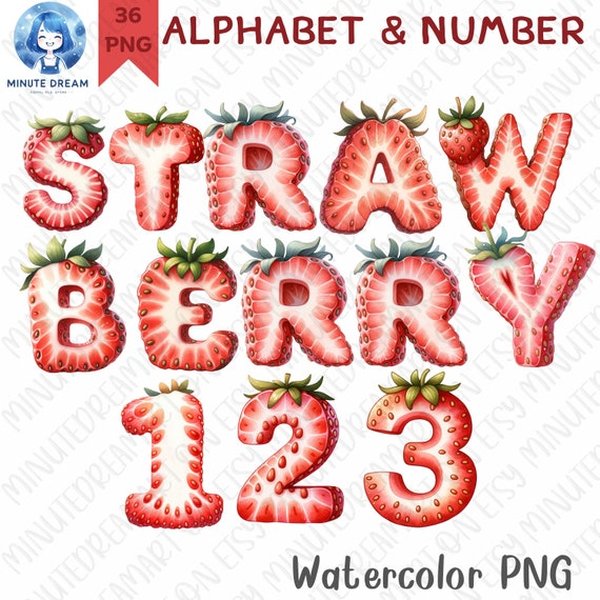
Stylized strawberry lettering, illustrating the type of word that can pose counting challenges for AI.
Tokenization: The Root of the Issue
LLMs don't see words as sequences of individual letters in the same way humans do. Instead, they break down text into units called "tokens." A token can be a whole word, a part of a word (like a prefix or suffix), a single character, or even multiple characters. For example, "strawberry" might be tokenized as ["straw", "berry"] or perhaps ["str", "aw", "berry"]. "Rredderr" might be tokenized differently from how we see its letters.
Because LLMs operate at the token level for tasks like understanding context and generating text, directly accessing and counting individual characters within those tokens is not their primary design strength. They are optimized for semantic understanding and probabilistic text generation, not for precise, character-level string manipulation tasks that are trivial for simple programming scripts or manual counting.
This means that when asked to count letters, an LLM might be "reasoning" based on patterns in its vast training data where such questions appeared, or attempting to interpret the string in a way that doesn't lend itself to direct character enumeration. This can lead to errors, especially with unusual spellings or high repetitions of characters, as seen in your query phrase.
The video below discusses this phenomenon, shedding more light on why AI can sometimes stumble on what appears to be a simple counting task:
This video explores why some AI platforms find it difficult to correctly count letters in words like "strawberry."
Therefore, for tasks requiring absolute precision in character counting, traditional programming methods or careful manual review remain the most reliable approaches.
Frequently Asked Questions (FAQ)
What is the final case-insensitive count of 'R's in the phrase?
The phrase "This Strarrabberrry is berryyrr berry Rredderr" contains a total of 16 'R's when counting both uppercase 'R' and lowercase 'r' together.
How many strictly uppercase 'R's are present?
There is exactly 1 uppercase 'R' in the phrase, located at the beginning of the word "Rredderr".
Why is manual or programmatic counting often more reliable than asking an LLM for character counts?
Manual counting or using a simple programming script allows for direct, sequential iteration through each character of a string. This ensures every character is examined and tallied correctly. LLMs, on the other hand, process text using tokenization, which breaks text into chunks (not always single letters). Their strength lies in understanding context and generating text, not precise, low-level character enumeration, which can sometimes lead to errors in counting tasks.
What is tokenization and how does it affect an LLM's ability to count characters?
Tokenization is the process by which Large Language Models (LLMs) break down a piece of text into smaller units called tokens. These tokens can be words, parts of words (e.g., 'ing', 'pre'), or even individual characters for less common symbols. For instance, the word "unbelievably" might be tokenized into ["un", "believab", "ly"]. Because LLMs operate on these tokens rather than raw character strings, they don't "see" text letter by letter in the way a human or a simple counting script does. This makes tasks like precise character counting non-native to their architecture, potentially leading to inaccuracies as they might infer counts based on token patterns rather than direct enumeration.
Recommended Further Exploration
If you found this analysis intriguing, you might be interested in exploring these related topics:
- Why do AI models struggle with simple counting tasks?
- Explore the concept of tokenization in large language models.
- Learn methods for precise character counting in text using programming languages like Python or R.
- What are common limitations of current generative AI technologies?
References
The following resources provide further context on character counting and the challenges AI faces with such tasks:
Last updated May 9, 2025