
Analyzing the Evolving Trends in COVID-19 IFR During the Pandemic
Understanding variations, innovations, and challenges in infection fatality rates over time
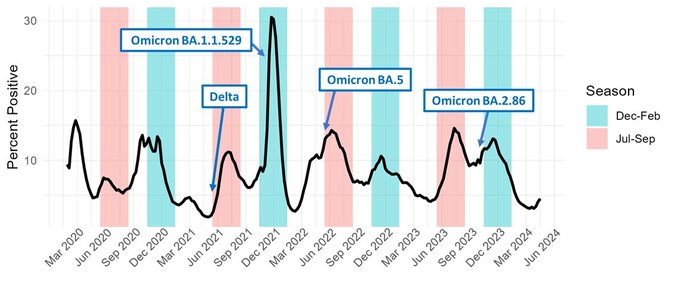
Key Insights and Highlights
- Impact of Variants and Vaccination: New variants like Delta and Omicron and the introduction of vaccines have significantly altered IFR trends.
- Age and Regional Disparities: The IFR varies widely with age, with older populations facing higher risks, and differences across regions are influenced by healthcare quality and socioeconomics.
- Temporal and Methodological Changes: Early estimates were higher due to under-reporting and differing methodologies, with trends improving over time as testing and treatment advanced.
Overview of COVID-19 IFR Trends
The Infection Fatality Rate (IFR) measures the proportion of deaths among all the infected individuals, including those undiagnosed. Since the onset of the COVID-19 pandemic, the IFR has seen fluctuations driven by numerous factors including variants, vaccination coverage, population demographics, healthcare infrastructure, and regional policies. The evolution of IFR is fundamental in understanding the progression of the pandemic and developing targeted public health responses.
Initial Phase and Early Estimates
Early Challenges and Underreporting
During the initial stages of the pandemic, IFR estimates were highly variable. Studies in early 2020 showed a wide range of estimates (from less than 0.1% up to over 1%) due to several factors:
- Limited testing capacity which led to substantial underreporting of asymptomatic and mild cases.
- Methodological differences between various seroprevalence studies resulting in inconsistent estimates.
- Healthcare systems that were initially unprepared, resulting in higher mortality rates particularly among vulnerable populations.
This early phase established a baseline understanding of the IFR, highlighting the need for increased testing and more robust reporting mechanisms to capture the full extent of the pandemic’s impact.
Influence of Demographics and Age
Exponential Relationship with Age
The IFR is profoundly influenced by the age of the infected individual. Younger individuals, including children and young adults, typically show very low IFR, while the elderly, especially those above 60, exhibit much higher fatality rates. Studies have demonstrated an exponential increase in mortality risk with age. For instance:
- Older adults have not only higher IFRs but also often suffer from comorbidities that compound the risk.
- Younger demographics experienced lower fatality rates, especially after the application of rigorous public health measures and later due to vaccination efforts.
This demographic disparity has reinforced the need for tailored public health policies, ensuring that the most vulnerable groups receive targeted protection and healthcare support.
Role of Virus Variants
Emergence of Delta, Omicron, and Other Variants
Throughout the pandemic, several SARS-CoV-2 variants have emerged with different characteristics concerning contagiousness and severity. Importantly:
- The Delta variant, noted for its increased transmissibility, was associated with periods of higher IFR during peaks of infection due to increased case numbers and overwhelmed health systems.
- The Omicron variant, despite being highly transmissible, showed a trend toward a lower IFR in comparative studies. Even though it spread rapidly, the reduced severity meant that even surges in cases did not always translate to equivalent increases in fatalities.
The ongoing mutation of the virus stresses the need for continuous monitoring and assessment, as each new variant may influence IFR in different ways.
Vaccination Impact and Public Health Interventions
Improvements Through Mass Vaccination
The introduction and widespread rollout of COVID-19 vaccines have been a game changer in reducing the IFR. Vaccination has led to:
- Significant reductions in severe cases and mortality, especially among high-risk populations.
- A shift in the demographics of those affected, with a notable improvement in outcomes for older and vulnerable groups.
- Overall lowering of the IFR, as enhanced immunization decreased the number of infections that progressed to severe or fatal outcomes.
Vaccinated individuals, even when infected, tend to experience milder forms of the disease, thus effectively reducing the IFR. Public health strategies focusing on increasing vaccine coverage, especially in at-risk populations, have been central to this improvement.
Global and Regional Disparities in IFR
Healthcare System Efficacy and Socioeconomic Factors
Significant differences in IFR have been observed across various geographies. These disparities are driven by:
- Healthcare Infrastructure: Countries with advanced and accessible healthcare systems have generally reported lower IFRs due to better patient management and access to critical care.
- Socioeconomic Variations: Lower-income regions often reported higher IFRs that reflect limited healthcare resources, underfunded public health initiatives, and additional societal challenges.
- Public Policy and Timely Interventions: Regions that quickly implemented robust public health measures including lockdowns, mandatory mask-wearing, and effective testing protocols generally saw more stable and lower IFRs over time.
Recognizing these regional variations is essential for designing effective global and local pandemic responses where resources can be allocated appropriately to reduce mortality rates.
Synthesis: Summary of Trends and Key Influences
In synthesizing various studies and analyses, the evolving trends in COVID-19 IFR during the pandemic demonstrate a complex interplay of factors:
| Factor | Influence on IFR | Key Observations |
|---|---|---|
| Early Testing & Reporting | Higher initial IFR | Underestimation of asymptomatic and mild cases; inconsistent study methodologies |
| Age and Demographics | Significantly higher IFR in older populations | Exponential risk increase with age; targeted interventions required for elderly |
| Virus Variants | Varied IFR impact | Delta leading to higher peaks; Omicron with lower severity though high case numbers |
| Vaccination | Lower IFR overall | Significant reduction in severe cases and deaths; pivotal in changing pandemic dynamics |
| Regional & Socioeconomic Factors | Varied IFR across countries | Differences in healthcare quality, infrastructure, and timely policy responses |
Detailed Analysis of Key Influences
Healthcare System Responses
Adaptation and Preparedness
Initially, healthcare systems globally were challenged by a sudden surge in critical patients. Over time, these systems adapted through:
- Rapid expansion of intensive care capacity and adoption of new treatment protocols.
- Increased testing and better identification of cases, which led to more accurate IFR assessments.
- Global collaboration on treatment methods and information sharing helped mitigate early challenges, reducing the risk of fatal outcomes.
Evolving Public Health Strategies
Policy Innovations and Vaccination Campaigns
Government policies have played a crucial role in controlling the spread and impact of COVID-19. Noteworthy interventions include:
- Strict lockdowns and social distancing measures that slowed the transmission rate, allowing healthcare systems to adjust.
- Mask mandates and hygiene protocols that reduced the risk of transmission, indirectly impacting IFR by lowering the severity and frequency of infections.
- Mass vaccination campaigns supported by global initiatives, which markedly reduced severe cases and mortality, thereby lowering the overall IFR.
These public health approaches underscore the critical relationship between policy measures and improvements in IFR trends.
Statistical Trends and Methodological Refinements
Improved Data Collection and Analysis
Over the course of the pandemic, methodological enhancements in data collection and analysis have refined IFR estimates:
- Enhanced seroprevalence studies captured a clearer picture of total infection numbers, leading to more accurate fatality calculations.
- Age-stratified analysis became central, delineating the risk differences between younger and elderly populations.
- The evolution of statistical models allowed researchers to differentiate outcomes based on regional disparities and healthcare variabilities.
These methodological refinements have been instrumental in providing a more accurate view of the IFR trends and guiding public health decision-making.
References
- CDC Respiratory Viruses Data - CDC
- CDC Forecasting and RT Estimates - CDC
- WHO Disease Outbreak News - WHO
-
Infection fatality rate from seroprevalence data - PMC
- Variation in COVID-19 IFR by Age, Time and Geography - The Lancet
Recommended Further Queries
Last updated March 26, 2025