
Comprehensive Report on Complex Programmable Logic Devices (CPLDs)
Exploring the Architecture, Applications, and Future of CPLDs
Key Takeaways
- Overview of CPLD architecture and core components.
- Various applications and advantages in modern digital systems.
- Comparison with other programmable logic devices and future trends.
Introduction
Complex Programmable Logic Devices (CPLDs) have become integral components in the landscape of digital electronics. Positioned between Simple Programmable Logic Devices (SPLDs) and Field-Programmable Gate Arrays (FPGAs), CPLDs offer a balanced combination of programmability, performance, and ease of use. Their ability to implement intricate digital circuits makes them indispensable in various applications, ranging from consumer electronics to industrial control systems.
Architecture of CPLDs
Core Components
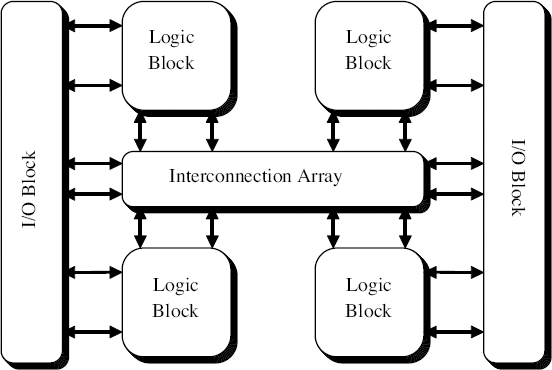
The architecture of CPLDs is characterized by multiple programmable logic blocks, often referred to as macrocells, interconnected through a programmable interconnection matrix. Each macrocell typically comprises:
-
Programmable AND/OR Arrays: These arrays can be reconfigured to perform a wide range of logic functions, allowing for flexibility in circuit design.
-
Macrocells: Serving as the building blocks, macrocells can implement combinational or sequential logic. They offer options for output types, such as true or complement signals, and can include feedback paths for more complex operations.
Interconnect and Routing
The interconnect architecture in CPLDs is meticulously designed to provide predictable signal routing and timing. Unlike FPGAs, which often have more complex and layered routing networks, CPLDs typically feature fewer programmable interconnect layers. This streamlined routing results in more deterministic timing characteristics, making CPLDs suitable for applications where timing precision is paramount.
Memory and Non-Volatility
CPLDs utilize non-volatile memory technologies, such as Flash or EEPROM, to store their configuration data. This feature ensures that the device retains its programmed logic configurations even when power is removed, facilitating instant functionality upon system startup. The centralized memory architecture within CPLDs typically supports configurations up to 1MB, balancing capacity with scalability.
Key Features and Characteristics
Programmable Logic Functions
CPLDs offer highly flexible programmable logic capabilities, allowing designers to implement diverse digital functions. The combination of programmable AND/OR arrays and macrocells enables the realization of complex combinational and sequential logic circuits within a single device.
Deterministic Timing
One of the standout features of CPLDs is their deterministic timing behavior. The fixed architectural elements and less complex routing contribute to predictable signal propagation delays, which is critical for timing-sensitive applications such as real-time control systems.
Power Efficiency
CPLDs are designed with power efficiency in mind. Their low to medium design complexity and optimized architecture result in lower power consumption compared to more complex programmable devices like FPGAs. This makes CPLDs particularly suitable for battery-operated and portable applications where power conservation is essential.
Advantages of CPLDs
Predictable Timing
The architectural design of CPLDs ensures predictable timing performance, which is crucial for applications that require precise control over signal timing. This predictability simplifies the design process and enhances the reliability of the implemented logic circuits.
Non-Volatile Configuration
The non-volatile memory in CPLDs allows them to retain their configuration without continuous power supply. This feature enables "instant-on" functionality, where the device becomes operational immediately upon power-up, a vital requirement for many embedded and industrial systems.
Ease of Use and Deployment
Compared to FPGAs, CPLDs typically offer a simpler programming model and shorter design turnaround times. This ease of use facilitates rapid prototyping and iterative development, making CPLDs an attractive choice for smaller to medium complexity projects.
Low Power Consumption
CPLDs generally consume less power than FPGAs, especially in designs that do not demand extensive parallel processing capabilities. Their power-efficient operation is advantageous for applications where energy consumption is a critical constraint.
Applications
Embedded Systems
In embedded systems, CPLDs serve as "glue logic," interfacing different digital modules and managing communications between diverse components. Their ability to handle complex combinational and sequential logic tasks makes them ideal for controlling communications, processing sensor inputs, and managing protocol handling in consumer electronics.
Industrial and Automotive Controls
CPLDs are extensively utilized in industrial automation and automotive electronics due to their robust performance in harsh environments. They are integral in engine control units, sensor integration, safety systems like airbag deployment logic, and other timing-critical control systems, ensuring reliable and deterministic operation.
Communication Interfaces
Managing communication protocols such as SPI, UART, and I²C is another key application area for CPLDs. They facilitate the bridging of communication between different system components and ensure high-speed interfacing and efficient data handling.
Prototyping and System Integration
CPLDs are favored for rapid prototyping, allowing developers to test and validate digital designs in real-world settings before committing to large-scale or custom ASIC implementations. Their reprogrammable nature supports iterative development and system integration tasks efficiently.
Comparison with Other Programmable Logic Devices
CPLD vs SPLD
CPLDs offer greater complexity and logic capacity compared to SPLDs. While SPLDs are suitable for simpler tasks with limited logic functions, CPLDs provide the necessary resources and flexibility for medium-complexity designs, making them a more versatile choice in varied applications.
CPLD vs FPGA
FPGAs are more powerful and capable of handling highly complex logic circuits with extensive parallelism. However, CPLDs provide more deterministic timing and consume less power, making them preferable for applications where timing precision and energy efficiency are critical. Additionally, the simpler architectural design of CPLDs often results in easier design implementation and faster development cycles compared to FPGAs.
| Feature | CPLD | FPGA | SPLD |
|---|---|---|---|
| Logic Capacity | Medium | High | Low |
| Timing Predictability | High | Lower | High |
| Power Consumption | Low to Medium | High | Low |
| Programming Complexity | Moderate | High | Low |
| Typical Applications | Control Systems, Interfaces | High-Performance Computing, Advanced DSP | Simple Logic Functions |
Programming and Development Tools
Hardware Description Languages
Designing logic for CPLDs typically involves the use of Hardware Description Languages (HDLs) such as VHDL and Verilog. These languages allow designers to describe the functional behavior of the digital circuits, which can then be synthesized into the programmable logic of the CPLD.
Development Environments
Various development environments are available to facilitate CPLD programming and configuration. Leading tools include Intel Quartus Prime, Xilinx ISE/Vivado, Lattice Diamond, and Atmel ProChip Designer. These Integrated Development Environments (IDEs) provide comprehensive features such as synthesis, simulation, placement, routing, and debugging, streamlining the design workflow.
Market Trends and Future Directions
Integration with Microcontrollers
The future of CPLDs looks promising with trends pointing towards greater integration with microcontrollers and processors in System-on-Chip (SoC) designs. This hybrid approach enhances functionality and performance while maintaining power efficiency, catering to the growing demands of IoT and smart device applications.
Advancements in Power Management
Continuous improvements in power management schemes and thermal performance are set to enhance the energy efficiency of CPLDs. These advancements will make CPLDs even more suitable for applications where power conservation is critical, such as portable electronics and remote sensing systems.
Increasing Logic Density and Speed
As technology advances, CPLDs are expected to achieve higher logic densities and faster operational speeds. Enhanced fabrication techniques, such as submicron processes and FinFET technology, contribute to these improvements, allowing CPLDs to handle more complex tasks with greater efficiency.
Expanded Applications
The scope of CPLD applications is expanding into emerging fields such as the Internet of Things (IoT), smart appliances, and advanced automotive electronics. The versatility and adaptability of CPLDs make them well-suited to meet the evolving requirements of these dynamic markets.
Conclusion
Complex Programmable Logic Devices (CPLDs) occupy a critical niche in the realm of programmable logic. Their balanced architecture, comprising programmable logic blocks and deterministic interconnects, alongside features like non-volatile configuration and low power consumption, make them indispensable for a wide array of applications. Whether serving as glue logic in embedded systems, managing control functions in industrial settings, or facilitating communication interfaces, CPLDs offer a pragmatic and reliable solution to complex digital design challenges. As the electronics industry continues to evolve, the role of CPLDs is set to expand, driven by advancements in integration, power management, and increased logic capabilities. Their enduring versatility ensures that CPLDs will remain a fundamental component in the design and implementation of sophisticated digital systems.
References
Last updated February 12, 2025