

Key Insights into Doubly Linked List Tail Popping
- Dual Approaches: There are two primary methods for popping the tail of a doubly linked list: one returns the deleted node itself (allowing for potential reuse or external management), and the other returns only the value of the deleted node (with the node's memory being freed internally).
- Critical Edge Case Handling: Robust implementations must meticulously handle edge cases such as an empty list, a list with a single node, and a list with multiple nodes, ensuring
headandtailpointers remain consistent and valid. - Memory Management Responsibility: When a function returns the deleted node, the caller assumes responsibility for freeing that node's memory to prevent leaks. Conversely, when a function returns only the value, the function itself typically handles memory deallocation for the removed node.
Doubly linked lists are fundamental data structures in computer science, offering efficient insertion and deletion at both ends and in the middle, thanks to their bidirectional links. When working with these structures in C++, managing memory and pointer integrity during deletion operations, especially at the tail, is crucial. This comprehensive guide details two distinct C++ functions for removing the tail node: one that returns the pointer to the deleted node and another that returns only its value, with an emphasis on robust implementation within a DoublyLinkedList class.
Understanding the Doubly Linked List Node Structure
Before diving into the deletion functions, it's essential to define the basic building block of our doubly linked list: the Node. Each node typically contains the actual data, a pointer to the previous node (prev), and a pointer to the next node (next). This bidirectional linking is what distinguishes a doubly linked list from a singly linked list.
The Core Node Definition
A common C++ structure for a node in a doubly linked list looks like this:
template <typename T>
struct Node {
    T data;       // Data stored in the node (can be any type)
    Node* prev;   // Pointer to the previous node
    Node* next;   // Pointer to the next node

    // Constructor to initialize a new node
    Node(T val) : data(val), prev(nullptr), next(nullptr) {}
};
This Node structure is templated (<typename T>) to allow it to store any data type, making the DoublyLinkedList highly flexible. The constructor initializes prev and next to nullptr, which is vital for correctly identifying the ends of the list or an isolated node.
Figure 1: Mindmap of Doubly Linked List Tail Popping Concepts.
The mindmap above visually outlines the key components and operations involved in implementing tail-popping functionalities for a doubly linked list, emphasizing the structural elements, the two distinct popping methods, and crucial considerations like edge cases and memory management.
Implementing the DoublyLinkedList Class
To effectively manage the nodes and provide a clear interface, these functions are best encapsulated within a DoublyLinkedList class. This class will maintain pointers to the head (first node) and tail (last node) of the list, along with a count or size variable for convenience.
Structure of the DoublyLinkedList Class
#include <iostream>
#include <stdexcept> // For exceptions

template <typename T>
class DoublyLinkedList {
private:
    Node<T>* head;
    Node<T>* tail;
    size_t size; // Using size_t for count, more appropriate for sizes

public:
    // Constructor initializes an empty list
    DoublyLinkedList() : head(nullptr), tail(nullptr), size(0) {}

    // Destructor to free all allocated memory
    ~DoublyLinkedList() {
        while (head != nullptr) {
            Node<T>* temp = head;
            head = head->next;
            delete temp;
        }
    }

    // Helper function to add elements to the end of the list for testing
    void push_back(const T& value) {
        Node<T>* newNode = new Node<T>(value);
        if (!head) { // If list is empty
            head = tail = newNode;
        } else {
            tail->next = newNode;
            newNode->prev = tail;
            tail = newNode;
        }
        size++;
    }

    // Function 1: Pop tail and return the deleted Node pointer
    Node<T>* popTailNode() {
        if (tail == nullptr) { // List is empty
            return nullptr;
        }

        Node<T>* deletedNode = tail;

        if (head == tail) { // Only one node in the list
            head = nullptr;
            tail = nullptr;
        } else { // Multiple nodes
            tail = tail->prev;
            tail->next = nullptr; // Disconnect the old tail
        }

        deletedNode->prev = nullptr; // Isolate the deleted node
        deletedNode->next = nullptr; // Ensures consistency if reused

        size--;
        return deletedNode; // Caller is responsible for deleting this node
    }

    // Function 2: Pop tail and return the value (deletes the node internally)
    T popTailValue() {
        Node<T>* deletedNode = popTailNode(); // Use the existing popTailNode logic
        if (deletedNode == nullptr) {
            throw std::runtime_error("Cannot pop from an empty list.");
        }
        T value = deletedNode->data;
        delete deletedNode; // Free the memory of the deleted node
        return value;
    }

    // Helper function to display the list contents
    void display() const {
        Node<T>* current = head;
        if (!current) {
            std::cout << "List is empty." << std::endl;
            return;
        }
        while (current) {
            std::cout << current->data << (current->next ? " <-> " : "");
            current = current->next;
        }
        std::cout << std::endl;
    }

    // Helper function to get the current size of the list
    size_t getSize() const {
        return size;
    }
};
Returning the Deleted Node (popTailNode())
The popTailNode() function is designed to remove the last node from the list and return a pointer to it. The key responsibility here is that the caller is then responsible for managing the memory of the returned node (i.e., calling delete on it when it's no longer needed).
How popTailNode() Works:
- Empty List: Checks if
tailisnullptr. If so, the list is empty, and it returnsnullptr, indicating no node was removed. - Store Node to Delete: A temporary pointer,
deletedNode, is created and assigned to the currenttail. This preserves the node's address before modifying thetailpointer. - Single Node List: If
head == tail, it means there's only one node. After removal, the list will be empty, so bothheadandtailare set tonullptr. - Multiple Nodes List: If there are multiple nodes, the
tailis moved to itsprevnode (tail = tail->prev). Thenextpointer of this newtailis then set tonullptrto effectively disconnect the old tail from the list. - Isolate Node: The
prevandnextpointers ofdeletedNodeare set tonullptr. This isolates the returned node, preventing dangling pointers if it's reused or inspected. - Update Size: The list's
sizeis decremented. - Return: The
deletedNodepointer is returned.
This function is useful in scenarios where the deleted node might need to be reinserted into another list, pooled, or inspected before its memory is ultimately freed.
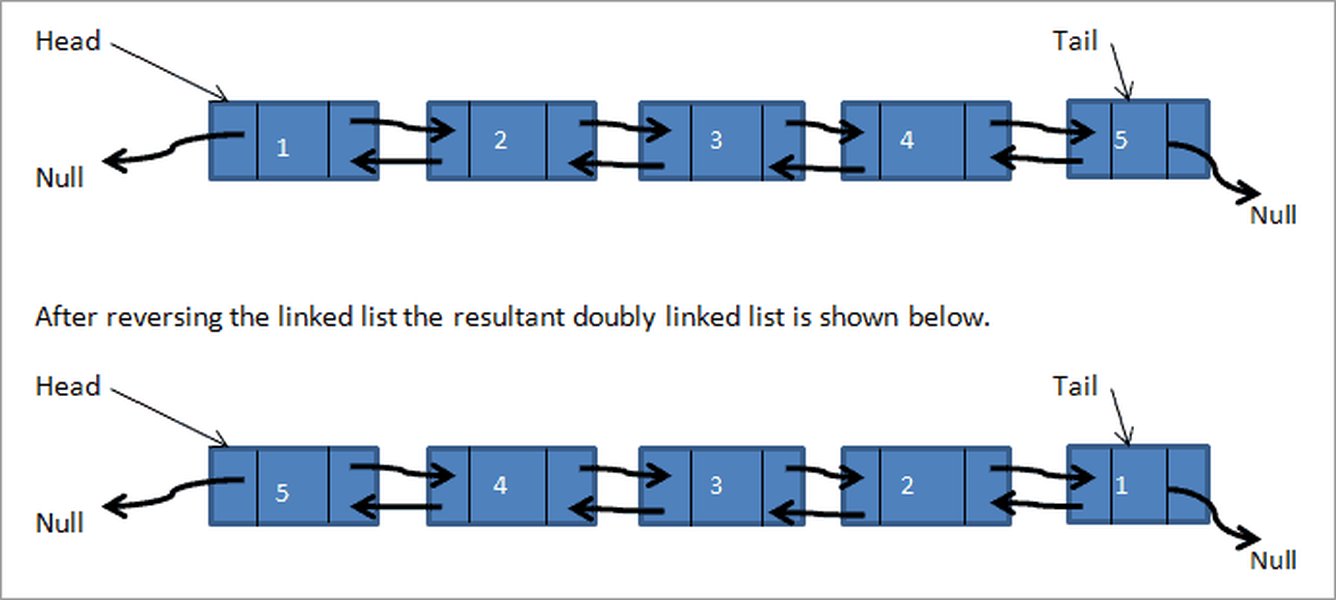
Figure 2: Conceptual representation of a Doubly Linked List structure.
The image above illustrates the typical structure of a doubly linked list, showing how nodes are interconnected with prev and next pointers. This visual aids in understanding how popTailNode carefully manipulates these pointers to remove the last element.
Returning the Deleted Value (popTailValue())
The popTailValue() function builds upon popTailNode(). Its primary purpose is to remove the tail node, extract its data, and then immediately free the memory associated with that node. This is often the more common "pop" operation when memory ownership is not to be transferred to the caller.
How popTailValue() Works:
- Call
popTailNode(): It first callspopTailNode()to perform the actual removal of the tail node from the list. - Handle Empty List: If
popTailNode()returnsnullptr(meaning the list was empty),popTailValue()throws astd::runtime_errorto indicate that no value could be retrieved. Alternatively, one could return anstd::optional<T>in C++17+ for safer handling. - Extract Value: If a node was successfully removed, its
datamember is extracted and stored in a temporary variablevalue. - Free Memory: The
deletedNodeis thendeleted, freeing its dynamically allocated memory. This is a critical step to prevent memory leaks. - Return: The extracted
valueis returned.
Robustness and Memory Management Considerations
Memory management is paramount in C++ when dealing with dynamically allocated data structures like linked lists. Failure to properly deallocate memory leads to memory leaks, which can degrade application performance and stability over time.
The Importance of the Destructor
The DoublyLinkedList class includes a destructor (~DoublyLinkedList()). This destructor is vital for ensuring that all dynamically allocated Node objects are properly deleted when the DoublyLinkedList object itself goes out of scope. It iterates through the list, deleting each node until the list is empty, preventing memory leaks.
Caller vs. Callee Responsibility
- For
popTailNode(), the caller explicitly takes ownership of the returnedNode*and must calldeleteon it later. - For
popTailValue(), theDoublyLinkedListclass retains responsibility for deleting the node, simplifying memory management for the caller.
Comparing Performance and Use Cases
Both popTailNode() and popTailValue() operate with O(1) time complexity, assuming head and tail pointers are maintained. This efficiency makes them ideal for scenarios requiring quick removal from the end of a list.
Figure 3: Comparative Analysis of Tail Popping Functions.
Choosing the Right Function
| Feature | popTailNode() |
popTailValue() |
|---|---|---|
| Return Type | Node<T>* (pointer to the deleted node) |
T (the data value of the deleted node) |
| Memory Management | Caller is responsible for deleteing the returned node to prevent leaks. |
Function internally deletes the node, freeing its memory. |
| Use Case | When the deleted node might be reused, pooled, or its full structure needs inspection outside the list. | When only the data value is needed, and the node's memory should be immediately deallocated. Typical for stack/queue operations. |
| Complexity | O(1) (constant time, assuming tail pointer is maintained) | O(1) (constant time, assuming tail pointer is maintained) |
| Error Handling (Empty List) | Returns nullptr. |
Throws std::runtime_error (or std::optional<T> in modern C++). |
The table above provides a concise comparison between the two tail-popping methods, highlighting their differences in return type, memory management, and ideal use cases. This helps in deciding which function is most appropriate for a given programming context.
Video: Doubly Linked List (Deleting the Last Node)
This YouTube video provides a visual and auditory explanation of deleting the last node in a doubly linked list, which directly corresponds to the popTailNode() and popTailValue() functionalities discussed. It helps in visualizing the pointer manipulations and understanding the flow of execution, especially for those who prefer learning through demonstrations.
Practical Usage Example
To illustrate how these functions are used, consider the following main function example:
Example Application of Pop Functions
int main() {
    DoublyLinkedList<int> list;

    // Build the list
    list.push_back(10);
    list.push_back(20);
    list.push_back(30);
    list.push_back(40); // List: 10 <-> 20 <-> 30 <-> 40

    std::cout << "Original list: ";
    list.display(); // Output: Original list: 10 <-> 20 <-> 30 <-> 40
    std::cout << "List size: " << list.getSize() << std::endl; // Output: List size: 4

    // --- Using popTailValue() ---
    try {
        int deletedVal = list.popTailValue(); // Removes 40 and deletes its node
        std::cout << "Popped tail value: " << deletedVal << std::endl; // Output: Popped tail value: 40
        std::cout << "List after popTailValue: ";
        list.display(); // Output: List after popTailValue: 10 <-> 20 <-> 30
        std::cout << "List size: " << list.getSize() << std::endl; // Output: List size: 3
    } catch (const std::runtime_error& e) {
        std::cerr << "Error: " << e.what() << std::endl;
    }

    // --- Using popTailNode() ---
    Node<int>* deletedNodePtr = list.popTailNode(); // Removes 30, returns pointer, but doesn't delete memory yet
    if (deletedNodePtr) {
        std::cout << "Popped tail node value (from pointer): " << deletedNodePtr->data << std::endl; // Output: Popped tail node value (from pointer): 30
        // Important: Manually delete the node to free its memory!
        delete deletedNodePtr;
        deletedNodePtr = nullptr; // Good practice to nullify pointer after deletion
    }
    std::cout << "List after popTailNode: ";
    list.display(); // Output: List after popTailNode: 10 <-> 20
    std::cout << "List size: " << list.getSize() << std::endl; // Output: List size: 2

    // Pop remaining elements to test empty list scenario
    list.popTailValue(); // Removes 20
    list.popTailValue(); // Removes 10

    std::cout << "List after popping all elements: ";
    list.display(); // Output: List is empty.

    // Test popping from an empty list (should throw exception)
    try {
        list.popTailValue();
    } catch (const std::runtime_error& e) {
        std::cerr << "Error when popping from empty list: " << e.what() << std::endl; // Output: Error when popping from empty list: Cannot pop from an empty list.
    }

    return 0;
}
This main function demonstrates the sequence of operations, showcasing how to add elements, use both popping functions, and crucially, how to handle the memory for the node returned by popTailNode(). It also includes error handling for attempting to pop from an empty list.
Figure 4: Code Robustness Across Various Scenarios.
Frequently Asked Questions
Why use a doubly linked list instead of a singly linked list for these operations?
prev). In a singly linked list, deleting the tail would require traversing the entire list from the head to find the second-to-last node, resulting in O(N) time complexity.What happens if I forget to delete the node returned by popTailNode()?
delete the node returned by popTailNode() will result in a memory leak. The memory allocated for that node will remain occupied and inaccessible, leading to increased memory consumption by your program. Over time, this can cause performance issues or even application crashes if the leaks are significant.Can popTailValue() be made safer without throwing an exception?
popTailValue() to return an std::optional<T>. This allows the function to indicate the absence of a value (e.g., when the list is empty) without relying on exceptions, providing a more functional and often safer approach to error handling. For older C++ standards, returning a default value or using an output parameter to indicate success/failure are alternatives.Why are the prev and next pointers of the deletedNode set to nullptr in popTailNode()?
prev and next pointers of the deletedNode to nullptr (isolating it) is a good defensive programming practice. It ensures that if the caller accidentally tries to use these pointers after the node has been removed from the list, they won't inadvertently point to invalid memory locations or cause unintended side effects with the rest of the list. It makes the returned node truly detached.Conclusion
Implementing tail-popping operations for a doubly linked list in C++ requires careful attention to pointer manipulation and memory management. By providing both popTailNode() (returning the node pointer) and popTailValue() (returning the data value and managing memory internally), developers gain flexibility in how they interact with the list. Robust error handling for empty lists and diligent memory deallocation through destructors and explicit delete calls are critical for creating stable and efficient data structures. These functions, when part of a well-designed DoublyLinkedList class, form the backbone for many dynamic data management applications.
Recommended Further Exploration
- How to implement insertion and deletion at any position in a doubly linked list?
- What are the best practices for memory management in C++ doubly linked lists?
- When should I choose a doubly linked list over other data structures like arrays or singly linked lists?
- How can I implement an iterator for a C++ doubly linked list?