
Understanding Pointers in C++
A Comprehensive Guide to Mastering Pointers in C++
Key Takeaways
- Pointers store memory addresses, enabling direct memory manipulation.
- They are essential for dynamic memory allocation and efficient data structure implementation.
- Modern C++ emphasizes the use of smart pointers to enhance safety and memory management.
Introduction to Pointers
What Are Pointers?
Pointers are one of the most powerful and essential features in C++. They provide the ability to directly interact with memory by storing and manipulating the addresses of variables. Unlike regular variables that store data values, pointers hold the memory addresses where these data values are stored. This capability allows for efficient memory management, dynamic allocation, and the creation of complex data structures such as linked lists, trees, and graphs.
Why Use Pointers?
Using pointers offers several advantages:
- Efficient Memory Usage: Pointers allow for dynamic memory allocation, which means that memory can be allocated and deallocated as needed during runtime.
- Performance: By passing large data structures by reference using pointers, programs can avoid the overhead of copying large amounts of data.
- Flexibility: Pointers enable the implementation of dynamic data structures and facilitate low-level programming tasks.
Declaration and Syntax
Declaring Pointers
To declare a pointer in C++, you use the asterisk (*) symbol. The syntax involves specifying the type of data the pointer will point to, followed by the pointer's name. The type must match the type of the variable to which the pointer will refer.
int* ptr; // Declares a pointer to an integer
double* dblPtr; // Declares a pointer to a double
char* charPtr; // Declares a pointer to a character
Pointer Initialization
After declaring a pointer, it needs to be initialized to point to a valid memory address. This can be done by assigning it the address of an existing variable using the address-of operator (&).
int x = 10;
int* ptr = &x // ptr now holds the address of x

double y = 20.5;
double* dblPtr = &y // dblPtr holds the address of y
Void Pointers
A void pointer, declared using void*, is a generic pointer type that can hold the address of any data type. However, it cannot be dereferenced directly without casting it to another pointer type.
void* ptr;
int x = 10;
ptr = &x // ptr now holds the address of x
Pointer Operations
Dereferencing Pointers
Dereferencing a pointer means accessing the value stored at the memory address the pointer holds. This is done using the asterisk (*) operator.
int x = 10;
int* ptr = &x
int y = *ptr; // y is now 10

*ptr = 20; // x is now 20
Pointer Arithmetic
Pointers can be incremented or decremented to traverse arrays or dynamic memory structures. Pointer arithmetic takes into account the size of the data type to which the pointer is pointing.
int arr[5] = {1, 2, 3, 4, 5};
int* ptr = arr; // Points to arr[0]

ptr++; // Now points to arr[1]
*ptr = 10; // arr[1] is now 10
Pointer to Pointer
A pointer to a pointer is a variable that holds the address of another pointer. This can be useful in scenarios where multiple levels of indirection are required, such as dynamic arrays of pointers or managing complex data structures.
int x = 10;
int* ptr = &x
int** ptr2 = &ptr // ptr2 holds the address of ptr
Dynamic Memory Allocation
Using new and delete
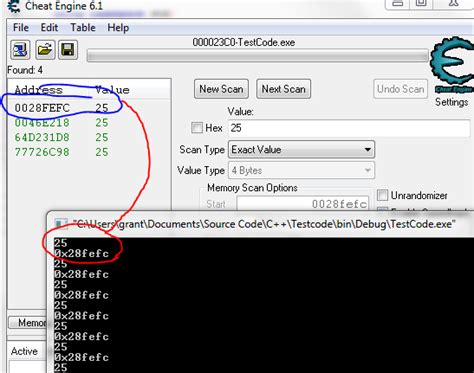
Dynamic memory allocation allows programs to request memory during runtime, which is essential for creating data structures whose size may not be known at compile time. The new operator allocates memory, and the delete operator frees it.
// Allocates memory for a single integer
int* ptr = new int;
*ptr = 25;

// Allocates memory for an array of 10 integers
int* arr = new int[10];

// Freeing allocated memory
delete ptr;
delete[] arr;
Memory Management Best Practices
Proper memory management is crucial to prevent memory leaks and undefined behavior. Always pair new with delete and new[] with delete[]. Failure to do so can result in memory leaks, where allocated memory is not properly freed.
Functions and Pointers
Passing by Reference
Pointers enable passing variables by reference to functions, allowing the function to modify the original variable directly.
void increment(int* ptr) {
    (*ptr)++;
}

int main() {
    int x = 5;
    increment(&x); // x is now 6
    return 0;
}
Returning Pointers from Functions
Functions can return pointers, enabling dynamic memory allocation within functions to be accessed by the caller. However, care must be taken to avoid returning pointers to local variables, which can lead to undefined behavior.
int* createPointer(int value) {
    int* ptr = new int;
    *ptr = value;
    return ptr;
}

int main() {
    int* ptr = createPointer(10);
    // Use the pointer
    delete ptr; // Free the allocated memory
    return 0;
}
Pointers and Arrays
Arrays as Pointers
In C++, the name of an array acts as a pointer to its first element. This allows for efficient traversal and manipulation of array elements using pointer arithmetic.
int arr[5] = {1, 2, 3, 4, 5};
int* ptr = arr; // Equivalent to int* ptr = &arr[0];

for(int i = 0; i < 5; i++) {
    cout << *(ptr + i) << " ";
}
// Output: 1 2 3 4 5
Multidimensional Arrays
Pointers can also be used to navigate multidimensional arrays. Understanding the memory layout of such arrays is essential for efficient access and manipulation.
int matrix[3][3] = {
    {1, 2, 3},
    {4, 5, 6},
    {7, 8, 9}
};

int(*ptr)[3] = matrix; // Pointer to an array of 3 integers

for(int i = 0; i < 3; i++) {
    for(int j = 0; j < 3; j++) {
        cout << ptr[i][j] << " ";
    }
    cout << endl;
}
Smart Pointers
Introduction to Smart Pointers
Modern C++ introduces smart pointers, which are template classes that provide automatic memory management. They help prevent common pointer-related issues such as memory leaks and dangling pointers by ensuring that memory is properly freed when it's no longer needed.
Types of Smart Pointers
| Smart Pointer | Description | Use Case |
|---|---|---|
std::unique_ptr |
Manages a single object with exclusive ownership. | Use when you want sole ownership of a resource. |
std::shared_ptr |
Allows multiple pointers to share ownership of an object. | Use when multiple parts of the program need to access the same resource. |
std::weak_ptr |
Provides a non-owning reference to an object managed by std::shared_ptr. |
Use to prevent circular references that can lead to memory leaks. |
Example: Using std::unique_ptr
#include <memory>
#include <iostream>

int main() {
    // Creating a unique_ptr
    std::unique_ptr<int> ptr = std::make_unique<int>(10);

    std::cout << "Value: " << *ptr << std::endl;

    // Transferring ownership
    std::unique_ptr<int> ptr2 = std::move(ptr);

    if(!ptr) {
        std::cout << "ptr is now null." << std::endl;
    }

    std::cout << "Value from ptr2: " << *ptr2 << std::endl;

    return 0;
}
Advantages of Smart Pointers
- Automatic Memory Management: Automatically deallocates memory when it's no longer needed, reducing the risk of memory leaks.
- Exception Safety: Ensures that memory is properly freed even when exceptions occur.
- Ownership Semantics: Clearly defines ownership of resources, making code easier to understand and maintain.
Common Pitfalls and Best Practices
Common Mistakes with Pointers
- Uninitialized Pointers: Pointers that are not initialized can point to arbitrary memory locations, leading to undefined behavior.
- Dangling Pointers: Pointers that reference memory that has already been deallocated.
- Memory Leaks: Forgetting to deallocate dynamically allocated memory results in memory not being freed.
- Null Pointer Dereferencing: Attempting to access memory through a null pointer causes runtime errors.
- Incorrect Pointer Arithmetic: Miscalculations in pointer arithmetic can lead to accessing unintended memory locations.
Best Practices
-
Always Initialize Pointers: Initialize pointers to a valid memory address or to
nullptrupon declaration. -
Use Smart Pointers: Prefer using smart pointers like
std::unique_ptrandstd::shared_ptrto manage dynamic memory automatically. -
Avoid Raw Pointers When Possible: Use references or smart pointers instead of raw pointers to enhance safety and readability.
-
Check for Null Pointers: Always verify that a pointer is not null before dereferencing it.
-
Be Cautious with Pointer Arithmetic: Ensure that pointer arithmetic stays within the bounds of allocated memory.
-
Use RAII (Resource Acquisition Is Initialization): Ensure that resources are properly released when objects go out of scope.
Advanced Topics
Function Pointers
Function pointers store the address of a function, allowing functions to be passed as arguments, stored in arrays, or returned from other functions. They are useful for callbacks and implementing event-driven programming.
#include <iostream>

void greet() {
    std::cout << "Hello, World!" << std::endl;
}

int main() {
    // Declare a function pointer
    void (*funcPtr)() = greet;

    // Call the function using the pointer
    funcPtr();

    return 0;
}
Pointer to Member Functions
Pointers can also point to member functions within a class. This allows for dynamic binding and polymorphism.
#include <iostream>

class MyClass {
public:
    void display() {
        std::cout << "Display function called." << std::endl;
    }
};

int main() {
    MyClass obj;
    void (MyClass::*ptr)() = &MyClass::display;

    // Calling the member function using the pointer
    (obj.*ptr)();

    return 0;
}
Pointers and References
While pointers and references both allow access to other variables, they have fundamental differences. Pointers can be reseated to point to different objects and can be null, whereas references must be initialized upon declaration and cannot be null or changed to refer to another object after initialization.
Smart Pointers vs. Raw Pointers
Smart pointers provide automatic memory management, reducing the risk of memory leaks and dangling pointers. They should be preferred over raw pointers, especially in modern C++ (C++11 and later), where smart pointers are part of the standard library.
Practical Examples
Implementing a Linked List
Pointers are fundamental in implementing dynamic data structures like linked lists. Each node in a linked list contains data and a pointer to the next node.
#include <iostream>

struct Node {
    int data;
    Node* next;
};

int main() {
    // Creating nodes
    Node* head = new Node();
    Node* second = new Node();
    Node* third = new Node();

    // Assigning data
    head->data = 1;
    head->next = second;

    second->data = 2;
    second->next = third;

    third->data = 3;
    third->next = nullptr;

    // Traversing the list
    Node* ptr = head;
    while(ptr != nullptr) {
        std::cout << ptr->data << " ";
        ptr = ptr->next;
    }
    // Output: 1 2 3

    // Deallocating memory
    delete head;
    delete second;
    delete third;

    return 0;
}
Dynamic 2D Array Allocation
Dynamically allocating a 2D array using pointers provides flexibility in managing the size of the array at runtime.
#include <iostream>

int main() {
    int rows = 3, cols = 4;

    // Dynamically allocating a 2D array
    int** array = new int*[rows];
    for(int i = 0; i < rows; i++) {
        array[i] = new int[cols];
    }

    // Initializing the array
    for(int i = 0; i < rows; i++) {
        for(int j = 0; j < cols; j++) {
            array[i][j] = i * cols + j;
        }
    }

    // Displaying the array
    for(int i = 0; i < rows; i++) {
        for(int j = 0; j < cols; j++) {
            std::cout << array[i][j] << " ";
        }
        std::cout << std::endl;
    }

    // Deallocating memory
    for(int i = 0; i < rows; i++) {
        delete[] array[i];
    }
    delete[] array;

    return 0;
}
Conclusion
Pointers are a vital aspect of C++ programming, offering unparalleled control over memory management and enabling the creation of efficient and dynamic data structures. Mastering pointers is essential for any C++ developer aiming to write high-performance and resource-efficient applications. While pointers provide great power, they also come with responsibilities, such as ensuring proper memory management to avoid leaks and undefined behavior. Embracing modern C++ practices, such as using smart pointers, can mitigate many of these risks, leading to safer and more maintainable code.
References
Last updated January 18, 2025