
Unlocking the Blueprint: How to Architect a Co-Parenting App Like TalkingParents
A deep dive into the essential features, technical foundations, and strategic considerations for building a successful co-parenting communication platform.
Key Insights for Aspiring App Creators
- Unalterable & Court-Admissible Records: The cornerstone of apps like TalkingParents is the creation of secure, timestamped, and unchangeable records of all communications and shared information, which is crucial for legal validity.
- Robust Security & Data Privacy: Given the sensitive nature of co-parenting interactions, implementing top-tier security measures, including end-to-end encryption and compliance with privacy regulations, is paramount.
- User-Centric Design for Simplicity: Co-parents often navigate stressful situations; thus, an intuitive, easy-to-use interface that simplifies scheduling, communication, and information sharing is essential for user adoption and satisfaction.
Understanding the Co-Parenting App Landscape
Co-parenting apps have emerged as vital tools for divorced or separated parents, aiming to streamline communication, organize schedules, and reduce conflict for the well-being of their children. These platforms provide a neutral, documented space for interactions, which can be invaluable, especially in high-conflict situations or when court oversight is involved. The market includes several established players, each with unique strengths.
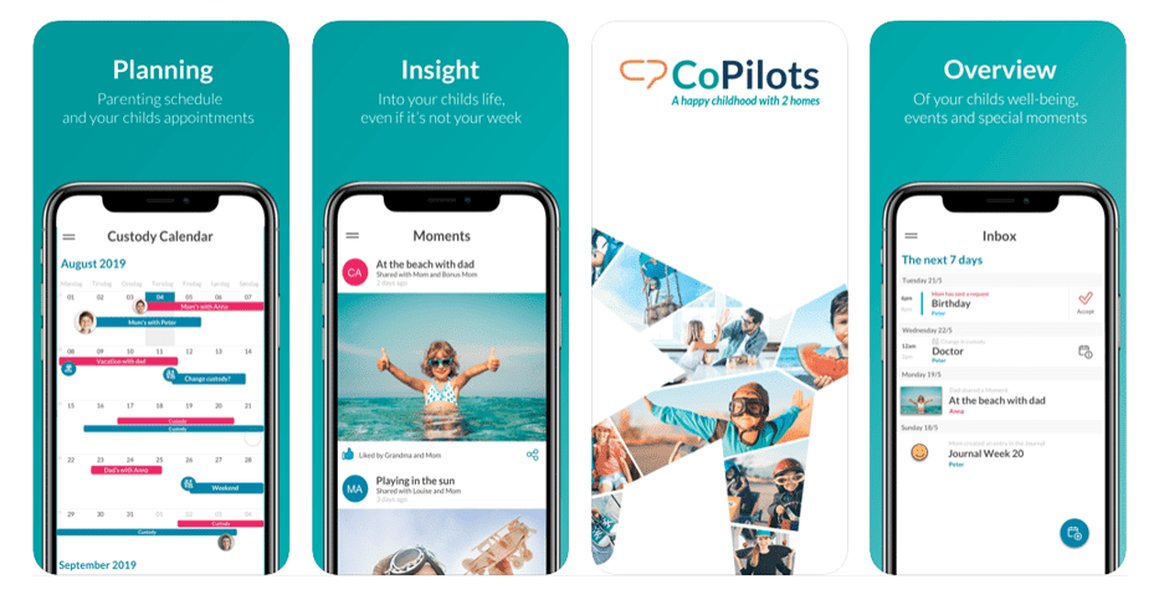
A glimpse into the competitive landscape of co-parenting applications.
Apps like TalkingParents, OurFamilyWizard, and AppClose are prominent examples. TalkingParents is known for its comprehensive suite of tools, including recorded calls and court-admissible records. OurFamilyWizard offers features like the ToneMeter™ to encourage positive communication. AppClose positions itself as a largely free alternative. Understanding these competitors' offerings helps in identifying gaps and opportunities for a new app.
Core Features: The Backbone of Your Co-Parenting App
To create an app that genuinely assists co-parents and stands out in the market, a robust set of core features is essential. These features should address the primary pain points of co-parenting: communication, scheduling, finances, and information sharing, all while maintaining record integrity.
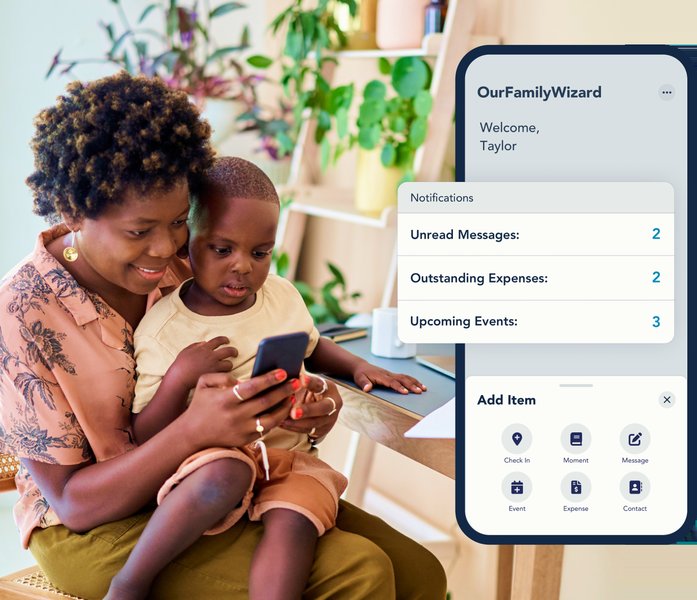
Example of a co-parenting app interface, highlighting key functionalities like calendars and messaging.
Below is a table detailing the crucial functionalities your app should consider incorporating:
| Feature | Description | Key Considerations |
|---|---|---|
| Secure & Unalterable Messaging | A platform for parents to communicate with messages that are timestamped, permanently recorded, and cannot be edited or deleted by users. | End-to-end encryption, court admissibility, clear read-receipts, ToneMeter™ (optional). |
| Shared Calendar | A centralized, interactive calendar for managing custody schedules, appointments (medical, school), holidays, and extracurricular activities. Allows for scheduling requests and changes. | Real-time synchronization, event reminders, detailed logging of changes, ability to propose and accept schedule modifications. |
| Expense Tracking & Reimbursement | Tools to log shared child-related expenses, request reimbursements, and potentially facilitate payments between parents. | Receipt uploads, clear categorization, payment history, dispute resolution mechanisms, potential integration with payment gateways. |
| Information & Document Storage | A secure digital vault for storing and sharing vital child-related information such as medical records, insurance details, school information, emergency contacts, and allergy details. | Secure access controls, search functionality, version control for documents, organized categories. |
| Recorded Audio & Video Calling | Secure, in-app calling features (audio and/or video) where calls are recorded, timestamped, and stored. This prevents reliance on personal phone numbers and creates a record. | User consent for recording, high-quality audio/video, secure storage of recordings, transcript availability (optional). |
| Journaling / Personal Notes | A private space for each parent to make personal notes and observations related to co-parenting, not shared with the other parent but potentially exportable. | Privacy controls, timestamping, easy export for personal records. |
| Court & Legal Professional Access | A feature allowing verified legal professionals (attorneys, guardians ad litem, mediators) to access relevant records with user consent. | Role-based access, audit trails of professional access, ensuring no misrepresentation of who is viewing data. |
| Exportable & Certified Records | The ability for users (and their legal representatives) to easily export communications, calendar entries, expense logs, and other information into legally presentable formats (e.g., certified PDFs). | Professional formatting, clear timestamps, official certification or notarization options if feasible. |
Technical Blueprint: Building a Robust Platform
Developing a co-parenting app requires a solid technical foundation to ensure security, reliability, and scalability. This involves careful planning of both backend and frontend components.
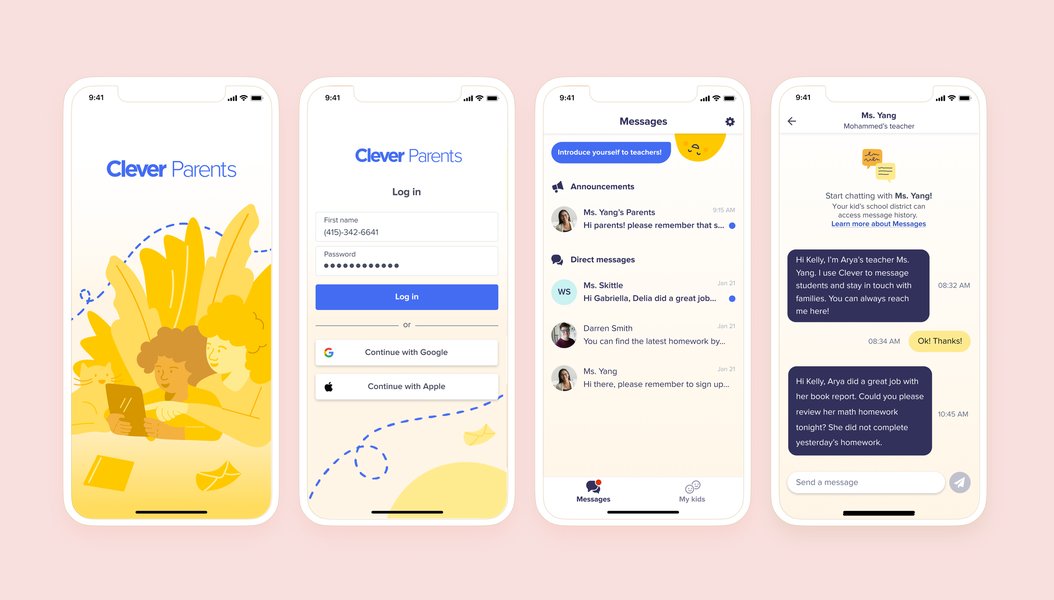
Initial screen designs are crucial for planning the user flow and interface of a co-parenting app.
Backend Architecture
Cloud Infrastructure
Utilize scalable cloud platforms like Amazon Web Services (AWS), Google Cloud Platform (GCP), or Microsoft Azure. These offer services for databases, storage, authentication, and serverless functions, allowing your app to grow with its user base.
Secure Database
Choose a robust and secure database system (e.g., PostgreSQL, MongoDB). Data should be encrypted at rest and in transit. The database schema must efficiently manage user data, messages, calendar events, and other records.
Real-time Communication
Implement real-time messaging capabilities using technologies like WebSockets or Firebase Realtime Database/Cloud Firestore. This ensures that messages and calendar updates are instantly reflected for all users.
APIs
Develop secure and well-documented APIs (Application Programming Interfaces) to handle communication between the frontend applications and the backend server. RESTful APIs or GraphQL are common choices.
Frontend Development
Platform Compatibility
Decide whether to build native apps for iOS (Swift or Objective-C) and Android (Kotlin or Java) or opt for a cross-platform framework like React Native, Flutter, or Xamarin. Native apps often provide better performance and platform integration, while cross-platform development can be faster and more cost-effective for reaching both audiences.
User Interface (UI) and User Experience (UX)
The UI must be clean, intuitive, and easy to navigate, even for non-tech-savvy users. UX design should focus on simplifying complex tasks like scheduling and expense tracking, minimizing potential for user error or frustration. Focus on accessibility standards.
Considering No-Code/Low-Code Options
For entrepreneurs or teams without extensive coding expertise, no-code or low-code platforms like Bubble.io can be a viable starting point for creating a Minimum Viable Product (MVP). These platforms allow for visual development of app logic and interfaces, significantly speeding up the initial development process. While they might have limitations for highly complex or scalable applications, they are excellent for validating an idea and gathering user feedback before investing in custom development.
Visualizing Development Priorities: A Radar Chart Analysis
Developing a sophisticated co-parenting app involves balancing various critical aspects. The radar chart below illustrates the relative importance and potential effort associated with key development areas. Understanding these dimensions can help in strategic planning and resource allocation. "Importance Score" reflects how critical the area is for app success, while "Effort Score" indicates the potential complexity or resources required for its implementation (both on a scale of 1 to 10, with 10 being highest).
As the chart suggests, areas like Security Implementation and Legal Compliance Focus are of paramount importance and typically require significant effort. User Experience is also highly critical for adoption. While a rich feature set is desirable, it might be balanced against initial cost and complexity, perhaps by phasing features over time.
Navigating the Labyrinth: Legal and Security Imperatives
The information exchanged and stored within a co-parenting app is often highly sensitive and may be used in legal proceedings. Therefore, uncompromising attention to legal admissibility and data security is non-negotiable.
Ensuring Court Admissibility
Unalterable and Timestamped Records
All communications, calendar entries, expense logs, and shared documents must be meticulously timestamped. Crucially, these records must be unalterable by users once created. Any changes (e.g., to a calendar event, if allowed by app logic) must also be logged with timestamps, indicating who made the change and when. This immutability is key to their acceptance by courts.
Verifiable Authenticity
The app should have mechanisms to verify user identities during signup and ensure that communications are genuinely from the attributed parent. This might involve email and phone verification. Secure export options for records, potentially with a form of digital certification or declaration of authenticity, can further enhance their legal standing.
Data Security and Privacy
Encryption
Employ end-to-end encryption for messages and calls where possible. All data, whether in transit between the app and server or at rest in the database and file storage, must be robustly encrypted using current industry-standard algorithms.
Authentication and Access Control
Implement strong authentication mechanisms, including multi-factor authentication (MFA), to protect user accounts from unauthorized access. Role-based access controls should govern what data users (including parents and any invited legal professionals) can see and interact with.
Compliance with Regulations
Ensure compliance with relevant data privacy laws such as GDPR (General Data Protection Regulation) if serving users in Europe, CCPA (California Consumer Privacy Act) if applicable, and potentially HIPAA (Health Insurance Portability and Accountability Act) if specific health information features are deeply integrated (though generally, co-parenting apps might not fall directly under HIPAA unless providing healthcare services). Clear privacy policies and terms of service are essential.
Regular Security Audits
Conduct periodic security audits and penetration testing by third-party experts to identify and address vulnerabilities proactively.
Mapping Success: Key Components of a Co-Parenting App
The development of a co-parenting app like TalkingParents is a multifaceted endeavor. The mindmap below outlines the interconnected core components, technical considerations, legal requirements, development stages, and business aspects that contribute to building a comprehensive and effective platform. Understanding these relationships is crucial for a holistic approach to app creation.
This mindmap visually breaks down the project into manageable segments, from foundational features and technical infrastructure to the critical legal safeguards and the overarching goal of supporting co-parents and their children.
The Development Lifecycle: From Concept to Reality
Creating a co-parenting app is a journey that follows a structured development lifecycle, ensuring that the final product is functional, secure, and meets user needs.
Phase 1: Research and Meticulous Planning
This initial phase involves in-depth market research to understand the target audience (co-parents, legal professionals), analyze competitors (like TalkingParents, OurFamilyWizard, AppClose), and identify unique selling propositions. Define the core features, scope of the project, and establish a preliminary budget and timeline. Gather requirements for legal admissibility in relevant jurisdictions.
Phase 2: Intuitive Design and User Experience (UX/UI)
Create wireframes, mockups, and interactive prototypes to visualize the app's structure and user flow. The design should prioritize simplicity, ease of use, and accessibility, considering the often-stressful context in which co-parents will use the app. Solicit feedback on designs from potential users if possible.
Phase 3: Building the Minimum Viable Product (MVP)
Develop the core set of essential features identified in the planning phase. The MVP should provide fundamental value to early adopters and allow for testing key assumptions about the app's utility. For a co-parenting app, this would likely include secure messaging, a basic shared calendar, and user registration/linking.
Phase 4: Iteration and Advanced Feature Integration
Based on feedback from the MVP and further planning, begin developing advanced features. This could include expense tracking, document storage, recorded audio/video calls, and tools for legal professional access. Development should be iterative, with regular builds and reviews.
Phase 5: Rigorous Testing and Quality Assurance (QA)
Conduct comprehensive testing across multiple devices and operating systems. This includes:
- Functional testing: Ensuring all features work as intended.
- Security testing: Penetration testing and vulnerability assessments to protect sensitive data.
- Usability testing: Observing real users interacting with the app to identify pain points.
- Performance testing: Evaluating app responsiveness and stability under load.
- Legal compliance review: Ensuring record-keeping meets standards for court admissibility.
Phase 6: Launch, Deployment, and Ongoing Support
Once the app passes QA, prepare for launch. This involves submitting it to app stores (Apple App Store, Google Play Store) with clear descriptions, privacy policies, and terms of service. After launch, continuously monitor app performance, gather user feedback, fix bugs promptly, and plan for regular updates with new features and improvements. Provide robust customer support channels.
The Role of Documented Communication in Legal Settings
A primary driver for the adoption of co-parenting apps like TalkingParents is their utility in legal contexts, particularly in family court. When disagreements arise, having a clear, unalterable record of communications, scheduled events, and shared expenses can be invaluable. These apps provide a neutral ground for interactions, removing ambiguity and the "he said, she said" dynamic.
The following video features Stephen Nixon, the founder of TalkingParents, discussing how the platform helps parents prepare for court by ensuring all interactions are documented. It provides insight into the importance of features like unalterable records and comprehensive communication logs for legal proceedings.
"Prepping for Court with TalkingParents" discusses how documented communications support legal processes.
As highlighted in the video and by legal professionals, the ability of these apps to produce certified or easily verifiable records of messages, calendar events, and financial transactions helps streamline legal processes, reduce disputes over past interactions, and provide courts with reliable evidence. This focus on legal admissibility is a critical differentiator and a core value proposition for apps in this space.
Monetization Strategies: Sustaining Your App
To ensure the long-term viability and continuous improvement of your co-parenting app, a well-thought-out monetization strategy is crucial. Most successful co-parenting apps employ a freemium model or tiered subscriptions.
Freemium Model
Offer a basic version of the app with essential features (e.g., secure messaging, basic shared calendar) for free. This helps attract a large user base and allows parents to experience the app's core benefits. Limitations might include storage capacity, number of archived records, or access to advanced features.
Subscription Tiers
Introduce paid subscription plans (monthly or annually) that unlock premium features. These could include:
- Unlimited storage for messages and documents.
- Advanced features like recorded audio/video calls.
- Enhanced record export options (e.g., certified PDFs).
- Access for legal professionals.
- Detailed expense reporting and management.
- Priority customer support.
Clearly communicate the value proposition of each tier. Some apps charge per parent, while others might offer family plans. The pricing should be competitive yet reflect the value and security provided by the platform. Consider that court orders sometimes mandate the use of such apps, and parents may have varying financial capacities.
Frequently Asked Questions (FAQ)
How long does it typically take to build an app like TalkingParents?
The development timeline for a co-parenting app similar to TalkingParents can vary significantly based on the complexity of features, the size and experience of the development team, and the chosen technology stack. A Minimum Viable Product (MVP) with core features might take 4-6 months. A more comprehensive version with advanced functionalities, robust security, and cross-platform support could take 9-12 months or even longer. This includes phases for planning, design, development, testing, and initial launch.
Is it possible to build such an app without extensive coding skills?
Yes, it's becoming more feasible to build applications with limited coding skills using no-code or low-code platforms like Bubble.io. These platforms allow you to visually design the app's interface and logic. For an MVP of a co-parenting app, focusing on features like user registration, basic messaging, and a shared calendar, these tools can be very effective. However, for advanced features, high-level security, scalability, and the kind of court-admissible record integrity found in apps like TalkingParents, custom coding or significant technical expertise is often required. A no-code approach can be a great way to start and validate your concept.
What makes co-parenting app records "court-approved" or "court-admissible"?
While no app can guarantee its records will be admitted in every court case (as admissibility depends on specific court rules and judicial discretion), certain features significantly increase the likelihood. These include:
- Unalterable Records: Messages, calendar entries, and other logged activities cannot be edited or deleted by users once submitted.
- Timestamps: All records are automatically and accurately timestamped.
- Authenticated Users: Clear identification of who created each record.
- Secure and Verifiable Export: The ability to export records in a format that is difficult to tamper with (e.g., certified PDFs) and that clearly shows the source and integrity of the data.
- Audit Trails: Logs of when information was viewed, shared, or modified (if modifications are system-tracked).
How much might it cost to develop a co-parenting app?
The cost of developing a co-parenting app can range widely, from tens of thousands to hundreds of thousands of dollars, or even more. Factors influencing cost include:
- Feature complexity: More advanced features (e.g., recorded video calls, AI-powered tone analysis) increase cost.
- Platform choice: Developing separate native apps for iOS and Android is typically more expensive than cross-platform development.
- Design sophistication: Custom, high-quality UI/UX design adds to the cost.
- Security requirements: Implementing robust security measures and ensuring legal compliance requires specialized expertise and investment.
- Team location and experience: Developer rates vary significantly by region and expertise.
- Ongoing maintenance and updates: Post-launch costs for hosting, support, and feature enhancements should also be budgeted.
Recommended Queries
- What are the key security features to implement in a communication app for sensitive data?
- How do co-parenting apps ensure the legal admissibility of their records in family court?
- Compare the pros and cons of native versus cross-platform app development for a new application.
- What are effective monetization strategies for freemium mobile applications?
References
Last updated May 9, 2025