
Creating the Perfect Buffer: The Science Behind pH 4.72 Solutions Using Hydrazoic Acid
Discover how to properly formulate a buffer system that maintains a precise pH level using HN3 and the right complementary substance.
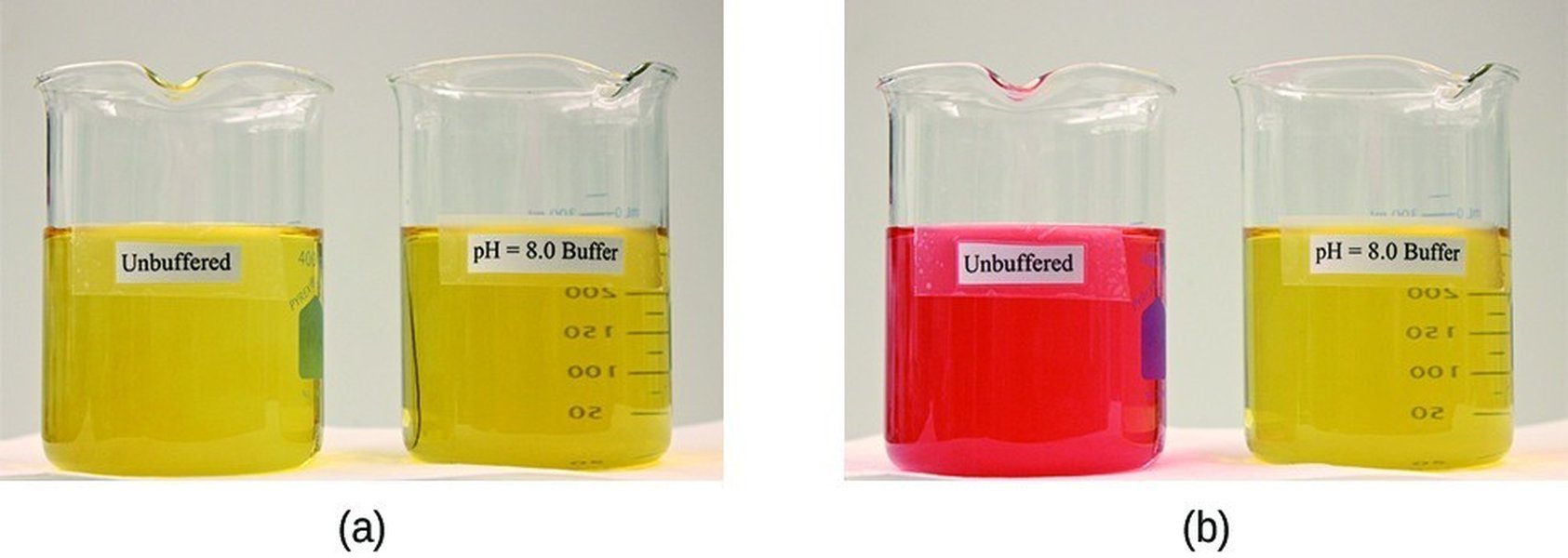
Key Buffer Solution Insights
- Hydrazoic acid (HN3) has a pKa of 4.72, making it ideal for creating a buffer at this exact pH value
- A proper buffer requires both a weak acid and its conjugate base to resist changes in pH when acids or bases are added
- Ammonia (NH3) can establish the necessary acid-base equilibrium with HN3 to create an effective buffer system
Understanding Buffer Systems
A buffer solution is a mixture that maintains a relatively constant pH even when small amounts of acid or base are added. Buffers are essential in chemical and biological systems where maintaining a specific pH is critical. A properly designed buffer consists of a weak acid and its conjugate base (or a weak base and its conjugate acid) in appropriate proportions.
Components of an Effective Buffer
For a buffer to function effectively, it must contain:
- A weak acid or base that can donate or accept protons
- The corresponding conjugate partner in appropriate concentrations
- Concentrations of both components substantial enough to neutralize added H+ or OH- ions
The Henderson-Hasselbalch Equation
The pH of a buffer can be calculated using the Henderson-Hasselbalch equation:
\[ \text{pH} = \text{pKa} + \log\left(\frac{[\text{conjugate base}]}{[\text{weak acid}]}\right) \]
When the concentration of the conjugate base equals the concentration of the weak acid, the pH equals the pKa of the acid. In our case, with a desired pH of 4.72 and using HN3 (which has a pKa of 4.72), we would need equal concentrations of HN3 and its conjugate base (N3-).
Analyzing the Given Options
Let's examine each of the provided options to determine which one would create an effective buffer system with hydrazoic acid:
| Option | Compound | Chemical Nature | Buffer Formation Potential |
|---|---|---|---|
| a) | ACH | Unclear/typographical error | Cannot determine |
| b) | NaOH | Strong base | Will neutralize HN3 but not create an optimal buffer |
| c) | H2O | Neutral | Will only dilute; doesn't contribute to buffer capacity |
| d) | NH3 | Weak base | Can form a buffer system with HN3 |
Why Ammonia (NH3) Creates an Effective Buffer
When ammonia (NH3) is added to a solution of hydrazoic acid (HN3), the following reaction occurs:
\[ \text{HN3} + \text{NH3} \rightarrow \text{N3}^- + \text{NH4}^+ \]
This reaction produces the conjugate base (N3-) of hydrazoic acid along with ammonium ions (NH4+). With both HN3 and N3- present in solution, the system can effectively resist pH changes by the following equilibria:
- When acid is added: N3- + H+ → HN3
- When base is added: HN3 + OH- → N3- + H2O
Contrasting with Other Options
While sodium hydroxide (NaOH) could theoretically convert some HN3 to its conjugate base, it's a strong base that would simply neutralize an equivalent amount of acid rather than establishing the proper equilibrium needed for a buffer. Water (H2O) would merely dilute the solution without contributing to buffer capacity, and ACH is an unclear option that can't be properly evaluated.
The mindmap above illustrates the key components and relationships in our buffer system, highlighting how ammonia helps establish the necessary acid-base equilibrium with hydrazoic acid.
Buffer Calculations and Performance
Quantitative Analysis of the Buffer System
To achieve a buffer with pH 4.72 using 100 mL of 1.00 M HN3, we need to calculate the amount of NH3 required. Since the desired pH equals the pKa of HN3 (4.72), we need equal concentrations of acid and conjugate base.
Calculating Required NH3
From the Henderson-Hasselbalch equation:
\[ 4.72 = 4.72 + \log\left(\frac{[\text{N3}^-]}{[\text{HN3}]}\right) \]
This simplifies to:
\[ \log\left(\frac{[\text{N3}^-]}{[\text{HN3}]}\right) = 0 \]
Therefore:
\[ \frac{[\text{N3}^-]}{[\text{HN3}]} = 1 \]
This means we need to convert exactly half of our HN3 to N3- using NH3. With 100 mL of 1.00 M HN3, we have 0.100 mol of HN3. To convert half of this (0.050 mol) to N3-, we need 0.050 mol of NH3.
The chart above shows the concentrations of chemical species in the final buffer solution after adding NH3 to HN3. Note how the initial 1.0 M HN3 is partially converted to 0.5 M HN3 and 0.5 M N3-, creating the ideal buffer composition at pH 4.72.
Testing Buffer Effectiveness
A well-designed buffer should maintain its pH when small amounts of acid or base are added. With equal concentrations of HN3 and N3-, this buffer would be most effective at resisting pH changes around its pKa value of 4.72.
Practical Applications of HN3/N3- Buffers
Buffers at pH 4.72 have various applications in chemistry and biochemistry:
- Enzymatic reactions that function optimally in mildly acidic environments
- Stabilization of certain protein formulations
- Chemical synthesis processes requiring precise pH control
- Analytical chemistry procedures where maintaining a specific pH is critical
However, it's important to note that hydrazoic acid and its salts (azides) are toxic and potentially explosive, so appropriate safety precautions must be taken when working with these compounds.
This video provides a comprehensive explanation of how to prepare buffer solutions, including the calculations involved in determining the right proportions of acid and conjugate base.
Frequently Asked Questions
References
- Reddit Discussion on HN3 and Buffers - r/APChem
- Buffer Preparation with NH3 and HN3 - Chegg
- Creating Buffers with HN3 and NH3 - Brainly
- Sodium Azide Calculations for HN3 Buffers - Brainly
- How to Prepare a Buffer - YouTube
Recommended Searches
Last updated March 28, 2025