
Understanding Credit Sales and Trade Receivables
Analyzing the Recording Process of Credit Sales and Collections
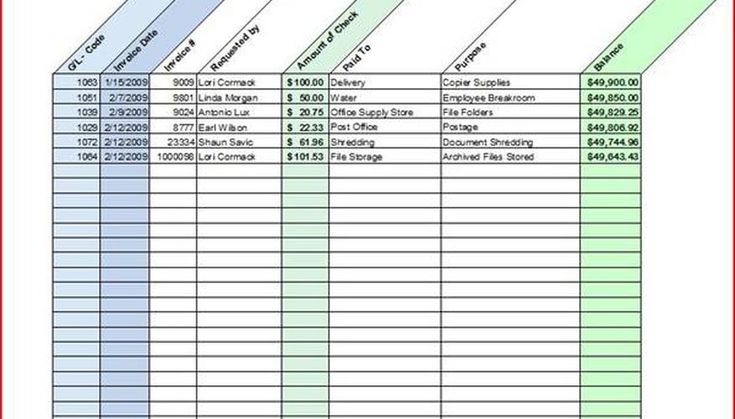
Key Insights
- Sales Increase Trade Receivables: When sales are made on credit, they are added to the trade receivables balance.
- Recording and Collections: The initial credit sale increases the receivables, and once payment is received, the receivables balance is reduced accordingly.
- No Direct Subtraction for Credit Sales: Credit sales themselves are not subtracted from the receivables; deductions occur only when payments are received.
Detailed Explanation of Trade Receivables and Credit Sales
Recording Credit Sales
In financial accounting, when a business sells goods or provides services on credit, it creates an asset known as trade receivables (or accounts receivable). This asset represents the amount that customers owe to the business, recorded under the assumption that payment will be received in the future. Therefore, when a credit sale is made, the company records two key entries:
Journal Entries for a Credit Sale
The typical double-entry accounting system for a credit sale involves:
- Debit Trade Receivables: This increases the asset account, reflecting the expectation of an incoming cash flow. It symbolizes the record of the amount that is due from the customer.
- Credit Sales Revenue: This credit entry recognizes the revenue earned from the sale of goods or services.
In mathematical terms, if you denote the amount of the credit sale as \( \text{\(S\)} \), the entry would be:
\( \text{\(debit: \ Trade \ Receivables \ (+S)\)} \) and \( \text{\(credit: \ Sales \ Revenue \ (+S)\)} \).
At the time of the sale, there is no subtraction from the receivables balance. Instead, the total of credit sales increases the trade receivables balance.
Recognition of Payment and Adjustments
The entire credit sale is initially recognized as an increase in trade receivables. However, when a customer subsequently pays for the goods or services, the corresponding amount is removed from the trade receivables balance. Here is how that process works:
Journal Entries for Customer Payment
- Debit Cash/Bank Account: This recognizes the receipt of funds and increases the liquid assets of the business.
- Credit Trade Receivables: This reduces the asset account as the amount is no longer due from the customer.
Represented mathematically, once the customer pays an amount \( \text{\(P\)} \), the adjustment in the accounting records becomes:
\( \text{\(debit: \ Cash \ (+P)\)} \) and \( \text{\(credit: \ Trade \ Receivables \ (-P)\)} \).
It is important to understand that the credit sale increases the receivables balance at the moment of sale. The subtraction only occurs upon payment, thereby reducing the outstanding balance.
Clarifying the Misconception
The question “Do you minus sales made on credit from trade receivable?” can lead to some confusion. It might be interpreted in two distinct ways:
- Upon recording the sale: The credit sale is added to the trade receivables; there is no subtraction because trade receivables are meant to capture all amounts yet to be collected.
- Upon customer payment: The amount received is subtracted from the trade receivables, thus reducing the asset to reflect collections.
The essential point is that the trade receivables balance represents amounts invoiced and due for collection, rather than a net figure after subtracting any credit sales. The subtraction specifically pertains to the event of cash receipt.
Practical Illustration: A Table Overview
| Transaction | Debit | Credit |
|---|---|---|
| Credit Sale Recording | Trade Receivables | Sales Revenue |
| Customer Payment Receipt | Cash/Bank | Trade Receivables |
This table summarizes the two key phases in handling credit sales within the accounting system. Initially, the credit sale increases trade receivables (no subtraction performed at this stage). Then, at the time of payment, the amount is deducted from trade receivables.
Additional Considerations in Trade Receivables Management
Impact of Sales Returns and Allowances
In practice, businesses also need to handle scenarios like sales returns or allowances. These adjustments may reduce the total credit sales, and in turn, are reflected in the trade receivables balance. Specifically:
- Sales returns or allowances are subtracted from the total credit sales, thereby reducing the gross amount that would be reported as trade receivables.
- The net credit sales figure is a more realistic indicator of the expected collection, considering these adjustments.
It is essential to account for these adjustments separately and not to confuse the initial recognition of a credit sale (which increases trade receivables) with adjustments made when cash is received or returns occur.
Uncollectible Accounts and Allowances
Over time, some trade receivables may become uncollectible due to customer defaults. In such cases, businesses create an allowance for doubtful accounts to reflect the anticipated loss in collectible amounts. Recognizing doubtful accounts does not directly subtract credit sales from trade receivables; instead, it provides a means to estimate the realizable value of receivables.
The process entails:
- Establishing an Allowance for Doubtful Accounts (a contra asset account).
- Writing off specific uncollectible amounts against this allowance once confirmed.
This method ensures that the balance sheet more accurately portrays the net collectible value of trade receivables.
Conceptual Overview with Mathematical Notation
Mathematical Representation
Let's denote the following variables for clarity:
- \( \text{CS} \) = Total credit sales
- \( \text{SR} \) = Sales returns and allowances
- \( \text{TR} \) = Trade receivables
At the time of sale:
\( \text{TR} = \text{TR}_{\text{prev}} + \text{CS} \)
And after accounting for returns and allowances:
\( \text{Net Credit Sales} = \text{CS} - \text{SR} \)
However, until payment is received, trade receivables remain at the total billed amount, which is why credit sales are initially added and only subtracted when cash is collected.
Practical Examples in Business Transactions
Example Scenario
Consider a business that makes a credit sale of $5,000. At the time of sale:
- Debit: Trade Receivables increases by $5,000.
- Credit: Sales Revenue increases by $5,000.
This transaction boosts the total trade receivables. When the customer later pays $5,000:
- Debit: Cash increases by $5,000.
- Credit: Trade Receivables decreases by $5,000.
This cycle ensures accurate recording of credit sales and subsequent cash inflow, thereby maintaining a precise financial picture.
References
- Trade receivables and revenue - ACCA Global
- What are Trade Receivables and How to Calculate Them? - HighRadius
- How To Calculate Credit Sales - Indeed
- Trade Receivables - Wall Street Mojo
- Accounts Receivable Explained - Investopedia
Recommended Related Queries
Last updated March 11, 2025