
Principles of Critical Thinking
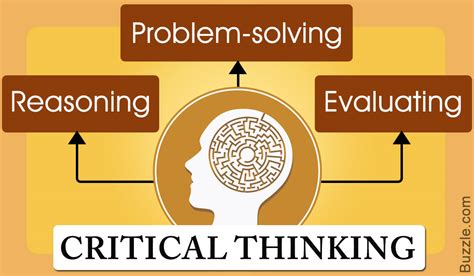
Critical thinking is an essential cognitive skill that empowers individuals to make reasoned and well-informed decisions. It involves the disciplined process of actively and skillfully conceptualizing, applying, analyzing, synthesizing, and evaluating information. By adhering to fundamental principles, critical thinkers can navigate complex issues with clarity, precision, and fairness. The following sections outline the key principles of critical thinking, providing a comprehensive framework for effective reasoning and decision-making.
1. Clarity and Precision
Clarity and precision are foundational to critical thinking. Clear and precise communication ensures that concepts and arguments are understood without ambiguity or vagueness.
Understanding and Defining Terms
It is crucial to comprehend and accurately define all terms used in an argument or discussion. This practice prevents misunderstandings and ensures that all parties have a common understanding of the concepts involved.
Specificity in Expression
Being specific and exact in both expression and thought helps avoid generalizations that can lead to misconceptions. Precise language facilitates deeper analysis and clearer communication of ideas.
2. Logic and Coherence
Logical reasoning and coherence are vital for constructing and evaluating arguments. Ensuring that each step of an argument is justified and follows a rational sequence strengthens the overall conclusion.
Valid Reasoning
Critical thinkers use valid deductive and inductive reasoning to ensure that conclusions logically follow from premises. This involves identifying logical fallacies and ensuring consistency in arguments.
Consistency and Rationality
Maintaining consistency in thought processes and adhering to rational principles help in forming coherent and persuasive arguments. Coherent arguments are structured in a way that each part supports the whole.
3. Open-Mindedness and Fairness
Open-mindedness and fairness are critical for considering diverse perspectives and avoiding personal biases that can distort judgment.
Embracing Diverse Viewpoints
Being open to alternative perspectives and counter-arguments allows for a more comprehensive understanding of issues. Fair-mindedness ensures that all viewpoints are evaluated based on their merits rather than personal preferences.
Avoiding Confirmation Bias
Critical thinkers strive to recognize and mitigate confirmation bias—the tendency to favor information that confirms existing beliefs. This involves actively seeking out and considering evidence that challenges preconceived notions.
4. Skepticism and Questioning
Skepticism entails a healthy level of doubt and the continual questioning of information to ascertain its validity and reliability.
Challenging Assumptions
Critical thinkers do not accept information at face value. They question underlying assumptions and explore the context in which information is presented to determine its credibility.
Evaluating Sources
Assessing the reliability and credibility of sources is paramount. This involves verifying the origin of information, the expertise of the source, and the evidence supporting the claims made.
5. Evidence-Based Reasoning
Relying on concrete, verifiable evidence is essential for forming sound judgments and making informed decisions.
Seeking Empirical Data
Utilizing empirical data and scientific research strengthens arguments by providing objective and measurable evidence. This reduces reliance on anecdotal information or unverified claims.
Quality and Reliability of Evidence
Not all evidence is created equal. Critical thinkers evaluate the quality and reliability of evidence, prioritizing information from reputable and authoritative sources.
6. Depth and Breadth
Exploring the complexity of issues (depth) and considering a wide range of perspectives (breadth) enhances the quality of critical thinking.
Complexity of Issues
Delving deeper into the intricacies of a subject allows for a more nuanced understanding. This involves examining underlying factors, potential implications, and alternative interpretations.
Multiple Perspectives
Considering diverse viewpoints prevents narrow-mindedness and fosters a well-rounded approach to problem-solving. It encourages the integration of various ideas to form a comprehensive perspective.
7. Relevance and Significance
Focusing on information that is directly related to the issue at hand (relevance) and prioritizing the most important aspects (significance) ensures efficient and effective thinking.
Filtering Information
Critical thinkers discern between pertinent and irrelevant information, concentrating their efforts on data that directly impacts the issue. This selective approach enhances the clarity and focus of their analysis.
Prioritizing Key Elements
Identifying and emphasizing the most significant aspects of a problem helps in addressing the core issues effectively. This prevents distraction by trivial details that do not contribute to the overall understanding.
8. Objectivity
Maintaining an objective stance involves separating personal emotions and biases from rational analysis.
Impartial Evaluation
Critical thinkers strive to assess information and arguments without letting personal feelings or prejudices interfere. This impartiality ensures that judgments are based on factual and logical consideration.
Self-Awareness of Biases
Recognizing and addressing one's own biases is crucial for achieving objectivity. This self-awareness allows individuals to minimize the influence of personal biases on their reasoning processes.
9. Systematic Approach
Adopting a structured and methodical approach to problem-solving enhances the effectiveness of critical thinking.
Breaking Down Problems
Dividing complex issues into smaller, manageable components facilitates a clearer analysis and more targeted solutions. This step-by-step method ensures that each aspect is thoroughly examined.
Structured Methods of Analysis
Employing systematic techniques, such as SWOT analysis or flowcharts, aids in organizing thoughts and identifying logical connections among various elements of a problem.
10. Reflective Thinking
Reflective thinking involves continuously examining and reassessing one's own thought processes to enhance self-awareness and improve reasoning skills.
Self-Examination
Critical thinkers regularly reflect on their reasoning, questioning the validity and reliability of their conclusions. This practice fosters continuous improvement and adaptability in thinking.
Willingness to Admit Mistakes
Acknowledging and learning from errors is a key aspect of reflective thinking. It promotes intellectual humility and the pursuit of more accurate and reliable knowledge.
11. Integration of Principles
The principles of critical thinking are interconnected and function cohesively to promote sound reasoning and informed decision-making.
Interconnectedness of Skills
Clarity, precision, logic, open-mindedness, and objectivity work together to create a robust framework for critical analysis. Mastery of one principle often enhances the effectiveness of others.
Holistic Application
Applying these principles holistically ensures that critical thinking is not limited to isolated aspects but is a comprehensive approach to understanding and evaluating information.
Conclusion
By adhering to these principles—clarity and precision, logic and coherence, open-mindedness and fairness, skepticism and questioning, evidence-based reasoning, depth and breadth, relevance and significance, objectivity, systematic approach, and reflective thinking—individuals can cultivate strong critical thinking skills. These principles provide a structured and effective means of analyzing information, forming reasoned conclusions, and making informed decisions in both personal and professional contexts.
For further reading and a deeper exploration of critical thinking principles, refer to the Stanford Encyclopedia of Philosophy: Critical Thinking.
Last updated January 4, 2025