
Unlocking Crypto Fortunes: Which Digital Assets Show Maximum Profit Potential in May 2025?
An in-depth exploration of cryptocurrencies demonstrating high growth prospects and the factors driving their potential returns.
Navigating the cryptocurrency market in pursuit of maximum profit requires a keen understanding of current trends, technological innovations, and risk factors. As of May 12, 2025, several digital assets are garnering attention for their potential. However, it's crucial to remember that the crypto landscape is inherently volatile, and past performance is not indicative of future results. This analysis synthesizes information from multiple sources to provide a comprehensive overview, not financial advice.
Key Highlights: Crypto Investment Insights for May 2025
- Established leaders like Bitcoin (BTC) and Ethereum (ETH) continue to be foundational investments, with ongoing developments such as ETF approvals and institutional adoption bolstering their positions.
- High-performance blockchains such as Solana (SOL) and payment-focused cryptos like XRP (Ripple) are noted for significant growth potential, driven by their utility and expanding ecosystems.
- Emerging altcoins, including those in AI, DeFi, and specialized niches (e.g., Qubetics, Kaspa), present opportunities for higher returns, albeit often accompanied by increased risk. Thorough research is paramount.
Understanding the Crypto Market: Volatility and Opportunity
The cryptocurrency market is renowned for its dynamic nature and high volatility. While the allure of substantial profits is strong, potential investors must be acutely aware of the significant risks involved. Investments can yield considerable returns, but they can also lead to substantial losses. It is a fundamental principle to only invest funds that one can afford to lose and to consider seeking advice from a qualified financial advisor before making any investment decisions. Market capitalization, technological underpinnings, adoption rates, and macroeconomic factors all play pivotal roles in a cryptocurrency's price trajectory.
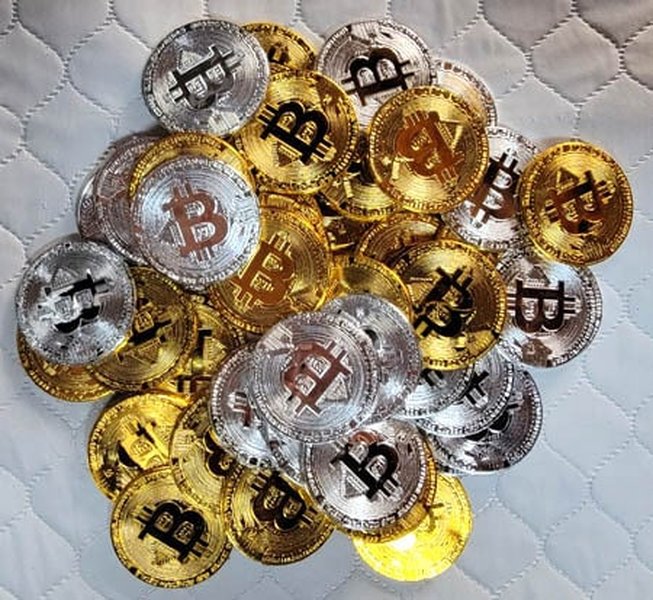
Physical representations of Bitcoin, symbolizing the tangible aspect of a digital asset class.
Top Contenders for Potential High Profit in 2025
Based on analyses from various market observers as of May 2025, several cryptocurrencies stand out due to their robust fundamentals, innovative technologies, strong communities, and recent performance metrics. These are categorized below for clarity.
Established Giants: The Bedrock of Crypto Portfolios
Bitcoin (BTC)
Bitcoin, the progenitor of cryptocurrencies, maintains its status as the market leader and a benchmark for the entire digital asset class. Often referred to as "digital gold," BTC is favored for its long history, widespread recognition, and increasing institutional adoption. As of May 2025, Bitcoin is trading around $103,000 - $104,000 with a market capitalization exceeding $2 trillion. Its role as a store of value, coupled with developments like Bitcoin ETFs, continues to attract significant investor interest. While it may offer more moderate growth compared to newer altcoins, its established position provides a degree of relative stability in a volatile market.
Ethereum (ETH)
Ethereum is the second-largest cryptocurrency by market capitalization and serves as the foundational layer for a vast ecosystem of decentralized applications (dApps), including Decentralized Finance (DeFi) and Non-Fungible Tokens (NFTs). With ongoing upgrades like the transition to Ethereum 2.0 (focused on scalability and efficiency), a robust developer community, and the recent launch of Ethereum ETFs, ETH is poised for continued growth. Its price is reported in the range of $2,300 - $2,540 in May 2025. Ethereum's utility in powering Web3 innovations makes it a compelling investment for those seeking exposure to the broader blockchain technology landscape.
High-Growth Platforms: Speed, Scalability, and Specialized Utility
Solana (SOL)
Solana has gained prominence for its high transaction speeds, scalability, and low fees, making it an attractive platform for developers building dApps, particularly in DeFi and NFT sectors. Trading around $135 in May 2025, Solana's rapidly expanding ecosystem positions it as a strong competitor to Ethereum. While it has faced scrutiny regarding network stability and centralization, its performance and technological propositions continue to draw investor attention for potentially high returns.
XRP (Ripple)
XRP is primarily known for its association with Ripple, a company focused on facilitating fast and low-cost international payments for financial institutions. Despite past legal challenges, XRP has demonstrated resilience and is gaining traction within the banking sector. In May 2025, XRP is trading around $2.35 - $2.40. Its potential for real-world application in cross-border settlements makes it an intriguing prospect for investors looking for growth tied to tangible financial use cases. Some sources report significant year-to-date gains, highlighting its dynamic performance.
Emerging & Specialized Cryptocurrencies: The High-Risk, High-Reward Frontier
Beyond the established leaders, a diverse range of altcoins offers unique value propositions and, consequently, varying degrees of profit potential and risk. These include:
- AI-Focused Cryptos: Tokens like Bittensor (TAO) and Render (RNDR) are gaining traction as the integration of Artificial Intelligence with blockchain technology expands.
- Privacy Coins: Monero (XMR) continues to be a leading choice for users prioritizing transaction privacy.
- Layer 1 & Layer 2 Solutions: Projects like Kaspa (KAS), Arbitrum (ARB), Hedera (HBAR), Stacks (STX), Polygon (MATIC), and Polkadot (DOT) aim to address scalability, interoperability, or offer unique blockchain architectures, attracting speculative interest for explosive growth.
- Presale & Niche Projects: Cryptocurrencies like Qubetics (TICS), mentioned for its unique solutions and significant ROI potential from presale stages, and EcoTerra, focusing on sustainability, represent the innovative edge of the market. JetBolt (JBOLT) is noted for potentially eliminating gas fees.
- Community-Driven Coins: Dogecoin (DOGE), initially a meme coin, has cultivated a large and active community, contributing to its sustained popularity and market presence.
Stablecoins: A Note on Capital Preservation
Stablecoins like Tether (USDT) are pegged to fiat currencies (e.g., the US dollar) and aim to maintain a stable value. While they are not designed for profit appreciation through price increases, they play a crucial role in the crypto ecosystem. Investors use stablecoins to hedge against volatility, preserve capital during market downturns, and facilitate trading between different cryptocurrencies. USDT, with a market cap reportedly over $1 trillion in May 2025, is a key tool for liquidity management.
Visualizing Key Crypto Performance Metrics
To better understand the relative positioning of some leading cryptocurrencies, the following radar chart provides a visual comparison across several key metrics as perceived in the current market environment of May 2025. These evaluations are based on synthesized information from market analyses and expert opinions, reflecting general sentiment rather than precise, guaranteed future outcomes. The metrics include Profit Potential, Stability, Innovation, Adoption Level, and Community Strength, scored on a relative scale.
Comparative Overview of Selected Cryptocurrencies
The table below offers a snapshot comparison of some of the frequently discussed cryptocurrencies, highlighting their primary focus, perceived advantages, and typical risk profile. This information is intended for comparative purposes and should be supplemented with independent research.
| Cryptocurrency | Primary Focus/Use Case | Key Advantages (as of May 2025) | General Risk Profile | Market Cap Indication (May 2025) |
|---|---|---|---|---|
| Bitcoin (BTC) | Store of Value, Digital Gold | High liquidity, strong brand, institutional adoption, first-mover advantage | Moderate (relative to other cryptos) | Very High (>$2 Trillion) |
| Ethereum (ETH) | Smart Contracts, dApps, DeFi, NFTs | Large developer community, vast ecosystem, ongoing upgrades (scalability) | Moderate | High (~$2.5 Trillion reported by one source, price around $2.3k-$2.5k) |
| Solana (SOL) | High-Speed Transactions, Scalable dApps | High throughput, low transaction costs, growing ecosystem | Moderate to High (network stability concerns) | Medium to High |
| XRP (Ripple) | Cross-Border Payments, Financial Solutions | Fast settlement, low fees for payments, partnerships with financial institutions | Moderate to High (regulatory uncertainty historically) | Medium to High |
| Dogecoin (DOGE) | Community Coin, Payments | Strong, active community, widespread recognition | High (meme coin volatility) | Medium |
| Tether (USDT) | Stable Value, Trading, Capital Preservation | Pegged to USD, high liquidity, widely used | Low (related to issuer and reserve risks) | Very High (>$1 Trillion) |
| Emerging Altcoins (e.g., Qubetics, AI tokens) | Niche Solutions, New Technologies | Potential for very high returns, innovative features | Very High (speculative, low liquidity, newer projects) | Low to Medium |
Exploring the Crypto Investment Landscape: A Mindmap
To maximize profit potential in the cryptocurrency market, investors must consider a multitude of interconnected factors. The mindmap below illustrates key areas of consideration, from understanding the asset itself to broader market dynamics and risk management strategies. This holistic view can aid in making more informed investment decisions.
In-Depth Crypto Insights: Learning from Experts
For those looking to delve deeper into cryptocurrency investment strategies for 2025, various expert analyses and discussions can provide valuable perspectives. The following video explores some of the most bullish projects and offers insights into what could make 2025 a significant year for crypto investors.
"10 Best Crypto to Invest in 2025: The Most Bullish Projects" offers a detailed look at promising cryptocurrencies for the year.
This video discusses a selection of cryptocurrencies considered to have strong potential in 2025, examining their underlying projects, market trends, and the factors that could contribute to their growth. It often covers a mix of established players and emerging altcoins, providing a broader view of the investment landscape. Such analyses typically highlight the importance of understanding the specific utility, development roadmap, and competitive advantages of each project before investing. Remember, while informative, these discussions constitute opinions and should not be the sole basis for investment decisions.
Important Considerations for Crypto Investors
Investing in cryptocurrencies requires a strategic approach and a clear understanding of the associated risks and best practices:
- Thorough Research (DYOR - Do Your Own Research): Before investing in any cryptocurrency, conduct comprehensive research into the project's whitepaper, development team, technology, use case, community, and overall market position.
- Risk Management: Never invest more than you can afford to lose. The crypto market is highly volatile, and prices can fluctuate dramatically. Consider using strategies like stop-loss orders if trading actively.
- Diversification: Spreading your investments across different cryptocurrencies can help mitigate risk. A diversified portfolio might include a mix of established coins, growth-potential altcoins, and perhaps some exposure to newer, more speculative assets, depending on your risk tolerance.
- Long-Term vs. Short-Term Goals: Determine your investment horizon. Some investors prefer long-term holding ("HODLing") of established cryptocurrencies, while others may engage in short-term trading of more volatile assets. Your strategy should align with your financial goals and risk appetite.
- Security: Use reputable exchanges and secure wallets to store your cryptocurrencies. Be aware of phishing scams and other security threats prevalent in the digital asset space. Enable two-factor authentication (2FA) wherever possible.
- Stay Informed: The crypto market evolves rapidly. Keep up-to-date with news, technological developments, and regulatory changes that could impact your investments.
- Understand Market Cycles: Cryptocurrencies often experience bull and bear market cycles. Understanding these cycles can help in making more informed entry and exit decisions, though timing the market perfectly is nearly impossible.
Frequently Asked Questions (FAQ)
What are the biggest risks in crypto investing?
The primary risks include high market volatility (rapid price swings), lack of regulation in many jurisdictions (though this is evolving), potential for scams and fraud, security risks (hacking of exchanges or wallets), and technological risks (bugs in code, project failures). It's crucial to only invest what you can afford to lose.
How is market capitalization important for choosing a crypto?
Market capitalization (market cap) is the total value of all a cryptocurrency's coins that have been mined or are in circulation. It's calculated by multiplying the current market price of a single coin by the total number of coins in circulation. Generally, cryptocurrencies with larger market caps (e.g., Bitcoin, Ethereum) are considered more established and potentially less volatile than those with smaller market caps, which may offer higher growth potential but also carry greater risk.
Should I invest in Bitcoin or altcoins for maximum profit?
This depends on your risk tolerance and investment strategy. Bitcoin is generally seen as a more stable, long-term store of value. Altcoins (any cryptocurrency other than Bitcoin) can offer higher profit potential due to their lower prices and smaller market caps, meaning larger percentage gains are possible. However, they also come with significantly higher risk and volatility. Many investors choose a diversified approach, holding both Bitcoin and a selection of altcoins.
What are "tokenomics" and why do they matter?
Tokenomics refers to the economics of a cryptocurrency token. It includes factors like the token's total supply, how it's distributed, its inflation/deflation rate, and its utility within its ecosystem. Good tokenomics can create demand and scarcity, potentially driving up the token's value, while poor tokenomics can lead to inflation or lack of investor interest. Understanding a project's tokenomics is crucial for assessing its long-term viability and profit potential.
Recommended Related Queries
- What are the key differences between Bitcoin and Ethereum for investors in 2025?
- How to evaluate the risk and reward of investing in new altcoins?
- What impact will institutional adoption and ETFs have on cryptocurrency prices in 2025?
- Exploring the role of AI-focused cryptocurrencies in the current market.
References
Last updated May 12, 2025