
Applications of Crystal Structure in Engineering
Unlocking Material Potential Across Industries
Key Takeaways
- Crystal structures are fundamental in determining the electrical, mechanical, and optical properties of materials, enabling their tailored application in various engineering sectors.
- Advanced engineering techniques, such as additive manufacturing and crystal engineering, leverage crystal structures to develop high-performance materials for cutting-edge technologies.
- Understanding and manipulating crystal structures enhance energy storage solutions, catalytic processes, and the overall durability and efficiency of engineering materials.
1. Enhancing Electronic and Optoelectronic Devices
Semiconductor Materials and Performance
The crystal structure of semiconductor materials, such as silicon and gallium arsenide, is paramount in defining their electrical conductivity and carrier mobility. The arrangement of atoms within the crystal lattice influences the formation of electronic band structures, which directly impacts the performance of devices like transistors, diodes, and integrated circuits. Engineers meticulously design and manipulate crystal structures to optimize these properties, thereby enhancing the efficiency and speed of electronic devices.
Optoelectronic Applications
In the realm of optoelectronics, crystal structures play a critical role in device functionality. Materials engineered with specific crystal orientations exhibit unique optical properties, such as birefringence and non-linear optical behavior. These properties are essential for the development of lasers, light-emitting diodes (LEDs), and photonic crystals used in optical fibers and telecommunications. By controlling the periodicity and orientation of crystal lattices, engineers can fine-tune the interaction between light and matter, leading to advancements in data transmission and photonic technologies.
Advanced Semiconductor Devices
Single-crystal semiconductors are the backbone of high-performance electronic and optoelectronic devices. The purity and defect density of the crystal structure determine the reliability and efficiency of components like solar cells and LEDs. Techniques such as epitaxial growth and crystal defect engineering are employed to produce superior crystal lattices, ensuring optimal device performance and longevity.
2. Tailoring Mechanical Properties for Structural Applications
Influence of Crystal Structures on Material Strength
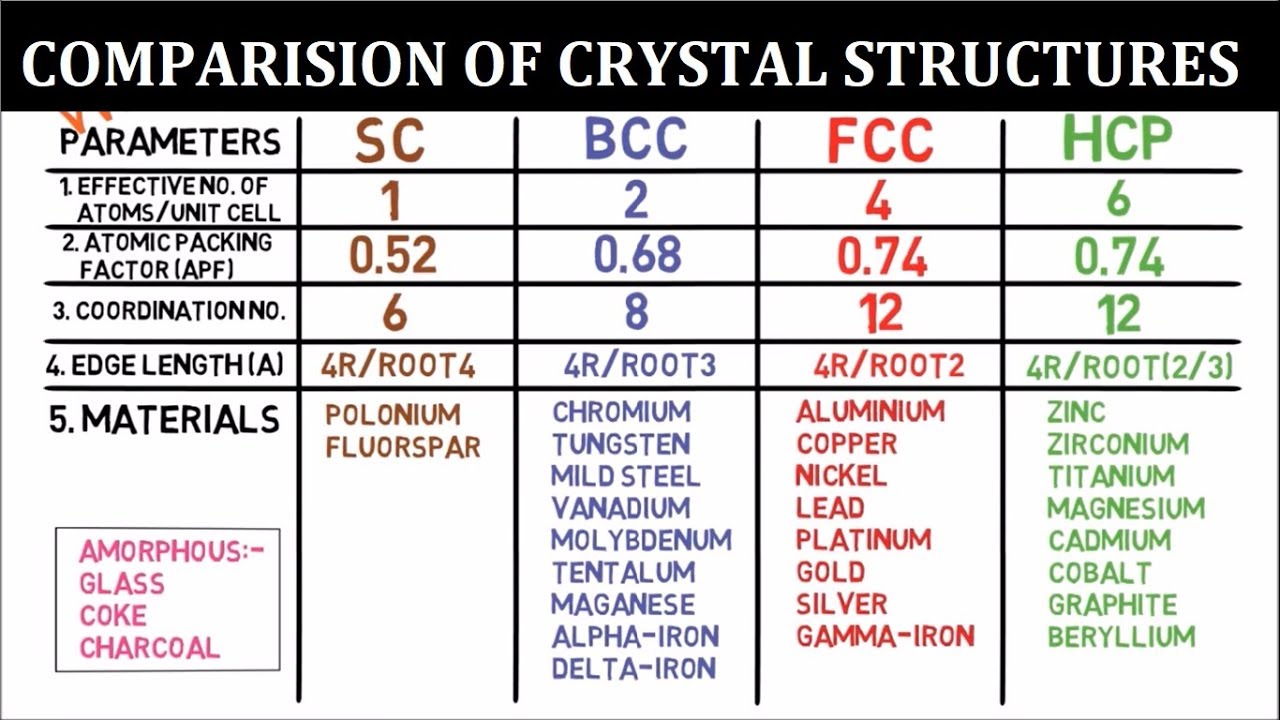
The mechanical properties of materials, including strength, ductility, and hardness, are intrinsically linked to their crystal structures. Metals exhibiting face-centered cubic (FCC) structures, such as aluminum and copper, generally possess higher ductility, making them suitable for applications requiring significant deformation without failure. In contrast, body-centered cubic (BCC) structures, found in metals like steel and tungsten, offer enhanced hardness and strength but lower ductility. By selecting appropriate crystal structures through alloying and heat treatment, engineers can design materials tailored to specific structural requirements.
Grain Size and Crystal Orientation
The size and orientation of grains within a crystalline material significantly affect its mechanical behavior. Fine-grained materials often exhibit higher strength due to the increased number of grain boundaries, which impede dislocation movement. Engineers manipulate grain size and crystal orientation through processes like annealing and forging to enhance material properties. For instance, controlling the crystallographic texture is crucial in the aerospace industry, where materials must withstand extreme stress and temperature variations.
Nanostructured Materials and MEMS
At the nanoscale, crystal structures and their defects become even more influential in determining mechanical properties. Nanocrystalline alloys and thin films engineered for microelectromechanical systems (MEMS) exhibit extraordinary hardness and strength while maintaining lightweight characteristics. By precisely controlling atomic arrangements and minimizing defects, engineers develop materials that are both durable and efficient for use in miniature devices and high-performance applications.
3. Optimizing Optical and Photonic Materials
Photonic Crystals and Light Control
Photonic crystals, characterized by their periodic crystal structures, have the unique ability to control the flow of light, analogous to how semiconductors control electron flow. These materials possess photonic band gaps that prohibit the propagation of specific light wavelengths, enabling the design of highly efficient optical fibers, lasers, and sensors. By engineering the periodicity and symmetry of crystal lattices, engineers can achieve precise manipulation of light for advanced photonic applications.
Non-Linear Optical Materials
Crystal structures with non-centrosymmetric lattices exhibit non-linear optical properties, essential for applications like frequency doubling in lasers and optical modulators. Materials such as lithium niobate and barium borate are engineered to enhance these properties, facilitating the development of devices that require precise control over light intensity and phase. The ability to tailor these materials at the crystal level opens avenues for innovations in telecommunications and laser technology.
4. Advancing Energy Storage and Conversion Technologies
Lithium-Ion Battery Materials
The performance and efficiency of lithium-ion batteries are heavily dependent on the crystal structures of electrode materials. Engineers design crystal lattices that facilitate the rapid insertion and extraction of lithium ions, thereby improving charging rates and battery life. Advanced materials such as lithium cobalt oxide and silicon-based anodes are developed with optimized crystal structures to enhance energy density and cycle stability.
Fuel Cells and Electrolyzers
In fuel cell technology, the crystal structure of catalyst materials like platinum and nickel affects their catalytic activity and durability. By engineering the surface crystal structures, engineers enhance the efficiency of hydrogen and oxygen reactions, leading to more effective energy conversion systems. Similarly, electrolyzers benefit from tailored crystal structures to improve water splitting efficiency, contributing to sustainable energy solutions.
Solar Energy Conversion
Solar cells rely on materials with crystal structures that optimize light absorption and charge carrier separation. Perovskite solar cells, for example, are engineered with specific crystal orientations to maximize photovoltaic efficiency. By manipulating the crystal lattice parameters, engineers enhance the stability and performance of solar cells, paving the way for more affordable and efficient renewable energy sources.
5. Improving Catalytic Processes and Chemical Engineering
Catalyst Surface Engineering
The catalytic activity and selectivity of materials are profoundly influenced by their crystal structures. Engineers design and manipulate crystal surfaces to create active sites that enhance reaction rates and product yields. For instance, platinum nanoparticles with engineered crystal facets are used to improve the efficiency of catalytic converters in automotive applications, reducing harmful emissions.
Multimetallic Catalysts
In the field of chemical engineering, multimetallic catalysts with tailored crystal structures exhibit enhanced catalytic properties. By adjusting the arrangement of multiple metal atoms within the crystal lattice, engineers achieve higher activity and selectivity in processes such as oil refining and pharmaceutical synthesis. These advancements lead to more efficient and sustainable chemical production methods.
6. Enhancing Corrosion Resistance and Chemical Stability
Crystallographic Orientation and Coatings
The resistance of materials to corrosion and chemical degradation is closely tied to their crystal structures. Engineers analyze and control the crystallographic orientation of materials to apply coatings that enhance corrosion resistance. In harsh environments like marine and chemical processing industries, such coatings protect structural components from oxidation and degradation, extending their lifespan and reliability.
Alloy Design for Enhanced Stability
Alloying elements are incorporated into metal crystal structures to improve their chemical stability and resistance to corrosive agents. For example, stainless steels are designed with specific chromium and nickel content, forming a stable crystal lattice that resists rust and wear. By meticulously engineering alloy compositions and crystal structures, engineers develop materials that maintain their integrity under challenging operational conditions.
7. Innovations in Additive Manufacturing and Materials Design
3D Printing of Metals
Additive manufacturing, particularly 3D printing of metals, necessitates a profound understanding of crystal structure evolution during the rapid solidification process. Engineers control process parameters such as temperature gradients and cooling rates to influence grain size, texture, and residual stresses within the crystal lattice. This precise control results in components with tailored mechanical and physical properties, suitable for high-performance applications in aerospace and automotive industries.
Materials Design and Customization
Advanced materials design leverages crystal engineering to develop materials with specific, targeted properties. This includes designing turbine blades with superior strength-to-weight ratios, crafting diamond abrasives with optimized crystal facets, and creating specialized engineering components that meet stringent performance criteria. The ability to customize crystal structures enables the fabrication of materials that address unique engineering challenges and drive innovation across various sectors.
8. Developing Advanced Materials in Pharmaceuticals and Beyond
Pharmaceutical Applications
In the pharmaceutical industry, crystal structures dictate the solubility, stability, and bioavailability of drugs. Engineers design and engineer crystal forms, including polymorphs and cocrystals, to enhance drug efficacy and reduce side effects. By controlling the crystalline form of pharmaceutical compounds, researchers develop medications that are more effective and reliable, improving patient outcomes.
Elastic Molecular Crystals and Sensors
Elastic molecular crystals, engineered for specific mechanical responses, find applications in sensors and actuators. These materials exhibit controlled deformation characteristics, enabling precise detection and response mechanisms in various sensing technologies. By tailoring the crystal structure, engineers create materials that offer both flexibility and robustness, critical for developing reliable and sensitive sensing devices.
Gas Sorption and Framework Compounds
Crystal structures are integral to the development of materials for gas sorption and storage. Framework compounds, such as metal-organic frameworks (MOFs), are engineered with specific pore sizes and structures to enhance their capacity and selectivity for gas molecules. These materials are pivotal in applications like carbon capture, hydrogen storage, and gas separation technologies, contributing to environmental sustainability and energy efficiency.
Comprehensive Overview of Crystal Structures and Their Engineering Applications
Table: Common Crystal Structures and Their Engineering Applications
| Crystal Structure | Characteristics | Engineering Applications |
|---|---|---|
| Face-Centered Cubic (FCC) | High ductility, multiple slip systems | Aluminum and copper alloys used in automotive and aerospace industries |
| Body-Centered Cubic (BCC) | Higher strength, lower ductility | Steel alloys for structural components in construction and machinery |
| Hexagonal Close-Packed (HCP) | Limited slip systems, high strength | Titanium alloys for aerospace applications and biomedical implants |
| Diamond Cubic | High hardness, excellent thermal conductivity | Semiconductors like silicon used in electronics and photovoltaic cells |
| Perovskite | Complex lattice structure, tunable properties | Solar cells and superconductors in energy applications |
| Metal-Organic Frameworks (MOFs) | Porous structures, high surface area | Gas sorption, carbon capture, and drug delivery systems |
Conclusion
The crystal structure of solids is a cornerstone in the field of engineering, influencing a vast array of material properties and applications. From enhancing the performance of electronic and optoelectronic devices to tailoring the mechanical strength of structural materials, the meticulous design and manipulation of crystal lattices enable engineers to develop advanced materials that meet the demanding requirements of modern technologies. Additionally, innovations in additive manufacturing and crystal engineering open new horizons for creating customized materials with unparalleled properties, driving progress across various industries. The integration of crystal structure knowledge into engineering practices not only optimizes existing applications but also paves the way for groundbreaking advancements in energy storage, catalysis, pharmaceuticals, and beyond, underscoring the indispensable role of crystal structures in shaping the future of engineering.
References
Last updated February 16, 2025