
Optimizing CUDA Ray Tracing Aggregation Without Atomics
Efficient Strategies for Handling 400k Rays with 100k Results Each
Key Takeaways
- Hierarchical Parallel Reduction: Utilize a multi-level reduction approach to aggregate ray results efficiently.
- Memory Optimization: Implement coalesced memory access and leverage shared memory to enhance performance.
- Segmented and Prefix Sum Techniques: Apply segmented reductions and prefix sums to manage independent and ordered aggregations without atomic operations.
Introduction
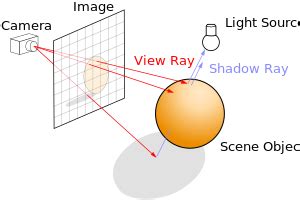
Ray tracing is a computationally intensive rendering technique that simulates the physical behavior of light to produce highly realistic images. When dealing with an extensive number of rays and results, such as 400,000 rays each computing up to 100,000 results, efficient aggregation of these results becomes critical. Utilizing CUDA for parallel processing can significantly accelerate this task. However, avoiding atomic operations, which can lead to contention and performance bottlenecks, requires strategic approaches to aggregation.
Hierarchical Parallel Reduction
A Multi-Level Approach to Aggregation
Parallel reduction is a fundamental technique in CUDA programming used to aggregate data efficiently. It involves breaking down the aggregation task into smaller, manageable chunks and then combining the results hierarchically.
Step-by-Step Implementation
1. Initial Partitioning
Divide the 400k rays into blocks and threads. Assign each thread to handle a subset of rays, ensuring that each thread processes multiple rays to maximize GPU utilization.
2. Local Aggregation within Blocks
Within each block, threads use shared memory to perform a local reduction of their assigned rays' results. Shared memory is significantly faster than global memory and helps in reducing memory access latency.
3. Block-Level Reduction
After local aggregation, each block writes its partial results to a global memory array. This array will then be used in a second reduction phase to combine the partial results from all blocks.
4. Final Reduction
The final reduction can be performed either on the GPU using a secondary kernel or on the CPU after copying the partial results back to the host. Utilizing optimized CPU libraries like std::accumulate or parallel frameworks such as OpenMP can expedite this step.
Advantages
- Scalability: Efficiently handles large data sets by distributing the workload across multiple levels.
- Performance: Minimizes synchronization overhead and maximizes memory bandwidth utilization.
- Flexibility: Can be adapted to different aggregation operations such as sum, average, or maximum.
Memory Optimization
Enhancing Data Access Patterns
Memory bandwidth and access patterns are critical factors influencing the performance of CUDA applications. Optimizing how memory is accessed and utilized can lead to substantial performance gains.
Techniques for Memory Optimization
1. Coalesced Memory Access
Ensure that memory accesses by threads within a warp are contiguous and aligned. This allows the GPU to combine multiple memory requests into a single transaction, significantly reducing memory latency.
2. Shared Memory Utilization
Leverage shared memory to store intermediate results during the reduction process. Shared memory is on-chip and offers much lower latency compared to global memory.
3. Memory Alignment and Padding
Properly align data structures and introduce padding where necessary to prevent memory bank conflicts, which can degrade performance.
4. Use of Texture and Constant Memory
For read-only data that is frequently accessed by multiple threads, consider using texture or constant memory. These memory types are cached, reducing access times for repeated reads.
Benefits
- Reduced Memory Latency: Faster access to frequently used data via shared and specialized memory types.
- Increased Throughput: Efficient memory access patterns maximize the utilization of memory bandwidth.
- Lower Power Consumption: Optimized memory usage can lead to reduced power usage, enhancing overall system efficiency.
Segmented and Prefix Sum Techniques
Managing Independent and Ordered Aggregations
When dealing with massive datasets where each ray's results need to be aggregated independently, segmented reductions and prefix sums become essential techniques.
Segmented Reduction
Segmented reduction involves dividing the data into distinct segments and performing separate reductions within each segment. This is particularly useful when each ray's results are independent of others.
Prefix Sum (Scan)
Prefix sum is an operation that computes the cumulative sum of a sequence of numbers. It's useful for ordered aggregations where the result of one computation depends on the outcomes of previous computations.
Implementation Strategies
1. Assigning Threads to Segments
Allocate specific threads or groups of threads to handle individual segments (i.e., individual rays). This ensures that each segment is processed without interfering with others, thus eliminating the need for atomic operations.
2. Utilizing Warp-Level Primitives
Leverage warp-level primitives such as __shfl_xor_sync to perform efficient intra-warp reductions. These operations allow threads within a warp to communicate and share intermediate results quickly.
3. Hierarchical Aggregation for Prefix Sums
Implement a hierarchical approach where prefix sums are first computed within smaller blocks of data and then combined to form the final result. This method efficiently manages dependencies without requiring atomic operations.
Advantages
- Independent Processing: Allows each ray's results to be aggregated separately, preventing race conditions.
- Order Preservation: Maintains the necessary order for computations that depend on the sequence of operations.
- Scalability: Efficiently handles large numbers of rays by distributing the workload across multiple threads and blocks.
Hierarchical Aggregation
Balancing Parallelism and Memory Usage
Hierarchical aggregation involves multiple levels of reduction to efficiently combine results from a vast number of rays and computations. This approach strikes a balance between parallelism and memory usage, ensuring optimal performance.
Implementation Steps
1. Local Aggregation within Thread Blocks
Each thread block performs a local aggregation of its assigned rays’ results using shared memory. This minimizes the number of global memory accesses and leverages the fast access speeds of shared memory.
2. Global Aggregation Across Thread Blocks
After local aggregation, the partial results from each block are written to a global memory array. A final reduction step combines these partial results into the final aggregated output.
3. Final Reduction Phase
The final reduction can be executed using a secondary CUDA kernel or on the CPU. Utilizing efficient reduction algorithms ensures that this phase does not become a performance bottleneck.
Advantages
- Efficiency: Reduces the number of required memory accesses by performing local aggregations.
- Scalability: Handles large datasets by distributing the reduction process across multiple levels.
- Reduced Contention: Minimizes the need for synchronization across threads, thereby avoiding performance hits from contention.
Practical Implementation
Example CUDA Kernel for Parallel Reduction
The following CUDA kernel demonstrates a parallel reduction approach to aggregate ray tracing results without using atomic operations:
Reduction Kernel
    __global__ void reduceKernel(float* input, float* output, int n) {
        extern __shared__ float sdata[];
        unsigned int tid = threadIdx.x;
        unsigned int i = blockIdx.x * blockDim.x + threadIdx.x;
        sdata[tid] = (i < n) ? input[i] : 0;
        __syncthreads();

        // Perform reduction in shared memory
        for(unsigned int s = blockDim.x / 2; s > 0; s >>= 1) {
            if(tid < s) {
                sdata[tid] += sdata[tid + s];
            }
            __syncthreads();
        }

        // Write the result of this block to the output
        if(tid == 0) {
            output[blockIdx.x] = sdata[0];
        }
    }
Host Code for Launching the Kernel
    void reduce(float* d_input, float* d_output, int n) {
        int threads = 512;
        int blocks = (n + threads - 1) / threads;
        reduceKernel<<<blocks, threads, threads * sizeof(float)>>>(d_input, d_output, n);
        // Optionally perform a second reduction on the output if blocks > 1
        if(blocks > 1) {
            reduce(d_output, d_output, blocks);
        }
    }
Data Organization Strategy
Efficient data organization is paramount for performance optimization. Here, a 2D array structure is employed where the first dimension corresponds to the ray index and the second dimension stores the results for each ray.
Memory Allocation with cudaMallocPitch
Using cudaMallocPitch ensures optimal memory alignment and coalesced access patterns, which are crucial for performance:
    // Allocate device memory for results
    float* d_results;
    size_t pitch;
    cudaMallocPitch(&d_results, &pitch, sizeof(float) * RESULTS_PER_RAY, NUM_RAYS);
Ray Tracing Kernel
    __global__ void rayTraceKernel(float* results, size_t pitch, const RayData* rays) {
        int rayIdx = blockIdx.x * blockDim.x + threadIdx.x;
        if (rayIdx >= NUM_RAYS) return;

        // Get pointer to this ray's result array
        float* rayResults = (float*)((char*)results + rayIdx * pitch);

        // Process ray and store results directly
        for (int i = 0; i < RESULTS_PER_RAY; i++) {
            rayResults[i] = computeResult(rays[rayIdx], i);
        }
    }
Aggregation Kernel
    __global__ void aggregateKernel(float* results, size_t pitch, float* finalResults) {
        __shared__ float sdata[256];
        int rayIdx = blockIdx.x;
        int tid = threadIdx.x;

        float* rayResults = (float*)((char*)results + rayIdx * pitch);
        float sum = 0.0f;

        // Each thread sums a subset of the results
        for(int i = tid; i < RESULTS_PER_RAY; i += blockDim.x) {
            sum += rayResults[i];
        }

        sdata[tid] = sum;
        __syncthreads();

        // Perform parallel reduction in shared memory
        for(int s = blockDim.x / 2; s > 0; s >>= 1) {
            if(tid < s) {
                sdata[tid] += sdata[tid + s];
            }
            __syncthreads();
        }

        // Write the final aggregated result for this ray
        if(tid == 0) {
            finalResults[rayIdx] = sdata[0];
        }
    }
Launch Configuration
Properly configuring the grid and block dimensions is essential for maximizing GPU utilization:
// For ray tracing
dim3 block(256);
dim3 grid((NUM_RAYS + block.x - 1) / block.x);
rayTraceKernel<<<grid, block>>>(d_results, pitch, d_rays);

// For aggregation
dim3 redBlock(256);
dim3 redGrid(NUM_RAYS);
aggregateKernel<<<redGrid, redBlock>>>(d_results, pitch, d_finalResults);
Optimization Points
- Memory Coalescing: Ensure threads access contiguous memory locations to maximize memory bandwidth.
- Shared Memory Usage: Utilize shared memory for intermediate storage during reductions to reduce global memory traffic.
- Minimize Thread Divergence: Assign each thread to handle complete ray processing to reduce divergence and improve efficiency.
- Memory Alignment: Align data structures to prevent uncoalesced accesses and ensure optimal memory throughput.
Advanced Techniques and Enhancements
Cooperative Groups
Cooperative Groups simplify the implementation of warp- and block-level reductions by providing higher-level abstractions for thread synchronization and communication.
Example Using Cooperative Groups
    #include <cooperative_groups.h>
    namespace cg = cooperative_groups;

    __global__ void cooperativeReduce(float* input, float* output, int n) {
        cg::thread_block cta = cg::this_thread_block();
        extern __shared__ float sdata[];
        unsigned int tid = threadIdx.x;
        unsigned int i = blockIdx.x * blockDim.x + threadIdx.x;
        sdata[tid] = (i < n) ? input[i] : 0;
        cta.sync();

        // Use cooperative groups for reduction
        for(unsigned int s = blockDim.x / 2; s > 0; s >>= 1) {
            if(tid < s) {
                sdata[tid] += sdata[tid + s];
            }
            cta.sync();
        }

        if(tid == 0) {
            output[blockIdx.x] = sdata[0];
        }
    }
Utilizing Optimized Libraries
Libraries such as NVIDIA Thrust and CUB provide highly optimized reduction functions that can further enhance performance. These libraries are designed to take advantage of GPU architecture intricacies, ensuring efficient execution.
Example with Thrust
    #include <thrust/device_vector.h>
    #include <thrust/reduce.h>

    float aggregateResults(thrust::device_vector<float>& d_input) {
        return thrust::reduce(d_input.begin(), d_input.end(), 0.0f, thrust::plus<float>());
    }
Considerations
-
Ensure that the library functions do not internally use atomic operations if avoidance of atomics is critical.
-
Benchmark library-based reductions against custom implementations to verify performance gains.
Conclusion
Aggregating the results of a large number of rays in CUDA without using atomic operations is a challenging task that requires careful consideration of parallel reduction techniques, memory optimization, and hierarchical aggregation strategies. By implementing a multi-level parallel reduction approach, optimizing memory access patterns, and leveraging advanced CUDA features and libraries, it is possible to achieve efficient and scalable aggregation of ray tracing results.
The outlined strategies ensure maximal GPU utilization, minimize synchronization overhead, and prevent memory contention, thereby addressing the complexities inherent in high-performance ray tracing tasks.
References
These references provide additional insights into CUDA-based ray tracing and optimization techniques, offering practical examples and discussions from the developer community.
Last updated January 19, 2025