
Optimizing Ehlers Optimal Tracking Filter for Diverse Market Dynamics
Tailoring a Powerful Adaptive Filter for Enhanced Trading Performance
John Ehlers' Optimal Tracking Filter (OTF) is a sophisticated technical indicator designed to minimize lag while effectively smoothing price data. Unlike traditional linear filters such as Simple Moving Averages (SMA) or Exponential Moving Averages (EMA), the OTF is a non-linear filter that adapts to changing market conditions. This adaptability is key to its effectiveness in identifying trends and potential turning points with reduced whipsaws, a common challenge in technical analysis.
Key Insights into Ehlers Optimal Tracking Filter Customization
- Adaptability is Crucial: The OTF's strength lies in its ability to adapt its filtering based on market volatility and trend strength, allowing it to track price changes more effectively than static filters.
- Parameters Influence Responsiveness and Smoothness: Adjusting parameters like the smoothing period and slowing period significantly impacts the filter's responsiveness to price changes and its level of smoothing.
- Market Conditions Dictate Optimal Settings: Different market conditions (trending vs. ranging) necessitate different OTF parameter settings to achieve the best balance between signal timeliness and noise reduction.
Understanding the Core of Ehlers Optimal Tracking Filter
The Ehlers Optimal Tracking Filter is rooted in the concept of minimizing the lag inherent in traditional smoothing methods. Ehlers addressed the dilemma between smoothing price data to avoid false signals (whipsaws) and the resulting lag that can delay entry or exit points, rendering signals less effective. The OTF, along with other Ehlers filters like the Adaptive Laguerre Filter, Median Average Adaptive Filter, Butterworth Filter, Coral Filter, Gaussian Filter, Distant Coefficient Filter, MAAF, and Supersmoother Filter, aims to strike a better balance.
The filter operates by adapting its internal parameters based on market dynamics. This adaptive nature allows it to track trending markets closely while exhibiting less change during range-bound or consolidating periods. This is a significant advantage over static filters that apply the same level of smoothing regardless of the market environment.
The mathematical formulation of Ehlers filters often resembles that of Finite Impulse Response (FIR) filters, where the output is a weighted sum of recent input values. The coefficients (c's) in the equation \(y = c_1x_1 + c_2x_2 + ... + c_nx_n\) are where the adaptive intelligence of the filter resides, incorporating statistical measures of market behavior.
The Problem of Lag in Traditional Filters
Traditional moving averages, such as SMAs and EMAs, are linear filters. While effective for smoothing, they introduce lag, meaning their signals trail price movements. This lag can be particularly detrimental in fast-moving markets, leading to missed opportunities or delayed reactions to reversals. Ehlers' work in developing filters like the OTF directly addresses this limitation by introducing non-linear and adaptive techniques.
Adaptive Mechanisms in Ehlers Filters
Adaptive filters adjust their characteristics based on the input data. In the context of the OTF and similar Ehlers filters, this adaptation often involves analyzing market volatility, cycle periods, or tracking efficiency. For instance, the Adaptive Laguerre Filter uses a variable gamma factor that adjusts based on how well the filter is tracking past price bars. This allows it to be more responsive when the market is trending and less so when it is consolidating.
Customizing Ehlers Optimal Tracking Filter Parameters
Customizing the parameters of the Ehlers Optimal Tracking Filter is essential to optimize its performance for specific trading strategies and market conditions. While the exact parameters can vary depending on the specific implementation of the OTF (e.g., in different trading platforms like TradingView, MetaTrader, or Thinkorswim), common adjustments often involve parameters related to smoothing and responsiveness.
Key Parameters and Their Impact
Two frequently encountered parameters in OTF implementations are the "Period of Smoothing" and the "Period of Slowing."
Period of Smoothing
This parameter directly influences the level of smoothing applied to the price data. A higher smoothing period will result in a smoother filter line that is less susceptible to minor price fluctuations (noise). However, increased smoothing also introduces more lag. Conversely, a lower smoothing period will make the filter more responsive to price changes but may result in more whipsaws in choppy markets.
Period of Slowing
The Period of Slowing parameter, also sometimes referred to as a "tracking index" or related concept depending on the specific OTF variant, relates to how quickly the filter adapts to changes in market direction or volatility. Adjusting this parameter allows traders to fine-tune the filter's responsiveness. A shorter slowing period can make the filter more aggressive in tracking rapid price shifts, while a longer period can make it less reactive to sudden movements.
Adapting to Market Conditions
The key to effective customization lies in aligning the filter's parameters with the prevailing market conditions. Here's a general approach:
Trending Markets
In strongly trending markets, traders often prefer a filter that tracks price relatively closely to identify potential entry or exit points as the trend continues. In this scenario, slightly lower values for the Period of Smoothing might be considered to reduce lag. The Period of Slowing could be adjusted to ensure the filter remains responsive to the trend's momentum.
Consider the example of a breakout in a trending market:
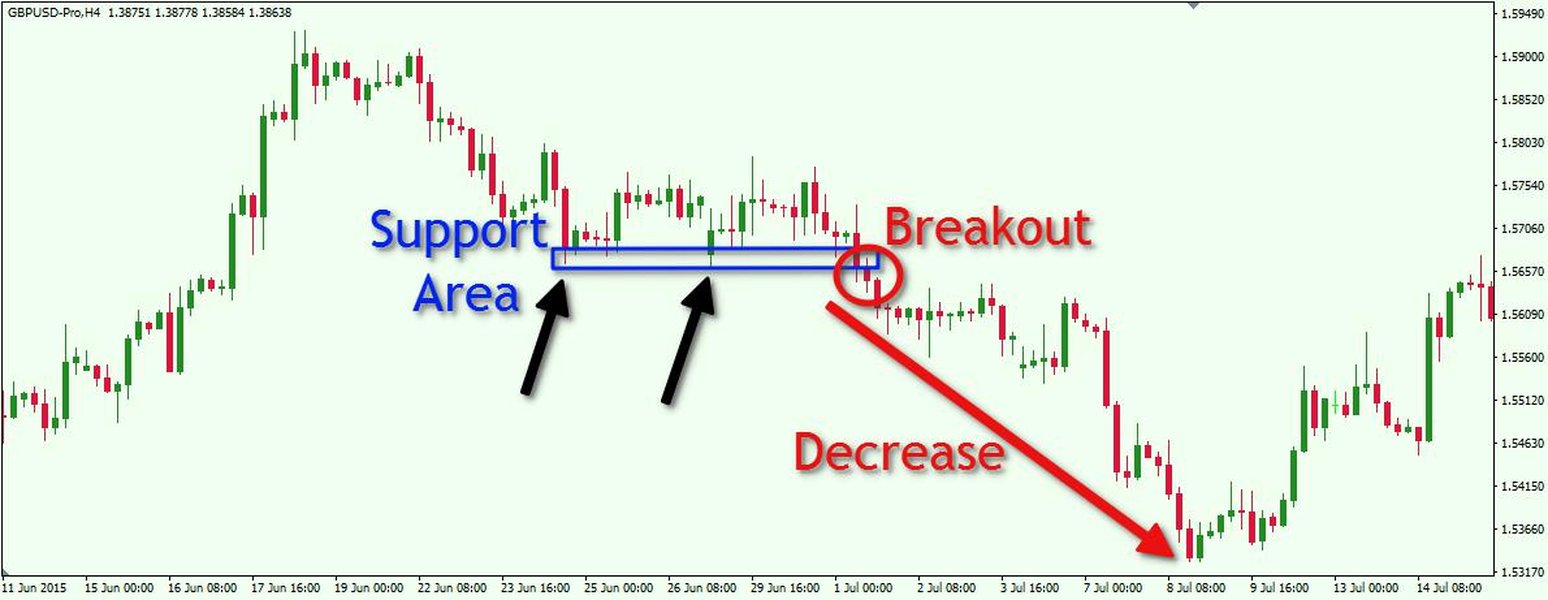
Example of a breakout scenario where a responsive filter is beneficial.
Ranging or Consolidating Markets
In ranging or consolidating markets, the primary challenge is to avoid false signals generated by price fluctuations within a defined range. In these conditions, increasing the Period of Smoothing can help filter out noise and reduce whipsaws. A longer Period of Slowing might also be beneficial to prevent the filter from reacting too quickly to minor price swings within the range.
Identifying fair value gaps, which can occur in both trending and ranging markets, requires a filter that can distinguish between significant price movements and noise. While not exclusively an OTF application, understanding market structure is crucial for filter customization.
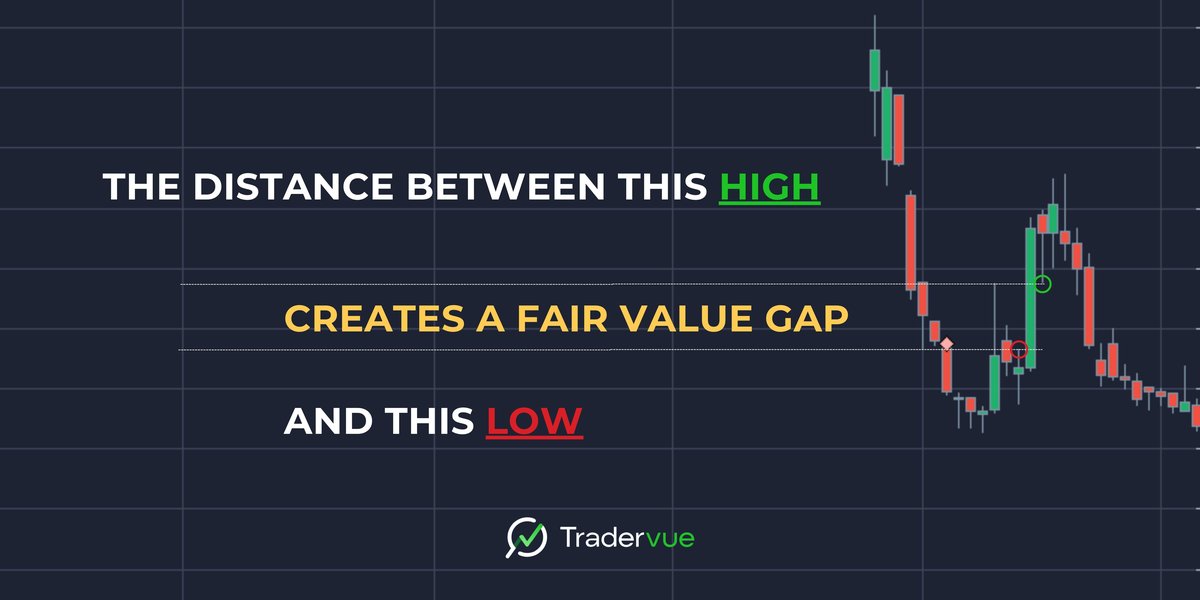
An illustration that highlights the importance of filtering noise in various market structures.
Considering Other Variables
Beyond the core smoothing and slowing parameters, other factors can influence the OTF's performance and should be considered during customization:
-
Timeframe: The optimal parameters for a filter can vary significantly depending on the timeframe being analyzed (e.g., daily, hourly, or minute charts). Shorter timeframes often exhibit more noise, which may necessitate greater smoothing.
-
Asset Volatility: Different financial instruments have varying levels of volatility. Assets with higher volatility may require more robust filtering to reduce noise effectively.
-
Trading Strategy: The specific trading strategy being employed will also influence the desired characteristics of the filter. A strategy focused on capturing short-term movements may require a more responsive filter, while a long-term trend-following strategy might benefit from a smoother filter.
Practical Aspects of Customization
Customizing the Ehlers Optimal Tracking Filter is often an iterative process that involves experimentation and backtesting. Traders can utilize the features provided by their trading platform to adjust parameters and observe the impact on historical data.
Backtesting and Optimization
Backtesting is a crucial step in validating customized filter settings. By applying the filter with different parameters to historical price data, traders can evaluate its performance based on metrics relevant to their strategy, such as profitability, drawdown, and the number of false signals. Optimization tools available in some trading platforms can also help identify parameter ranges that have performed well historically.
Here's a simplified illustration of how different parameters might affect a filter's output:
| Parameter Setting | Impact on Responsiveness | Impact on Smoothing | Suitable Market Condition (General) |
|---|---|---|---|
| Lower Smoothing Period | Higher | Lower | Trending Markets |
| Higher Smoothing Period | Lower | Higher | Ranging/Consolidating Markets |
| Shorter Slowing Period | More Adaptive | Less Smooth (potentially) | Rapidly Changing Markets |
| Longer Slowing Period | Less Adaptive | More Smooth (potentially) | Stable Markets |
This table provides a general guide; the optimal combination of parameters will depend on specific market conditions and trading goals.
Visual Analysis
In addition to quantitative analysis through backtesting, visual inspection of how the filtered line interacts with price on a chart can provide valuable insights. Traders can observe how closely the filter tracks price in different market phases and assess its ability to smooth noise while capturing significant moves.
Advanced Considerations and Further Exploration
John Ehlers has developed a wide array of advanced filtering techniques. Exploring these can provide further options for enhancing trading strategies.
Adaptive Laguerre Filter
As mentioned earlier, the Adaptive Laguerre Filter is another powerful adaptive tool from Ehlers. It uses the median price of the last four bars and an alpha coefficient to balance smoothing and lag. Its adaptive gamma factor allows it to adjust its filtering based on how well it's tracking past price movement.
Non-Linear Filters
Ehlers' work often focuses on non-linear filters, which can provide advantages over traditional linear methods in handling the non-stationary nature of financial market data. The Ehlers Distant Coefficient Filter is an example of a non-linear filter designed to handle non-stationary data.
Optimal Tracking Index
Some implementations of the OTF incorporate a "Tracking Index" concept, which aims to optimize the filter's tracking based on the uncertainty in price movement and the ability to measure it. This further refines the adaptive nature of the filter.
Here is a video discussing the Ehlers Roofing Filter, which is related to Ehlers' work on filtering noise:
This video explores the Ehlers Roofing Filter, a noise reduction technique developed by John Ehlers, providing context on his broader work in applying digital signal processing to financial markets.
Reducing Tunable Parameters
Ehlers himself has emphasized the importance of reducing the number of tunable parameters in trading strategies to enhance robustness. While customizing the OTF involves parameter adjustments, the goal is to find settings that are robust across various market conditions rather than overfitting to historical data with an excessive number of parameters.
Frequently Asked Questions
What is the main advantage of the Ehlers Optimal Tracking Filter over traditional moving averages?
The main advantage is its adaptive nature, which allows it to reduce lag while still effectively smoothing price data. Traditional moving averages have a fixed level of smoothing and lag, regardless of market conditions, whereas the OTF adjusts to market volatility and trend strength.
How do I determine the best parameters for the Ehlers Optimal Tracking Filter?
Determining the best parameters involves understanding the impact of each parameter (like Smoothing Period and Slowing Period) on the filter's responsiveness and smoothness. This is typically done through experimentation, visual analysis of the filter on charts, and backtesting its performance on historical data relevant to the asset and timeframe you are trading.
Can the Ehlers Optimal Tracking Filter be used for all market conditions?
The OTF is designed to perform well in both trending and ranging markets due to its adaptive nature. However, its effectiveness can be enhanced by customizing its parameters to suit the prevailing market condition. It's important to remember that no single indicator is perfect for all situations.
Are there other Ehlers filters I should consider?
Yes, John Ehlers has developed several other advanced filters, including the Adaptive Laguerre Filter, Supersmoother Filter, and Roofing Filter, among others. Each has unique characteristics and can be explored for different analytical needs and trading strategies.
References
Last updated April 22, 2025