
Hypothesis Testing in Capacitive Wireless Transfer Systems
Understanding Alternative and Null Hypotheses in CWT Performance Evaluation
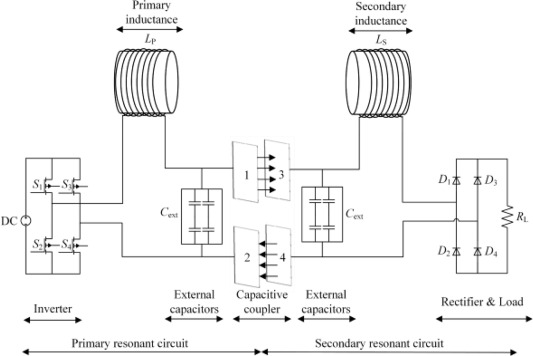
Key Highlights
- Alternative Hypothesis (H1): Posits that innovations or modifications in the CWT system will lead to improved performance metrics such as efficiency, power transfer distance, or operational reliability.
- Null Hypothesis (H0): Assumes that any observed differences in system performance are due to random variation, implying no significant improvement from the design changes.
- Practical Application: These hypotheses guide experimental designs, helping researchers statistically validate whether new techniques, such as advanced coupling designs or compensation methods, enhance system behavior.
Understanding the Hypotheses
Fundamentals of Hypothesis Testing
Hypothesis testing is a statistical approach used to ascertain whether observable effects in an experiment are due to a specific intervention or simply random chance. In the context of capacitive wireless transfer (CWT) systems, this involves formulating statements about system performance and then using experimental data to accept or reject these statements.
The Alternative Hypothesis (H1)
The Alternative Hypothesis, noted as H1, asserts that a specific change or modification in the CWT system creates a significant improvement compared to the current or traditional method. For example, if a researcher introduces a new design for the coupling plates or modifies the compensation circuit topologies, the hypothesis might be stated as:
"H1: The implementation of the new design significantly improves the efficiency or extends the power transfer distance of the CWT system."
This hypothesis is experimental by nature; researchers will collect data such as power transfer efficiency measurements, output power values, and alignment tolerances. Statistical tests (e.g., t-tests or ANOVA) are applied to determine if the performance improvements observed are statistically significant.
The Null Hypothesis (H0)
In contrast, the Null Hypothesis (H0) represents a baseline or default position that any differences observed in the system’s performance are a result of random variation rather than an effect of the new system design. In CWT system testing, H0 might be formulated as:
"H0: There is no significant difference in the performance metrics (e.g., efficiency, power transfer distance, operational reliability) between the new CWT system design and the traditional design."
With the null hypothesis, the intent is to try and disprove it in favor of the alternative hypothesis. If the gathered data shows a statistically significant distinction, H0 can be rejected, thereby lending support to the notion that the innovation does indeed result in better performance.
Applying Hypothesis Testing in CWT Systems
A Structured Approach for Experimental Analysis
In capacitive wireless transfer systems, researchers utilize hypothesis testing to compare various aspects of system design. Below are several examples of how these tests are structured:
Example 1: Evaluating System Efficiency
Suppose a new CWT system is developed with improved coupling plate designs that purportedly enhance energy efficiency. The hypotheses might be:
- H1: The new system design increases the overall efficiency beyond 90%.
- H0: The system's efficiency remains at or below 90%, indicating no improvement from the traditional design.
Researchers would measure the efficiency under controlled conditions, perform statistical tests, and determine whether the changes observed are significant.
Example 2: Investigating the Effects of Misalignment
Misalignment between the transmitting and receiving plates can reduce the effectiveness of capacitive coupling. In this case, hypotheses could be:
- H1: Misalignment significantly decreases the power transfer efficiency of the system.
- H0: Misalignment has no significant effect on power transfer efficiency.
Statistical analysis would help determine if the misalignment truly has an operational impact or if the variations are negligible.
Example 3: Testing Compensation Techniques
Another area of investigation might involve different compensation circuit topologies. Researchers might test:
- H1: Employing a specific compensation method significantly enhances performance metrics like power transfer range and system stability.
- H0: The compensation technique does not produce a statistically significant improvement in system performance.
Data collection for these tests involves recording system performance under various configurations and applying the appropriate statistical tests to either reject or accept H0.
Comparative Analysis Table
The following table summarizes examples of hypotheses in CWT systems, comparing various experimental setups:
| Experimental Focus | Alternative Hypothesis (H1) | Null Hypothesis (H0) |
|---|---|---|
| Efficiency Improvement | The new design improves efficiency beyond a critical threshold (e.g., > 90%). | No significant efficiency improvement; remains ≤ 90%. |
| Impact of Misalignment | Misalignment leads to a significant reduction in power transfer efficiency. | Misalignment does not have a statistically significant impact on efficiency. |
| Compensation Methods | A novel compensation technique significantly improves the power transfer range and system stability. | The compensation technique does not yield any significant improvement in performance. |
Further Considerations in CWT Research
Innovative Design and Material Selection
Advanced research in CWT systems continuously pushes for better performance through innovative design and material choices. Modern approaches leverage:
- Enhanced Coupling Plates: Utilizing materials with high dielectric strength to achieve greater power densities and robust operation over larger air gaps.
- High-Frequency Operation: Implementing higher operating frequencies for more efficient power transfer by reducing energy losses during transmission.
- Dynamic Testing: Applying dynamic load conditions and environmental variations to validate system reliability under different operational scenarios.
These technological advancements not only enable improved performance but also provide rich datasets for hypothesis testing, facilitating a deeper understanding of the factors influencing CWT system behavior.
Statistical Tools and Data Analysis Methods
Techniques for Validating Hypotheses
In hypothesis testing scenarios, rigorous statistical methods are essential to ensure that experimental results are valid and reliable. Common techniques include:
- T-tests and ANOVA: These tests determine if the differences between experimental groups are statistically significant.
- Confidence Intervals: By establishing a range of values for system performance, confidence intervals provide insight into the precision and reliability of measured differences.
- P-value Analysis: P-values help determine the likelihood of observing the data given that the null hypothesis is true; a low p-value typically suggests that the null hypothesis can be rejected.
By integrating these statistical techniques, researchers can effectively judge whether the observed improvements in system design are truly beneficial or if random variation has led to misleading outcomes.
References
- Capacitive Wireless Power Transfer: A Review of the Current State of Technology - MDPI
-
A New Capacitive Coupler Design for Wireless Power Transfer - ScienceDirect
- Wireless Power Transfer - Wikipedia
- Research and Application of Capacitive Power Transfer System: A Review - MDPI
- Null and Alternative Hypotheses - Scribbr
Recommended Related Queries
Last updated March 7, 2025