
Cyber Security Threats
An In-depth Exploration of the Evolving Cybersecurity Landscape in 2025
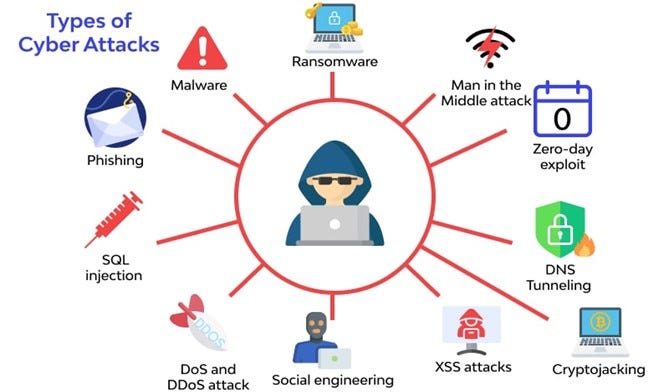
Key Takeaways
- Increasing Complexity: Cyber threats are growing in complexity and sophistication, driven by emerging technologies like AI, IoT, and quantum computing.
- Diverse Attack Vectors: Attacks range from supply chain compromises and ransomware to AI-powered strikes and geopolitical cyber warfare.
- Proactive Defense Necessity: Robust, multi-layered defense strategies and continuous adaptation are essential to mitigate these evolving threats.
Overview of Cybersecurity Threats in 2025
The cybersecurity landscape in 2025 is characterized by an unprecedented diversity and complexity of threats. With rapid technological innovation and increasing global interconnectivity, attackers have become more adaptive and proficient in exploiting vulnerabilities across multiple fronts. The evolution of cyber threats now comprises a broad spectrum of attack vectors, including supply chain attacks, AI-powered assaults, sophisticated ransomware operations, and state-sponsored cyber warfare. In this comprehensive analysis, we examine these prevalent threats, discuss emerging risks, and outline strategic defenses that organizations must implement to secure their digital environments.
Core Cyber Threat Types
1. Supply Chain Attacks
Nature of the Threat
Supply chain attacks target the interconnected networks that organizations depend on, typically by infiltrating less-secure third-party vendors or software providers. In 2025, nearly half of global organizations have experienced these types of attacks, where vulnerabilities in software updates or hardware components are exploited to infiltrate secure networks. Attackers insert malicious code into trusted software updates, allowing them to bypass conventional security measures and compromise an extensive range of endpoints.
Defensive Strategies
To counteract these vulnerabilities, a comprehensive defense strategy must encompass rigorous vendor assessment, continuous monitoring of supply chain integrity, and the integration of advanced security protocols designed to detect and neutralize embedded threats.
2. AI-Powered and Agentic Cyber Attacks
Exploitative Tactics
Artificial Intelligence has emerged as a double-edged sword in cybersecurity. Attackers leverage AI to create highly convincing phishing campaigns, automate malware generation, and even conduct deepfake social engineering attacks that can mimic legitimate communications with alarming precision. The advent of agentic AI systems—autonomous bots capable of planning and executing attacks without human oversight—adds an entirely new dimension to threat landscapes.
Benevolent Uses and Risks
While defenders also deploy AI for purposes such as threat detection, real-time analysis, and rapid response, the dual use of these technologies has resulted in an ongoing arms race. AI systems not only quicken the pace at which cyberattacks can be executed but also enable automatic adaptation to bypass emerging security measures.
3. Ransomware and Double-Extortion Schemes
Evolution of Ransomware
Ransomware attacks continue their upward trajectory, with attackers increasingly incorporating AI and automation to conduct more targeted and damaging assaults. Traditional ransomware that merely encrypts files has given way to double extortion tactics, where cybercriminals exfiltrate sensitive data prior to an attack and then coerce victims into paying a ransom under the threat of exposing stolen information.
Industry Impact
The healthcare, life sciences, and finance sectors are particularly at risk, and the financial implications are severe. As extortion demands rise—with some incidents reporting averages exceeding millions of dollars—the imperative for strong defensive postures and cyber resilience becomes ever more critical.
4. Advanced Persistent Threats (APTs) and State-Sponsored Cyber Warfare
Persistent Threat Actor Tactics
APTs represent prolonged and stealthy attacks that can remain undetected within networks for extensive periods. Often carried out by state-sponsored agencies or highly organized cybercriminal groups, these attacks are designed to exfiltrate sensitive information, disrupt critical infrastructure, or derail national security operations.
Global and Geopolitical Implications
The use of cyber warfare has escalated into a critical geopolitical tool, with nations leveraging their cyber capabilities to influence, disrupt, or sabotage the operations of adversary states. This forms a persistent threat to national security and muddles the lines between criminal activity and acts of war in the digital realm.
5. Traditional Threats and Evolving Malware
Malware Variants
Traditional forms of malware, including viruses, worms, Trojans, and spyware, continue to be a significant concern. Modern malware has evolved to become more elusive and potent, often utilizing techniques like fileless execution and memory-resident operations that evade traditional antivirus solutions.
Changing Attack Vectors
Malicious software now frequently serves not just as a standalone threat, but also as an enabler for broader breaches such as botnets, cryptojacking, and even as components of larger, multi-pronged campaigns that also involve social engineering and AI exploitation.
6. Social Engineering and Phishing Attacks
Human Factor Exploitation
Social engineering remains one of the most effective methods for breaching cybersecurity defenses. Phishing, spear phishing, and whaling are cornerstones of these tactics; cybercriminals manipulate human psychology to prompt individuals into revealing sensitive credentials or executing harmful actions. Such attacks have grown increasingly sophisticated, often utilizing detailed contextual information and impeccable language to deceive targets.
Preventative Education
Defense against social engineering hinges on continuous education and awareness programs. Well-informed users are a critical line of defense, making regular training and simulation exercises an indispensable component of any cybersecurity strategy.
7. IoT and Operational Technology (OT) Vulnerabilities
Increased Endpoints, Increased Risk
The proliferation of Internet-of-Things (IoT) devices and the growing reliance on Operational Technology (OT) in critical industries has expanded the attack surface significantly. Many of these devices are less secure due to outdated firmware and weakened authentication protocols, presenting attractive targets for attackers aiming to create large-scale botnets or disrupt industrial processes.
Strategies for Securing IoT
Effective mitigation strategies include the deployment of stringent access controls, regular firmware updates, and network segmentation to isolate vulnerable devices from core systems.
Emerging Technologies and Their Impact on Cybersecurity
As we progress further into 2025, emerging technologies such as quantum computing, blockchain, and advanced forms of AI introduce both opportunities and challenges in securing digital assets. Even as these technologies empower defensive measures, they also provide new tools for cyber adversaries.
Quantum Computing and Encryption Challenges
Quantum Vulnerability
Quantum computing has the potential to break classical encryption algorithms currently in use, posing a significant threat to data security. Although quantum-resistant cryptography is under development, organizations need to plan ahead for the eventual transition to these new encryption standards to safeguard sensitive information.
Proactive Cryptography Measures
The implementation of quantum-safe algorithms, alongside continuous advancements in encryption technology, remains a top priority for organizations preparing for the post-quantum era.
Blockchain and Data Integrity
Distributed Security
Blockchain technology offers promising applications in enhancing data integrity and transparent tracking of information, particularly in verifying software supply chains and secure financial transactions. However, the immutable nature of blockchain also means that any security flaws introduced into these systems are extremely challenging to correct.
Balanced Integration
Careful integration of blockchain solutions with existing systems is required to ensure that security enhancements do not inadvertently introduce new vulnerabilities.
Table of Common Cyber Threats
| Type of Threat | Description | Key Mitigation Strategy |
|---|---|---|
| Supply Chain Attacks | Exploitation of vulnerabilities in third-party providers and software updates. | Vendor assessment and continuous monitoring. |
| AI-Powered Attacks | Usage of AI to automate phishing, malware, and deepfake social engineering. | Implementation of AI-driven security tools and threat simulations. |
| Ransomware | Encryption of critical data with demands for ransom, including double extortion tactics. | Robust backup systems and cyber resilience strategies. |
| Advanced Persistent Threats | Prolonged undetected breaches by sophisticated state-sponsored or organized groups. | Continuous monitoring and multi-layered defense frameworks. |
| Social Engineering | Exploitation of human factors, such as through phishing or impersonation tactics. | Effective employee education and simulation training. |
| IoT/OT Vulnerabilities | Security weaknesses in connected devices and industrial control systems. | Regular updates, strong authentication, and network segmentation. |
Proactive Cybersecurity Strategies
In the face of these multifaceted threats, organizations must prioritize proactive cybersecurity measures to prevent, detect, and respond to potential breaches. The following strategic initiatives are essential:
Zero Trust Architecture
Principles and Implementation
Zero Trust is based on the premise that no user or device, whether inside or outside the network, should be trusted by default. All access requests must be authenticated, authorized, and continuously validated. Organizations should implement granular network segmentation, rigorous identity verification, and least-privilege access controls to minimize the risk of lateral movement by attackers.
AI-Enhanced Security Operations
Automated Threat Hunting
AI-powered security tools, often referred to as Security Operations Center (SOC) co-pilots, enhance the ability to analyze massive volumes of security data in real time. These systems help in identifying abnormal patterns, prioritizing critical threats, and automating responses to reduce false positives and response times.
Continuous Learning and Adaptation
As threat actors continuously evolve their methodologies, cybersecurity solutions must also adapt. Machine learning models can be trained on historical threat data to predict and preemptively neutralize emerging risks.
Employee Training and Awareness Programs
Building a Human Firewall
Given the critical role of human behavior in cyber defense, regular training sessions aimed at recognizing phishing attempts, social engineering tactics, and safe online practices are indispensable. Organizations must emphasize that security is everyone’s responsibility, ensuring that employees are aware of the latest threats and know how to respond.
Simulation and Drills
Engaging in realistic cyber-attack simulation exercises can significantly improve an organization’s incident response times. These simulations help identify weaknesses in security protocols and provide valuable insights for continuous improvement.
Regulatory Compliance and Cyber Insurance
Evolving Legal Requirements
The tightening of cybersecurity regulations globally necessitates strict adherence to data protection standards. Organizations must integrate compliance measures into their security strategies, ensuring that they meet the evolving standards and practices mandated by modern legislation.
Ensuring Business Continuity
Cyber insurance continues to play a pivotal role in risk management. However, insurers are increasingly demanding stringent security controls and comprehensive preparation plans from organizations. Evaluating and updating cyber insurance policies is essential to ensuring recovery in the event of a breach.
Cloud Security and Data Protection
Security in the Cloud Era
As organizations migrate to cloud environments, they must adopt proactive and integrated security solutions. Instead of reactive, remediation-focused approaches, the trend is moving toward preventative measures that detect anomalies before they escalate into full-scale breaches. Architectural solutions that are designed specifically for cloud platforms are becoming increasingly important.
Data Backup and Recovery
The importance of robust data backup systems cannot be overstated, especially in the context of ransomware. Regular automated backups and well-tested recovery plans help ensure business continuity and limit the impact of any successful ransomware attack.
Conclusion
In summary, the cybersecurity threat landscape in 2025 is marked by an explosion of advanced, multifaceted tactics that leverage emerging technologies to exploit vulnerabilities. Whether it is through supply chain attacks, AI-driven operations, targeted ransomware campaigns, or even state-sponsored cyber warfare, the need for adaptive and resilient security strategies has never been more critical. Organizations must invest in integrated security architectures, enhance employee training, adhere to evolving regulatory demands, and continuously innovate their defensive measures. By proactively addressing these challenges, organizations can mitigate risks, minimize disruptions, and protect their critical digital assets in an increasingly hostile cyber environment.
References
- Emerging Cyber Threats Proactive Strategies for 2025 - Meet Ascent
-
Key Cybersecurity Threats and Opportunities for 2025 - WWT
- Cybersecurity Threats to Watch in 2025 - Information Security Buzz
- Cybersecurity Forecast 2025 - Google Cloud
- Top 10 Cybersecurity Predictions for 2025 - Cyber Magazine
- Cybersecurity Trends - Splunk
- Top Cybersecurity Trends - Simplilearn
- Top Cyber Security Threats - San Diego Online Degrees
- Cyber Security Trends - SentinelOne
- Cybersecurity Trends - Gartner
- The Emerging Cybersecurity Threats in 2025 - Cloud Security Alliance
- 2025 Security Report - Check Point
- Cybersecurity Trends to Watch in 2025 - ISACA
Learn More
Last updated February 18, 2025