
Decoding Cyclopropane's Simplest Identity: The Chemical Building Blocks
Understanding the fundamental representation of cyclopropane through its empirical formula and exploring what empirical formulas tell us about chemical compounds
Key Insights About Empirical Formulas
- The empirical formula of cyclopropane is CH₂, representing the simplest whole-number ratio of its elements
- Empirical formulas show the proportional relationship between elements in a compound, not the actual number of atoms
- The molecular formula C₃H₆ is exactly 3 times the empirical formula, showing the true composition of each cyclopropane molecule
Understanding Empirical Formulas in Chemistry
An empirical formula is a chemical formula that represents the simplest whole-number ratio of atoms of each element present in a compound. Unlike molecular formulas which show the actual number of atoms in a molecule, empirical formulas only indicate the relative proportions of different atoms. They are the most reduced form of a chemical formula, providing a simplified view of a compound's composition.
For example, the empirical formula CH₂ tells us that for every carbon atom in cyclopropane, there are two hydrogen atoms. This doesn't mean the molecule contains only one carbon and two hydrogen atoms, but rather that this 1:2 ratio represents the compound's most basic compositional pattern.
How Empirical Formulas Differ from Molecular Formulas
While the empirical formula shows the simplest ratio, the molecular formula tells us the actual count of atoms in a molecule. For cyclopropane:
- Empirical formula: CH₂ (ratio of 1 carbon : 2 hydrogen)
- Molecular formula: C₃H₆ (actual composition of 3 carbon atoms and 6 hydrogen atoms)
The molecular formula is 3 times the empirical formula, meaning three CH₂ units combine to form one cyclopropane molecule. In some cases, the empirical and molecular formulas can be identical, such as in water (H₂O) or carbon dioxide (CO₂), where the formula already represents the simplest ratio.
How to Determine an Empirical Formula
Finding an empirical formula typically follows these steps:
The Analytical Process
Step 1: Determine Mass Percentages
First, determine the mass percentage of each element in the compound through chemical analysis.
Step 2: Convert to Moles
Convert these percentages into moles by dividing by the respective atomic masses of the elements.
Step 3: Find the Simplest Ratio
Divide all mole values by the smallest one to find the simplest whole-number ratio.
Step 4: Round to Whole Numbers
If necessary, multiply all values by a small integer to obtain whole numbers, giving you the empirical formula.
Example: Finding Cyclopropane's Empirical Formula
Let's walk through finding the empirical formula for cyclopropane:
If we analyzed cyclopropane and found it contains approximately 85.7% carbon and 14.3% hydrogen by mass:
- For carbon: 85.7g ÷ 12.01g/mol ≈ 7.13 mol
- For hydrogen: 14.3g ÷ 1.01g/mol ≈ 14.16 mol
- Mole ratio C:H = 7.13:14.16 ≈ 1:2
- Therefore, the empirical formula is CH₂
| Element | Mass Percentage | Atomic Mass (g/mol) | Moles | Mole Ratio | Simplest Ratio |
|---|---|---|---|---|---|
| Carbon (C) | 85.7% | 12.01 | 7.13 | 1 | 1 |
| Hydrogen (H) | 14.3% | 1.01 | 14.16 | 1.99 | 2 |
Visual Representation: Cyclopropane's Structure and Formulas
Radar Chart: Comparing Different Aspects of Chemical Formulas
The following radar chart compares empirical and molecular formulas across different dimensions of chemical information they provide. This helps visualize the strengths and limitations of each formula type in representing cyclopropane and other compounds.
Understanding Cyclopropane Through a Mindmap
This mindmap illustrates how cyclopropane's empirical formula relates to other chemical concepts and how empirical formulas fit into the broader context of chemical nomenclature and analysis:
Visualizing Cyclopropane's Structure
Understanding the relationship between cyclopropane's empirical formula (CH₂) and its actual molecular structure helps explain its unusual chemical properties. These images show the three-dimensional arrangement of atoms in cyclopropane:
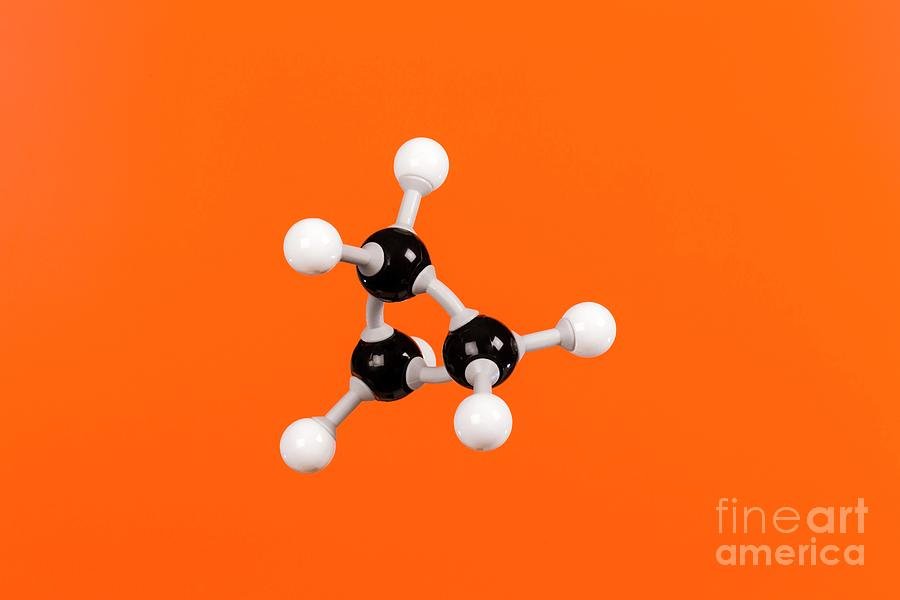
3D model of cyclopropane showing its triangular ring structure
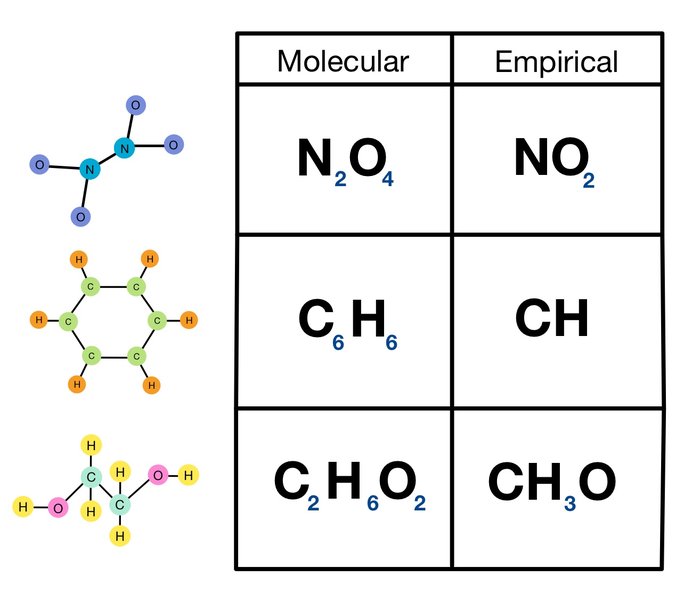
Comparison of empirical and molecular formulas for various compounds
The triangular structure of cyclopropane creates significant ring strain due to the 60° bond angles, deviating from the preferred 109.5° tetrahedral angle of sp³ hybridized carbon. This strain makes cyclopropane more reactive than typical alkanes, despite its simple empirical formula of CH₂.
Empirical Formulas in Chemistry Education and Research
Watch: Understanding Empirical Formulas
This video provides an excellent introduction to empirical formulas, explaining how they're calculated and their importance in chemistry:
The video explains how empirical formulas serve as the foundation for understanding compound composition and demonstrates the process for determining them from experimental data.
Practical Applications of Empirical Formulas
Empirical formulas have numerous practical applications in chemistry and related fields:
Chemical Analysis and Identification
Chemists use empirical formulas as a starting point for compound identification. When analyzing an unknown substance, determining its empirical formula can narrow down possibilities and guide further investigation.
Quality Control in Industry
In manufacturing, empirical formula determination helps verify product purity and composition, ensuring consistency in pharmaceuticals, fertilizers, and other chemical products.
Environmental Monitoring
Environmental scientists use empirical formula analysis to identify pollutants and track their sources and transformations in ecosystems.
Education and Fundamental Understanding
Empirical formulas provide a foundation for teaching chemistry concepts like stoichiometry, percentage composition, and the law of definite proportions.
Frequently Asked Questions
References
- Empirical Formula - Wikipedia
- Cyclopropane - Wikipedia
- Cyclopropane | C3H6 | CID 6351 - PubChem
- Empirical Formula Definition - Merriam-Webster
- Empirical and Molecular Formula - BYJUS
- Definition of Empirical Formula - ThoughtCo
- Determining an Empirical and Molecular Formula - LibreTexts
Recommended Searches
Last updated April 4, 2025