
Unlocking Danish Timber Construction: A Guide to Wood, Dimensions, and Regulations
Navigating the standards for wooden elements in Danish building projects, from identification to compliance.
Understanding the specifics of construction wood, its dimensions, and the governing Danish regulations is crucial for any building project in Denmark. While I cannot directly analyze images from your project, I can provide comprehensive insights into how these elements are typically assessed according to Danish standards.
Key Insights into Danish Timber Construction
- Critical Standards: Compliance with DS/EN 1995-1-1 DK NA (Eurocode 5) and the Danish Building Regulations (Bygningsreglementet) is paramount for all timber structures, ensuring safety and durability.
- Sustainable Focus: Denmark increasingly mandates Life Cycle Assessments (LCAs) for new constructions and promotes the use of certified wood (e.g., FSC or PEFC) to meet ambitious CO2 reduction goals.
- Evolving Practices: Modern timber construction in Denmark now accommodates buildings up to 45 meters in height, provided they satisfy stringent fire safety (e.g., REI 120) and structural engineering criteria.
Identifying Construction Wood in Danish Projects
Recognizing the type and quality of wood used in a Danish construction project involves several aspects, from visual inspection to verifying certifications and adherence to grading standards.
Common Wood Types and Visual Characteristics
In Denmark, the most commonly used structural softwoods are pine (fyr) and spruce (gran). These are chosen for their favorable strength-to-weight ratio and workability. Visual identification cues include:
- Grain Pattern: The arrangement of wood fibers.
- Knots: Their size, type, and distribution are critical for strength grading.
- Color: Typically light, though this can vary with species and treatment.
- Surface Treatment: Wood may be treated for durability, fire resistance, or moisture protection.
Engineered wood products like Cross-Laminated Timber (CLT) and Glued Laminated Timber (Glulam) are also increasingly popular, especially in larger and modular constructions. These are recognizable by their layered or laminated structures and are valued for their strength and dimensional stability.
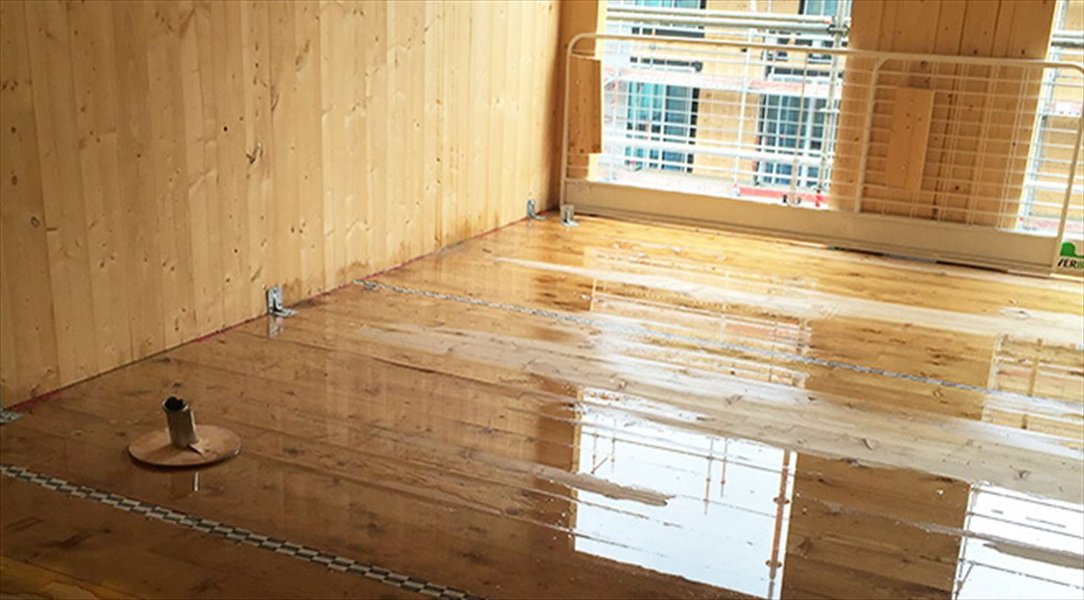
Timber framework illustrating typical wood construction techniques.
Quality, Grading, and Certification
Structural timber in Denmark must be strength graded according to European standards, with national annexes providing specific Danish requirements. Key aspects include:
- Visual Strength Grading: Often follows standards like DS-INSTA 142 (Nordic visual strength grading rules for timber). This involves assessing defects such as knots, slope of grain, and fissures. For instance, knots in structural timber might be limited in size relative to the wood's width and thickness.
- Machine Strength Grading: Provides a more precise assessment of timber strength.
- Certifications: Look for markings indicating sustainable sourcing, such as FSC (Forest Stewardship Council) or PEFC (Programme for the Endorsement of Forest Certification). These are increasingly important under Denmark's sustainability agenda.
- CE Marking: Indicates conformity with health, safety, and environmental protection standards for products sold within the European Economic Area.
Typical Dimensions of Wooden Elements in Danish Construction
The dimensions of wooden elements in Danish construction are dictated by structural requirements, insulation needs, and specific building codes. While exact dimensions vary per project, common ranges and standards exist.
Standardized Sizes and Considerations
Danish building traditions and modern regulations influence timber sizing. For example, increased insulation thicknesses, driven by energy efficiency requirements in the Building Regulations (Bygningsreglementet), can lead to larger timber dimensions for wall assemblies.
Common Timber Element Dimensions
The following table summarizes some typical dimensions for various timber elements used in Danish construction. These are indicative and can vary based on specific engineering calculations and project requirements.
| Element Type | Typical Dimensions (mm) | Notes |
|---|---|---|
| Structural Posts (Stolper) | 45x95, 45x120, 45x145, or larger | Minimum 45mm thickness often cited. Post spacing typically around 0.6-1.0 meter. |
| Beams (Bjælker) / Joists (Spær) | Widths: 45 upwards (e.g., 45, 70, 95). Depths: 145 upwards (e.g., 45x145, 45x195, 70x220). Larger beams 100x200 to 200x300. | Dimensions depend heavily on span and load. |
| Frame Timber (Rammetræ) | 46 x 86/114/144/174 | Used for building frames. |
| Mullions/Transoms (Poster/Løsholter) | 60 x 86/92/102/114/144/174 | Structural elements within window or door frames. |
| Window Sash (Vinduesrammer) | 55 x 64 | The movable part of a window. |
| Door Frame (Dørkarme) | 102 x 64 | Frame surrounding a door. |
| Thresholds (Dørtrin) | 46 (thickness) | Typically hardwood (e.g., oak) with minimum density requirements. |
| CLT Panels | Thickness: 100-300+ | Widths up to 2.5 meters or more, lengths vary. |
Note: These dimensions are illustrative. Always consult project-specific engineering documents and relevant Danish standards.
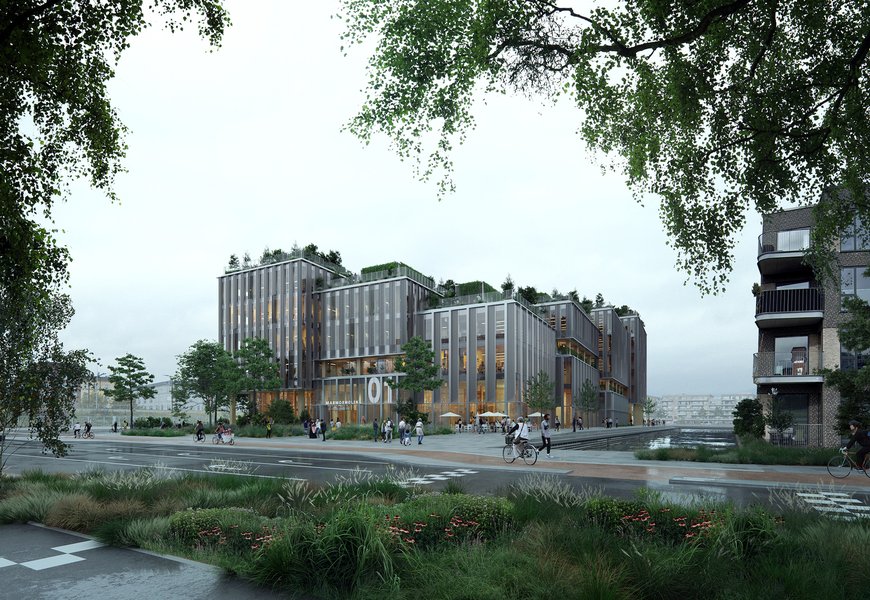
Example of a modern large-scale timber building in Denmark, showcasing the architectural possibilities of wood.
Factors Influencing Timber Dimensions: A Visual Overview
The selection of timber dimensions is a multifaceted decision, influenced by a variety of structural, environmental, and regulatory factors. The radar chart below illustrates the relative importance of these factors for different types of timber elements commonly found in Danish construction. For example, 'Heavy Load-Bearing Beams' require high scores in Structural Load, Span Length, Fire Safety, and Wood Species Strength, while 'Standard Wall Studs' might prioritize Insulation Requirements and Climatic Impact (LCA score).
This chart visually represents how different priorities shape the choice of timber dimensions, reflecting the complex interplay of engineering, regulatory, and sustainability concerns in Danish building practices.
Core Danish Rules and Standards for Timber Construction
Compliance with Danish rules and standards is non-negotiable for timber construction projects. These regulations ensure structural integrity, fire safety, energy efficiency, and environmental sustainability.
Key Regulatory Frameworks
- Danish Building Regulations (Bygningsreglementet - BR18, with ongoing updates): This is the primary set of legal requirements for all construction in Denmark. It covers aspects like structural safety, fire safety, energy performance, and indoor climate. Recent updates emphasize stricter CO2 emission limits and LCA requirements.
- Eurocode 5 (DS/EN 1995-1-1): Design of timber structures: This European standard provides common rules for the structural design of timber buildings. Denmark has a National Annex (DS/EN 1995-1-1 DK NA:2019) that adapts Eurocode 5 to Danish conditions, specifying particular values, methods, or supplementary rules. It covers material properties, basis of design, ultimate limit states, and serviceability limit states.
- AB Standards (e.g., AB 18, ABT 18): These are general conditions for building and construction works and for turnkey contracts in Denmark, often forming the contractual basis for larger projects.
Specific Requirements and Considerations
Structural Integrity and Safety
Timber structures must be designed to safely withstand all anticipated loads. This involves correct dimensioning, proper connections, and adherence to the strength classes specified for the wood. Eurocode 5 and its Danish NA provide detailed calculation methods.
Fire Safety
A critical aspect, especially for multi-storey timber buildings. Danish regulations, in line with European standards, often require timber elements to meet specific fire resistance classes (e.g., REI 60 or REI 120, indicating resistance for 60 or 120 minutes). This has enabled the construction of modular timber buildings up to 45 meters in height in Denmark since 2021, provided they pass relevant fire tests like the REI 120. This may involve using fire-retardant treatments or encapsulating timber elements in fire-resistant materials.
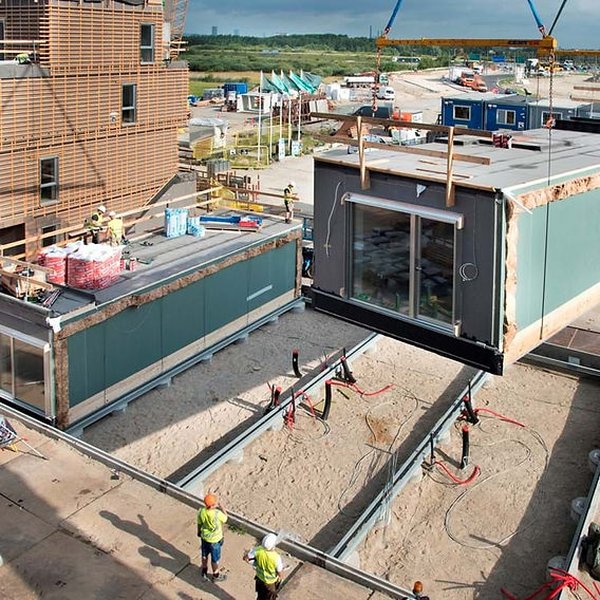
Denmark now allows modular timber buildings up to 45 meters, adhering to strict fire safety standards.
Sustainability and Environmental Performance
Denmark is at the forefront of sustainable construction. Key requirements include:
- Life Cycle Assessment (LCA): Since January 1, 2023, LCA calculations are mandatory for new buildings to document their environmental impact over a 50-year lifespan. There are CO2 emission limits, for instance, an average of 7.1 kg CO2-eq/m²/year for new buildings larger than 1,000 m² (with stricter limits phased in). Wood, being a renewable material with potential for carbon sequestration, often performs well in LCAs.
- Sustainable Sourcing: Use of certified wood (FSC, PEFC) is strongly encouraged and often a requirement.
- Material Efficiency: Promoting the use of existing structures and recycled materials, which are calculated as zero-emission in LCAs.
Visualizing Danish Timber Construction Compliance
The mindmap below outlines the interconnected areas crucial for ensuring compliance in Danish timber construction projects. It highlights key regulations, wood specifications, sustainability aspects, safety considerations, and innovative design practices that define the modern approach to building with wood in Denmark.
(Eurocode 5 for Timber)"] id1b["Danish Building Regulations
(Bygningsreglementet BR18+)"] id1c["AB General Conditions
(AB18, ABT18)"] id1d["DS-INSTA 142
(Visual Strength Grading)"] id2["Wood Material & Elements"] id2a["Species (Pine, Spruce)"] id2b["Strength Grading & Quality"] id2c["Prescribed Dimensions & Tolerances"] id2d["Moisture Content Control"] id2e["Engineered Wood (CLT, Glulam)"] id3["Sustainability & Environment"] id3a["Life Cycle Assessment (LCA)
Mandatory since 2023"] id3b["CO2 Emission Limits"] id3c["FSC/PEFC Certification"] id3d["Use of Recycled/Reused Timber"] id4["Safety & Performance Criteria"] id4a["Structural Integrity & Load Bearing"] id4b["Fire Resistance (e.g., REI 120)"] id4c["Durability & Service Life"] id4d["Sound Insulation & Acoustics"] id5["Design & Construction Practices"] id5a["Increased Insulation Thickness
for Energy Efficiency"] id5b["Modular Construction Techniques"] id5c["Permitted Building Heights
(Up to 45m for modular timber)"] id5d["Proper Detailing for Moisture Protection"]
This mindmap serves as a conceptual guide to navigating the complex landscape of Danish timber construction, emphasizing the holistic approach required to meet all regulatory, safety, and environmental demands.
Innovations in Danish Timber Construction: The TRÆ Project
Denmark is witnessing remarkable advancements in timber construction, pushing the boundaries of height, sustainability, and design. The "TRÆ" project in Aarhus is a prime example, aiming to be one of Denmark's tallest wooden residential buildings. This project exemplifies the integration of modern timber technologies like CLT and Glulam with ambitious sustainability goals. The video below provides a recap of its construction, offering insights into the practical application of many of the standards and techniques discussed.
The TRÆ project not only showcases the structural capabilities of timber but also highlights Denmark's commitment to reducing the carbon footprint of its built environment. It involves meticulous planning regarding material sourcing, fire safety engineering to meet the 45-meter height potential, and Life Cycle Assessments to ensure environmental performance, all in accordance with Danish regulations.
Frequently Asked Questions (FAQ)
Recommended Further Exploration
To deepen your understanding of timber construction in Denmark, you might find these related queries useful:
- What are the detailed fire safety regulations for multi-storey timber buildings in Denmark?
- How is Life Cycle Assessment (LCA) specifically applied to timber construction projects in Denmark?
- Can you show examples of innovative CLT and Glulam projects in Scandinavia and their compliance with Eurocodes?
- What are the specific requirements for moisture protection and durability of wooden facades in Danish coastal climates?
References
The information presented is based on established Danish construction standards and practices. For detailed official information, please consult the following resources:
 s3.eu-west-2.amazonaws.com
Last updated May 12, 2025