
Identifying a Big, Dark Bird with Unique Yellow Markings
Exploring the Possibilities of a Distinctive Bird
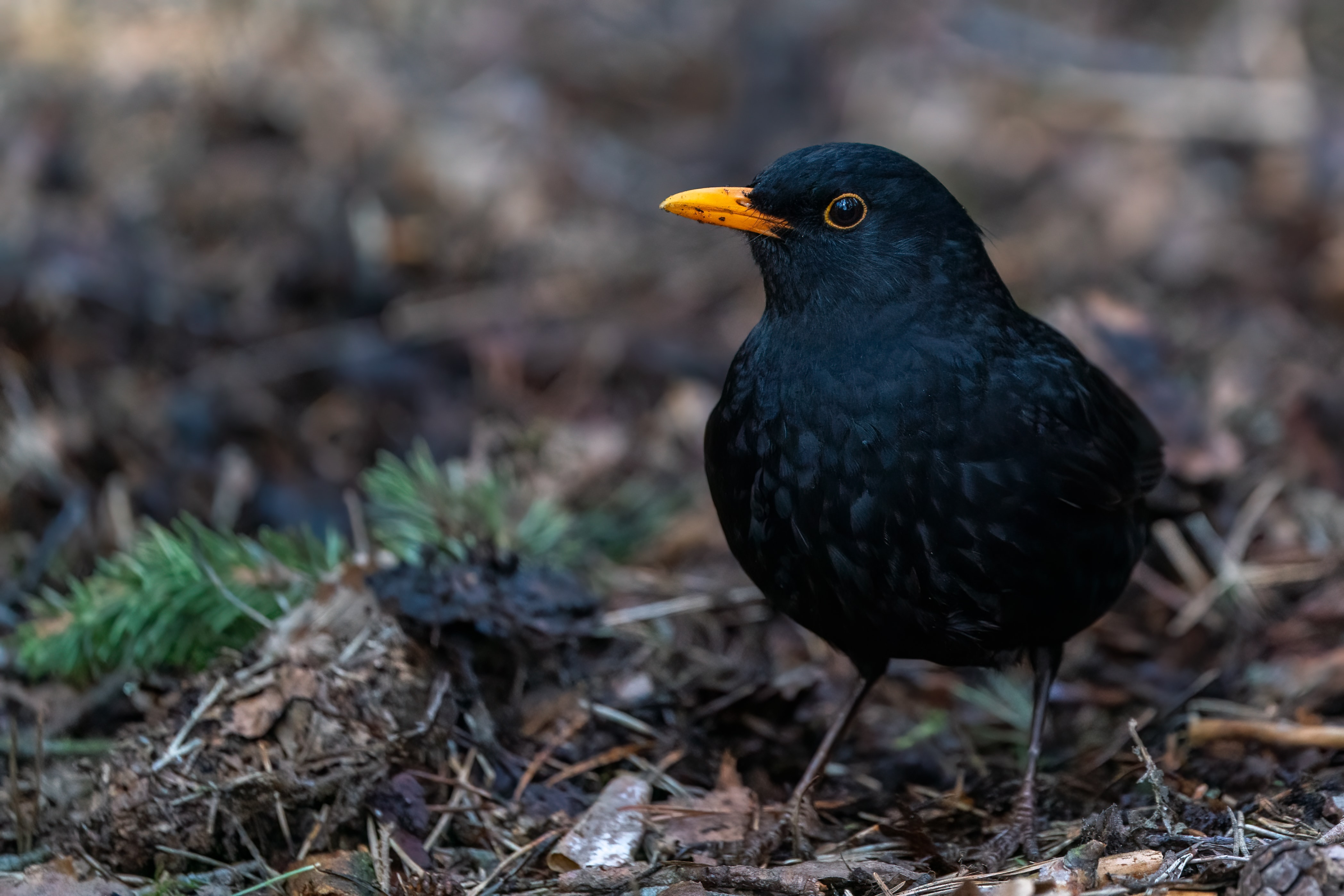
Key Insights
- Distinctive Physical Traits: The combination of a dark, round body, short yellowish feet, short neck, and prominent yellow markings sets this bird apart.
- Potential Species Identification: Possibilities include variations of blackbirds, such as the Common Blackbird, Eurasian Blackbird, or Great-tailed Grackle, amongst others.
- Importance of Additional Context: Identification greatly benefits from details like behavior, habitat, and location, which can refine the possibilities.
Overview of the Description
You described a bird with several specific physical features: a large dark body that resembles a round ball, short yellowish feet, a short neck, and distinctive yellow coloration on both the beak and a patch on the throat. When trying to identify any bird, especially one with such striking and unusual characteristics, the details surrounding its body structure and coloration are very important. This overview dissects each feature and looks at the different bird species that might match this description.
Interpreting the Physical Attributes
Round Body Shape
The description of a "round ball" body could suggest a bird with a relatively stout build. This trait is typically observed in birds that either have a compact structure or exhibit particular feathering that gives them a more rounded profile. While many dark-feathered birds exist, a round body in combination with other bright yellow features is not common. Such a shape might be a result of a robust build or certain fat deposits during seasonal variations.
Short Yellowish Feet and Short Neck
The characteristic of having short yellowish feet helps narrow down the possibilities since many ground or water birds have distinctive foot colorations that are adapted to their habitat. A short neck is another notable attribute. Birds with short necks tend to have a compact appearance overall, which is often associated with certain species that live in dense vegetation or those that have evolved for specific feeding techniques.
Bright Yellow Beak and Yellow Patch on Throat
The combination of a bright yellow beak with an additional yellow patch on the throat is particularly striking. This dual-color feature serves as a strong visual cue in species differentiation. Bright colors in birds are frequently used for attracting mates, signaling species identity, or intimidating rivals. When combined with a dark, glossy plumage, these yellow markings can be a defining factor in pinpointing the bird's identity.
Possible Species Matching the Description
Based on the explicit traits provided, several species have been suggested as candidates for the bird you described. Let’s evaluate these potential matches:
Common Blackbird (Turdus merula)
The Common Blackbird, widely known in Europe and parts of Asia, is often noted for its glossy, dark plumage. In many cases, the male exhibits distinctive coloration enhancements, which could sometimes be interpreted as a yellow patch or an associated bright marking near the beak. Although not all individuals have a “round ball” appearance, the overall body shape can seem compact and robust. Some observers note that in dim light or from certain angles, the dark feathers might give an impression of a very rounded body.
Key points aligning with your description:
- Dark, glossy plumage that can appear as a sizable, compact mass.
- Bright yellow or orange beak, especially in adult individuals.
- Additional subtle markings, such as slight yellowing around the face or throat.
Eurasian Blackbird
Closely related to the Common Blackbird, the Eurasian Blackbird is known for similar features. The visual characteristics include a sleek dark appearance with occasionally noticeable bright yellow elements in its bill or around the eye, though the yellow throat patch is less commonly emphasized in literature. However, in some environmental conditions, the patch of yellow may be more distinguished among the dark plumage.
This species is frequently observed in urban, woodland, and garden areas, providing several records of differing light conditions that could enhance the visibility of yellow markings.
Great-tailed Grackle (Quiscalus mexicanus)
The Great-tailed Grackle is another strong candidate given its glossy black coloring and occasional bright yellow features. Although more prevalent in the Americas, especially in regions of North and Central America, this bird has a robust and rounded silhouette. The description of a “round ball” body can correlate with the grackle’s distinctive posture and feather display, which has been noted by bird enthusiasts. The yellow aspects, such as in the beak or feathers in certain lighting conditions, further support its candidacy as an alternative possibility. Observers often see such birds as part of large urban flocks, leading to multiple perspectives on their coloration.
Other Notable Possibilities
There are other species mentioned in various bird identification guides that offer similar traits:
- Yellow-throated Toucan: Generally differs due to its large, expansive bill, yet the yellow patch and vibrant markings occasionally create confusion for quick identification, though the toucan’s overall size and bill shape are quite distinctive and do not align perfectly with the description.
- European Starling: Known for its dark coloration and occasional bright beak coloration, European Starlings tend to have a longer neck and legs, but in some cases, the compactness of the body might be misinterpreted when seen from a distance.
- Other Black Birds with Yellow Accents: Various species of birds that show mixed plumage often have adaptations that include yellow accents on otherwise dark features like the beak and throat patch. These birds are sometimes regional variants and can be influenced by factors such as seasonal molt or environmental conditions.
Determining the Best Match
By comparing the unique combination of traits provided — the big dark, almost spherical form, the short stature of the feet and neck, and the bright yellow accents on the beak and throat — the information presently available is most consistent with certain types of blackbirds.
Factors Supporting the Blackbird Hypothesis
Plumage and Body Shape
Blackbirds, particularly the Common Blackbird and its relatives, exhibit a complex interplay of glossy dark plumage with potential hints of brightness arising from beak and facial features. The robust body and compact profile, seen especially in males, gives off a “round ball” visual impression under certain conditions. Such an appearance might be influenced by how light interacts with the feather layers, creating an almost metallic sheen in some environmental contexts.
Yellow Features
The bright yellow beak is an identifying factor that aligns consistently with observations of both Common and Eurasian Blackbirds. While the yellow throat patch is not a prominent common trait in many depictions, variations in the bird’s appearance, especially during breeding or due to individual variation, could account for this feature. In addition, the short yellowish feet match descriptions found in some less common descriptions of such species.
Behavior and Habitat Considerations
Behavior often plays a significant role in species identification. Birds belonging to the blackbird family are typically seen in various habitats ranging from woodlands to urban gardens. The observations of their behavior, such as how they forage or interact within a flock, can provide further evidence toward identification. For example, the Great-tailed Grackle often congregates in urban settings in large flocks, and its appearance changes subtly depending on the group dynamics and lighting.
Contextual Identification and Field Considerations
It is important to note that identifying a bird solely based on physical description can be challenging. Field identification often requires more contextual data including:
- Geographical Location: The bird’s range can significantly narrow down the options available. For instance, Common and Eurasian Blackbirds are prevalent in Europe and parts of Asia, whereas the Great-tailed Grackle is common in America.
- Behavioral Patterns: Observations such as feeding habits, song, flight patterns, and group behavior can help refine the identification process. Blackbirds often have characteristic calls and flight silhouettes that experts use as cues.
- Seasonal Changes: Birds can alter their appearance during breeding seasons or due to molt, leading to temporary changes in coloration or shape. These changes may explain seemingly anomalous features like a bright yellow throat patch.
- Environmental Context: Lighting, background, and even photographic angle may affect how certain colors – especially yellows – are perceived. Sometimes the appearance of a “yellow patch” might be an optical effect resulting from ambient light reflecting off the feathers.
Additional Resources for Bird Identification
For those interested in pursuing a more precise identification of the bird in question, consulting detailed birdwatching guides can be very helpful. Field guides often include detailed illustrations or photographs that correlate behavioral and physical traits. It is also beneficial to compare sightings via bird identification apps or websites where community input and expert opinions can provide a consensus.
Bird Identification Guides and Websites
| Resource Name | Description |
|---|---|
| All About Birds - Common Blackbird | Provides a detailed overview of the Common Blackbird, including visual and behavioral cues. |
| Bird Helpful | A site dedicated to the identification of various bird species with particular emphasis on physical features. |
| Avibirds | Offers species profiles with images and regional occurrence maps. |
| Animal Spot | A general resource for animal facts that includes bird-specific characteristics. |
| Birdfy | Features articles on birds with unique color features and identification tips. |
Utilizing multiple sources can help triangulate observations and lead to a more confident identification.
Comparative Analysis of Similar Species
In synthesizing the available information, a comparative analysis between the Common Blackbird, Eurasian Blackbird, and Great-tailed Grackle provides deeper insight into which species is most likely being observed.
Key Differentiators
Size and Body Shape
While both the Common Blackbird and Eurasian Blackbird are known for their relatively rounded, compact forms, the impression of “a round ball” may be noted more distinctly in species that have heavier, more robust builds. The Great-tailed Grackle, on the other hand, can appear even more rounded and bulky when observed from afar, particularly when seen in a flock where visual depth perception is challenged.
Yellow Beak and Throat Marking
It is the vibrant, bright yellow in the beak coupled with a yellow patch on the throat that stands out in your description. Among the species considered, the Common Blackbird and related variants can exhibit these features under certain conditions, though they are more typically associated with slight facial yellow accents rather than a vivid yellow patch. Grackles, with their more dynamic display during display flights and calls, sometimes show mixed plumage hints due to light reflections.
Foot and Leg Characteristics
The observation of short yellowish feet is common among some bird species but is particularly telling when combined with other features. In blackbirds, the feet are often adapted to ground foraging, and the hues may appear more pronounced because of the dark contrast with their plumage. Such distinctions can give further credence to the possibility that the bird in question is indeed a variant of a blackbird rather than other dark bird species.
Field Identification Tips
For enthusiasts and bird watchers, confirming the identity of a bird often necessitates some hands-on field work. Below are key tips to help ascertain the correct species:
- Observe in Different Lighting: Since colors can vary dramatically with sunlight or shadow, try viewing the bird in various light conditions to see if the yellow features remain prominent.
- Note Behavioral Patterns: Pay attention to the bird’s behavior. Does it forage individually or in groups? What is its flight pattern? Does it have a distinctive song? Such observations are crucial for accurate identification.
- Record Location and Habitat: The geographical area and type of habitat can instantly narrow down possibilities based on regional bird species distributions.
- Photograph for Later Comparison: Taking clear photos and comparing them against reputable bird field guides can offer additional insights.
- Consult Experts: Local birdwatching clubs, online forums, or ornithological societies are valuable resources. They often have firsthand experience and can help evaluate subtle differences that are hard to discern with casual observation.
These steps not only refine the identification process but also enrich the overall birdwatching experience.
Integrative Summary
The bird you described, characterized by its big dark body, short and stout physical features, and the striking combination of a bright yellow beak with a yellow throat patch, fits best within the spectrum of birds classified as blackbirds. The Common Blackbird and Eurasian Blackbird stand out as strong candidates. Alternatively, some aspects of the Great-tailed Grackle align with your description, particularly if the bird exhibits more robust, rounded features in certain lighting conditions.
Nevertheless, without additional details such as habitat, behavior, and precise location, absolute identification can be challenging. The variability in appearance due to age, seasonal changes, and environmental lighting means that similar physical traits may sometimes be observed in different species. Therefore, if further field observations—especially recordings of its behavior or a clearer photo—are available, they could conclusively identify the species in question.
Supplementary Considerations
Environmental Influence on Appearance
Bird coloration in the natural world is not solely determined by genetics but is constantly influenced by environmental factors. For example, the way light reflects off a bird's feathers can cause additional hues to appear more vibrant than they truly are in standardized conditions. In some species of blackbirds, the interplay of sunlight, moisture, and angle of observation can enhance seemingly subtle yellow markings, giving them a more pronounced appearance. This underscores the importance of considering the environmental context when trying to match a physical description to a species.
Variability Within Species
It is not uncommon for birds within the same species to show variability in physical traits. Sexual dimorphism (differences in appearance between males and females), age-related plumage differences, and seasonal changes (especially during mating or molting seasons) can result in a range of appearances within a single species. As such, while many sources suggest the Common Blackbird or Great-tailed Grackle as probable matches, localized variants or even hybrid forms may account for the unique combination of features you reported.
Navigating Online Bird Identification Resources
Today’s digital age provides an abundance of resources for bird identification. Instead of relying on a single guide, cross-referencing multiple authoritative sources can help provide a more comprehensive understanding. Databases such as All About Birds, Avibirds, and Bird Helpful offer interactive tools, while community discussions on birdwatching forums can also yield anecdotal evidence and shared experiences, which might include sightings of birds with similar features.
References
- Eurasian Blackbird - All About Birds
- 10 Black Birds With Yellow Beaks - Birdfy
- Black Birds with Yellow Beaks - A-Z Animals
- Bird Identification - Bird Helpful
- Common Blackbird Profile - Avibirds
Recommended Queries for Deeper Insights
Last updated March 12, 2025