
Unveiling Governance Paradigms: Dark Enlightenment Meets China's Enduring Rule
An in-depth exploration of a modern reactionary ideology versus a millennia-old system of governance, highlighting their surprising overlaps and stark contrasts.
The "Dark Enlightenment" (often abbreviated as NRx) and "Rule in China" represent vastly different concepts—one a relatively recent, Western-born philosophical and political ideology, and the other a complex tapestry of historical and contemporary governance in a major East Asian civilization. While a direct, symmetrical comparison is challenging due to their disparate natures, examining their core tenets, historical contexts, and visions for societal structure reveals fascinating points of convergence and divergence. This analysis seeks to illuminate these two distinct approaches to power, order, and societal organization.
Core Insights: At a Glance
Key takeaways from comparing the Dark Enlightenment and Rule in China.
- Shared Anti-Democratic Stance: Both the Dark Enlightenment and historical/modern rule in China fundamentally reject liberal democratic principles, favoring hierarchical and authoritarian structures of governance, albeit for different reasons and with different justifications.
- Ideology vs. Implemented System: The Dark Enlightenment is primarily a theoretical, reactionary ideology largely confined to online discourse and intellectual circles, whereas rule in China encompasses millennia of practical governance, evolving from imperial dynasties to a modern single-party state.
- Divergent Philosophical Roots: The Dark Enlightenment is a critique of and reaction against Western Enlightenment values, advocating a return to pre-Enlightenment or novel authoritarian models. In contrast, Chinese rule, both historical and contemporary, draws from indigenous philosophies (like Confucianism and Legalism) and, more recently, Marxist-Leninist thought adapted to Chinese contexts.
Deconstructing the Dark Enlightenment (NRx)
Understanding the tenets of this neo-reactionary movement.
The Dark Enlightenment, also known as the neo-reactionary movement (NRx), emerged in the late 2000s, primarily through online blogs and forums. It represents a radical critique of modern liberal democracy and egalitarianism, viewing them as detrimental to societal stability and progress.
Core Principles and Proponents
At its heart, the Dark Enlightenment is an anti-democratic and anti-egalitarian philosophy. Key figures associated with its development include Curtis Yarvin (writing under the pseudonym Mencius Moldbug), who laid much of its groundwork, and Nick Land, a British philosopher who coined the term and further elaborated on its concepts. Their writings often express a deep disillusionment with the trajectory of Western civilization since the Enlightenment.
The movement advocates for a return to, or establishment of, what it considers more robust and effective forms of governance, such as:
- Absolute Monarchism: A preference for strong, centralized leadership unencumbered by democratic processes.
- Cameralism: A theory of public administration where the state is managed like a large corporation, prioritizing efficiency and order, often with a technocratic elite at the helm.
- Hierarchical Social Structures: A belief in natural hierarchies and an explicit rejection of social and political equality.
Critique of Modernity
A central theme in Dark Enlightenment thought is the rejection of "Whig historiography"—the idea that history represents an inevitable march towards greater liberty, enlightenment, and liberal democracy. Instead, NRx proponents often argue that democratic systems lead to societal decay, inefficiency, and the rise of a self-serving political class they sometimes term "The Cathedral" (a decentralized network of institutions, including academia and media, perceived as upholding progressive orthodoxy).
Some interpretations link the Dark Enlightenment to techno-libertarian elements, envisioning future governance models heavily influenced by technology, potentially even AI-driven, to enforce order and efficiency. However, it remains a largely theoretical and controversial ideology, often criticized for its elitist, authoritarian, and sometimes racially charged undertones.
Understanding Rule in China: A Historical and Contemporary Overview
Exploring the evolution of governance in one of the world's oldest civilizations.
"Rule in China" refers to the multifaceted systems of governance that have shaped Chinese civilization over thousands of years, from ancient imperial dynasties to the contemporary People's Republic of China (PRC).
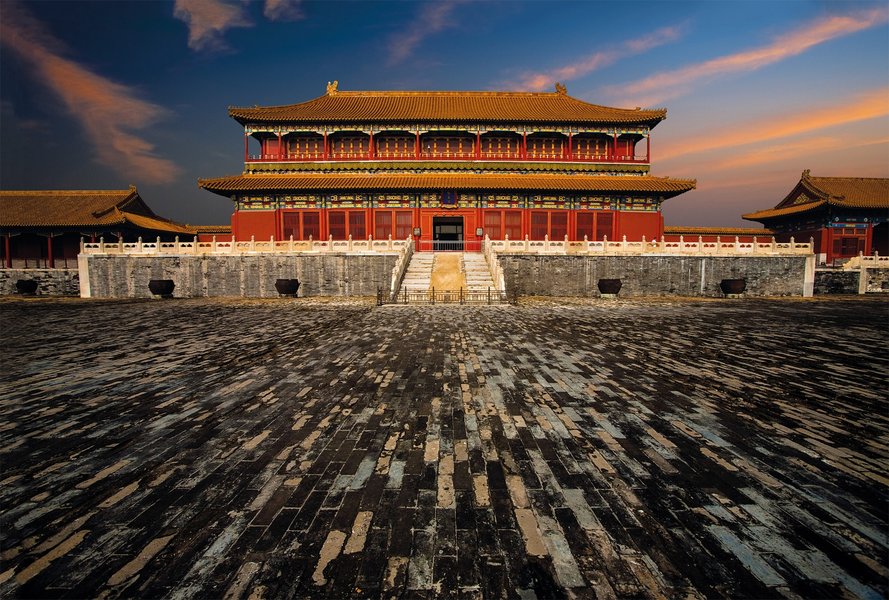
The Forbidden City in Beijing, the imperial palace for centuries, symbolizing the centralized power and grandeur of dynastic rule in China.
Imperial Dynastic System (c. 221 BCE - 1912 CE)
For over two millennia, China was governed by a succession of imperial dynasties, each leaving an indelible mark on its political and cultural landscape. Key characteristics of this era include:
- The Mandate of Heaven (天命 - Tiānmìng): A philosophical concept that legitimized the rule of the Emperor (Son of Heaven). The Mandate was conditional upon the ruler's virtue and ability to govern justly and maintain harmony; natural disasters or widespread unrest were often interpreted as signs that the ruler had lost this divine favor.
- Centralized Imperial Authority: Emperors typically wielded supreme power, though the extent of this power varied. Dynasties like the Qin (which first unified China), Han, Tang, Song, Ming, and Qing established vast, centralized empires.
- Bureaucratic Administration: A sophisticated and often meritocratic bureaucracy, famously reliant on the imperial examination system (科舉 - kējǔ), managed the day-to-day affairs of the state. Scholar-officials, selected based on their knowledge of Confucian classics, played a crucial role in governance.
- Philosophical Underpinnings: Confucianism, with its emphasis on hierarchy, social harmony, filial piety, and virtuous leadership, profoundly influenced the ideology of rule. Legalism, advocating strict laws and centralized power, also played a significant role, particularly in state administration.
Periods like the Han and Tang dynasties are often considered golden ages, characterized by stability, prosperity, and significant cultural and technological advancements. The dynastic system officially ended with the abdication of the Xuantong Emperor in 1912.
Modern Governance (Post-1949)
Following a period of republican government and civil war, the People's Republic of China was established in 1949 under the leadership of the Chinese Communist Party (CCP). Contemporary rule in China is characterized by:
- Single-Party State: The CCP holds a monopoly on political power, with its supremacy enshrined in the constitution.
- "Socialism with Chinese Characteristics": The official state ideology, blending Marxist-Leninist principles with elements of market economics and Chinese nationalism.
- Centralized Authority and Stability: A strong emphasis is placed on maintaining social order, political stability, and national unity, often at the expense of individual political freedoms.
- Technological Governance: The state leverages advanced technology for economic development, social management, and surveillance (e.g., the social credit system).
Modern China's governance model is distinct from its imperial past but retains elements of centralized control and a focus on state-led objectives, adapting to the complexities of a globalized world.
Points of Convergence: Shared Ideological Terrain
Where Dark Enlightenment theories and Chinese governance concepts find common ground.
Despite their vastly different origins and contexts, some conceptual parallels can be drawn between the Dark Enlightenment and aspects of rule in China, particularly concerning their views on democracy, hierarchy, and order.
- Rejection of Liberal Democracy: Both frameworks are fundamentally non-democratic or anti-democratic. The Dark Enlightenment explicitly critiques and rejects liberal democracy as flawed and decadent. Historically, imperial China operated on principles of absolute monarchy and divine mandate, with no provision for popular sovereignty. Modern China, while using terms like "whole-process people's democracy," remains a single-party authoritarian state where Western-style multi-party democracy is not practiced or endorsed.
- Emphasis on Hierarchy and Elite Rule: The Dark Enlightenment advocates for hierarchical societal structures and rule by a capable elite (e.g., a monarch or a technocratic CEO-like figure). Similarly, traditional Chinese society was strictly hierarchical, with the Emperor at the apex, followed by scholar-officials, gentry, and commoners. The imperial bureaucracy, though meritocratic in its selection via examinations, constituted an elite governing class. Modern China, while ideologically rooted in communism, also features a distinct political elite within the CCP.
- Prioritization of Order and Stability: A core tenet of the Dark Enlightenment is that its proposed systems would ensure greater order and efficiency than democracies. Maintaining social order and harmony (和谐 - héxié) has been a paramount concern throughout Chinese history, from imperial times (essential for the Mandate of Heaven) to the present day, where "stability maintenance" (维稳 - wéiwěn) is a key objective of the CCP.
- Critique of Egalitarianism: The Dark Enlightenment is overtly anti-egalitarian, viewing inequality as natural or even desirable. While Confucianism in imperial China emphasized social roles and duties within a hierarchy rather than outright equality, and modern China's socialist ideology espouses equality in principle, practical realities in both historical and contemporary contexts have involved significant social and economic stratification.
Fundamental Divergences: Contrasting Paths and Philosophies
The critical differences that set these two concepts apart.
The dissimilarities between the Dark Enlightenment and rule in China are profound, stemming from their distinct origins, nature, and practical realities.
| Feature | Dark Enlightenment (NRx) | Rule in China (Historical & Contemporary) |
|---|---|---|
| Nature & Implementation | Primarily a theoretical, philosophical, and political ideology; largely an online phenomenon with no direct implementation as a governing system. | A set of actual, historical, and ongoing governance systems that have practically shaped a major civilization for millennia. |
| Origins & Context | Modern Western ideology (late 2000s); a reaction against perceived failures of Enlightenment values, democracy, and progressive modernity. | Ancient East Asian origins, evolving over thousands of years; pre-dates the European Enlightenment and developed indigenous philosophies (Confucianism, Legalism). Modern rule incorporates Marxism-Leninism adapted to Chinese conditions. |
| Philosophical Basis | Rejection of universalism, liberalism, and egalitarianism. Advocates for particularist, often elitist or monarchist, principles. Draws from a critique of existing Western thought. | Historically based on concepts like the Mandate of Heaven, Confucian ethics (emphasizing harmony, hierarchy, and duty), and Legalist administrative principles. Modern China draws on CCP ideology ("Socialism with Chinese Characteristics"). |
| Legitimation of Power | Proposed to be based on efficiency, competence, traditional authority (monarchy), or technocratic elitism. | Historically: Divine Mandate, virtuous rule, ability to maintain order and prosperity. Modern: CCP's historical role, economic development, national rejuvenation, and maintaining stability. |
| Scale and Scope | Often envisions smaller, more manageable polities like city-states or corporate-run entities (neo-cameralism). | Has always dealt with governing vast territories and enormous populations, from sprawling empires to a modern nation-state of over a billion people. |
| Cultural Foundation | A product of Western intellectual traditions and online subcultures; often lacks a specific, rooted cultural framework beyond its reactionary stance. | Deeply embedded in Chinese culture, history, and societal norms, evolving organically within that specific civilizational context. |
In essence, the Dark Enlightenment is a speculative and reactive ideology seeking alternatives to contemporary Western political systems. Rule in China, conversely, represents the accumulated experience and evolution of governance within one of the world's oldest continuous civilizations, adapting through dynastic cycles, revolutions, and modern geopolitical transformations.
Comparative Governance Attributes: A Visual Analysis
Assessing key characteristics of Dark Enlightenment, Imperial China, and Modern China.
This radar chart offers a visual comparison of the Dark Enlightenment's theoretical framework against the historical practice of Imperial China and the contemporary governance model of Modern China. The scores (ranging from 1 to 10, where 1 is low and 10 is high) are based on an interpretative synthesis of their defining attributes. For "Egalitarian Values," a lower score indicates a stronger rejection of egalitarianism or a more pronounced hierarchical structure.
The chart highlights that while both Dark Enlightenment and Chinese systems (historical and modern) score high on rejecting liberal democracy and favoring hierarchy, they diverge significantly in areas like historical precedent and the nature of their technological embrace. Modern China shows a strong drive for global influence and utilizes technology extensively for governance, whereas the Dark Enlightenment's technological vision is more speculative and its historical grounding minimal. Imperial China stands out for its immense historical precedent.
Conceptual Mindmap: Dark Enlightenment vs. Rule in China
Visualizing the core ideas and their relationships.
This mindmap provides a structured overview of the key concepts associated with the Dark Enlightenment and Rule in China, highlighting their defining characteristics, shared aspects, and major differences. It helps to visualize the distinct intellectual and practical domains these two subjects occupy.
Anti-Democratic
Anti-Egalitarian
Reactionary"] id1b["Key Proponents
Curtis Yarvin (Moldbug)
Nick Land"] id1c["Governance Vision
Monarchy, Cameralism
Technocratic Rule"] id1d["Origins
Late 2000s, West
Online Movement"] id1e["Critique
Rejects Enlightenment Values
Sees Democracy as Failure"] id2["Rule in China"] id2a["Historical Context (Imperial)"] id2a1["Dynastic System (e.g., Qin, Han, Ming, Qing)"] id2a2["Mandate of Heaven"] id2a3["Centralized Bureaucracy
Meritocracy (Exams)"] id2a4["Hierarchical Society"] id2b["Modern Context (PRC)"] id2b1["Chinese Communist Party (CCP) Rule"] id2b2["Single-Party State"] id2b3["'Socialism with Chinese Characteristics'"] id2b4["Technological Governance (Surveillance)"] id3["Shared Aspects (Convergence)"] id3a["Rejection of Liberal Democracy"] id3b["Emphasis on Hierarchy & Authority"] id3c["Prioritization of Order & Stability"] id3d["Critique of Egalitarianism (Implicit or Explicit)"] id4["Key Differences (Divergence)"] id4a["Nature: Ideology vs. System"] id4b["Origin & Context: Modern Western vs. Ancient/Evolving Eastern"] id4c["Implementation: Theoretical vs. Practical/Historical"] id4d["Philosophical Basis: Reaction to Enlightenment vs. Indigenous (Confucianism, Legalism) + Marxism"] id4e["Scale & Scope: Often Smaller Entities (NRx) vs. Vast Empires/Nations (China)"]
The mindmap illustrates that while both concepts engage with themes of authority and governance structure, their foundations, applications, and ultimate aims are distinct. The Dark Enlightenment is a theoretical counter-proposal to modern Western systems, whereas Rule in China is the lived, evolving reality of a major global power with deep historical roots.
Perspectives from a Proponent: Curtis Yarvin on Dark Enlightenment
Insights into the mindset behind the neo-reactionary movement.
To better understand the Dark Enlightenment, it is insightful to hear from one of its primary ideologues. The following video features Curtis Yarvin (Mencius Moldbug), who is widely credited with laying the foundational ideas of the neo-reactionary movement. In this interview, Yarvin discusses his perspectives, which often include critiques of democracy and proposals for alternative governance structures. Understanding his viewpoint provides direct context to the theories being compared, though it's important to approach such content critically and consider diverse perspectives.
Curtis Yarvin discussing concepts related to the Dark Enlightenment.
Yarvin's arguments often revolve around the idea that modern democracies are inefficient, prone to decay, and ultimately unsustainable. He typically advocates for systems that concentrate power in the hands of a sovereign, likening ideal governance to a well-run corporation or a traditional monarchy. These ideas stand in stark contrast to the participatory ideals of liberal democracy but find echoes in historical systems of authoritarian rule, including some aspects of dynastic China, albeit with entirely different philosophical and cultural underpinnings.
Frequently Asked Questions (FAQ)
What is the Dark Enlightenment in simple terms?
The Dark Enlightenment (or neo-reaction, NRx) is a political and philosophical ideology that fundamentally rejects modern democracy and egalitarianism. It advocates for a return to older forms of government, such as monarchy, or new forms of authoritarian rule, like states run like corporations by a CEO-king. It's largely an online movement critical of Enlightenment values like liberty and equality, viewing them as sources of societal decline.
How did traditional China's rulers justify their power?
Traditional Chinese emperors justified their rule primarily through the concept of the "Mandate of Heaven" (天命 - Tiānmìng). This was the belief that Heaven granted the emperor the right to rule based on his virtue and ability to govern justly and maintain harmony. If a ruler became corrupt or incompetent, or if natural disasters and social unrest became widespread, it was seen as a sign that he had lost the Mandate, potentially legitimizing rebellion and the rise of a new dynasty. Confucian principles emphasizing hierarchy, order, and the ruler's moral responsibility also played a key role in legitimizing imperial authority.
Are there any real-world governments based on Dark Enlightenment ideas?
No, there are no governments currently or historically that are explicitly based on the Dark Enlightenment ideology. It remains a largely theoretical and niche philosophical movement, primarily existing in online discourse. While its proponents advocate for specific forms of authoritarian governance, these ideas have not been implemented as a formal system of rule anywhere.
How does modern China's governance differ from its imperial past?
Modern China, under the Chinese Communist Party (CCP), differs significantly from its imperial past, though some elements of centralized authority and bureaucratic administration persist. Key differences include:
- Ideology: Imperial China was guided by the Mandate of Heaven and Confucianism. Modern China's official ideology is "Socialism with Chinese Characteristics," based on Marxism-Leninism.
- Source of Legitimacy: Emperors claimed divine backing. The CCP's legitimacy is based on its historical role in revolution, economic development, and maintaining national sovereignty and stability.
- Political Structure: Imperial China was a monarchy. Modern China is a single-party state with a collective leadership structure within the CCP (though power has become more centralized under recent leaders).
- Economic System: Imperial China was largely agrarian with varying degrees of state control. Modern China has a mixed economy with significant state capitalism and integration into the global market.
- Social Mobility & Control: The imperial examination system offered a path for social mobility. Modern China has different avenues but also employs advanced technology for social control and surveillance, which was not possible in imperial times.
Is the Dark Enlightenment related to any specific political groups today?
The Dark Enlightenment is often associated with parts of the alt-right and other far-right movements due to its anti-democratic, anti-egalitarian, and hierarchical views. Some of its ideas have found resonance among certain figures in tech and libertarian circles who are critical of existing democratic institutions. However, it's not a formal political party or a monolithic group but rather a loose network of thinkers and online communities. Its influence on mainstream politics is generally considered fringe, though its ideas occasionally surface in broader political discourse.
Recommended Further Exploration
Delve deeper into related topics with these queries.
- What were the philosophical underpinnings of the Mandate of Heaven in Chinese history?
- What are the main critiques and controversies surrounding neo-reactionary movements like the Dark Enlightenment?
- How has the Chinese Communist Party's governing ideology evolved since 1949?
- What are the theories and criticisms of technocracy as a model of governance?
References
Sources consulted for this analysis.

 johncarlosbaez.wordpress.com
Last updated May 8, 2025