
Unpacking David Brooks' Wisdom: The Transformative Power of Life's Lessons
Delving into the profound insights of a renowned cultural commentator on character, humility, and human connection.
Key Highlights from David Brooks' Philosophy
- Embracing Adversity: Brooks emphasizes that recovering from suffering isn't about healing, but about transformation, leading to a fundamentally different and often stronger self.
- The Art of Seeing: His work highlights the crucial importance of deep understanding and compassion in human interactions, moving beyond superficial judgments to truly see others.
- Beyond Accomplishment: Brooks champions "eulogy virtues" (character traits) over "résumé virtues" (achievements), arguing that true fulfillment comes from meaningful connections and moral development.
David Brooks, a prominent political and cultural commentator, offers profound insights into human nature, morality, and the pursuit of a meaningful life. His work often encourages introspection and a re-evaluation of societal values, shifting focus from external accomplishments to internal character and deep human connection. A central theme in his philosophy, particularly articulated in his book "How to Know a Person: The Art of Seeing Others Deeply and Being Deeply Seen," revolves around the idea that "The greatest thing a person does is to take the lessons of life, the hard knocks of life, the surprises of life, and the mundane realities of life and refine their own consciousness so that they can gradually come to see the world with more understanding, more wisdom, more humanity, and more grace." This quote encapsulates his belief in life's transformative power and the continuous journey of self-refinement.
The Essence of Transformative Learning
Refining Consciousness Through Life's Rigors
Brooks' statement on the greatest thing a person does speaks to a continuous process of growth, not merely through accumulation of knowledge, but through the crucible of lived experience. It suggests that true wisdom is not found in academic pursuits alone, but in the intelligent processing and integration of everyday challenges, unexpected turns, and even the monotony of existence. This refining of consciousness is an active, ongoing endeavor that leads to profound changes in one's perspective and interaction with the world.
From Hard Knocks to Higher Understanding
The "hard knocks" of life, as Brooks puts it, are not merely obstacles to overcome but essential components of character building. Suffering, in his view, is not a disease to be cured, but a transformative experience that changes individuals fundamentally. It forces a confrontation with one's limitations and beliefs, fostering resilience and prompting a deeper quest for meaning. This aligns with his emphasis on "eulogy virtues"—the moral qualities people remember about us after we are gone—over "résumé virtues," which are focused on external success. The lessons from hardship contribute significantly to these eulogy virtues, shaping a person into someone of greater depth and compassion.

David Brooks often discusses the importance of social emotional learning and character building.
The Role of Mundane Realities and Surprises
Beyond dramatic suffering, Brooks also highlights the importance of "mundane realities" and "surprises." The everyday routines and unexpected events, though seemingly small, collectively contribute to this refinement. It is in the steady navigation of ordinary life that habits are formed and character is solidified. The surprises, whether positive or negative, break patterns and force adaptation, further contributing to a more nuanced understanding of self and world.
The Journey Towards Wisdom, Humanity, and Grace
Cultivating Deeper Virtues
The ultimate outcome of this continuous refinement is the gradual development of increased understanding, wisdom, humanity, and grace. These are interconnected virtues that signify a well-developed character and a profound capacity for meaningful engagement with life and others.
Understanding and Wisdom
Brooks' concept of understanding goes beyond mere knowledge; it involves seeing the world with greater insight and nuance. Wisdom, in this context, is not just about accumulating facts, but about knowing what one doesn't know, acknowledging limitations, and having the moral quality to navigate uncertainty. This radical self-awareness, born from processing life's lessons, allows individuals to approach situations and people with less judgment and more curiosity.
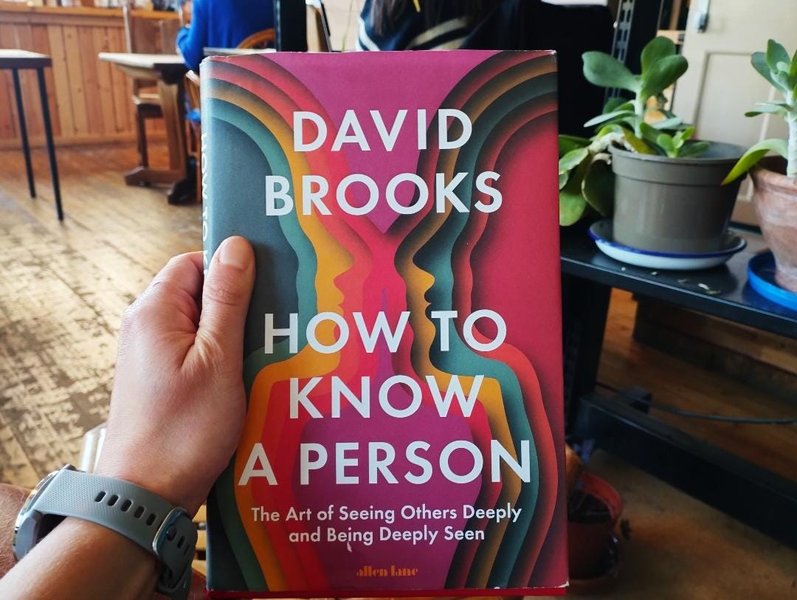
Human connection is a recurring theme in Brooks' works.
Humanity and Grace
The development of humanity implies a deeper empathy and compassion for others. Brooks stresses the importance of truly "seeing" people—not as problems to solve, but as mysteries to be understood. This involves active listening, showing up for others in their moments of trauma, and offering undivided attention. Grace, in turn, suggests a lightness of being, a sense of inner peace and equilibrium that comes from having wrestled with life's complexities and emerged with a refined spirit. It's about being able to let go of the need for constant validation and instead focus on genuine connection and contribution.
This radar chart illustrates the transformative impact of embracing life's lessons on key character traits. The "Pre-Refinement State" dataset represents a baseline, while the "Impact of Life Lessons" dataset shows the potential for growth in areas like empathy, resilience, self-awareness, humility, compassion, and wisdom as one refines consciousness through experience. The chart visually reinforces Brooks' idea that engaging with the "hard knocks, surprises, and mundane realities" of life significantly elevates these virtues, leading to a more developed and gracious self.
The Counter-Cultural Call for Character
Shifting Focus from External Validation to Inner Growth
Brooks often critiques modern society's hyper-individualistic tendencies and its fixation on external success. He argues that this focus distracts from the more significant work of building character and fostering meaningful connections. His philosophy serves as a counter-cultural call to re-evaluate what truly matters for a fulfilling life.
The Second Mountain: Commitment and Connection
In "The Second Mountain," Brooks elaborates on the idea that true fulfillment comes from commitment—to a spouse and family, a vocation, a philosophy or faith, and a community. This is a departure from the "first mountain" of individualistic striving for success and recognition. The second mountain is about losing oneself in something larger, a "merger of self" that leads to profound joy beyond mere happiness. It is in these commitments, nurtured by the lessons of life, that individuals find deep meaning.
In this TED Talk, David Brooks questions whether one should live for their resume or their eulogy, encouraging a focus on inner character over external achievements. This video directly relates to his core philosophy of prioritizing "eulogy virtues," which are cultivated by integrating life's lessons, rather than solely pursuing "résumé virtues," which often stem from a focus on external validation. It serves as a compelling introduction to his call for a more meaningful life centered on moral development and genuine human connection.
Humility and Self-Forgetfulness
Humility is a cornerstone of Brooks' philosophy. He defines it not as thinking lowly of oneself, but as radical self-awareness from a distance, recognizing one's limitations and willingness to learn from others. This contrasts sharply with egotism, which he describes as a "ravenous hunger in a small space—self-concerned, competitive, and distinction-hungry." Failure, in this context, can lead to the greatest success: humility and learning. To fulfill oneself, one must forget oneself; to find oneself, one must lose oneself in a larger purpose or community.
Practical Applications of Brooks' Insights
How to Live a Life of Deeper Meaning
Brooks' philosophical insights are not abstract but offer practical guidance for navigating relationships, education, and personal growth. His emphasis on relational intelligence and character building has tangible implications for daily life.
The Art of Seeing Others Deeply
In "How to Know a Person," Brooks provides a roadmap for deeper human connection. It involves practicing a "ministry of presence" by simply showing up for people in distress, refraining from comparison, and offering undivided attention. He encourages asking open-ended questions that foster deeper understanding, such as "What's it like...?" or "Tell me about...". The goal is to view each person as a mystery to be honored, not a puzzle to be solved, fostering compassion and understanding rather than judgment.
Character Building in Education
Brooks laments that while young people are extensively tutored and monitored in academic aspects, character building is often neglected. He advocates for an education system that offers "new things to love" and shapes students' perception of the world, going beyond mere impartation of facts. This echoes his belief that we become better not by acquiring new information, but by acquiring "better loves"—a love for wisdom, for community, and for humanity.

David Brooks speaking at an event, where he often shares his views on societal and personal development.
Summary of Core Tenets
A Holistic View of Human Flourishing
David Brooks' overarching message is a call to intentional living—a life where meaning is derived not from external markers of success but from internal moral growth and profound connections. The table below summarizes some of his key ideas, illustrating how they interweave to form a cohesive philosophy for human flourishing.
| Core Concept | Description | Impact on Individual |
|---|---|---|
| Transformative Suffering | Suffering leads to fundamental change, not just healing; it reshapes the self. | Develops resilience, deepens perspective, fosters empathy. |
| Eulogy Virtues vs. Résumé Virtues | Prioritizing character traits (kindness, courage) over external achievements (career success). | Shifts focus to intrinsic worth, fosters authentic self-respect. |
| Humility & Self-Awareness | Knowing what you don't know and being open to learning; freedom from constant self-proving. | Promotes continuous growth, reduces ego, enhances relationships. |
| The Second Mountain | Moving beyond individual achievement to commit to something larger than oneself (community, vocation, faith). | Leads to deeper meaning, profound joy, and lasting fulfillment. |
| Art of Seeing Others Deeply | Approaching people with compassion and understanding, seeing them as mysteries, not problems. | Improves interpersonal connections, fosters empathy, builds trust. |
| Importance of Connections | Meaning in life comes from deep human bonds, not solely accomplishments. | Combats isolation, creates supportive networks, enriches personal life. |
This table highlights the foundational elements of David Brooks' philosophy, illustrating how each concept contributes to a more meaningful and character-driven life. It emphasizes his consistent call for a shift in focus from external validation to internal growth and relational depth.
Conclusion
David Brooks' assertion that "The greatest thing a person does is to take the lessons of life, the hard knocks of life, the surprises of life, and the mundane realities of life and refine their own consciousness so that they can gradually come to see the world with more understanding, more wisdom, more humanity, and more grace" serves as a powerful testament to the ongoing journey of human development. It champions a life lived with intentionality, where every experience, no matter how challenging or ordinary, is an opportunity for profound inner growth. His work encourages us to look beyond superficial metrics of success, embracing humility, fostering deep connections, and continuously striving to cultivate the moral virtues that truly define a rich and meaningful existence.
Frequently Asked Questions (FAQ)
What does David Brooks mean by "eulogy virtues" versus "résumé virtues"?
How does David Brooks suggest we "see others deeply"?
What is "The Second Mountain" about according to David Brooks?
Why does David Brooks emphasize suffering as transformative?
How important is humility in Brooks' philosophy?
Recommended Readings
- Explore the core lessons from David Brooks' "The Road to Character" and their relevance today.
- Delve deeper into the concept of eulogy virtues and their cultivation in a goal-oriented world.
- Investigate the profound impact of humility on individual development and interpersonal relationships.
- Learn practical strategies for fostering deeper human connections as advocated by David Brooks.
References
 itstheresechua.wordpress.com
Last updated May 21, 2025