
Unlock Consistent Day Trading Profits: The $100k Capital Preservation Blueprint for 2025
Learn the Exact Strategies, Assets, and Risk Controls to Target $500-$1500+ Daily While Protecting Your Capital.
You're looking for a practical, hands-on approach to replicate consistent day trading success in 2025, focusing squarely on preserving your $100,000 capital while achieving solid daily profits ($500-$1500+) on 70-80% of trading days. You want the exact blueprint, not just theory. As a trader who built success on this very foundation—capital preservation first, consistent profits second—I will lay out the precise methodology I would use to mentor you, guiding you trade-by-trade.
Forget chasing home runs. Our goal is consistent base hits, achieved through discipline, meticulous risk management, and proven strategies adapted for 2025 market conditions. We operate like a business, prioritizing longevity and steady growth over gambling.
Key Highlights of the Strategy
- Capital Preservation is Paramount: We implement iron-clad risk rules, never risking more than 0.5% to 1% ($500-$1000) of our $100k capital on any single trade, combined with strict daily loss limits.
- Focus on High-Probability Setups: We target liquid assets like major cryptocurrencies (BTC, ETH), stock indices (via Futures like ES/NQ), and select large-cap stocks, using momentum and scalping strategies during peak volatility periods.
- Discipline and Consistency Drive Profitability: Success comes from rigorous adherence to the trading plan, meticulous record-keeping, and continuous learning, aiming for a 70-80% win rate on profitable days through strategic trade selection and management.
The Bedrock: Capital Preservation Rules
Protect Your Capital Like a Fortress
Before placing a single trade, internalize this: your primary job is risk manager, not profit chaser. The $100,000 is your working capital, the lifeblood of your trading business. Protecting it is non-negotiable. Here are the rules we live by:
Strict Per-Trade Risk Limit
We will never risk more than 0.5% to 1% of our capital on any single trade. With $100,000, this means your maximum potential loss per trade is capped at $500 to $1,000. This is achieved through:
- Stop-Loss Orders: Every trade MUST have a pre-defined stop-loss order placed immediately upon entry. This is your ejection seat if the trade moves against you.
- Position Sizing: The amount of capital allocated to a trade (position size) is calculated based on the distance between your entry price and your stop-loss price, ensuring the potential loss adheres to the 0.5%-1% rule. For example, if your stop-loss is 1 point away on an ES futures contract (worth $50 per point) and your max risk is $500, you can trade a maximum of 10 contracts ($500 / $50 = 10).
Daily Loss Limit ("Circuit Breaker")
We implement a hard stop on losses for the day. If total net losses reach a pre-set threshold, typically 2% to 3% of capital ($2,000 - $3,000), we STOP trading for the day. No exceptions. This prevents catastrophic losses driven by emotion or poor market conditions.
Favorable Risk/Reward Ratio
We only take trades where the potential profit (reward) is realistically at least 1.5 to 2 times the potential loss (risk). Aiming for a 1:2 risk/reward ratio means for every $500 risked, we target at least $1,000 in profit. This ensures that even with a win rate below 50%, the strategy can remain profitable (though we aim much higher).
Your Trading Toolkit: Assets, Markets, Platforms & Tools for 2025
Selecting the Right Instruments and Environment
Success requires trading the right assets in the right markets using reliable tools. Our focus is on instruments with high liquidity (easy to get in and out without significantly impacting price) and sufficient volatility (price movement) to achieve our daily profit targets within short timeframes.
Assets We Will Trade:
- Cryptocurrencies (Primary Focus - 24/7 Markets):
- Bitcoin (BTC/USDT or BTC/USD): High liquidity, established patterns, good for momentum and larger moves.
- Ethereum (ETH/USDT or ETH/USD): Similar to BTC, often correlated but can exhibit unique volatility.
- Select Altcoins (e.g., SOL/USDT, BNB/USDT): Traded cautiously during high volatility periods, offering potentially larger percentage moves but with higher risk. Focus on top 10-15 by market cap.
- Why Crypto? The 24/7 market allows trading flexibility outside traditional market hours, and volatility provides frequent opportunities. We'll trade pairs against stablecoins (USDT/USDC) for clear P&L tracking.
- Index Futures (High Liquidity during Market Hours):
- E-mini S&P 500 Futures (ES): Tracks the S&P 500 index. Extremely liquid, tight spreads, excellent for scalping and momentum during US market hours.
- E-mini Nasdaq 100 Futures (NQ): Tracks the Nasdaq 100. More volatile than ES, good for capturing tech sector momentum.
- Why Futures? Centralized market, high leverage (used responsibly!), clear price action, suitable for systematic strategies.
- Highly Liquid Large-Cap Stocks & ETFs (During Market Hours):
- Stocks: Companies like Apple (AAPL), Microsoft (MSFT), Tesla (TSLA) – those with average daily volumes over 5-10 million shares.
- ETFs: SPDR S&P 500 ETF (SPY), Invesco QQQ Trust (QQQ) – provide diversified exposure with high liquidity.
- Why Stocks/ETFs? Familiar instruments, responsive to news and technical levels, good for opening range and momentum plays.
- Commodities (Occasional Diversification):
- Gold Futures (GC) or Gold ETFs (GLD): Traded based on macroeconomic factors or specific technical setups. Often acts as a safe haven.
Markets We Will Operate In:
- Cryptocurrency Exchanges: Major, reputable exchanges with high liquidity like Binance, Coinbase Pro/Exchange, Kraken, or Bybit (depending on jurisdiction and fees in 2025).
- Futures Exchanges: Primarily the Chicago Mercantile Exchange (CME) for ES, NQ, and GC contracts.
- Stock Exchanges: NYSE and NASDAQ during US market hours (9:30 AM - 4:00 PM ET).
Platforms and Tools:
- Brokerage/Execution Platforms:
- Interactive Brokers (IBKR): Excellent all-around choice for stocks, futures, and forex. Low commissions, fast execution, robust platform (Trader Workstation - TWS). High initial learning curve but professional grade.
- ThinkorSwim (TOS) by Charles Schwab: Top-tier charting and analysis tools, great for stock/options/futures day trading. Paper trading mode is excellent for practice.
- NinjaTrader: Popular for futures trading, known for its charting, automated strategy capabilities, and ecosystem of indicators/add-ons.
- Binance/Bybit/Coinbase: For direct crypto trading, offering spot and futures markets with necessary order types (limit, stop-limit, OCO).
- Charting and Analysis:
- TradingView: The industry standard for charting. Powerful, web-based, connects to many brokers/exchanges. Essential for technical analysis, multi-timeframe analysis, and custom alerts. Premium subscription recommended.
- Bookmap: Visualizes order book liquidity and trade flow, providing an edge in understanding market depth (Advanced tool).
- News and Scanners:
- Benzinga Pro / Trade-Ideas: Real-time news feeds and market scanners to identify potential movers based on news, volume spikes, or technical criteria.
- Economic Calendar (e.g., ForexFactory, Investing.com): Essential for tracking market-moving economic releases (e.g., Fed announcements, CPI data).
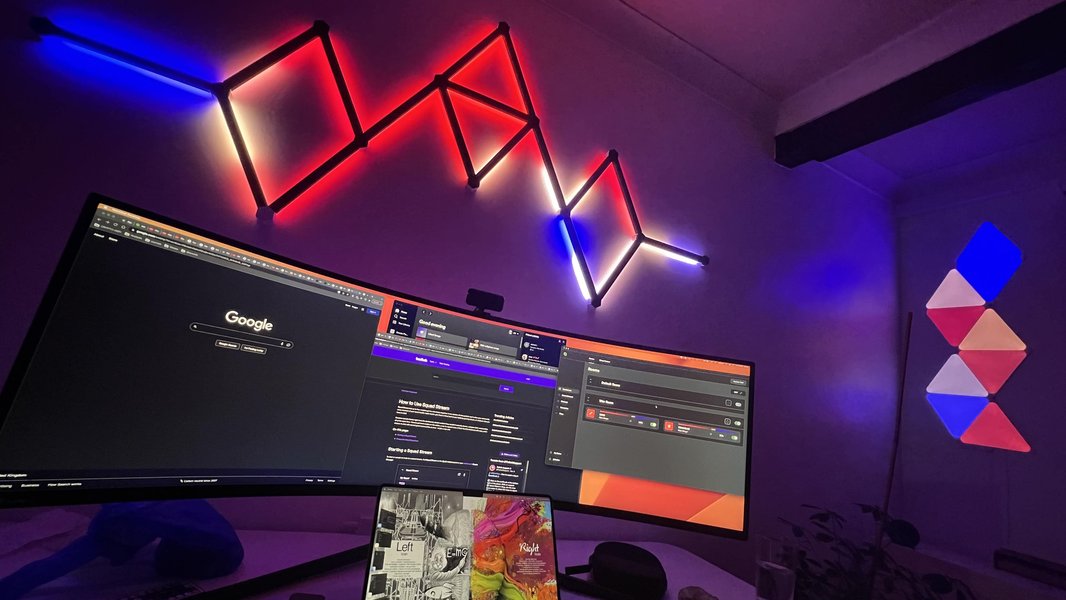
A well-organized trading station is crucial for efficient execution and analysis.
Core Strategies: The Engine of Consistency
Mastering High-Probability Setups
We won't try to master dozens of strategies. Instead, we focus on executing 2-3 core strategies exceptionally well, adapting them to the chosen asset and current market conditions. Our primary focus will be on Momentum and Scalping.
Strategy 1: Momentum Trading (Capturing Strong Moves)
- Concept: Identify assets showing strong directional movement (up or down) confirmed by increasing volume and ride that momentum for a short period.
- Timeframes: 5-minute and 15-minute charts for trend identification and entry signals. 1-minute chart for fine-tuning entries/exits.
- Indicators:
- Moving Averages (e.g., 9 EMA, 21 EMA Crossover): Signal potential trend shifts.
- Volume Weighted Average Price (VWAP): Key intraday level; trading above VWAP suggests bullish bias, below suggests bearish.
- MACD (Moving Average Convergence Divergence): Gauge momentum strength and direction.
- Volume Bars/Profile: Confirm the strength behind price moves.
- Entry Signal: Enter long when price breaks above a key resistance level or starts trending above VWAP/moving averages with increasing volume and confirming MACD signal. Enter short when price breaks below support or trends below VWAP/moving averages with volume confirmation.
- Exit Signal: Take profit at pre-defined target (e.g., next resistance/support level, achieving 1.5-2R). Exit via stop-loss if triggered. Consider trailing stop-loss once the trade is significantly in profit. Exit if momentum indicators (MACD, volume) weaken.
- Best Assets: ES, NQ, BTC, ETH, liquid large-cap stocks (AAPL, TSLA).
Strategy 2: Scalping (Accumulating Small Wins)
- Concept: Make numerous small trades throughout the day, aiming to profit from very small price fluctuations. Requires speed, focus, and low transaction costs.
- Timeframes: 1-minute and 5-minute charts. Tick charts or Renko charts can also be used.
- Indicators:
- Level II / Order Book: Gauge buying/selling pressure in real-time.
- Time & Sales (Tape Reading): Watch the flow of executed orders.
- Short-term Moving Averages (e.g., 5 EMA, 8 EMA).
- RSI (Relative Strength Index - e.g., RSI(2) or RSI(14)) for overbought/oversold indications in range-bound conditions.
- Entry Signal: Enter based on quick breakouts of micro-levels, order flow imbalances seen on Level II, or quick pullbacks to a short-term MA. Requires very quick decision-making.
- Exit Signal: Take profit after a small, pre-defined gain (e.g., 2-4 ticks on ES, a few cents on a stock, 0.1-0.2% on BTC). Stop-loss is extremely tight (e.g., 1-2 ticks below entry on ES). Trades typically last seconds to a few minutes.
- Best Assets: ES, NQ (due to liquidity and low spreads), highly liquid cryptocurrencies (BTC, ETH).
Strategy 3: Opening Range Breakout (ORB) / Fade (Capitalizing on Initial Volatility)
- Concept: Trade the breakout of the price range established in the first few minutes (e.g., 5, 15, or 30 minutes) after the market opens, or fade (trade against) the initial move if it lacks conviction.
- Timeframes: 1-minute and 5-minute charts for the opening range.
- Indicators: Volume is critical. Pre-market high/low levels.
- Entry Signal: Buy if price breaks decisively above the opening range high with strong volume. Short if price breaks decisively below the opening range low with strong volume. Alternatively, fade the breakout if it occurs on low volume or immediately reverses.
- Exit Signal: Profit target based on ATR (Average True Range) or key levels. Tight stop-loss just inside the broken range.
- Best Assets: Stocks, ETFs, Index Futures (ES, NQ).
Strategy Comparison Radar Chart
This chart provides a visual comparison of the primary asset classes we'll consider, based on key characteristics relevant to our day trading strategy. Understanding these nuances helps in selecting the right asset for the right market condition and strategy.
The Daily Battle Plan: A Structured Routine
Executing with Discipline, Day In, Day Out
Consistency comes from routine. Here’s how we’d structure our trading day:
Pre-Market Prep (Approx. 7:30 AM - 9:00 AM ET)
- Global Market Review: Check overnight price action in Asian and European markets. Scan major financial news headlines (Bloomberg, Reuters, financial news sites).
- Economic Calendar Check: Note any significant economic releases scheduled for the day (e.g., Fed announcements, employment data) and plan to be cautious or flat around those times.
- Asset Watchlist Scan: Run scanners (TradingView, Finviz, Benzinga Pro) to identify potential candidates for the day based on pre-market volume, news catalysts, or significant gaps.
- Chart Analysis: Mark key support/resistance levels, previous day's high/low/close, VWAP, and pivot points on the charts of our primary watchlist assets (ES, NQ, BTC, key stocks).
- Develop Trading Plan: Formulate specific trade ideas ("If ES breaks above X level with volume, go long with stop at Y"). Define entry, exit, and stop-loss levels *before* the market opens.
Market Open & Morning Session (9:30 AM - 11:30 AM ET)
- Observe Initial Volatility: The first 30-60 minutes are often the most volatile. Avoid jumping in impulsively.
- Execute Opening Range Plays: If a high-probability ORB setup emerges on ES, NQ, or a key stock, execute according to the plan.
- Look for Momentum Trades: As initial volatility settles, identify assets establishing clear intraday trends. Use momentum strategy criteria to find entries.
- Focus and Execute: Concentrate on 1-2 high-quality setups rather than trying to trade everything. Execute trades decisively based on pre-defined rules. Manage open positions actively (adjust stops if appropriate, take partial profits).
Midday Session (11:30 AM - 2:30 PM ET)
- Reduced Volatility Period: Often characterized by choppier price action (the "lunchtime doldrums"). Risk should generally be reduced.
- Scalping Opportunities: This period can be suitable for scalping highly liquid instruments like ES or BTC if clear short-term patterns emerge.
- Review Morning Trades: Briefly assess performance from the morning session. Avoid revenge trading if down.
- Monitor Crypto Markets: Crypto volatility can pick up independently of traditional market hours. Keep an eye on BTC/ETH for setups.
Late Afternoon & Close (2:30 PM - 4:00 PM ET)
- Potential Increase in Volatility: Activity sometimes picks up again as the market heads towards the close.
- Position Management: Focus on managing existing positions. Avoid entering new trades late in the day unless it's a very clear, quick setup. Aim to be flat (no open positions) by the market close for stocks/futures to adhere to the day trading principle. Crypto positions can be held longer but require overnight risk assessment.
- Flatten Positions: Close out remaining day trades before the 4:00 PM ET equity market close.
Post-Market Review & Journaling (After 4:00 PM ET)
- Log Every Trade: Record details for each trade (asset, entry price/time, exit price/time, stop-loss, profit/loss, strategy used, reason for entry/exit). Use a spreadsheet or dedicated trading journal software.
- Analyze Performance: Calculate daily P&L. Review winning and losing trades objectively. What worked? What didn't? Did I follow my rules? Where can I improve?
- Prepare for Tomorrow: Note any lessons learned. Briefly scan headlines for potential impact on the next trading day. Disconnect and recharge.
Visualizing the Trading Ecosystem
Connecting the Core Concepts
This mindmap illustrates how the different components of our trading approach interconnect, starting from the foundational capital and risk management principles, through asset and strategy selection, to execution and continuous improvement via review.
($100k)"] id1a["CORE PRINCIPLE:
Capital Preservation"] id1a1["Rule 1: 0.5% - 1% Risk Per Trade"] id1a2["Rule 2: Daily Loss Limit (2-3%)"] id1a3["Rule 3: Position Sizing"] id1a4["Rule 4: R:R Ratio >= 1.5:1"] id2["Asset Selection
(Liquidity & Volatility)"] id2a["Cryptocurrencies
(BTC, ETH, SOL)"] id2b["Index Futures
(ES, NQ)"] id2c["Large-Cap Stocks/ETFs
(AAPL, SPY)"] id2d["Commodities
(Gold)"] id3["Core Strategies
(High Probability)"] id3a["Momentum Trading
(5/15m Charts, MAs, VWAP, Vol)"] id3b["Scalping
(1/5m Charts, L2, Tape, Tight Stops)"] id3c["Opening Range
(Breakout/Fade)"] id4["Platforms & Tools
(Reliability & Speed)"] id4a["Brokers
(IBKR, TOS, NinjaTrader)"] id4b["Crypto Exchanges
(Binance, Coinbase)"] id4c["Charting
(TradingView)"] id4d["News/Scanners
(Benzinga, TV)"] id5["Daily Execution Cycle"] id5a["Pre-Market Prep"] id5b["Morning Session (High Vol)"] id5c["Midday Session (Lower Vol)"] id5d["Afternoon/Close"] id5e["Post-Market Review
& Journaling"] id6["Target Outcome"] id6a["$500 - $1500+ Avg Daily Profit"] id6b["70-80% Profitable Days"] id6c["Consistent Growth"] id6d["Long-Term Sustainability"] id7["Mentorship Process"] id7a["Demo Trading First"] id7b["Live Trading (Small Size)"] id7c["Daily Trade Reviews"] id7d["Psychological Coaching"] id7e["Gradual Scaling"]
Strategy Summary Table
This table provides a quick reference for the core parameters of our primary trading strategies.
| Strategy | Typical Timeframe | Key Indicators | Entry Signal Example | Exit Signal Example | Typical Risk/Reward | Best Assets |
|---|---|---|---|---|---|---|
| Momentum Trading | 5min / 15min (Entry), 1min (Refine) | Moving Averages (e.g., 9/21 EMA), VWAP, MACD, Volume | Price breaks above 21 EMA & VWAP on increasing volume, MACD bullish crossover. | Reach profit target (e.g., 2R), price reversal below key MA, weakening volume/MACD divergence. | 1:1.5 to 1:3+ | ES, NQ, BTC, ETH, Liquid Stocks |
| Scalping | 1min / 5min / Tick Chart | Level II, Time & Sales, Short MAs (e.g., 5/8 EMA), RSI (Range) | Quick break of micro-level, large bid/ask absorbed on L2, pullback to 5 EMA in strong trend. | Small fixed profit target (e.g., 2-4 ticks ES), immediate tight stop-loss hit. | 1:1 to 1:1.5 | ES, NQ, BTC, ETH |
| Opening Range Breakout (ORB) | 5min / 15min (Range), 1min (Entry) | Opening Range High/Low, Volume, Pre-Market Levels | Price closes above 15min opening range high on high volume. | Reach profit target (e.g., ATR-based), price fails breakout and re-enters range. | 1:1.5 to 1:2.5 | ES, NQ, Liquid Stocks/ETFs |
Relevant Insights from Trading Experts
Mastering the Craft: A Simple Daily Strategy
Many successful traders emphasize simplicity and routine. This video discusses a straightforward daily process focusing on trend following, taking multiple trades, and managing risk – concepts that align closely with our momentum and scalping approach aimed at achieving daily profits consistently.
The video highlights building a daily trading process around identifying the market trend and executing trades based on that bias. It reinforces the idea of taking multiple small opportunities throughout the day, combined with rigorous risk management, which is essential for reaching the 70-80% profitable days target. Key takeaways often include pre-defining entry/exit points, respecting stop-losses religiously, and focusing on consistent execution over hitting home runs – all central pillars of the strategy I'm outlining for you.
Mentorship in Action: The Hands-On Path
From Theory to Live Execution
My mentorship approach is intensely practical:
- Foundation & Simulation (Week 1-2): We start in a demo/paper trading account using the exact platforms (e.g., ThinkorSwim, TradingView linked to IBKR Paper Trader, Binance Demo). Focus is entirely on understanding risk rules, platform mechanics, and executing the core strategies without real money pressure. I'll share my screen, talk through my analysis and trade execution in real-time based on current market conditions. You'll replicate these trades.
- Live Trading - Small Size (Week 3 onwards): Once you demonstrate consistent execution and rule adherence in demo, we move to live trading, but with significantly reduced position sizes. Risk might be capped at 0.1% ($100) per trade initially. The goal isn't profit yet, but managing real emotions and execution with real capital.
- Daily Trade Review & Feedback: Each day, we review every trade taken (yours and mine if trading alongside). We analyze entries, exits, risk management, and adherence to the plan using our trade journals. This feedback loop is critical for identifying mistakes and reinforcing good habits.
- Psychological Coaching: We openly discuss the emotional challenges – fear, greed, impatience, FOMO. I'll provide techniques for maintaining discipline, managing stress, and building a resilient trading mindset.
- Gradual Scaling: As you demonstrate consistent profitability (hitting the 70-80% profitable day target, even with small size) and adherence to risk rules over several weeks/months, we gradually increase position size towards the target 0.5%-1% risk per trade.
This step-by-step process ensures you build the necessary skills and psychological fortitude before risking significant capital, maximizing the chances of replicating consistent success.
Frequently Asked Questions (FAQ)
Is the $500-$1500 daily profit target realistic with $100k capital?
Yes, it is realistic, but challenging and requires strict adherence to the plan. A $500 profit represents a 0.5% return on $100k, and $1500 is 1.5%. Achieving this consistently 70-80% of the time requires mastering the strategies, excellent risk management, and capitalizing on opportunities effectively. It's not guaranteed daily income; there will be losing days, and the focus remains on the *average* performance over weeks and months while preserving capital.
What if I hit my daily loss limit? What happens next?
If you hit the pre-defined daily loss limit (e.g., $2,000 or 2% of capital), you immediately stop trading for the day. Close all open positions. This is a hard rule to prevent significant drawdowns caused by emotional trading or unfavorable market conditions. You then use the rest of the day to review the losing trades, analyze what went wrong (market conditions, execution errors, rule violations?), and prepare mentally for the next trading day without trying to "win back" the losses immediately.
How long does it take to become consistently profitable with this approach?
There's no fixed timeline, as it depends heavily on the individual's learning speed, discipline, market conditions, and dedication. Some traders might achieve consistency within 6 months, while others might take a year or longer. The mentorship focuses on accelerating this process by providing a proven framework, hands-on guidance, and immediate feedback, but consistent profitability requires mastering execution, risk management, and emotional control through practice and experience.
Why focus on only 2-3 strategies? Aren't more strategies better?
Mastery trumps variety in day trading. It's far more effective to become an expert at executing a few high-probability strategies under specific market conditions than to be mediocre at many. Focusing allows for deep understanding, quicker recognition of optimal setups, and refinement of execution. This leads to higher consistency and confidence compared to constantly switching between strategies you haven't fully mastered.
Can I really close over 70% of trades within 24 hours using these strategies?
Yes, the strategies outlined (Scalping, Momentum Trading, Opening Range plays) are inherently short-term. Scalps last minutes, momentum trades typically aim for intraday moves lasting minutes to a few hours, and opening range plays resolve relatively quickly. By design, these approaches ensure positions are not held overnight for stocks/futures, fitting the "close within 24 hours" requirement. For crypto, while positions *can* be held longer, the day trading focus means most trades initiated will target profits within the same day or trading session.
Recommended Further Exploration
- Explore advanced techniques for momentum trading using VWAP and MACD specifically for index futures like ES and NQ.
- Learn how to master scalping techniques on 1-minute charts for BTC and ETH incorporating order flow analysis.
- Understand the critical role of trading psychology in managing emotions and maintaining discipline during live trading.
- Compare the leading day trading platforms like Interactive Brokers, ThinkorSwim, and NinjaTrader for active traders in 2025.
References
Last updated May 4, 2025