
Unveiling the D.C. Circuit's Stance: How Notices and Comments Shape Federal Rulemaking
A deep dive into key D.C. Circuit Court of Appeals cases defining the crucial elements of public participation in government regulations.
The United States Court of Appeals for the D.C. Circuit plays a pivotal role in administrative law, frequently scrutinizing how federal agencies develop and issue regulations. Central to this oversight are the requirements surrounding Notices of Proposed Rulemaking (NPRMs) and the public comment periods that follow. These elements, mandated by the Administrative Procedure Act (APA), are designed to ensure transparency, public participation, and accountability in the rulemaking process. The D.C. Circuit's jurisprudence has consistently emphasized the importance of agencies providing clear, detailed NPRMs and fair opportunities for public input.
Essential Insights: Key Takeaways
- The Administrative Procedure Act (APA) is Paramount: The D.C. Circuit rigorously enforces APA requirements, ensuring agencies provide adequate notice of proposed rules and meaningful opportunities for public comment.
- Clarity in Notices is Non-Negotiable: Notices of Proposed Rulemaking must clearly articulate the proposed rule's terms or substance, the subjects and issues involved, and the agency's rationale to allow for informed public feedback.
- Fairness in Comment Periods is Crucial: Agencies must allow reasonable time for comments and may need to re-notice or reopen comment periods if significant changes are made to a proposed rule post-initial comment.
The Bedrock of Public Participation: Notice of Proposed Rulemaking (NPRM)
An NPRM is the formal announcement by a federal agency of its intent to issue a new regulation or modify an existing one. The D.C. Circuit has consistently held that the content of an NPRM is critical for ensuring that the public has a meaningful opportunity to participate in the rulemaking process. Vague or insufficient notices can lead to a rule being invalidated.
Core Content Requirements for NPRMs
Based on D.C. Circuit interpretations of the APA, an adequate NPRM generally must include:
- The Terms or Substance of the Proposed Rule: This means either the actual text of the proposed rule or a clear summary of its provisions.
- A Description of the Subjects and Issues Involved: The notice must identify the key policy choices, factual assumptions, and methodologies the agency is considering. It should lay out the problems the agency is trying to address and how the proposed rule aims to solve them.
- Reference to Legal Authority: The NPRM should cite the statutory authority under which the rule is being proposed.
- Sufficient Detail for Meaningful Comment: The overarching principle is that the notice must provide enough information to allow interested parties to understand the agency's proposal and to formulate intelligent, relevant comments. This includes disclosing critical data or studies upon which the agency relies.
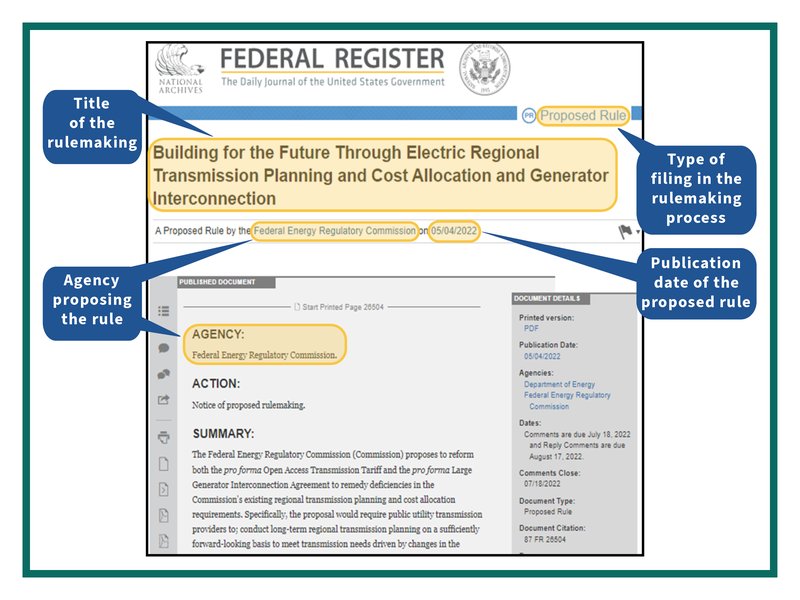
A visual guide illustrating the typical stages of the federal rulemaking process, emphasizing the notice and comment phases.
The "Logical Outgrowth" Test
A significant aspect of notice adequacy reviewed by the D.C. Circuit is whether the final rule is a "logical outgrowth" of the proposed rule. If a final rule differs too substantially from what was proposed in the NPRM, or if it addresses issues not reasonably foreseeable from the notice, the court may find that the public was not adequately notified. In such cases, a new round of notice and comment might be required.
The Voice of the Public: Rulemaking Comment Periods
Once an NPRM is published, the APA requires agencies to provide interested persons an opportunity to participate in the rulemaking through submission of written data, views, or arguments. The D.C. Circuit pays close attention to the fairness and adequacy of these comment periods.
Key Considerations for Comment Periods
- Reasonable Duration: While the APA does not prescribe a specific length, comment periods typically range from 30 to 60 days, or longer for complex rules. The D.C. Circuit assesses whether the allotted time was sufficient for the public to analyze the proposal and prepare meaningful responses.
- Agency's Duty to Consider Comments: Agencies are not merely passive recipients; they have an obligation to consider all relevant comments submitted. While they don't have to agree with every comment, their final rule and its preamble should reflect consideration of significant issues raised.
- Substantive Changes and Re-Noticing: If an agency makes significant changes to a proposed rule based on comments received, or for other reasons, and these changes were not foreshadowed in the original NPRM (i.e., not a logical outgrowth), the D.C. Circuit often requires the agency to issue a new or supplemental NPRM and provide an additional comment period. This ensures that the public has a chance to comment on the rule as it is likely to be finalized.
- Procedural Fairness: The overall process must be fair. This includes ensuring that all relevant materials are available to the public and that the agency does not rely on "secret data" or ex parte communications that are not part of the public record.
Landmark Cases and D.C. Circuit Scrutiny
Several cases heard by the D.C. Circuit illustrate its approach to NPRM content and comment period requirements. These decisions provide valuable guidance to federal agencies and the regulated community.
Spotlight on Influential Decisions
The D.C. Circuit's jurisprudence in this area is extensive. Below is a table summarizing key themes from illustrative cases where the court has addressed the adequacy of agency rulemaking procedures, including notice and comment aspects.
| Case Theme/Context | Agency Involved (Example) | Key Issue(s) Related to NPRM/Comments | D.C. Circuit's General Stance/Typical Outcome |
|---|---|---|---|
| Pipeline Safety Rules | Pipeline and Hazardous Materials Safety Administration (PHMSA) | Adequacy of NPRM, handling of substantive changes made during or after the comment period without re-noticing. For instance, in Interstate Natural Gas Association of America v. PHMSA (2024), scrutiny was applied to whether changes were properly handled. | The court often vacates rules if the notice was insufficient or if significant changes were made without a new opportunity for comment, emphasizing procedural fairness. |
| Environmental Regulations (NEPA) | Council on Environmental Quality (CEQ) | Statutory authority to issue binding regulations, adequacy of notice content regarding the scope and impact of proposed rules under NEPA. | The court has questioned agencies' authority if not clearly granted by statute and has vacated rules where notices lacked clarity on the rule's substance or impact, necessitating more detailed future notices. |
| Labor Relations Rules | National Labor Relations Board (NLRB) | Agency attempts to use "procedural" exceptions to bypass full notice-and-comment; sufficiency of detail in NPRM regarding substantive effects of rules. | The court closely examines claims of procedural exceptions, often requiring full notice-and-comment if a rule has substantive impacts. Notices must provide clear descriptions of proposed changes. |
| Direct Final Rulemaking | Various Agencies | Adherence to APA notice requirements even in expedited rulemaking processes intended for noncontroversial rules. | The court has emphasized that even "direct final rules" must have comprehensive notices. If a rule proves controversial, the direct final process is often deemed insufficient, and full notice-and-comment is required. |
These examples underscore the D.C. Circuit's commitment to upholding the APA's procedural safeguards. The court's decisions consistently reinforce that agencies must be thorough and transparent when proposing new rules, ensuring that the public's right to participate is protected.
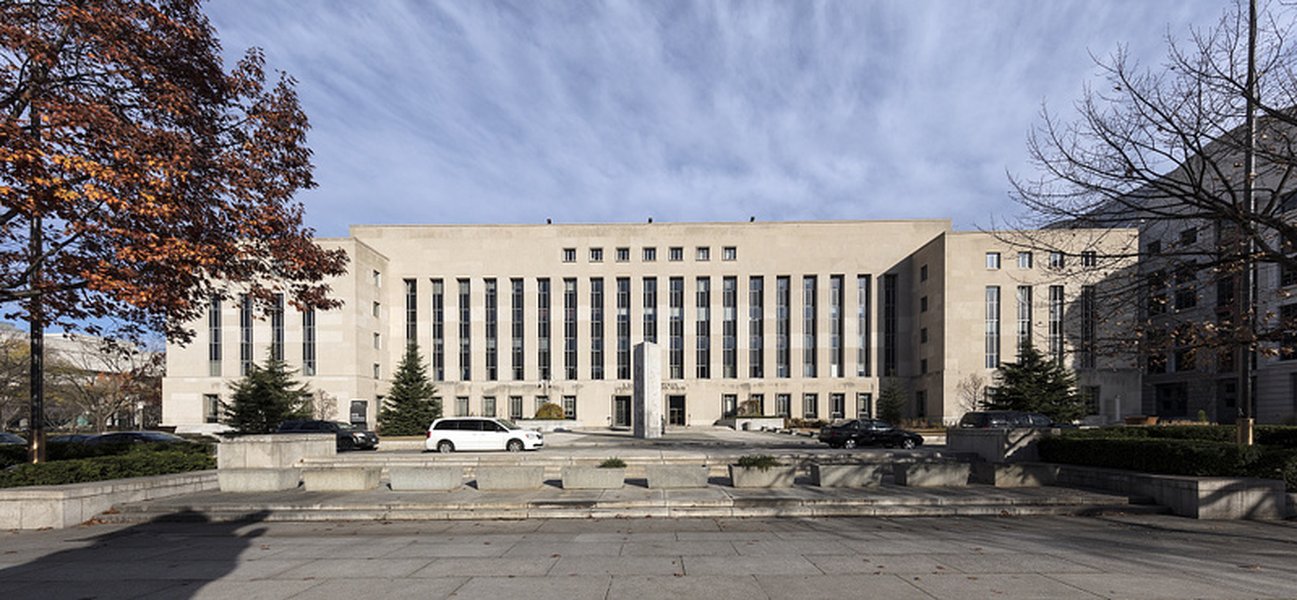
The E. Barrett Prettyman United States Courthouse, where the D.C. Circuit Court of Appeals hears many significant administrative law cases.
Visualizing Key Factors in D.C. Circuit Review
The D.C. Circuit's review of agency rulemaking often hinges on several critical factors related to notice and comment. The radar chart below provides a conceptual illustration of these factors, comparing an idealized APA-compliant process against common pitfalls that agencies might encounter, leading to judicial challenge.
This chart conceptualizes how different aspects of the rulemaking process are evaluated. "Ideal APA Compliance" represents a high standard across all factors. The "Common Agency Pitfall" datasets illustrate scenarios where deficiencies in one or more areas (e.g., lack of clarity in the notice, insufficient time for comments) could lead to a rule being challenged and potentially overturned by the D.C. Circuit.
Mapping the Rulemaking Landscape
The federal rulemaking process, particularly as overseen by the D.C. Circuit, involves several interconnected components. The mindmap below illustrates the key elements of APA rulemaking, focusing on the lifecycle from the initial notice to judicial review, highlighting the critical junctures where NPRM content and comment period management are assessed.
This mindmap provides a structured overview, showing how the initial NPRM sets the stage for the comment period, and how failures in these early stages can lead to challenges and specific actions during judicial review by the D.C. Circuit. The court's emphasis on transparency, participation, and accountability underpins its entire approach to administrative rulemaking.
Frequently Asked Questions (FAQ)
What is the Administrative Procedure Act (APA)?
The Administrative Procedure Act (APA), enacted in 1946, is a U.S. federal statute that governs the way administrative agencies of the federal government may propose and establish regulations. It mandates procedures for rulemaking and adjudication, including requirements for public notice and comment, to ensure fairness and transparency.
Why is the D.C. Circuit Court of Appeals so influential in administrative law?
The D.C. Circuit has jurisdiction over many cases involving federal agency actions because many agency headquarters are located in Washington D.C., and many statutes specify the D.C. Circuit for judicial review. As a result, it has developed significant expertise and a substantial body of case law on administrative law issues, making its rulings highly influential nationwide.
What happens if an agency doesn't provide adequate notice in its NPRM?
If a court, such as the D.C. Circuit, finds that an agency's Notice of Proposed Rulemaking was inadequate (e.g., too vague, or the final rule was not a "logical outgrowth" of the proposal), it can invalidate the final rule. The agency might then have to restart the rulemaking process with a new, compliant NPRM and comment period, or the court might remand the rule to the agency for further proceedings.
Can an agency change a proposed rule after the comment period closes?
Yes, agencies can, and often do, modify proposed rules in response to public comments. However, if the changes are significant and were not reasonably foreseeable from the original NPRM (i.e., they are not a "logical outgrowth"), the agency typically must provide a new notice and an additional opportunity for public comment on the revised proposal to comply with APA requirements as interpreted by courts like the D.C. Circuit.
Recommended Further Exploration
To delve deeper into the nuances of administrative rulemaking and the D.C. Circuit's role, consider exploring these related queries:
- What is the 'logical outgrowth' doctrine in administrative law and how has the D.C. Circuit applied it?
- How does the D.C. Circuit review agency decisions under the 'arbitrary and capricious' standard of the APA?
- What are the key differences between formal and informal rulemaking under the Administrative Procedure Act?
- Explore significant D.C. Circuit cases that defined an agency's duty to respond to public comments during rulemaking.
References
The information presented is synthesized from analyses of D.C. Circuit case law and administrative procedure. For further reading on specific cases and interpretations, the following resources, referenced in the source materials, may be useful:
 media.cadc.uscourts.gov
Last updated May 9, 2025