
Unlocking Precision: A Deep Dive into the DC Linear Hybrid Stepper Motor Market Dynamics
Exploring global trends, regional powerhouses, and application-driven growth in the world of precise linear motion.
Key Market Insights at a Glance
- Robust Growth Trajectory: The global market for hybrid linear stepper motors is experiencing significant expansion, with projections indicating a rise from approximately USD 1.2 billion in recent years (2022-2024) to an estimated USD 2.0 - 2.5 billion by 2030-2033, driven by a strong Compound Annual Growth Rate (CAGR) generally ranging between 7.8% and 9.0%.
- Asia-Pacific Leads the Charge: The Asia-Pacific region stands as the dominant force, accounting for roughly 40% of the broader DC stepper motor market revenue, and is the fastest-growing market, fueled by extensive industrial automation and a booming robotics sector, particularly in China, Japan, India, and South Korea.
- Application-Driven Demand: Industrial automation and robotics represent the largest application segment, consuming a significant portion of market volume (potentially over 40%), followed by critical sectors like semiconductor manufacturing, medical equipment, and packaging machinery, all requiring high-precision linear motion.
Understanding the DC Linear Hybrid Stepper Motor Landscape
DC linear hybrid stepper motors represent a specialized and increasingly vital segment within the broader motion control industry. These motors ingeniously combine the robust torque and precision characteristics of hybrid stepper motor technology (merging features of permanent magnet and variable reluctance motors) with direct linear motion capabilities, all powered by a DC supply. This eliminates the need for traditional mechanical conversion systems like lead screws or belts for linear movement in some integrated designs, or works in conjunction with them in linear actuator forms, offering enhanced accuracy, greater efficiency, and improved reliability for a multitude of applications.
The demand for these motors is intrinsically linked to the global push towards greater automation and the escalating need for precise positioning in various industrial and technological processes. As industries evolve, the requirement for components that can deliver high performance, repeatability, and durability becomes paramount, positioning DC linear hybrid stepper motors as a key enabling technology.
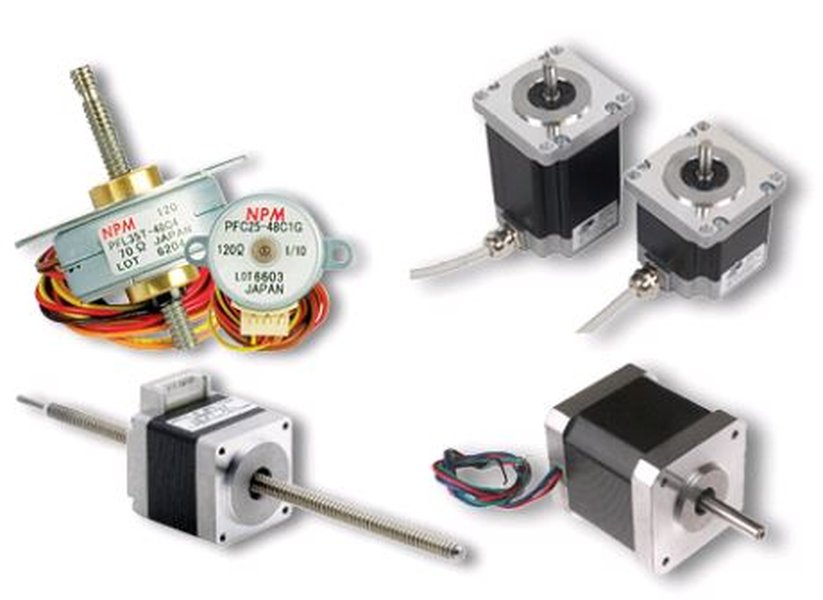
Assortment of stepper motors, illustrating the technology's diverse forms.
Global Market Dynamics: Size, Growth, and Projections
The market for solutions involving hybrid stepper technology with linear motion capabilities is demonstrating robust growth. While specific figures for "DC linear hybrid stepper motors" as a standalone category are often intertwined with broader "hybrid stepper motors" or "hybrid linear stepper actuators," the trend is unequivocally positive. The global hybrid stepper motors market was valued around USD 1.2 to 1.25 billion in 2024, projected to reach approximately USD 1.7 to 1.94 billion by 2031-2033, with a CAGR of about 5%. More specifically, the hybrid linear stepper motors segment and hybrid stepper motor linear actuators show even more vigorous growth.
Market Valuation and Forecast Summary
The table below provides a consolidated view of market valuations and growth projections for closely related market segments, highlighting the strong upward trajectory. These figures underscore the increasing adoption of hybrid stepper technology in linear motion applications.
| Market Segment | Base Year Value (Approx.) | Projected Value (Approx.) | Forecast Period | CAGR (Approx.) |
|---|---|---|---|---|
| Hybrid Stepper Motors (Overall) | USD 1.2 - 1.25 Billion (2024) | USD 1.7 - 1.94 Billion | by 2031-2033 | ~5% |
| Hybrid Linear Stepper Motors | USD 1.2 Billion (2022/2024) | USD 2.0 - 2.5 Billion | by 2030-2033 | 7.8% - 9.0% |
| Hybrid Stepper Motor Linear Actuators | USD 1.2 Billion (2022/2024) | USD 2.3 - 2.5 Billion | by 2030-2033 | 8.5% - 9.1% |
This growth is primarily fueled by the expanding needs of industrial automation, advancements in robotics, and the continuous demand for precision in manufacturing and medical devices.
Regional Market Breakdown
The global demand for DC linear hybrid stepper motors and related actuators is geographically diverse, with certain regions leading due to their industrial maturity and technological adoption rates. The revenue distribution for the broader DC stepper motor market, which serves as a strong indicator, highlights the following regional dynamics:
Asia-Pacific: The Dominant Growth Engine
Accounting for approximately 40% of the market revenue for DC stepper motors in 2023, Asia-Pacific is not only the largest market but also the fastest-growing. This dominance is propelled by:
- Massive industrial automation initiatives, particularly in manufacturing hubs like China, Japan, India, and South Korea.
- A burgeoning robotics industry serving both domestic and international markets.
- Rapid expansion in the semiconductor and electronics manufacturing sectors, which heavily rely on precise linear motion.
North America: Hub of Advanced Manufacturing and Innovation
North America, primarily the USA and Canada, contributes around 22% of the market revenue. Key drivers include:
- Advanced manufacturing industries, including automotive, aerospace, and defense automation.
- A strong medical equipment sector that demands high-precision components.
- The presence of key motor manufacturers and high adoption rates in sophisticated robotics applications.
Europe: Strong Industrial Automation Focus
Europe holds a significant market share, representing about 25% of total revenue. Growth in this region is supported by:
- Widespread automation in automotive manufacturing, a cornerstone of the European economy.
- Strong aerospace and medical technology sectors.
- Governmental and industry initiatives promoting Industry 4.0 and smart manufacturing.
Emerging Markets: Latin America and MEA
Latin America and the Middle East & Africa (MEA) account for smaller shares, approximately 6% and 7% respectively. These regions are considered emerging markets with considerable growth potential driven by ongoing industrial modernization efforts and increasing investments in automation technology.
Comparative Regional Strengths in the Stepper Motor Market
The radar chart below offers a visual comparison of key regions based on factors influencing the DC linear hybrid stepper motor market. These are qualitative assessments reflecting general market perceptions and trends. "RoW" (Rest of World) encompasses Latin America, MEA, and other smaller markets. Scores are on a relative scale, with higher values indicating stronger positioning for that specific attribute.
This visualization highlights Asia-Pacific's strong market share and growth, North America's lead in technological adoption and R&D, and Europe's solid industrial automation focus.
Application Deep Dive: Where Demand Thrives
The versatility and precision of DC linear hybrid stepper motors make them indispensable in a variety of applications. While exact volume distribution can vary, revenue and demand are concentrated in sectors requiring precise, repeatable linear motion.
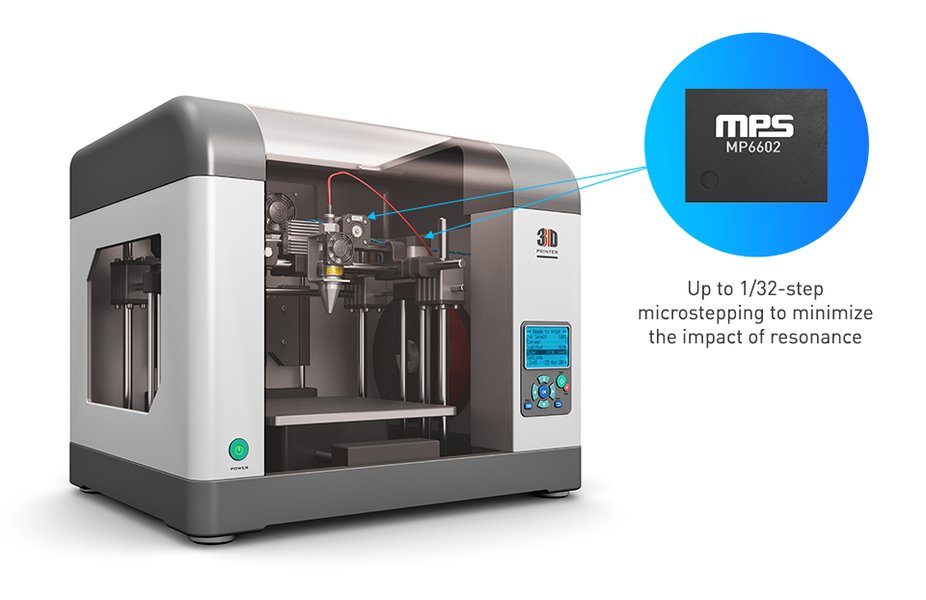
Stepper motors are integral to modern manufacturing and industrial equipment for precise control.
Industrial Automation and Robotics
This is unequivocally the largest application segment, estimated to account for over 40% of demand by volume. DC linear hybrid steppers are crucial in:
- CNC (Computer Numerical Control) machines: For precise tool positioning.
- Automated assembly lines: In pick-and-place systems, conveyors, and component handling.
- Robotic arms: Enabling accurate linear movements for various tasks.
- Packaging machinery: For exact dosing, positioning, labeling, and product handling (contributing 10-15% of total market volume).
Semiconductor Manufacturing
A rapidly growing and critical application, the semiconductor industry relies on ultra-precise linear motion for:
- Wafer handling and positioning: During fabrication and inspection.
- Photolithography equipment: Requiring sub-micron accuracy.
- Testing and probing systems.
Medical Equipment
While potentially smaller in sheer volume compared to industrial automation, the medical sector commands high value due to stringent precision, reliability, and safety requirements. Applications include:
- Diagnostic devices: Scanners, imagers, and sample analysis equipment.
- Surgical robots and tools: Requiring delicate and precise movements.
- Automated drug delivery systems and medical pumps.
- Ventilation equipment.
Automotive Sector
The automotive industry utilizes these motors in increasing automation within assembly lines and for various in-vehicle applications requiring precise control. This sector accounts for around 10-12% of the market and is growing due to:
- Automated manufacturing and testing equipment.
- Components within vehicles requiring precise linear actuation.
Other Niche and Emerging Applications
Beyond the major segments, DC linear hybrid stepper motors find use in:
- 3D Printing (Additive Manufacturing): For precise control of print heads and build platforms.
- Aerospace and Defense: In actuation systems and precision instrumentation.
- Telecommunication Equipment: For adjusting components.
- Office Equipment and Consumer Electronics: In printers, scanners, and other devices.
Key Market Trends and Influencers
Several overarching trends and driving forces are shaping the trajectory of the DC linear hybrid stepper motor market. These factors collectively contribute to its sustained growth and evolution. The mindmap below visualizes the interconnected elements influencing this dynamic market.
This mindmap illustrates how factors like the push for Industry 4.0, the necessity for greater precision in manufacturing, and regional economic strengths are propelling the DC linear hybrid stepper motor market forward. Customization to meet specific application needs and advancements in motor technology itself are also key trends enhancing their adoption.
Navigating Challenges and Seizing Opportunities
While the outlook for the DC linear hybrid stepper motor market is largely positive, it is not without its challenges. High initial development costs for specialized or highly customized motors can be a barrier for some applications. Additionally, competition from alternative motion control technologies, such as advanced servo motors in certain high-performance scenarios, remains a factor.
However, the opportunities far outweigh these challenges. The relentless global trend towards automation across virtually all manufacturing and many service sectors presents a vast and expanding field for application. As technologies like the Internet of Things (IoT) and Artificial Intelligence (AI) become more integrated into industrial processes, the demand for smart, efficient, and precise motors like DC linear hybrid steppers will only intensify. Continuous R&D efforts focusing on enhancing torque density, improving linear resolution, increasing energy efficiency, and extending the operational lifetime of these motors are key to capitalizing on these opportunities and maintaining a competitive edge.
Visualizing Stepper Motor Manufacturing
Understanding the manufacturing process can provide insights into the complexity and precision involved in creating stepper motors. The following video offers a glimpse into how these essential components are made, covering aspects relevant to various stepper motor types, including hybrid designs.
This factory tour showcases the intricate steps from raw materials to finished stepper motors, highlighting the quality control and engineering expertise required. Such processes are fundamental to producing the reliable hybrid linear stepper motors discussed in this analysis.
Frequently Asked Questions (FAQ)
What are the main advantages of hybrid stepper motors?
Hybrid stepper motors combine the best features of permanent magnet and variable reluctance stepper motors. Their key advantages include:
- High Torque at Low Speeds: They provide excellent torque, especially at lower operational speeds, which is beneficial for many positioning tasks.
- Good Holding Torque: They can hold a position firmly without power when detent torque is sufficient, or with minimal power.
- Higher Step Resolution: They typically offer finer step angles (e.g., 1.8 degrees or smaller) leading to more precise positioning.
- Improved Efficiency: Compared to some other motor types, they can be more energy-efficient for specific applications.
- Reduced Resonance: Hybrid designs often exhibit smoother operation and less resonance compared to variable reluctance motors.
Why is the Asia-Pacific region leading the DC linear hybrid stepper motor market?
The Asia-Pacific region's leadership stems from several factors:
- Manufacturing Hub: Countries like China, Japan, South Korea, and India are global manufacturing powerhouses with extensive industrial automation.
- Robotics Adoption: The region has a high adoption rate of industrial robots and is a leading producer of robotic systems.
- Electronics and Semiconductor Industry: A significant portion of global electronics and semiconductor manufacturing occurs in Asia-Pacific, creating massive demand for precision motion components.
- Government Support and Investment: Many governments in the region actively promote industrial modernization and technological advancement (e.g., "Made in China 2025").
- Growing Domestic Markets: Rising domestic consumption and infrastructure development also fuel demand for automated machinery.
What are common types of hybrid linear stepper actuators?
Hybrid stepper motor linear actuators are typically available in several configurations to suit different application needs:
- Captive Linear Actuators: In this design, the lead screw's rotary motion is converted into linear motion internally within the motor. The output shaft is typically a splined shaft that moves linearly but does not rotate. This design prevents the shaft from rotating, simplifying connection to the load.
- Non-Captive Linear Actuators: These actuators feature a lead screw that extends through the motor. The nut is integrated into the motor's rotor, and as the rotor turns, the lead screw moves axially. The screw must be supported externally to prevent rotation if linear motion is desired.
- External Linear Actuators (or Kerk-Style): The motor has a threaded rotor, and a lead screw is attached to the load. As the rotor turns, the lead screw (and thus the load) moves linearly. The motor itself provides the rotational force.
Recommended Further Exploration
- How do hybrid stepper motors compare to servo motors for high-precision linear applications?
- What specific impacts are Industry 4.0 and IoT having on the development and application of stepper motor technologies?
- What are the most promising future innovations and material advancements anticipated in DC linear hybrid stepper motor design?
- Which companies are leading the DC linear hybrid stepper motor market and what are their key growth strategies?
References
Last updated May 9, 2025