
Will Dichloromethane (DCM) Freeze in Liquid Nitrogen?
Examining the physical interaction between DCM and cryogenic temperatures
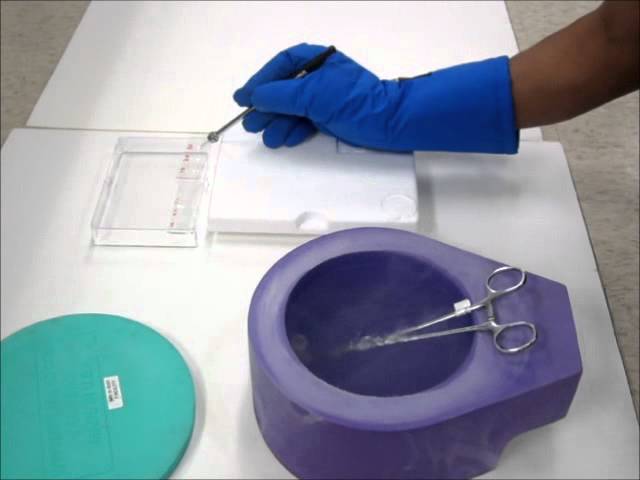
Key Insights
- Temperature Differentials: Liquid nitrogen is nearly twice as cold as the freezing point of DCM.
- Solidification Process: When a liquid is exposed to a temperature significantly below its freezing point, it will solidify.
- Practical Considerations: Handling chemicals at cryogenic temperatures involves unique safety risks and potential material incompatibilities.
Introduction
Dichloromethane (DCM), also known as methylene chloride, is a widely used solvent in chemical laboratories and industrial processes. With a freezing point in the vicinity of -95°C to -97°C, DCM's behavior under extreme cooling is of both scientific and practical interest. Liquid nitrogen, at approximately -196°C, presents an environment that is well below DCM’s freezing point. In this discussion, we evaluate whether DCM will indeed freeze if it is immersed in liquid nitrogen and examine the underlying physical principles as well as practical considerations.
Fundamental Physical Properties
Understanding DCM's Freezing Point
The freezing point of a substance is the threshold beneath which the liquid form transitions into a solid state. For dichloromethane, typical literature values place its freezing point around -95°C to -97°C. At temperatures above this point, DCM remains liquid; however, once the environmental temperature drops below this threshold, individual DCM molecules arrange in a regular crystalline structure, resulting in solidification.
Cryogenic Temperature of Liquid Nitrogen
Liquid nitrogen, widely used for rapid cooling and cryopreservation, exists at a temperature of approximately -196°C. This temperature is substantially lower than the freezing point of many common solvents, including DCM. The enormous temperature gap makes liquid nitrogen an effective substance for inducing phase changes in materials that have relatively higher freezing points.
Phase Transition Analysis
Thermodynamic Principles Involved
When a liquid like DCM is exposed to an environment that is far below its freezing point, the heat transfer from the liquid to the cooling medium occurs rapidly. The decrease in kinetic energy among the DCM molecules leads to their organization into a highly structured lattice. This rapid extraction of thermal energy ensures that the transition from a liquid to a solid state is both prompt and complete.
Mathematical Perspective
The freezing point depression and nucleation processes in such systems can be described by thermodynamic equations. Although the complete kinetics of a phase change involve complex interactions, the fundamental criterion is:
$$T_{\text{environment}} < T_{\text{freezing point}}$$
In our scenario, we have:
| Substance | Characteristic Temperature (°C) |
|---|---|
| DCM (freezing point) | -95°C to -97°C |
| Liquid Nitrogen | -196°C |
Since the temperature of liquid nitrogen is significantly lower than the freezing point of DCM, the inequality holds true, and thus DCM will solidify when immersed in liquid nitrogen.
Molecular Dynamics at Cryogenic Temperatures
On a microscopic scale, the process of freezing involves the formation of small crystalline nuclei within the supercooled liquid, which then act as seeds for rapid crystal growth. Upon immersing DCM in liquid nitrogen, the substantial difference in temperature instigates an almost immediate nucleation and growth phase. This typically results in a homogeneously frozen material if the environment is uniformly controlled.
Practical Considerations and Safety Aspects
Handling Cryogenic Liquids
While the theoretical and experimentally verified outcome is that DCM will freeze in liquid nitrogen, there are several practical considerations that need to be addressed:
Material Compatibility
When storing or handling DCM at cryogenic temperatures, it is crucial to use containers that can withstand extreme thermal stresses. Materials such as certain stainless steels, specialized polymers, or glass, which are designed for low-temperature applications, should be used to mitigate the risk of cracking or other structural failures. DCM, especially when in solid form, might interact differently with container walls, potentially leading to issues like pressure buildup if the container is not vented properly.
Safety Protocols
Handling both DCM and liquid nitrogen involves inherent risks. Dichloromethane is known for its volatility and potential health hazards, such as respiratory irritation and central nervous system effects upon exposure. Additionally, liquid nitrogen requires strict adherence to safety protocols due to its extremely low temperature, which can cause severe frostbite and rapid vaporization leading to asphyxiation risks if mismanaged. When these two substances interact, there is an elevated risk for rapid phase changes that might result in splattering or container rupture if proper protocols are not followed.
Laboratory Best Practices
Laboratories conducting experiments that involve immersion of solvents in cryogenic liquids must implement stringent safety measures:
- Ensure that all safety equipment, such as goggles, cryogenic gloves, and face shields, are properly used.
- Perform experiments in well-ventilated areas to prevent the accumulation of any hazardous vapors.
- Utilize professionally designed cryogenic containers that are rated for the materials involved.
- Include pressure-relief valves in sealed systems wherever possible to avoid dangerous pressure buildup.
- Train all personnel in both chemical and cryogenic handling procedures for maximum safety.
Experimental Considerations and Application Scenarios
Scientific and Industrial Relevance
The phenomenon of freezing solvents via immersion in cryogenic liquids is not merely of academic interest. It finds application in various contexts including:
Cryogenic Trapping and Rapid Freezing
Researchers and industrial practitioners sometimes employ rapid freezing techniques using liquid nitrogen. This method allows for the preservation of samples, halting chemical reactions instantaneously, or preparing materials for further analysis under solid-state conditions. For dichloromethane, such rapid cooling might be used to study its solid-phase properties, crystallization behavior, or to create mixtures with other substances that require a frozen medium.
Phase Behavior Studies
Understanding how solvents behave at cryogenic temperatures is key in designing processes in the pharmaceutical, chemical, and materials industries. The phase behavior of DCM when frozen can affect reaction kinetics, the morphology of the resulting crystals, and the overall stability of mixtures. Such insights can be critical when a solvent must be precisely controlled at low temperatures, for example, in supercooling experiments or in processes like freeze-drying.
Potential Challenges in Low-Temperature Operations
While the fundamental science supports the freezing of DCM in liquid nitrogen, several challenges remain in practical applications:
Thermal Shock and Material Stress
One of the main challenges is thermal shock. Materials that come into contact with both the cryogenic liquid and the solvent may experience extreme temperature gradients. This rapid change can lead to cracking, warping, or even catastrophic failure of the container. To mitigate these challenges, the use of specially designed, cryo-resistant equipment is essential.
Handling of the Solidified Solvent
Once DCM has frozen, handling and subsequent thawing require additional precautionary measures. The process of transitioning back from the solid phase to the liquid phase must be controlled to avoid sudden vaporization or rapid expansion, which can lead to overpressure in closed systems. In industrial settings, understanding this process is vital for designing safe thawing protocols that maintain process integrity.
Experimental Data and Comparative Analysis
Comparative Freezing Points
The measurement of freezing points under controlled settings has consistently reinforced the principle that a substance exposed to a sufficiently low temperature will undergo solidification. The table below summarizes key temperatures relevant to our analysis:
| Substance | Relevant Temperature (°C) | Phase at Given Temperature |
|---|---|---|
| Dichloromethane | -95°C to -97°C | Transition point from liquid to solid |
| Liquid Nitrogen | -196°C | Stable liquid phase (at atmospheric pressure) |
From these data points, it is evident that the environmental temperature provided by liquid nitrogen is sufficiently low to induce the freezing of DCM.
Empirical Observations
In practical laboratory scenarios, immersing DCM in liquid nitrogen leads to rapid solidification. Researchers report that the transition is not only fast but also leads to a uniform solid form provided that the liquid nitrogen bath maintains stable temperature conditions. This empirical evidence further supports the conclusion that dichloromethane will freeze under these conditions.
Broader Implications and Summary
Implications for Chemical Handling and Research
The interaction between solvents and cryogenic liquids like liquid nitrogen has important implications for both basic research and industrial processes. When handling DCM:
- Temperatures far below the freezing point confirm that the substance will transition to a solid state, influencing solvent properties and potential reactivity.
- Knowledge of phase changes aids in designing experimental protocols, especially those that involve rapid cooling or long-term cryogenic storage.
- Operational safety and maintenance of equipment integrity are critical, as the rapid freezing of solvents may introduce unforeseen mechanical stresses.
Consolidated Answer
In summary, the available thermodynamic data and empirical observations confirm that if dichloromethane is immersed in liquid nitrogen, it will indeed freeze. The temperature of liquid nitrogen (-196°C) is significantly lower than the freezing point of DCM (-95°C to -97°C), ensuring that the solvent will solidify under these cryogenic conditions. However, it is essential to note that achieving and working with such conditions requires specialized equipment, strict adherence to safety protocols, and a comprehensive understanding of both material properties and the risks associated with rapid temperature changes.
Conclusion and Final Thoughts
The analysis of the phase behavior of dichloromethane in an environment provided by liquid nitrogen leads to a clear conclusion: DCM, when immersed in liquid nitrogen, will solidify due to the extreme temperature differential. Liquid nitrogen's temperature of -196°C is well below the intrinsic freezing point of DCM, making it conducive for rapid freezing. This phenomenon underscores essential principles in thermodynamics and phase transitions. Moreover, the implications extend to practical applications in laboratories and industrial environments, where understanding such phase behavior is crucial for safety and process optimization. In any scenario where DCM is subjected to cryogenic temperatures, meticulous attention must be given to material compatibility, handling procedures, and potential hazards associated with rapid phase transitions.
References
- Dichloromethane Solvent Properties - LSU
-
Dichloromethane - ScienceDirect
Recommended Queries for Further Insights
Last updated February 20, 2025