
Breaking Free: The Ultimate Guide to Handling Toxic Friendships
Recognizing, addressing, and healing from friendships that drain rather than sustain you
Essential Insights for Handling Toxic Friendships
- Toxic friendships leave you consistently feeling worse after interactions, not better - recognizing this emotional pattern is the first step toward change
- Setting and maintaining clear boundaries is crucial - whether you choose to maintain or end the friendship
- Your mental health must be the priority - addressing toxic relationships is an act of self-care, not selfishness
Recognizing the Signs of a Toxic Friendship
Toxic friendships can be subtle or obvious in their harmful nature. Learning to identify the warning signs is the first crucial step in addressing the problem. Unlike healthy friendships that leave you feeling uplifted and supported, toxic relationships consistently drain your energy and undermine your well-being.
Common Red Flags to Watch For
Toxic friends often display specific patterns of behavior that signal an unhealthy relationship dynamic:
- They consistently monopolize conversations and make everything about themselves
- They become threatened by or dismissive of your successes and achievements
- They frequently criticize you or make subtle put-downs disguised as "jokes"
- They ignore your boundaries or become defensive when you try to establish them
- They attempt to isolate you from other friends or become jealous of your other relationships
- You feel drained, anxious, or stressed after spending time with them
- The friendship feels imbalanced - you give much more than you receive
- They consistently make you feel guilty for not meeting their expectations
Understanding these patterns can help you distinguish between normal friendship challenges and truly toxic dynamics that require intervention.
The Emotional Impact of Toxic Friendships
Toxic friendships can have profound effects on your mental and emotional health, including:
- Decreased self-esteem and confidence
- Chronic stress and anxiety
- Feelings of guilt, worthlessness, or inadequacy
- Energy depletion and emotional exhaustion
- Difficulty trusting others in relationships
Evaluating Your Friendship
Before taking action, it's important to thoughtfully evaluate the friendship to determine the best path forward. Not all challenging friendships are toxic, and some may be worth saving with the right approach.
Questions to Ask Yourself
- Is this a pattern of behavior or a temporary situation related to stress or life changes?
- Does this person show capacity for change and growth?
- Do you feel emotionally safe expressing your true feelings with this person?
- Does the friendship bring more joy than stress overall?
- Are there aspects of the friendship that are still valuable to you?
- Has the person been receptive to feedback in the past?
Using the Relationship Value Assessment
Consider creating a simple pros and cons list to objectively evaluate what this friendship brings to your life versus what it takes away. This can help clarify your thoughts and make a more informed decision about next steps.
This radar chart illustrates the key differences between healthy, toxic, and potentially repairable friendships across important relationship dimensions. Notice how toxic friendships score particularly low on boundaries, reciprocity, and trust - these are often the most telling indicators of a problematic relationship.
Strategies for Addressing Toxic Friendships
Once you've identified toxic patterns and evaluated the friendship, it's time to choose an approach that best suits your situation. There are several effective strategies to consider, depending on the severity of the toxicity and your desired outcome.
Setting Boundaries
Establishing clear boundaries is essential in any relationship, but particularly crucial when dealing with toxic dynamics:
- Be specific about behaviors that are unacceptable to you
- Use "I" statements to express how their actions affect you (e.g., "I feel hurt when you criticize my decisions")
- Clearly communicate your needs and expectations
- Be consistent in enforcing your boundaries
- Prepare for potential resistance or pushback
Direct Communication
If you value the friendship and believe it can improve, having an honest conversation may help:
- Choose a neutral, private setting for the conversation
- Focus on specific behaviors rather than making character judgments
- Express your feelings using "I" statements
- Listen to their perspective with an open mind
- Discuss possible solutions or changes that would improve the relationship
Gradually Reducing Contact
Sometimes a slow fade is the most comfortable approach:
- Gradually decrease the frequency of your interactions
- Take longer to respond to messages or calls
- Limit one-on-one time in favor of group settings
- Become less available for last-minute plans
- Focus energy on nurturing healthier relationships
Making a Clean Break
In some cases, a direct end to the friendship is necessary:
- Choose a method of communication that feels safe (in-person, phone, or written)
- Be clear but compassionate about your decision
- Focus on your needs rather than blaming them
- Keep the conversation brief and avoid getting drawn into arguments
- Consider blocking or unfollowing on social media if necessary
Comparison of Approaches
| Approach | Best For | Advantages | Challenges |
|---|---|---|---|
| Setting Boundaries | Friendships with specific problematic behaviors | Maintains relationship while protecting your well-being | Requires consistent enforcement; friend may resist |
| Direct Communication | Friends who may be unaware of their impact | Provides opportunity for growth and positive change | Can be emotionally difficult; friend may become defensive |
| Gradually Reducing Contact | Situations where confrontation feels unsafe | Avoids direct conflict; allows natural distance | Takes time; may lead to confusion or guilt |
| Clean Break | Severely toxic relationships causing significant harm | Creates immediate distance; provides clear closure | Can be emotionally intense; may face backlash |
Understanding Toxic Friendship Dynamics
This mindmap illustrates the complex patterns and characteristics of toxic friendships, helping you identify and understand these problematic relationships more clearly.
Expert Insights: Understanding Toxic Friendships
This video provides valuable insights into identifying toxic friendship patterns and implementing effective strategies to address them.
The video covers key indicators of toxic friendships and offers practical advice on how to recognize when a friendship has become harmful to your well-being. It also provides strategies for setting boundaries and making decisions about whether to maintain or end the relationship.
Visual Guide: Recognizing Toxic Friends

This image illustrates a common dynamic in toxic friendships - one person being dismissed or ignored while the other is distracted or disengaged. This type of behavior pattern, where one friend consistently devalues the other's presence or contributions, is a significant red flag in friendship dynamics.
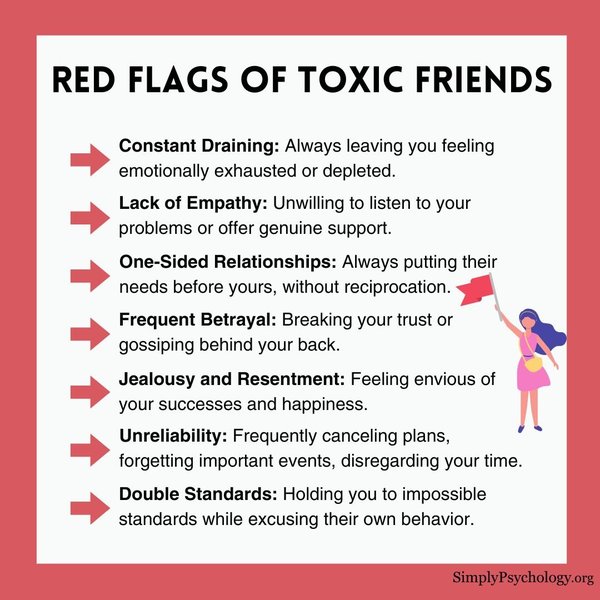
This graphic highlights key behaviors that indicate a friendship may have become toxic. Recognizing these patterns is essential for making informed decisions about how to proceed with the relationship.
Healing After a Toxic Friendship
Whether you've decided to set firm boundaries or end the friendship entirely, taking care of yourself during and after dealing with a toxic relationship is crucial.
Self-Care Strategies
- Practice self-compassion and remind yourself that you deserve healthy relationships
- Engage in activities that bring you joy and boost your confidence
- Reconnect with supportive friends and family members
- Consider journaling to process your feelings and experiences
- Establish routines that support your physical and mental health
- Give yourself permission to feel all emotions that arise, including grief or relief
Building Healthier Relationships
Use this experience as an opportunity to cultivate more positive connections:
- Reflect on what you've learned about your own boundaries and needs
- Identify the qualities you value most in friendships
- Practice recognizing early warning signs of toxic dynamics
- Nurture relationships with people who respect and support you
- Take time to build trust gradually in new friendships
When to Seek Professional Support
Sometimes, the impact of a toxic friendship goes deep enough to warrant professional help:
- If you're struggling with persistent feelings of guilt, anxiety, or depression
- When you find yourself repeating patterns of toxic relationships
- If you have difficulty establishing or maintaining boundaries
- When the end of the friendship has created significant disruption in your life
- If you need support developing healthier relationship skills
Frequently Asked Questions
References
- Toxic Friendship: 24 Signs, Effects, and Tips - Healthline
- Toxic Friends: Less Friend, More Foe - WebMD
- How to Break Free From a Toxic Friendship - Newport Healthcare
- How to End a Toxic Friendship - WikiHow
- Letting Go With Grace: Handling the Guilt of Ending Toxic Friendships - Chicago Counseling and Therapy
- How to Recognize Toxic Friends & Build Healthier Relationships - Natasha Adamo
- How to Deal with Toxic Friends - Simply Psychology
Recommended Searches
Last updated April 6, 2025